Why the Water and Bread Appeared on Your Bill in Europe
LineCast Networks
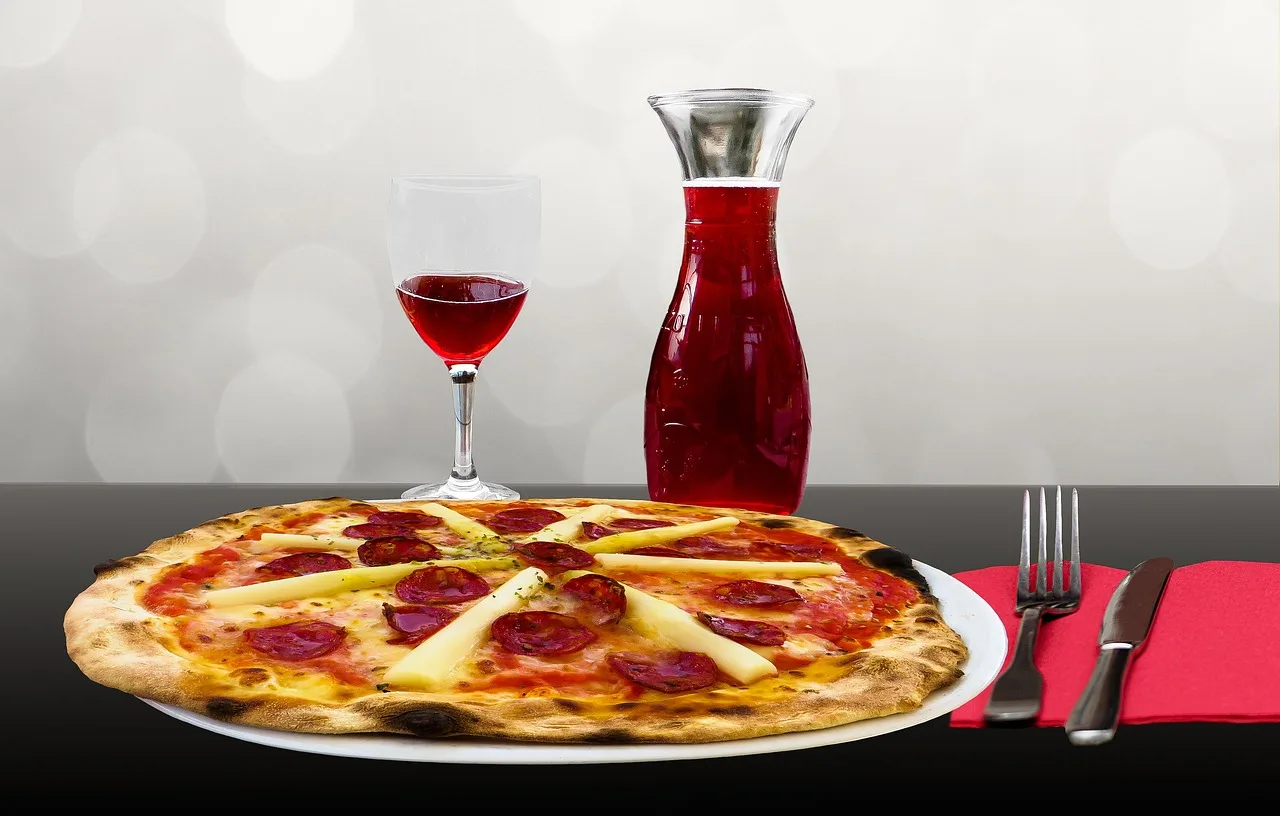
In Rome, the coperto on your bill is against the law. Not a grey area, not a custom the authorities have decided to tolerate. Article 16 of Lazio's regional law 21 of 2006, in the coordinated text the regional council still publishes as the version in force, deals with price transparency in places that serve food and drink. Where service is at a table, it says, the price list has to be available to customers before they order and has to show any service component in a way the public can understand. Then it adds a sentence with no wriggle room: "È inoltre fatto divieto di applicare costi aggiuntivi per il coperto." It is further forbidden to apply additional charges for the cover.
Restaurants in Rome, according to the consumer associations that field the complaints, comply by renaming. Codici told RomaToday the whole problem lives in the nomenclature: some restaurants call servizio what used to be the coperto. UDiCon, which has collected reports from diners since the law came in, has been saying the same thing for longer. Nobody has counted how many places do it, so take it as reporting rather than measurement, but the shape is consistent. The same charge, at the same amount, per head, reappears on the menu under the other word, which the same article permits as long as the price list discloses it before you order. The letter of the law is satisfied and the arithmetic is unchanged. This is the single most useful thing to understand about the small mysterious lines at the bottom of a European bill: almost all of them are legal, most of them are regulated, and the regulation usually governs disclosure rather than existence.
Coperto is an Italian word and mostly an Italian problem
Elsewhere in Italy the coperto is neither banned nor blessed. Italian legal and consumer commentary is consistent that there is no national prohibition, and that the obligation that does exist is the ordinary one of publishing prices, which means the coperto has to be printed on the menu or the price list you see before ordering. A coperto you could have read in advance is a price. A coperto that materialises on the bill and appears nowhere else is a different matter, and it is worth photographing the menu before you order if the place has the feel of somewhere that improvises.
What the coperto is for is a question restaurateurs answer differently depending on how the conversation is going. Bread, linen, cutlery, the washing of all of it. The historical origin usually offered, medieval inns charging guests for a place at the table while they ate food they had brought themselves, is folklore that I cannot verify from any source worth citing, so treat it as a story rather than a fact. What is documented is the modern shape of the thing: a per-person charge, levied whether or not you eat the bread, which some regions have decided is a charge for nothing.
Spain has no equivalent. Greece has banned it outright. France abolished the argument by a different route, which is worth explaining because it is the most elegant solution anyone has found.
Why the French bill has no extra lines
In France, the displayed price is the price. Restaurants and bars must post prices inside and outside the establishment, and the figures on a wine list are given inclusive of tax and inclusive of service, under the 1987 order that governs price display in places serving meals and drinks. There is no line to add at the end because the service was already inside the numbers you read on the way in. Anything you leave on the table afterwards is a genuine gratuity, offered because you felt like it, not a shortfall you are making up.
The German-speaking countries arrive at the same destination through consumer law rather than restaurant law. The German price indication ordinance requires a trader offering goods or services to consumers to state total prices, and where a price is broken down, the total has to be the figure that stands out. Austria's chamber of commerce guidance for hotels and restaurants says the same thing to its own members: price lists for food and drink, gross prices, everything in. A bill in Munich or Salzburg is boring on purpose.
Britain is the outlier in the other direction. There is no cover charge, but there is a discretionary service charge, usually a percentage, usually added without being asked for. What changed recently is not whether it appears but where the money goes. The Employment (Allocation of Tips) Act 2023 inserted a new section 27D into the Employment Rights Act 1996, which tells an employer that the tips, gratuities and service charges taken at a given site must be, in the statute's words, "allocated fairly between workers of the employer at that place of business". The government's guidance flattens that into a single line: "By law, all tips must be given to workers without deductions." The old suspicion that the service charge went into the till and stayed there is now a legal question with a legal answer.
The water on your table is a policy decision
The bottled water on the table, opened before anyone discussed it, is the charge that annoys people most, and it is the one where the rules differ most sharply from country to country. The reason is buried in European law.
The current EU drinking water directive tells member states to improve access to water for everyone, and then, in the article on access, it lists measures they are free to adopt if they want to push people towards the tap. One of the listed measures is nudging the places that feed people, restaurants and canteens and catering operations, into handing tap water over for nothing or for a token fee. May, not shall. Encouraging, not requiring. The result is a patchwork in which the same glass of water is a legal entitlement on one side of a border and a commercial decision on the other.
Spain took the strong version. Article 18 of the 2022 waste and circular economy law states that establishments in the hospitality and restaurant sector must always offer consumers the possibility of consuming non-bottled water free of charge, as a complement to the establishment's normal offering. The paragraph opens by announcing its own purpose, cutting the consumption of single-use packaging, which tells you the motivation was plastic rather than hospitality, but the effect for a customer in a bar in Valencia is the same: the jug is a right, not a favour. Note the exact words, non-bottled water. Filtered water served as a named product at a price is a different argument, and some establishments make it.
France requires the notice as well as the water. Restaurants and bars have to state visibly that customers can ask for free drinking water, and they have to serve it chilled or at room temperature. The notice has to be somewhere a customer will see it, on the menu or on a sign, which removes the awkwardness either way: you are not asking for a favour, you are exercising something the establishment was obliged to tell you about.
Greece went after the sequence rather than the price. Under the Greek rules of market conduct, restaurants and similar premises are not allowed to charge customers for couvert, meaning place settings, cutlery, napkins and the like, and no product, bottled water and bread given as the examples, may be served and charged without the consumer's prior consent. The fine is set per item. The rule is aimed precisely at the manoeuvre where a large bottle of water lands on the table with a nod and appears on the bill an hour later.
Britain, which lost the argument on the service charge, wins this one, and by an odd route. The mandatory conditions attached to every alcohol licence in England and Wales include a flat instruction: "The responsible person shall ensure that free tap water is provided on request to customers where it is reasonably available." That is drink policy rather than restaurant policy, written so that people drinking alcohol can get water without paying for it, and its reach is exactly the set of premises licensed to sell alcohol. Ask in a licensed pub or a restaurant with a wine list and the tap water is owed to you. Ask in the unlicensed café next door and you are back to asking nicely.
Italy has no such duty, and now has a judgment saying so. In April 2026 the Court of Cassation threw out the claim of a guest at a five-star hotel in the Dolomites who had been refused tap water at dinner over a Christmas stay and offered mineral water at seven euros a bottle, even after she offered to pay for the tap water. Italian law, the court held, contains no rule obliging a restaurateur or hotelier to serve it. The decision sits inside the ordinary freedom of a business to decide what it sells.

Portugal wrote the rule I would copy
The most quietly impressive piece of drafting in this whole area is Portuguese. Article 135 of the 2015 regime governing commerce, services and restaurants requires price lists in Portuguese at the entrance and inside, listing every dish, food item and drink the establishment supplies with its price, including the couvert where one exists. It then defines couvert as the set of foods or appetisers identified on the list as couvert and supplied at the customer's request. And it says that no dish, food item or drink, couvert included, may be charged if the customer did not ask for it.
Then it does the thing almost no other country does. The same article requires that rule to be transcribed onto the price list. The restaurant has to print, next to its own prices, the sentence that limits what it can charge you. The olives, the cheese, the little dish of carrot in vinegar: if they arrive unrequested and you leave them alone, you can ask for them to be taken away, and the law is on the menu in front of you saying so.
What to say, and where
The phrasing matters less than the timing. Ask before the bottle is opened, and ask for the thing by name.
Italy: acqua del rubinetto. Expect a no in tourist districts and take it gracefully, because there is no rule behind your request. France: une carafe d'eau, s'il vous plaît, which is the standard formula, though the law speaks of free drinking water and says nothing at all about the jug. Spain: agua del grifo, and the establishment is required to make it possible. Portugal: água da torneira, with no duty to serve it, only the rule that nothing unrequested can be charged. Germany and Austria: Leitungswasser, with no legal duty behind it that I could find, so it may come free, it may come with a small charge, and if it is charged, the price belongs on the list like anything else. Greece: νερό βρύσης, and separately, if bread arrives that you did not order, you are entitled not to pay for it. Britain: tap water, please, and in a licensed pub or restaurant in England or Wales they have to provide it where it is reasonably available.
The countries where none of this applies are the ones that solved it with arithmetic instead of etiquette. Where the total price rule bites hard, in France, Germany and Austria, there is no coperto, no service line and no negotiation, because the restaurant decided all of it before printing the menu. That is the correct answer and everybody involved knows it.
The charge printed on the menu is not the one to resent. It is disclosed, you agreed to it by sitting down and ordering, and in the countries that regulate it well it buys real things. The charge to watch is the plate nobody ordered and the bottle nobody opened in your presence, because that is the one that depends on you not looking. Portugal made restaurants print the answer on the same page as the prices. Everywhere else, you have to know it.
Sources
- Consiglio Regionale del Lazio, legge regionale 29 novembre 2006 n. 21, testo coordinato vigente - Article 16 on price transparency, including the express prohibition on charging a coperto and the permitted disclosure of a service component
- RomaToday, "Ristoranti, dal 'coperto' al 'servizio' nulla è cambiato: i clienti pagano ancora" - The consumer association Codici on restaurants relabelling the banned coperto as servizio, and the earlier UDiCon campaign on the same practice
- Ley 7/2022, de 8 de abril, de residuos y suelos contaminados para una economía circular (BOE consolidated text) - Article 18.3, opening with the aim of reducing single-use packaging, requiring hospitality establishments in Spain to always offer free non-bottled water
- Réglementation dans un bar ou un restaurant, Service-Public.fr - French rules on displaying prices inside and outside, prices quoted tax and service included, and the duty to display the availability of free drinking water and to serve it chilled or at room temperature
- Le verre d'eau et les toilettes, GHR - Trade federation restatement of article L541-15-10 of the Code de l'environnement, under which the notice may appear on the menu or on a display space
- Directive (EU) 2020/2184 on the quality of water intended for human consumption - Article 16(2), listing free or low-fee provision in restaurants, canteens and catering services among the measures member states may take
- Decreto-Lei n.º 10/2015, Diário da República, 1.ª série, n.º 11 - Article 135 defining couvert, barring charges for anything not requested, and requiring that rule to be printed on the price list
- Υπουργική Απόφαση 91354/2017, Κανόνες ΔΙ.Ε.Π.Π.Υ. (ΦΕΚ Β' 2983/2017) - Article 72 prohibiting couvert charges in Greek eating places and barring bread or bottled water being served and charged without prior consent, with a per-item fine
- The Licensing Act 2003 (Mandatory Licensing Conditions) Order 2010, Schedule paragraph 3 - Mandatory condition on alcohol-licensed premises in England and Wales that free tap water be provided on request where reasonably available
- Employment Rights Act 1996, section 27D - Requirement that qualifying tips, gratuities and service charges be allocated fairly to workers at the place of business
- Tips at work, GOV.UK - Government guidance stating in one line that deductions from tips are unlawful, and pointing to the statutory code of practice on how they are shared out
- Il Post, "Ristoranti e hotel possono rifiutarsi di servire acqua del rubinetto ai clienti" - Court of Cassation ordinance of 29 April 2026 holding that Italian law imposes no obligation to serve tap water
- Preisangabenverordnung § 3, Pflicht zur Angabe des Gesamtpreises - German requirement to state total prices to consumers and to highlight the total where a price is broken down
- Preisauszeichnung im Hotel- und Gastgewerbe, WKO - Austrian price-list and gross-price obligations for food, drink and accommodation