Why Locals Buy Bottled Water Where the Tap Is Perfectly Fine
LineCast Networks
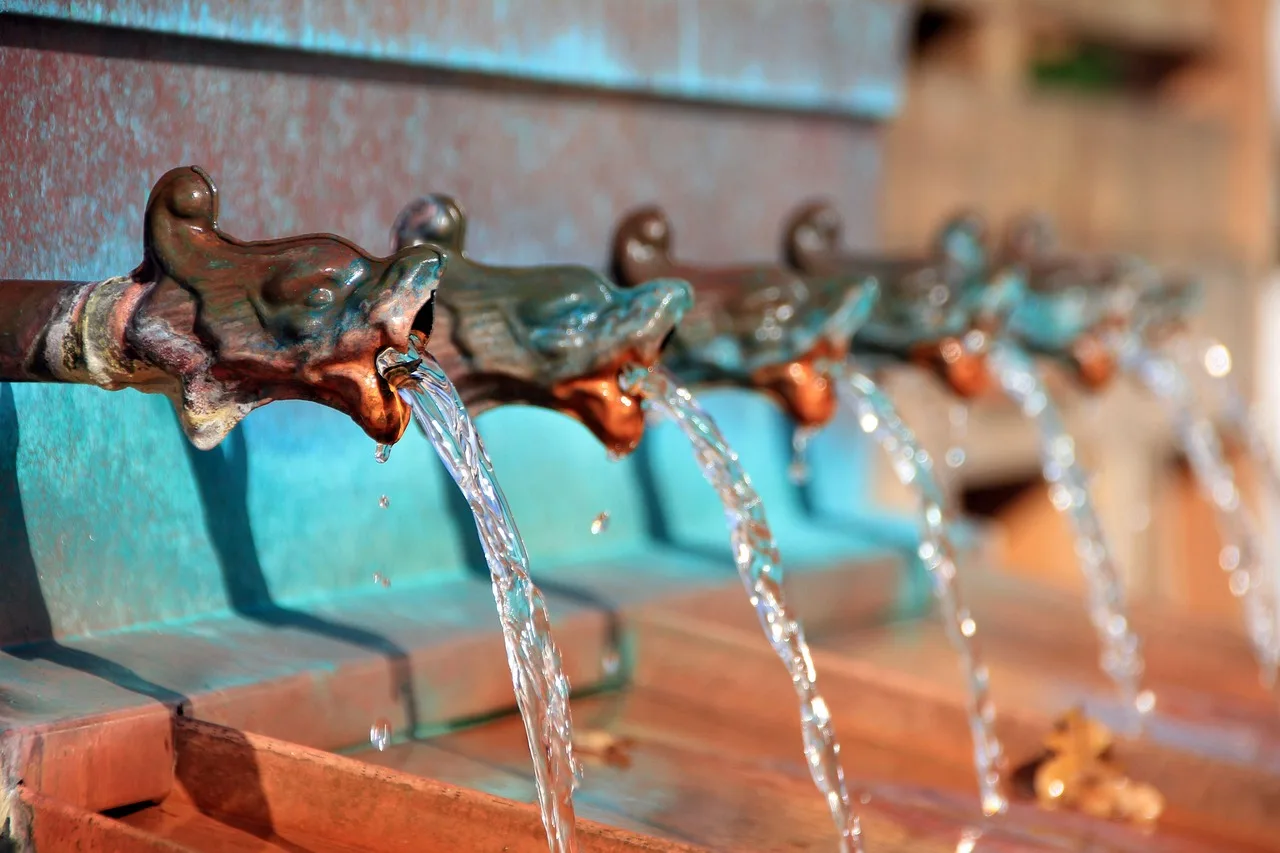
The water in the Trevi Fountain is not drinking water. Acea, which runs Rome's water service, looks after nine of Rome's monumental fountains under an arrangement with the city, and it says so plainly: the monumental fountains are fed with non-potable water, recirculated through treatment plants tuned to leave as little limescale as possible on the marble. The Trevi's supply is the Aqua Virgo, a Roman aqueduct dating from 19 BC and still working. Walk two streets away and you will find a nasone, one of the three thousand or so public fountains Acea keeps running across the city, and the water coming out of that is exactly what comes out of a Roman kitchen tap.
One neighbourhood, two kinds of water, two different legal statuses, and nothing on the surface to tell them apart. That is the real shape of the tap water question, and it is why the answer people want, a yes or a no per country, does not exist.
Three questions wearing one coat
"Can I drink the tap water here" is three questions stacked on top of each other.
Is the source clean. Does it survive the journey. Does it taste like something you want in your mouth.
Regulators answer the first two, and they stop answering somewhere short of your glass. On the third they go partway and then stop: German drinking water is supposed to be colourless, clear, cool and beyond reproach in smell and taste, in the federal environment agency's phrasing, and the European directive carries taste and odour among its indicator parameters. That rules out water that is wrong. Nobody rules on whether you like it, and liking it is the thing that actually governs what locals put in their shopping trolley.
Munich: an argument about dissolved limestone
Munich takes its drinking water entirely from groundwater, drawn from the Mangfall valley, the Loisach valley, and the Munich gravel plain held in reserve. Under normal conditions the city utility delivers it with no chemical treatment at all. Two ultraviolet plants stand by in case flooding or heavy rain in the catchment makes disinfection necessary, and if chlorine is ever needed on top of that, the utility has to agree it with the public health authority and tell the affected public immediately.
The water is also hard. The utility publishes the number: 15.8 degrees of German hardness on average, 2.8 millimoles per litre, which puts Munich formally in the "hard" band under German detergent law. The federal environment agency makes the general point that tap water tastes slightly different everywhere, according to which minerals dissolve out of the local ground on the way up. In Munich's case what you are drinking is a mouthful of pre-Alpine limestone. Plenty of people like it. Plenty of people raised on softer water do not, and the utility explicitly advises against softening cold drinking water partly because doing so changes how it tastes and smells.
So the crates of sparkling water stacked in every Munich stairwell are not a verdict on safety. They are a verdict on carbonation and habit. The utility's own consumer page makes the counter-case in a short list of flat bullet points, one sentence each: tap water is cheaper than the supermarket, it takes far less transport and packaging energy than bottled mineral water, and it spares you the business of hauling crates home. No exclamation marks. Just the arithmetic, sitting there.
There is one genuine caveat, and it is the caveat that matters everywhere. The utility's responsibility ends at the house connection. Everything past that point, the risers, the fittings, the taps, belongs to the building's owner. Lead service pipes have not been laid in Munich for more than ninety years, and the German limit for lead in drinking water was cut to 0.01 milligrams per litre in December 2013. But the utility still warns that lead can enter water from non-standard galvanising, from brass and gunmetal fittings, or from unapproved leaded solder in copper installations. The clean groundwater is not in dispute. The last thirty metres are.
Rome: the network is not the building
Acea Ato 2 monitors Rome's water from abstraction to household taps, runs continuous instrumented surveys along the aqueducts, and is rolling out Water Safety Plans in line with European and World Health Organization practice. It also publishes, by address, a downloadable sheet of average values from the chemical analyses of the previous twelve months. That is an unusually direct offer: type in where you are staying, read what is in the water there.
The nasoni are part of the same system rather than a tourist amenity. The first cast-iron ones appeared in 1874, under a mayor who wanted a public water distribution system for the sake of hygiene, and they were designed to run continuously in order to relieve pressure on the distribution network. Brass replaced the cast iron in the years since, so the fountain you actually drink from is usually not the metal of 1874, just the silhouette. Some now have timed taps to cut waste. Acea states directly that the water flowing from Rome's drinking fountains is the same water that reaches Roman homes.
And yet Italians buy a great deal of bottled water. In 2025 the national statistics institute found that around three households in ten say they do not trust drinking water from the tap, and that this is wildly uneven by region: the figure passes half in Sicily, at 57.6 per cent, and in Sardinia, at 52.1 per cent. That distrust is not a judgement on Rome, and it is not really a judgement on the network either. It is a judgement on the whole chain, and in a nineteenth-century palazzo the weakest link in that chain is the part nobody photographs.
Europe has legislated this split, with one carve-out worth knowing about. The recast Drinking Water Directive defines water for human consumption to include water put into bottles or containers, but Article 3 then exempts what it calls "natural mineral waters recognised as such by the responsible authority", and recognised natural mineral water fills most of the water shelf in an Italian supermarket. So the directive governs the tap far more tightly than it governs the bottle standing next to it. Where it does apply, it treats the building as a problem in its own right: domestic distribution systems, the pipework and fittings and appliances between the network and the taps people drink from where those are not the supplier's responsibility, get their own article and their own deadline, with the first risk assessment of them due by 12 January 2029. The European Union wrote that as a separate workstream because it is a separate problem.
Mexico City: where the two questions come fully apart
Mexico's drinking water standard, NOM-127-SSA1-2021, was published in the federal gazette and is mandatory across the country for the bodies responsible for public and private water supply systems. What a supply system means there is generous rather than narrow. Clause 3.15 runs from sources and abstraction works through treatment plants, storage and regulation tanks, and conduction and distribution lines, tanker trucks included, and it closes by saying they may be "sean de propiedad pública o privada", publicly or privately owned. Storage is inside the definition, not outside it.
The standard sets free residual chlorine at 0.2 to 1.5 milligrams per litre, and residual chlorine is a travelling technology. It exists to keep water disinfected while it moves through pipe to reach you.
The problem in Mexico City is that the pipe does not always travel. A study published in PLOS Water, combining ethnographic work in 59 households with a survey of 2,595 individuals, documents what people do about intermittent supply: almost every household stores water, most commonly in tinacos, the rooftop tanks visible from any high window in the city, often backed by an underground cistern. Households with less frequent supply keep larger stores. And the researchers record that the same adaptations which solve the quantity problem create a quality problem, with residents reporting noticeable deterioration in drinking water.
One household in the study had built the whole logic into their plumbing. Three rooftop tinacos held around 3,300 litres for daily use, refilled by a manual pump from an underground cistern. Separately, a direct line ran from the street straight to the kitchen sink, bypassing all the storage. It only produced water on Fridays, Saturdays and Sundays, the days the public supply reached the house. That was the tap they drank from, precisely because the water in it had not been through a tank.
That family worked out, without a laboratory, the thing a written standard cannot hand you. The norm's definition is broad enough to reach their tinacos. What it does not come with is anybody who climbs up to look. The project's own water sampling, the authors report, "documented deterioration in chlorine levels between the point of supply and the point of consumption", which is to say between the street and the glass. That sampling was done by researchers writing a paper, not by an inspector enforcing NOM-127. A rule that covers your roof tank and a system that measures your roof tank are not the same object.
What the official advice says, and whose advice it is
The gov.uk travel page for Mexico gives travellers exactly one line on the subject: "Only drink boiled or bottled water and avoid ice in drinks." The German foreign ministry says the same thing in more detail, telling travellers to drink only water of safe origin and never tap water, and to buy carbonated bottles, because a bottle that has been opened and refilled is easier to detect when it should be fizzing. The UK's own health pages for Italy and for Germany say nothing whatsoever about water.
Two things follow, and both get lost in the retelling. First, this is advice keyed to the country you are standing in and to the government issuing it, not to the passport in your pocket. A Mexican national and a British one drinking from the same tap in Coyoacán face the same water. What differs is which ministry's webpage they read on the plane. Second, national advice is written for a whole country and therefore flattens exactly the distinction that matters. It cannot tell apart a flat on a continuous supply from a house that receives water three days a week.
There is also the awkward matter of how little the precautions are proven to accomplish. The United States Centers for Disease Control's own reference for clinicians says that care in selecting food and drink can lower the risk of travellers' diarrhoea, then adds that people frequently cannot follow the advice, that restaurant hygiene is outside their control, and that "studies have demonstrated that risk behavior counseling on food and water hygiene may not decrease risk of diarrhea". The same chapter notes that bismuth subsalicylate, in studies conducted in Mexico, cut incidence by roughly half, which is more than has ever been demonstrated for the bottled-water precautions themselves. A sealed bottle is a sensible default. It is not a force field.
The source that actually settles it
Within the European Union, the answer lives with the water company, and it is published. For Rome, that is Acea Ato 2's address-level analysis sheet. For Munich, it is the utility's drinking water analysis, which gives an average plus a minimum and maximum spanning 95 per cent of readings. These are the numbers the utilities are legally accountable for, and they beat a hotel receptionist, a forum thread and your own instincts about how the water smells.
Outside the EU the shape is the same but the reading is harder. Find the national standard, find the operator's published monitoring, and then remember that a limit written in a gazette is only as good as the last place somebody took a sample. Where NOM-127 does spell out a field method for measuring disinfection residuals, it puts the reading at the household connection or at a tap on the distribution network. The words tinaco and rooftop appear nowhere in it. The tank is inside the norm's definition of a supply system and outside everything the norm tells anyone to go and measure.
Which leaves the question nobody can answer from a desk: whether the building you are sleeping in has a roof tank, when it was last cleaned, and what its risers are made of. That is the honest reason a lot of people who could perfectly well drink the tap buy the bottle instead. It is not a superstition about the city. It is an admission about a building they cannot see inside, and a short-let guest has even less visibility than the tenant downstairs.
So the useful thing to know changes by place. In Munich the interesting variable is calcium, and the correct move is to taste it before deciding. In Rome it is whether the fountain in front of you is a nasone or a monument, and the two are a short walk and one legal category apart. In Mexico City it is which day of the week the water arrived, which is a question your host can answer in about four seconds and no government website ever will.
Sources
- SWM: Fragen und Antworten zu M-Wasser - Munich draws only groundwater; normally no chemical treatment, two UV plants on standby, chlorine only with health-authority agreement; hardness 15.8 °dH and 2.8 mmol/l; advice against softening cold drinking water because it changes taste and smell; lead limit cut to 0.01 mg/l on 1 December 2013 and no lead pipes laid for over ninety years, but risk from galvanising, gunmetal fittings and leaded solder; SWM monitors from abstraction to the house connection, and the Gesundheitsamt enforces the Trinkwasserverordnung.
- SWM: Wasserqualität und Wasserhärtegrad in München - published analysis with average, minimum and maximum covering 95 per cent of readings; the six-item benefits list covering price, transport and packaging energy, and not carrying crates.
- Umweltbundesamt: Trinkwasser - tap water tastes different by region depending on locally dissolved minerals; drinking water should be colourless, clear, cool and faultless in smell and taste; responsibility for the systems is split between water suppliers and building owners, with state health offices carrying out supervision.
- Acea Acqua: Water in all its forms - Acea manages nine monumental fountains for the City of Rome; recirculation and treatment tuned to leave the water "neutral" so it does not deposit limescale on the marble; the monumental fountains run on non-potable water; the Trevi is fed by the Aqua Virgo of 19 BC.
- Acea: The Nasoni - over 3,000 drinking fountains in Rome; first cast-iron nasoni in 1874 under mayor Luigi Pianciani, with brass later replacing cast iron; designed to run continuously to relieve network pressure, some now on timed taps; the fountains carry the same supply that reaches Roman households.
- Acea Ato 2: La qualità della tua acqua - continuous instrumented surveys along the aqueducts plus potability analysis from abstraction to household taps; Water Safety Plans in line with EU directives and WHO; a map that returns a downloadable PDF of average chemical analysis values for the previous twelve months at a given address.
- Istat: Le statistiche sull'acqua - in 2025, three Italian households in ten do not trust drinking tap water, rising above half in Sicily (57.6 per cent) and Sardinia (52.1 per cent).
- Directive (EU) 2020/2184 on the quality of water intended for human consumption, EUR-Lex - Article 2(1) includes water put into bottles or containers in the definition; Article 3(1)(a) exempts natural mineral waters recognised under Directive 2009/54/EC; Article 2(2) defines domestic distribution systems; Article 7(6) and Article 10 set 12 January 2029 as the first deadline for risk assessment of those systems; Annex I Part C lists taste and odour as indicator parameters.
- NOM-127-SSA1-2021, Diario Oficial de la Federación - clause 1.2 makes the norm mandatory nationwide for the bodies responsible for public and private water supply systems; clause 3.15 defines a supply system to include storage and regulation tanks and tanker vehicles, "sean de propiedad pública o privada"; Table 9 sets free residual chlorine at 0.2 to 1.5 mg/L; Appendix B, clause B.8.1, places in-situ determination of residual iodine at the household connection or on the distribution network; the text contains no mention of tinacos or rooftop storage.
- PLOS Water: Making scarcity "enough" - 59 household interviews plus a 2,595-person survey in Mexico City; near-universal tinaco and cistern storage, larger stores where supply is less frequent, reported deterioration in drinking water quality; the NESTSMX water sampling documented deterioration in chlorine levels between point of supply and point of consumption; household 514 kept three tinacos of about 3,300 litres plus a direct street line to the kitchen sink that ran only on Fridays, Saturdays and Sundays.
- CDC Yellow Book, 2026 edition: Travelers' Diarrhea - food and water precautions are recommended but travellers cannot always adhere, restaurant hygiene is out of their control, and "studies have demonstrated that risk behavior counseling on food and water hygiene may not decrease risk of diarrhea"; studies from Mexico show bismuth subsalicylate reduces incidence by approximately 50 per cent.
- UK Foreign Office travel advice for Mexico: health - "Only drink boiled or bottled water and avoid ice in drinks."
- UK Foreign Office travel advice for Italy: health and for Germany: health - neither page mentions water.
- Auswärtiges Amt: Mexiko Reise- und Sicherheitshinweise - drink only water of safe origin and never tap water; buying carbonated bottled water makes a previously opened bottle easier to identify.