Which Emergency Number Works Where You Are Standing
LineCast Networks
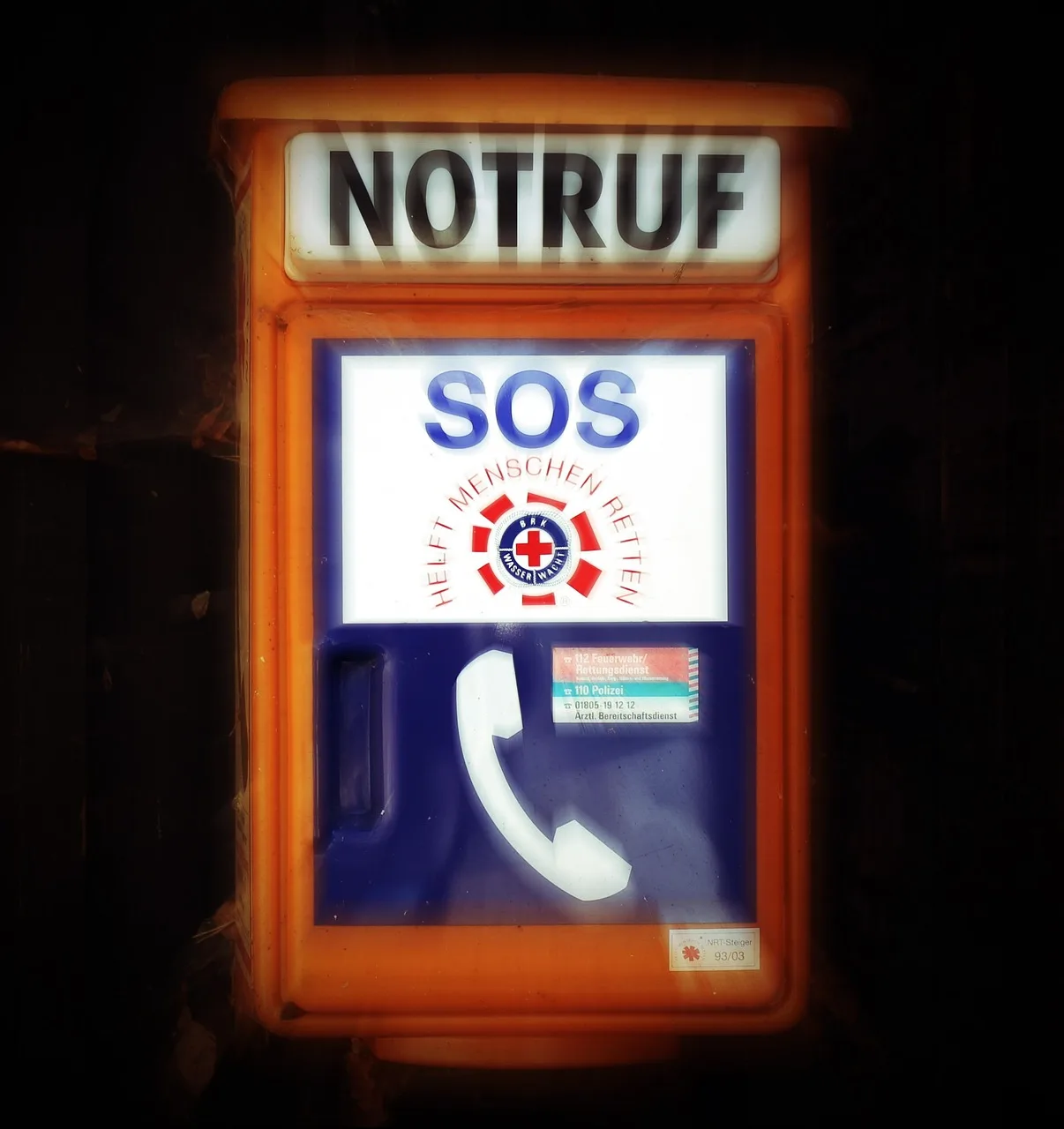
Japan runs three emergency telephone numbers, and the one visitors almost never hear about is 118. It belongs to the Japan Coast Guard, and it covers what goes wrong on the water: a swimmer in trouble, a collision between boats, oil on the surface, a hull adrift. It also covers a good deal that is not an accident at all. The Coast Guard's own list of what to report on 118 runs to smuggling, poaching, illegal entry and suspicious vessels, which makes 118 a crime line as much as a rescue line. The Ministry of Internal Affairs and Communications, which allocates Japanese telephone numbers, groups 118 with 110 for the police and 119 for the fire service in the same short block of three-digit codes, alongside the speaking clock on 117. That block is not a museum, either. The weather forecast on 177, which had been reading out the local outlook since 1955, was switched off at the end of March 2025; dial it now and you get a recording telling you the service has closed, and you are billed for listening to it. None of that is obvious from outside. Dial 110 for a person caught in a rip and you have reached a genuine emergency number and the wrong one.
That is the problem in miniature. Emergency numbers feel like settled facts, the way road signs feel like settled facts. They are national infrastructure, assembled at different times by different agencies for different reasons, and the correct answer changes at a border, sometimes completely.
What 112 actually guarantees
The European Electronic Communications Code, Directive (EU) 2018/1972, is the instrument that makes 112 real. Article 109 obliges member states to see that an end-user can summon the emergency services by dialling 112, or any national emergency number the state has designated, at no cost and with no payment mechanism of any kind required. Article 109(3) adds the clause that matters if you are a foreigner with only one number in your head: where a national number is still in use, a call to 112 has to be, in the Directive's words, "answered and handled at least as expeditiously and effectively as" a call to that national number.
That clause exists because most of Europe kept its old numbers. The European Commission lists eight countries that have gone over to 112 alone: Denmark, Estonia, Finland and Malta, then the Netherlands, Portugal, Romania and Sweden. Elsewhere, 112 runs in parallel with something older. Ireland is the clean example. Its Emergency Call Answering Service states that 999 and 112 exist equally and run in parallel, and that whichever you dial, the call is handled the same way.
The reach of 112 is wider than the EU and much narrower than the world. Ireland's emergency service lists it as live in every EU member state and in ten countries outside the Union besides: Iceland, Norway and Switzerland, the United Kingdom, Serbia, Montenegro and Albania, then Moldova, Georgia and Turkey. It also notes that EU coverage extends to Guyane, Martinique, Guadeloupe, Réunion, the Canary Islands, the Azores and Madeira. Outside that band it stops being a safe assumption. The same page is blunt about the reverse case. Of 911, the number that decades of imported television have taught the rest of the planet, it says: "It is not a valid emergency number for use in Ireland."
The numbers that are not 112
In the United Kingdom, the government's own guidance is to call 999 for a crime in progress or anyone in immediate danger, and 101 for everything that is not an emergency. Calls to both are free. 112 works there too, but 999 is what the country actually uses.
In the United States the number is 911, in Australia 000, in New Zealand 111. New Zealand Police note that mobile calls to 111 arrive with Emergency Caller Location Information attached.
A caution about older advice on the American system. For years the wireless 911 obligations sat at 47 CFR 20.18. Look that section up today and it reads "[Reserved]". The rules were rehoused in Part 9 of the same title, and 47 CFR 9.10 is where they now live. Nothing about dialling changed, but any guide that cites the old section is quoting a shell.
It is also worth being clear about what an emergency number is not. It is not a general switchboard. Ireland's service says plainly that 112 and 999 cannot connect you to anything except the four principal services: Garda, ambulance, fire and Coast Guard. For a downed power line or a burst main you need a different number entirely, and the Irish service publishes a list of them rather than taking the call. Europe reserves 116 000 as a missing children hotline available in every EU country. In Finland, where a call does not turn into an urgent dispatch, the response centre operator may point the caller instead to the non-emergency number 116 117, or to filing a report with the police. The UK has 101. These parallel numbers exist precisely so that the emergency line stays clear, and using them is not a lesser act.
Whether the call connects without a SIM
Estonia's Emergency Response Centre states on its own site that it is possible to call 112 there even with no SIM card in the phone and no network signal.
The United States has no rule about SIM cards as such. What it has is 47 CFR 9.10(b), which requires mobile carriers to transmit all wireless 911 calls "without respect to their call validation process", and which defines the calls in question as "any call initiated by a wireless user dialing 911 on a phone using a compliant radio frequency protocol of the serving carrier". Call validation is the check on whether you are a paying subscriber. SIM-less 911 in America rests on that clause by inference, not by name.
The same section governs handsets donated as 911-only devices, and the warning label it mandates is the most useful sentence any regulator has written on this subject. Under 47 CFR 9.10(o), the label must notify the user "that the handset can only be used to dial 911, that the 911 operator will not be able to call the user back, and that the user should convey the exact location of the emergency as soon as possible".
Read that as advice rather than as regulation. Where a SIM-less call works at all, the thing you lose is the call back. If the line drops, nothing can reach you. So the location has to go out first, in the first breath, ahead of the story.
I could not find an authoritative source setting one rule for Europe as a whole, and a good many national regulators say nothing about it publicly. So treat a SIM-less handset as a fallback that might work rather than a plan. If you are depending on a phone to summon help in a country you do not know, depend on one with a live connection.
Location is the whole call
European law now treats your position as something the network owes the call centre, not something you have to recite. Article 109(6) of the Code requires caller location information to reach the most appropriate answering point without delay once the communication is set up, including network-based location and, where available, location derived from the handset itself, and requires that establishing and transmitting it be free for both you and the call centre. The Commission's delegated regulation (EU) 2023/444 puts shape on that: for fixed lines, the accuracy criterion is expressed, in the regulation's own words, as "information related to the physical address of the network termination point"; for mobile networks it is expressed in metres, with a vertical figure too where that is feasible. Its recitals say an emergency communication should trigger both the network estimate and the handset-derived fix, when the latter is available.
Where the handset can do it, its own fix goes over in the opening seconds. That is worth wanting, because the network's own estimate is not a point. The regulation talks about a search area, and the metres are the radius of it. A search area is a polite name for a shape you might be anywhere inside. Nor is the handset fix purely satellite: Finland's own explainer notes that the Advanced Mobile Location method mixes satellite positioning with the distances to nearby Wi-Fi devices, which makes it sharper than GPS alone and also more easily fooled when someone moves a router.
Which is why every emergency service on earth still opens with the same question. Estonia's instruction is to say what has happened, then give the address as specifically as you can, or describe your surroundings, or read out your coordinates. Ireland's operator confirms which part of the country you are in before connecting you, and the service you reach will want the exact address, the Eircode if you have one, nearby landmarks and directions to the scene. The NHS guidance for calling 999 in England puts location first, ahead of symptoms, and adds an instruction most people never think of: call 999 again if your location changes.
So the preparation worth doing is not memorising numbers. It is being able to describe a place whose name you do not know. The road number and which way you are travelling. The last station you went through. The kilometre marker. The name over the nearest shop, spelled out letter by letter. The trailhead you set off from and roughly how long you have been walking. Finland's Emergency Response Centre Agency publishes a phone app that sends a location signal to the response centre when you place the call through the app, and its FAQ makes the low-tech fallback explicit: with no data connection the app can still put your coordinates on the screen for you to read out. The agency separately publishes an ordinary telephone number for satellite-phone callers on the Finnish mainland, and it is honest about what that costs you. The number is charged for, calls to it get no emergency priority in the telephone network, and they are answered at the agency's command centre rather than at a response centre, which is why the agency's advice is to use a mobile or a landline if you possibly can.
Two more habits, taken from the same official sources. Estonia and Ireland both say do not hang up until the call taker tells you it is fine, and keep the line free afterwards in case they ring back. Finland's agency points out that the risk assessment does not hold help up, because units can be alerted on the initial information while the operator is still asking questions.
The text services do not travel
Here the differences turn sharp, and they matter most to the people who most need them.
In the United Kingdom, texting 999 works only from a handset registered in advance. You send the word "register" to 999, read the automatic reply in full, text back "yes", and wait for a confirmation message. Change your number and you register again. There is also a relay route: dialling 18000, rather than the usual relay prefix, reaches a 999 operator through a relay assistant.
Ireland describes no registration step at all. Its emergency text service takes messages sent to 112 from any Irish-registered mobile, pre-pay or bill pay, on any of the Irish networks, and the emergency operator then contacts the service you asked for and reads your message to them. The instructions want the message ordered: which service, what has happened, which county, then where, down to the house number and Eircode. And the service is candid that text is the slower channel, so it tells you to make a voice call instead wherever you can.
In Finland, texting 112 is reserved for people with impaired hearing or speech, and the agency asks everyone else to call so that the channel stays clear. The first message is expected to carry the municipality and address, what has happened, further detail, and your name. Older regional numbers that served the same users were discontinued on 1 August 2025.
Japan's Coast Guard runs its own text service for deaf and speech-impaired users on 118, and it also requires registration beforehand.
The pattern is consistent and easy to miss. Non-voice access to emergency services is built nationally, tied to national mobile numbers, and generally does not follow you over a border. The version that works for you is the one you set up at home, and there is a good chance it stops working the moment you land somewhere else.
The message your phone sends you on arrival
If your mobile subscription falls under EU roaming rules, one genuinely useful thing happens by itself. Article 15 of Regulation (EU) 2022/612 requires your roaming provider to send an automatic message each time you enter a member state other than your own, telling you that you can reach the emergency services free of charge on 112, and giving you a free link to a page describing the alternative means of access mandated in the country you have just arrived in. It is the rare piece of arrival admin somebody else does on your behalf. A SIM issued outside the EU carries no such obligation and usually sends nothing at all, which is worth knowing if you are landing in Lisbon on an American or Australian number.
Cars do something comparable without being asked. New cars in the EU carry eCall, which dials 112 automatically after a serious road accident and passes on the vehicle's location. The Commission has since commissioned work on what becomes of that system as operators retire their 2G and 3G networks, a reminder that emergency infrastructure ages like every other kind.
What to actually rehearse
The received wisdom is to memorise 112 and stop worrying. Memorise it. It is the most portable number in Europe and it costs nothing to carry. But a number is the least interesting part of an emergency call. The interesting part is the twenty seconds after somebody answers, when a stranger in a room in Tallinn or Tampere or Dublin has to work out where on the map you are before anything else can begin. The sentence worth having ready is not the three digits. It is the one that starts "I am on the".
Sources
- 112 - the EU's emergency phone number, European Commission - 112 free and available across the EU; the eight member states using 112 as their only national number; eCall; the roaming SMS obligation
- Emergencies, Your Europe (European Commission) - 112 reachable at no cost from any phone, landline or mobile, anywhere in the Union; 116 000 available as the missing children hotline in every EU country
- Directive (EU) 2018/1972 establishing the European Electronic Communications Code - Article 109 on free access via 112 and national numbers, equal handling of 112 calls, and caller location without delay
- Commission Delegated Regulation (EU) 2023/444 - Article 3, which pegs fixed-line accuracy to a physical address and mobile accuracy to metres; recital 8 on those metres as the radius of a search area; both network-based and handset-derived location
- Regulation (EU) 2022/612 on roaming on public mobile communications networks - Article 15, the automatic message about 112 and alternative access sent on entering another member state
- Q&A on telephone numbers, Ministry of Internal Affairs and Communications, Japan - 110 for police, 118 for the maritime authority and 119 for the fire service within the Japanese 1XX number block
- Report incidents and accidents at sea on 118, Japan Coast Guard - 118 as the Coast Guard's emergency number; its published examples covering marine casualties, smuggling, poaching, illegal entry, oil discharge and suspicious vessels; NET118 registration for deaf and speech-impaired users
- Closure of the 177 weather forecast service, NTT West and NTT East - 177 in service from 1955 and withdrawn at 23:59 on 31 March 2025, with a chargeable closure announcement played afterwards
- Three-digit number services, NTT East - the live list showing 117 still running as the speaking clock and 177 marked as ended on 31 March 2025
- Emergency phone number 112, Estonian Emergency Response Centre - 112 callable with no SIM card or network signal in Estonia; what to say and in what order; keeping the line open
- 112, the ERC number in Finland, Emergency Response Centre Agency - Finland's single emergency number, six response centres, interpretation for callers without Finnish or Swedish
- Handling emergency calls, Emergency Response Centre Agency Finland - authorities alerted during the call on initial information; the operator may direct a caller to 116 117 or to a police report
- Emergency SMS messages to 112, Emergency Response Centre Agency Finland - text access restricted to impaired hearing or speech, required contents of the first message, and the 1 August 2025 discontinuation of regional numbers
- 112 Suomi application, Emergency Response Centre Agency Finland - the app and its stated purpose
- FAQ, 112 Suomi application, Emergency Response Centre Agency Finland - location transmitted only when the call is placed through the app; reading coordinates off the app with no data connection; AML combining satellite positioning with Wi-Fi distances
- Calling the emergency number with a satellite phone, Emergency Response Centre Agency Finland - the mainland satellite-phone number, its charge, its lack of emergency-call priority, and answering at the command centre
- Common questions, Ireland's Emergency Call Answering Service - 999 and 112 in parallel in Ireland, 911 not valid there, and what the call-taker asks
- Emergencies when travelling, Ireland's Emergency Call Answering Service - the list of European countries where 112 works, and the national numbers used in the US, Australia and New Zealand
- Other emergency numbers, Ireland's Emergency Call Answering Service - 112 and 999 connect only to the four main emergency services, with utilities and helplines listed separately
- Emergency Text Service, Ireland's Emergency Call Answering Service - text to 112 from any Irish-registered mobile, pre-pay or bill pay, on all Irish networks; the operator reads the message to the service requested; voice preferred where possible
- Sending a text to 112, Ireland's Emergency Call Answering Service - the required order of the message: which service, what, which county, where, plus house number, Eircode and landmarks
- 47 CFR 9.10, 911 Service, Electronic Code of Federal Regulations - paragraph (b) on transmitting all wireless 911 calls without respect to call validation and its definition of such calls; paragraph (o) on the label required for non-service-initialized 911-only handsets
- 47 CFR 20.18, Electronic Code of Federal Regulations - the former home of the US wireless 911 rules, now marked Reserved
- When to call 999, NHS - location asked first, contact number, and calling back if your location changes
- Contact 999 using Relay UK - the 18000 relay route and the advance registration required for texting 999
- Contact the police, GOV.UK - 999 for emergencies, 101 for non-emergencies, both free
- 111 Police Emergency, New Zealand Police - 111 as the New Zealand emergency number and Emergency Caller Location Information delivered on mobile calls