Whether You Must Carry Your Passport Depends on Which One You Hold
LineCast Networks
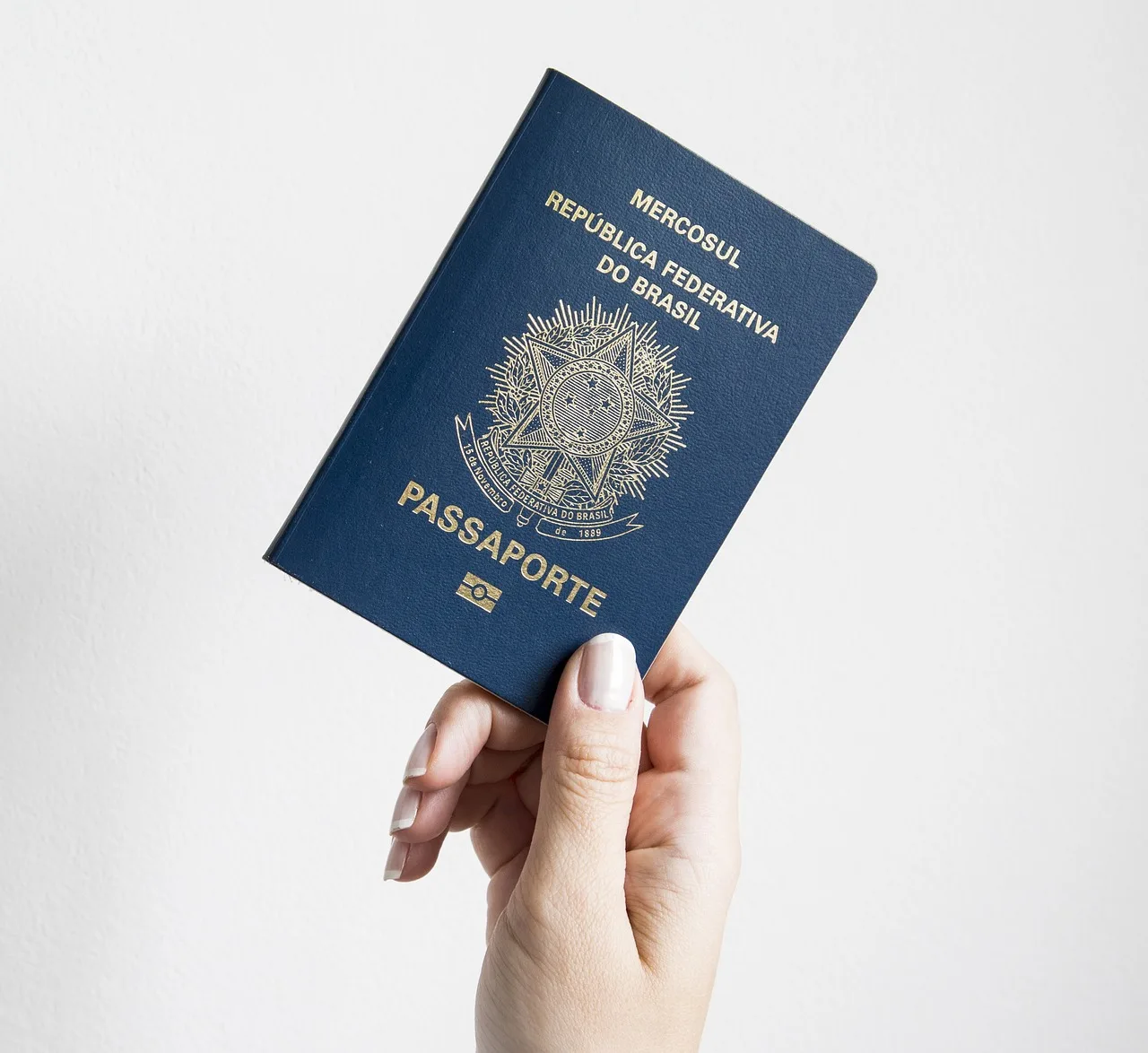
Article 651 of the Italian penal code punishes anyone who, asked by a public official in the course of their duties, refuses to give information about their personal identity, their status, or other personal particulars. The penalty is arrest of up to a month, or a fine. What the article does not say is that you have to produce anything. The duty it creates is to answer.
That gap, between telling an officer who you are and proving it with a card, is where most of the confusion about European identity rules lives. Both duties exist. They sit in different statutes, they attach to different people, and in all four countries below the answer turns to some degree on which passport is in your pocket.
The rule that makes nationality decisive
Article 26 of Directive 2004/38/EC, the free movement directive, is one of the few pieces of EU law that reads like a fairness clause and functions like one. A member state may check whether non-nationals are complying with a national requirement for them "always to carry their registration certificate or residence card", but only "provided that the same requirement applies to their own nationals as regards their identity card". Where they fail to comply, the state may impose "the same sanctions" it imposes on its own citizens for going out without theirs.
The effect is a peg. An EU citizen living in another member state is held to the local standard, whatever that standard happens to be. A citizen of a country outside the union gets no such peg. They fall under national immigration law, which is written for a different purpose, and which is generally both more demanding and more willing to attach a criminal penalty.
The same directive sets the entry rule. Two acceptable documents for Union citizens, who must be let in on a valid identity card or a passport. One for their family members who are not EU nationals, who need a passport, and who in most cases need an entry visa on top of it unless they hold a residence card. The divergence only widens once everybody is through.

Italy
The Italian immigration code opens by saying who it is for. It applies to nationals of states outside the European Union and to stateless persons, hereinafter called stranieri, and it does not apply to citizens of EU member states, save as provided by the rules implementing EU law. Everything that follows is therefore a set of rules about non-EU nationals specifically.
Article 6, paragraph 3 is the operative one. A foreigner who, at the request of officers and agents of public security, fails without justified reason to comply with an order to produce a passport or other identity document and a residence permit or other document attesting to regular presence in the territory, is punished with arrest of up to a year and a fine. Note the conjunction. Two things, not one.
A tourist has no residence permit, which is where the second half of the phrase does its work. Under the short-stay regime, a non-EU visitor staying up to ninety days does not apply for a permit; they make a declaration of presence. Arrive in Italy from a country outside the Schengen area and the declaration is treated as discharged at the border itself. The Polizia di Stato still describes that border act as the uniform Schengen stamp applied to your travel document, which is no longer what happens: the Entry/Exit System became fully operational at every Schengen crossing point on 10 April 2026, and stamps for short-stay non-EU travellers were replaced by a digital record of entries and exits. The obligation is now discharged by a database row you cannot show anyone by opening your passport. Arrive from another Schengen state instead and you have eight days to sign a form at the questura, unless you are lodging in a hotel, in which case the hotelier's declaration stands in for yours: they must report the identity details of everyone staying there to the questura within twenty-four hours of arrival. The Polizia di Stato says the copy of the declaration form is issued to the visitor precisely so they can prove compliance, and that it must be shown at any request by officers and agents of public security.
So the desk clerk who takes your passport at check-in and disappears with it for four minutes is discharging the declaration on behalf of one particular guest: the non-EU visitor who entered Italy from another Schengen country. For everyone else at that desk the same report is the hotel's own obligation under article 109 of the consolidated public security act, and it settles nothing on the guest's behalf. Article 109 also allows a hotel to lodge only people who can produce an identity document, so the request is not optional at either end of the counter. British government travel advice for Italy tells visitors that police may stop them at any time for an identity check or to establish their date of entry, and to carry photo identification at all times.
An Italian walking to the tobacconist is under article 651 and can satisfy it out loud, right up to the moment the officer does not believe them. Article 349 of the code of criminal procedure reaches both the person under investigation and anyone able to speak to the facts: refuse to be identified, or offer particulars or identity documents there are sufficient grounds to think false, and the judicial police may accompany you to their offices and hold you there for the time strictly necessary to identify you, and in any case no more than twelve hours, or no more than twenty-four with prior notice to the public prosecutor where the identification is particularly complex or needs consular help or an interpreter. Saying who you are is free. Being believed is the part that is not.
Spain
Spain writes the duty around the card rather than around the person, at least where its own nationals are concerned. The DNI is compulsory from the age of fourteen, and everyone obliged to hold one is obliged to exhibit it, and to allow its security features to be checked, when the authorities require this for the purposes of the identification power.
That power is narrower than its reputation. Officers may require identification where there are indications that the person may have taken part in an offence, or where the circumstances make it reasonably necessary to establish identity in order to prevent a crime. The statute then instructs that identification be carried out with strict respect for proportionality, equal treatment and non-discrimination, and lists the grounds, including nationality and ethnic origin, on which it may not discriminate.
The next paragraph is the interesting one, because it assumes you have no card. Where identification is not possible by any means, including by electronic or telephone means, or where the person refuses to identify themselves, officers may require them to come to the nearest police station equipped for the purpose, for the strictly necessary time, which may in no case exceed six hours. Read in sequence, the statute appears to expect an officer to try to establish who you are without a document before anybody gets into a car.
What is actually punished is refusal. Disobedience or resistance to authority, along with refusing to identify oneself or giving false or inexact data during identification, is a serious administrative infraction. Failing to obtain the personal documentation the law requires you to hold is a minor one, as is a third loss of it inside a year. Walking out of the house without the card you do hold appears on neither list.
Foreign nationals are on a different footing, and it is written into the same statute. Article 13 gives them the right and the obligation to keep and to carry on their person the documentation proving their identity, issued by the competent authorities of their country of origin or of departure, together with the documentation proving that they are in Spain regularly. They must exhibit it when the authorities lawfully require them to, and allow its security features to be checked, for no longer than that check takes. They may not be deprived of their home country documents except in the course of criminal judicial investigations. And the article then leaves open a door the Spaniard's version never needed, because the Spaniard was never obliged to be carrying anything: all of this is without prejudice to proving your identity by any other means if you do not have the documents on you. Spain runs both regimes out of one law, and your passport decides which one you are in.
British government advice supplies the practical layer the statute leaves out. Police may hold you at a station until they have confirmed your identity. Hotels, tourist accommodation and car hire firms have a legal duty to register the passport details of anyone checking in or collecting a vehicle, and you should wait while they do it rather than leaving the passport at reception to collect later. Thieves also pose as police officers and ask to see wallets: a genuine officer asks to see identification and not your wallet or purse, and all Spanish police, including those in plain clothes, carry official identification.

Germany
German law is precise here in a way that turns out to matter. A German aged sixteen or over who is subject to the general registration duty, or who is not subject to it but lives mostly in Germany, must possess a valid identity card, and a valid passport discharges that duty in the card's place. They must present the document on demand to an authority entitled to establish identity, and allow their face to be compared with the photograph. The verb is besitzen, to possess. The verb for carrying, mitführen, is absent. The same subsection then forbids requiring the holder to deposit the card or otherwise give up custody of it, and immediately exempts from that prohibition the authorities entitled to establish identity, along with cases of confiscation and seizure. The hotel cannot keep your card. The police can.
Mitführen appears elsewhere. Foreigners are required to carry a recognised and valid passport, or a passport substitute, when entering and leaving the country, and failing to do so is listed among the administrative offences punishable by a fine. Inside the country, a foreigner must present their passport on demand to an authority empowered to establish identity and allow the photograph comparison, mirroring the wording that applies to Germans. Failing to present it, or failing to present it in good time, is also a fineable administrative offence. That last phrase is a quiet way of saying that going home to fetch it may not be enough, without ever writing down a duty to carry.
If nobody can establish who you are, the code of criminal procedure allows police to hold a suspect where identity cannot otherwise be established, or can be established only with considerable difficulty. British government advice for Germany states the practical position cleanly: carrying identification is not a legal requirement, but if you cannot show any when asked, police can escort you to go and get your passport.
Japan
Japan has no ambiguity to resolve. Anyone in Japan on a foreign passport is required to keep it on their person for the whole of their stay, unless they hold a residence card and are carrying that instead. Mid- to long-term residents must carry the residence card at all times. Foreign nationals under sixteen are exempt from the carrying duty. Either document must be presented, on request, to an immigration inspector, an immigration control officer, a police officer, a coast guard officer, or other officials designated by ministry order.
The penalties are graded in a direction that surprises people. Failing to carry a passport draws the smallest fine in the set. Failing to carry a residence card draws double that. Refusing to present a residence card can bring imprisonment of up to a year, where refusing to present a passport cannot. Japan treats its foreign residents more strictly than its foreign visitors, which is the opposite of what the word "resident" usually implies.
The same article turns the demand back on the person making it. An official who asks to see your passport must carry an identification card showing their own official status, and must present it if you ask. It is one sentence, and it sits directly after the sentence obliging you to produce your document.
Japanese nationals are under no equivalent duty. The Police Duties Execution Act allows an officer to stop and question a person where there is sufficient probable cause to suspect them of a crime, or where they are judged to hold information about one, reasoning from unusual behaviour and surrounding circumstances. The same article then forbids taking anyone into custody, conducting them to a police box by force, or coercing an answer, except under criminal procedure law. A Japanese citizen may decline. A foreign national standing next to them may not, because the immigration act sits on top of that conversation.
The question worth asking before a trip is not whether the country requires identification. It is whether that country requires it of you, holding the passport you hold, and what it expects to happen in the ninety seconds after you say you left it at the hotel.
Sources
- Directive 2004/38/EC on the right of citizens of the Union to move and reside freely: Article 5 entry documents and the visa requirement for non-EU family members; Article 26, the equal-treatment limit on carrying requirements
- Codice penale, art. 651 (Normattiva): refusing to state your identity is an offence, and no duty to produce a document appears in the text. The link opens the 1930 penal code; select article 651 from the article list
- D.Lgs. 286/1998, Testo unico immigrazione, art. 6 (Normattiva): non-EU nationals' duty to produce passport and proof of regular presence, and the penalty. The link opens the whole decree; select article 6 from the article list
- D.Lgs. 286/1998, art. 1 (Brocardi): the code applies to non-EU nationals and stateless persons, called stranieri, and not to EU citizens save as provided by the rules implementing EU law
- Polizia di Stato: dichiarazione di presenza per cittadini stranieri: the short-stay declaration, the eight-day deadline for arrivals from Schengen states, the hotelier's declaration and 24-hour report, and showing the copy on request. Still describes the pre-2026 border stamp
- European Commission: the Entry/Exit System is fully operational, 10 April 2026: full operation across all Schengen countries and the replacement of passport stamps with digital entry and exit records
- Art. 109 TULPS, obblighi degli esercizi alberghieri (Brocardi): hotels may lodge only guests who produce an identity document, and must report guests' particulars to the questura within twenty-four hours
- Art. 349 codice di procedura penale (Brocardi): accompaniment to police offices for refusal to be identified or apparently false particulars, capped at twelve hours, or twenty-four with prior notice to the public prosecutor
- FCDO travel advice for Italy, safety and security: police may check identity and date of entry at any time; carry photo ID
- Ley Orgánica 4/2015 de protección de la seguridad ciudadana (BOE): art. 9, the DNI compulsory from 14 and the duty to exhibit it; art. 13, foreign nationals' duty to keep and carry identity and status documents, the bar on depriving them of home country documents, and proof of identity by other means; art. 16, the grounds for identification and the six-hour limit; art. 36.6, refusal as a serious infraction; art. 37.10 to 37.12, minor infractions for failing to obtain or negligently losing required documentation
- FCDO travel advice for Spain, safety and security: providing photo ID on request, being held until identity is confirmed, hotel and car hire registration, and the fake-officer scam
- § 1 Personalausweisgesetz, Ausweispflicht: Germans over 16 subject to the registration duty or mostly resident must possess and present an ID card, or a valid passport in its place; the deposit prohibition and its carve-out for identity-establishing authorities, confiscation and seizure
- § 13 Aufenthaltsgesetz, Grenzübertritt: foreign nationals must carry a recognised valid passport or passport substitute when entering and leaving Germany
- § 47a Aufenthaltsgesetz, Mitwirkungspflichten und Lichtbildabgleich: foreign nationals must present a passport on demand and allow photo comparison
- § 98 Aufenthaltsgesetz, Bußgeldvorschriften: failing to carry a passport at the border, and failing to present one or to present it in good time, as fineable offences
- § 163b Strafprozessordnung, Maßnahmen zur Identitätsfeststellung: police may hold a suspect where identity cannot otherwise be established
- FCDO travel advice for Germany, safety and security: carrying ID is not a legal requirement, but police may escort you to fetch a passport
- Immigration Control and Refugee Recognition Act, official English translation: Article 23 carrying and presentation duties, the official's own ID card duty, the under-16 exemption from carrying, and the graded penalties in Articles 75-2, 75-3 and 76
- The Police Duties Execution Act, official English translation: Article 2 stop-and-question powers and the bar on coercing an answer