What Visitors Keep Getting Wrong in Poland, Czechia and Hungary
LineCast Networks
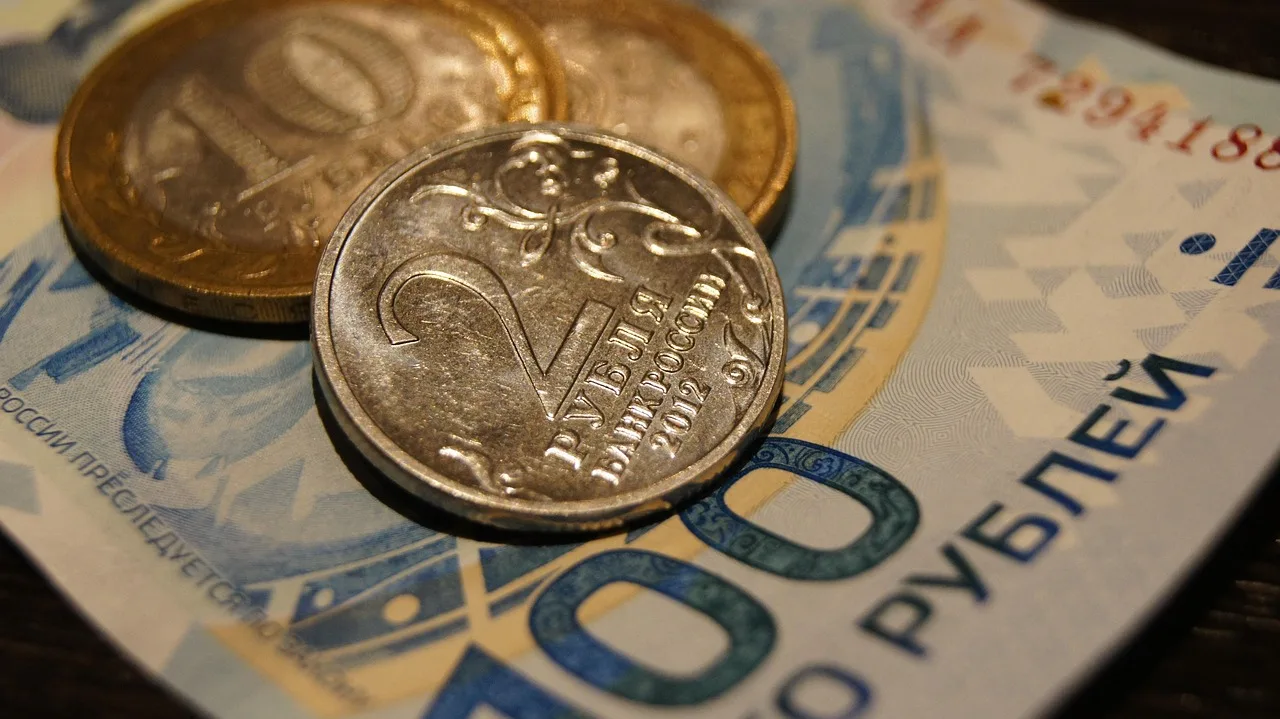
The United Nations Statistics Division maintains a geographic scheme called M49, the skeleton under a great deal of official data. Open it, go to Europe, and you will find region 151, Eastern Europe, containing Belarus, Bulgaria, Czechia, Hungary, Poland, Moldova, Romania, Russia, Slovakia and Ukraine. Now open the front page of the Visegrad Group, the intergovernmental club that Czechia, Hungary, Poland and Slovakia actually run between themselves. It describes its members, in its own words, as "the countries of the central European region".
Both statements are official. Only one of them is used by the people who live there, and the gap between the two is where most visitor mistakes begin. The label is not an insult. It is an old political boundary wearing a compass as a disguise, and the trouble with wearing it is that it encourages you to treat three separate countries as one place with one set of rules.
They are not. The rules differ, sometimes sharply, in the three areas that will actually cost you something: the money in your pocket, the money you leave on the table, and the drink in your hand.
Three currencies, and three different last digits
None of the three uses the euro. The European Central Bank's map of the euro area marks six EU members as being outside it: Denmark, Hungary, Poland, Romania, Sweden and the country the ECB's own map still labels the Czech Republic. Hold on to that last detail. The closing section comes back to it. Their neighbours have gone the other way: Slovenia adopted the euro in 2007, Slovakia in 2009, Croatia in 2023. Slovakia is the detail that catches people out, because it was half of the same country as Czechia until 1993 and it now takes euros while Czechia does not.
So you will handle three currencies, and each one ends in a different place.
Poland is the straightforward one. The Polish Tourist Organisation lists złoty coins of 1, 2 and 5, and groszy coins of 50, 20, 10, 5, 2 and 1. The one-grosz coin still exists, so a cash total can be settled exactly, and neither of the rounding rules described below crosses into Poland.
Hungary abolished the problem instead. The central bank pulled the one- and two-forint coins out of circulation on 1 March 2008, and, as the MNB's own bulletin on the change records, the rule on rounding to the nearest five came into force the same day. The rounding is symmetrical, and it lands on the total at the bottom of the bill, never on the individual prices above it. Cash is where you will meet it. The act also lets a business round card payments the same way, but only if it tells you so beforehand, which most do not bother to do. The smallest coin you will now see is five forint.
Czechia sits between the two. Some prices are still quoted in hundredths of a koruna, but the haléř has become a number on a shelf label and nothing else. The Czech tourist board is blunt about it: you will meet halers on a price tag and never in your change. Under Article 3(c) of the Consumer Protection Act, as the Czech National Bank explains it, a bill settled in cash has its total rounded to the nearest denomination still circulating, which now means the whole koruna. Non-cash payment is untouched.
The practical consequence is much the same in Hungary and Czechia, and it alarms people every time. Pay by card and you are charged the exact figure, unless a Hungarian till has warned you in advance that it rounds card payments too. Pay the same bill in cash and you are charged a slightly different one. Nothing has gone wrong. The receipt is doing what the statute tells it to do.
The euro is accepted, and that is the trap
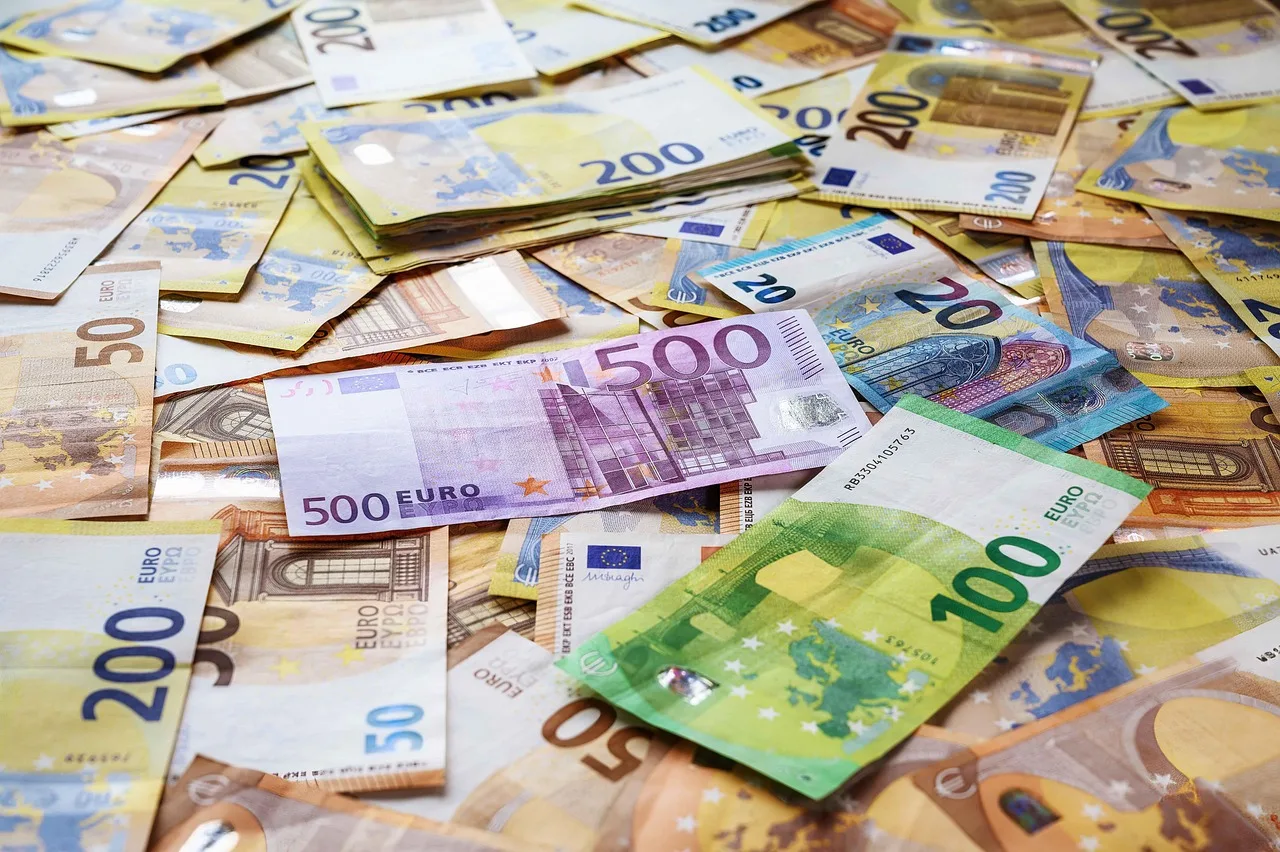
Plenty of shops, restaurants and tourist sites in all three countries will take euros. This is not a favour.
The Hungarian tourist board is unusually candid about it on its own money page. Many places take euros, it says, but the rates at such places "often don't follow the most up-to-date bank rates, and this is not in favor of the customers". Expect your change in forint. The Czech board says the same thing in gentler language: euros are widely accepted, but do not be surprised when the change comes back in crowns.
The mechanism is worth understanding because it recurs everywhere. Whoever performs the conversion chooses the rate. A souvenir shop that quotes you a euro price has appointed itself your currency dealer. So has the card terminal that offers, helpfully, to bill you in your home currency, and so has the airport machine with the large sign about zero commission. In each case the party doing the converting is the party setting the spread, and it is not your bank.
The same-looking booth, two different legal positions
Here is the single most useful difference between the three, and almost nobody knows it.
In Czechia, a currency exchange transaction can be undone. The Czech National Bank publishes ten rules for exchange-office customers, and they are the ones to read rather than any laminated sign in the window. No commission may be taken on an exchange, coins and cheques aside. The office must display the least favourable rate it offers, so it cannot advertise a flattering number and then apply a worse one at the counter; a better VIP rate may still exist behind the glass, but the office is forbidden to publish that figure to lure you in. Above the equivalent of 1,000 euro you must be handed the full terms in writing before any cash changes hands. Take the receipt. And you may cancel the deal within three hours, at the office where you made it, free of charge and without explaining yourself.
The cap is the part to memorise, because it is exactly where a bad afternoon gets expensive. The right to cancel covers the equivalent of 1,000 euro. Change more than that and only the first 1,000 euro worth can be reversed. Time when the office is shut does not count against the three hours.
In Poland, the official tourist site states the opposite in a single flat sentence about kantors: "Transactions in kantors cannot be reversed."
Two booths, two flags, an hour's flight apart, and one of them hands you a three-hour window while the other closes the door behind you. Anyone who assumes the region has one answer is going to learn this the expensive way.
Tipping is not a regional custom
There is no central European tipping rate, and the three national tourist boards do not even structure the question the same way.
Hungary is the most codified. The official line is that ten per cent is usual, in restaurants and taxis alike, and that if you pay by card the staff would rather have the tip in cash. Crucially, a service charge of ten to fifteen per cent added to the bill is starting to spread in Hungarian restaurants, and where it appears, the tourist board says you do not need to tip on top. So the first thing to do with a Hungarian bill is read it, because the answer to "should I tip" may already be printed on the paper.
Czechia is looser, and the tourist board's advice runs at two speeds. In upmarket restaurants a tip of about ten per cent is expected. On smaller bills and in ordinary places the custom is to round up to whatever matches how the meal went, and the board's own worked example takes a bill of 116 crowns to 130 or more. Some establishments put the tip in the bill themselves, so the Hungarian habit of reading the paper is not wasted here either. If the service was poor, the board says plainly that you owe nothing at all.
Poland is the interesting case, because the Polish Tourist Organisation's money page does not mention tipping at all. It covers coins, notes, kantors, cash machines and the fact that Poland's legal tender is the złoty, and it says nothing about gratuities. In practice a tip in Poland is a private decision made at the table, not a line on the bill, and something around a tenth for good service is the convention most restaurant workers will describe. Treat that as reported custom and not as a rule, because unlike the Hungarian service charge it is written down nowhere.
The error to avoid is not getting the percentage wrong. It is arriving in Kraków with the Budapest answer.

The drink-driving limit changes at the border
This is where the one-region assumption becomes genuinely dangerous.
The European Transport Safety Council's comparison of blood alcohol limits across Europe puts Czechia and Hungary at 0.0 grammes per litre in every column: standard drivers, novices and commercial drivers alike. Poland sits at 0.2, also across all three. Austria and Germany, from which a great many visitors arrive with their instincts already calibrated, are at 0.5 for ordinary drivers only. Austria drops to 0.1 for novices and professionals, Germany to 0.0.
A single beer at lunch is a normal thing in Munich or Vienna and an offence across the border. It is worth being precise about what kind of offence, because the word criminal gets thrown around loosely here and the truth is bad enough without it. In Poland, a reading between 0.2 and 0.5 promille is stan po użyciu alkoholu, a petty offence under Article 87 of the Code of Petty Offences, carrying detention or a fine of no less than 2,500 złoty, and a driving ban the court is obliged to impose. Only above 0.5 does the Criminal Code and its Article 178a take over. Czechia draws its line higher: the Czech police put the criminal threshold at 1 promille, and everything below that is handled by the municipal authority as an administrative offence, with a fine and a ban of six months to a year. Hungary, per the ETSC's country page, made driving above 0.5 a criminal matter in 2013, and treats the range beneath it with fines of roughly 75 to 250 euro plus penalty points.
So: not a criminal record for one beer, in any of the three. A fine, points, and quite possibly your licence for six months. And Poland's 0.2 is a tolerance for measurement error, mouthwash and last night, not an allowance to drink against.
Whether you may drink in the street is a separate question with a separate answer in each country, and it is not the answer people expect.
Poland has the strictest position, and it is national. Article 14 of the Act on Upbringing in Sobriety, in the form quoted by the Polish police, prohibits the consumption of alcoholic drinks in public places, with an exception for places designated for on-site consumption at points of sale. A municipal council may vote through an exemption for a specific public place, which is why a riverside spot in one city may be legal and an identical spot in the next town is not.
Czechia has no such national ban. Prague instead regulates by city ordinance: general binding ordinance number 10/2022, published in the official collection of local legislation in May 2022 and in force since 1 July that year, prohibits the drinking of alcohol in public spaces across a schedule of listed locations. So the honest answer to "can I have a beer on this street in Prague" is that it depends which street, and the list is a legal document, not a matter of taste.
The toasts, and what is actually true about them
Hungarians, as a rule, do not clink beer glasses. The custom is real and you will see it observed. The story attached to it, that thirteen Hungarian generals were executed at Arad in 1849 while Austrian officers clinked their beer, and that Hungary swore off the gesture for a hundred and fifty years, is folklore dressed as history. No such law has ever been produced, and no statute anyone can point to expired in the late 1990s. Nor can anyone produce a contemporary source for the celebrating officers. What survives is a custom that costs you nothing to observe, and observing it will be noticed. Clink wine, spirits and champagne freely; with beer, raise the glass, say egészségedre, and drink.
In Czechia the ritual is about the eyes. You say na zdraví, you touch glasses, and you look the other person in the face while you do it. This one is convention and not statute, and no ministry publishes a page about it, but break it at a Czech table and someone will tell you.
In Poland, na zdrowie is said over vodka, vodka is drunk alongside food and not in place of it, and toasts are aimed at people and occasions instead of being fired off at random.
The label, revisited
Names are taken seriously here, which is why the Czech Ministry of Foreign Affairs maintains a page setting out which one to use, and when. It is written for Czechs presenting their country abroad more than for the people arriving in it, but the answer travels. Both names are official: the formal one is the Czech Republic, the short geographic one is Czechia, both sit in the UN databases, and the ministry's rule is that the short form belongs anywhere the formal name is not actually required. Much as nobody says the French Republic when they mean France.
Which makes that ECB map worth a second glance. An EU institution is still printing the long form on its own euro-area page, so a visitor who has met only one of the two names has been quietly misinformed by a source with every appearance of authority.
That page exists because getting a name slightly wrong signals that you have not looked closely. So does treating all four Visegrad countries as interchangeable, or mixing up Slovenia and Slovakia, or carrying a Czech rule into Hungary on the assumption that countries near each other on the map must run on the same settings. Czechia and Hungary are not even neighbours: Slovakia sits between them, and of the three countries in this piece only Poland and Czechia share a frontier at all. What the three do share is a century of unpleasant history and an EU accession date, 1 May 2004. They do not share a currency, a rounding rule, a tipping convention or a blood alcohol limit.
Which is the useful way to hold all of this. Assume nothing transfers. And if you take one thing across the border with you, take the Czech three-hour rule, because in Prague you can walk back into the exchange office and undo a bad rate, up to the equivalent of 1,000 euro, and in Poland the tourist board has already told you, in six words, that you cannot.
Sources
- UNSD Methodology: Standard country or area codes for statistical use (M49) - the UN geoscheme places Czechia, Hungary, Poland and Slovakia in region 151, Eastern Europe
- About the Visegrad Group - the group's own description of its members as "the countries of the central European region", and the joint EU accession on 1 May 2004
- Czechia vs. Czech Republic, Ministry of Foreign Affairs of the Czech Republic - guidance addressed to those presenting the country abroad; both names are official and listed in UN databases, with the short form recommended wherever the formal name is not required
- European Central Bank: Members of the European Union and the euro area - six EU members outside the euro area, listed as Czech Republic, Denmark, Hungary, Poland, Romania and Sweden; Slovenia 2007, Slovakia 2009, Croatia 2023
- Czech National Bank: How to round after the withdrawal of 50-heller coins - Article 3(c) of Act No. 634/1992 Coll. requires cash totals to be rounded to the nearest valid denomination in circulation, and leaves non-cash payments unaffected
- Czech National Bank: Ten Golden Rules for Bureau-de-Change Clients - no commission on an exchange, publication of the least favourable rate, the ban on advertising VIP rates, written terms above EUR 1,000, and the three-hour right to cancel capped at the equivalent of EUR 1,000 with closing time excluded
- VisitCzechia: Currency, Payments, Prices and Tips - halers appear only on price labels, cash totals are rounded, euros accepted with change in crowns, about 10 per cent in upmarket restaurants, rounding up on smaller bills with the 116-to-130-crown example, some bills include the tip, nothing owed if the service was poor
- Erika Leszkó, "Rounding is not to be feared", MNB Bulletin - the smallest two coins left circulation on 1 March 2008, with the nearest-five rounding rule taking effect that same day, symmetrically and on final amounts payable; the act also permits rounding of card payments where the customer is notified in advance
- VisitHungary: Money - forint coin and note denominations, euro acceptance at rates the page says are "not in favor of the customers", the 10 per cent tipping norm, cash-preferred card tips, and the 10-15 per cent service charge just starting to spread
- Poland Travel: Money in Poland (notes and coins) - złoty and grosz denominations including the 1 grosz coin, and the statement that transactions in kantors cannot be reversed; the page carries no tipping guidance
- ETSC: Blood Alcohol Content (BAC) drink driving limits across Europe - Czechia, Hungary 0.0 and Poland 0.2 for standard, commercial and novice drivers; Austria and Germany 0.5 standard, 0.1 and 0.0 respectively for commercial and novice drivers
- ETSC: Drink-Driving in Hungary - the 0.0 g/l limit, the criminal threshold set at above 0.5 g/l in 2013, and the sanctions of roughly 75 and 250 euro plus penalty points for the bands below it
- Polish Police: Stan nietrzeźwości i stan po użyciu alkoholu - 0.2 to 0.5 promille is a petty offence under Article 87 of the Code of Petty Offences, punishable by detention or a fine of no less than 2,500 złoty with a mandatory driving ban; above 0.5 promille falls under Article 178a of the Criminal Code
- Police of the Czech Republic: Alkohol za volant nepatří - 1 promille is the threshold for the criminal offence; below it the case is dealt with by the municipal authority as an administrative offence, with a fine and a driving ban of six months to a year
- Polish Police: Zasady spożywania i sprzedaży alkoholu - the text of Article 14 of the Act on Upbringing in Sobriety, including the public-place ban at 14(2a) and the municipal exemption power at 14(2b)
- Collection of legal regulations of local authorities: Prague ordinance 10/2022 - Prague's generally binding ordinance banning alcohol consumption in listed public spaces, issued 26 May 2022, published 31 May 2022, in force from 1 July 2022, currently valid