What to Do in the First Two Hours After You Land
LineCast Networks
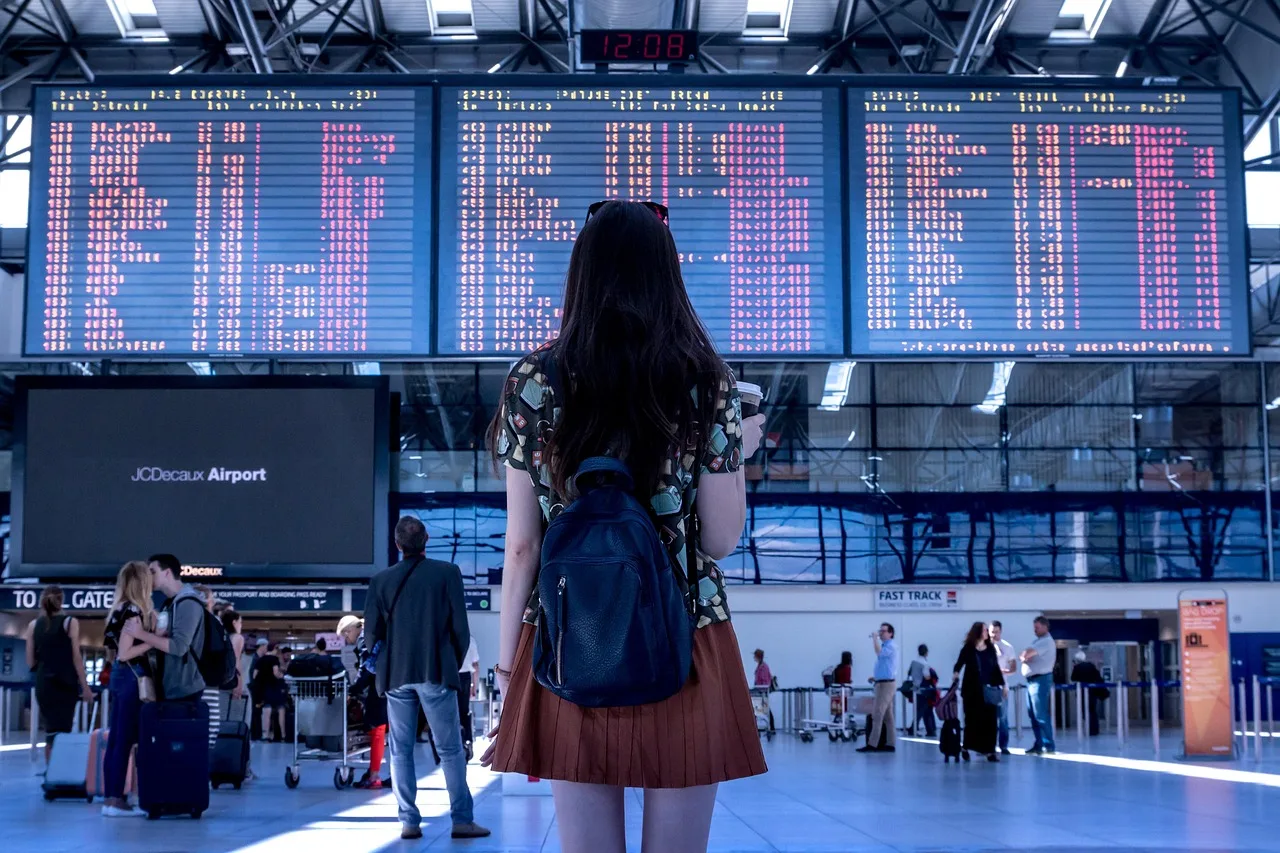
On 10 April 2026 the Schengen area stopped stamping passports. Twenty-nine countries, twenty-five EU member states plus Iceland, Liechtenstein, Norway and Switzerland, switched fully to the Entry/Exit System, which registers a non-EU arrival's name, travel document details, fingerprints and facial image, along with the date and place of every entry and exit, and does the overstay arithmetic without anyone having to squint at faded ink. Ireland and Cyprus sit inside the European Union and outside the system; their officers still stamp by hand. Everywhere else the stamp is gone, and with it the small ritual that used to tell you, physically, that you had arrived somewhere.
What replaced it is a database, and a database wants different things from you than a bored officer with a rubber stamp did. That is the useful way to think about the first two hours after landing: not as dead time before the holiday starts, but as a short sequence of small, mostly irreversible decisions, made by a version of you who has been awake for eighteen hours and is not at their sharpest. Get the order right and the rest of the trip inherits the benefit. Get it wrong and you spend day two undoing it.
The desk
Under the Entry/Exit System, a first crossing is an enrolment, and what gets enrolled depends on how you were allowed in. Visa-exempt travellers give four fingerprints, a facial image and a passport scan. If you needed a visa, your fingerprints are already sitting in the Visa Information System from the application, so the border takes the facial image and checks the prints against that older database instead of building a new set. Children under twelve give no fingerprints at all. From then on the record follows the document rather than the page.
It applies to non-EU nationals entering for short stays. Your passport decides which queue you join and which machine you stand in front of; the airline you flew and the terminal you walked out of have nothing to do with it. Two people on the same flight can have completely different experiences of the same border, and neither of them is doing anything wrong.
The officer's questions are less arbitrary than they feel. The system records the place and date of entry and exit and flags people who exceed their permitted stay, so an interest in your departure date is structural rather than suspicious. Have the answer ready: where you are sleeping tonight, and roughly when you leave. Ready means retrievable in about four seconds, on paper or on a screen that does not need a network connection, because the arrivals hall is exactly where your phone will decide it has no signal.
The card
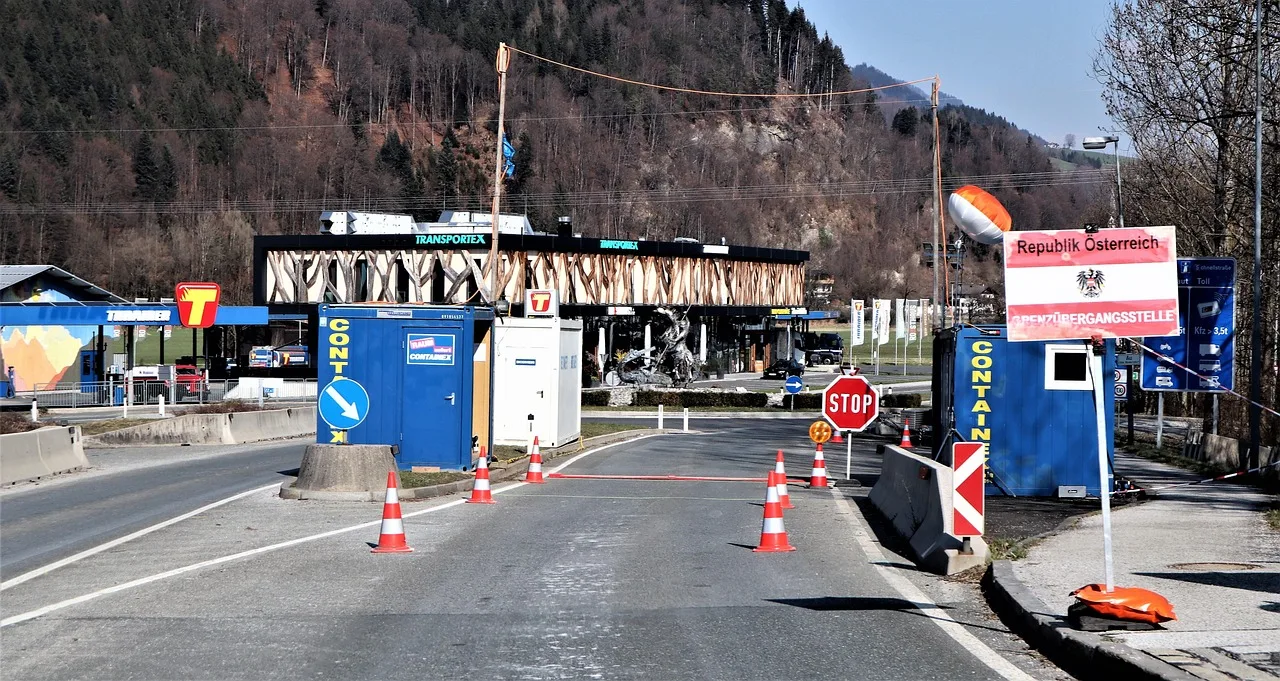
Somewhere between the aircraft door and the exit, many countries want a declaration. Not all of them: the Schengen countries the last section described generally hand you nothing at all, and the near-universal version of the ritual is the red and green customs channel rather than a form. But where a card exists, people treat it as a formality and should not.
Australia is the clearest illustration. The Incoming Passenger Card is a legal document, required under the Migration Act 1958 and its regulations, and it must be completed in English. For non-citizens it doubles as the declaration relating to health and character requirements; for Special Category Visa applicants and Norfolk Island permanent residents it is the visa application itself. The same small card does three different jobs depending on who is holding it, and the consequences of refusing it are graded by nationality: an Australian citizen who declines faces a penalty, while a non-citizen faces the penalty and, on top of it, refusal of clearance into the country. It also asks for your intended address in Australia, which is the practical argument for having that written down before the wheels touch. Meanwhile the digital alternative, the Australia Travel Declaration, exists only as a pilot on Qantas flights into Brisbane and selected flights into Sydney and Melbourne. Anyone not invited into the pilot fills in the paper card as normal.
The lesson generalises past Australia. Downloading an arrival app does not mean the app applies to your flight, your airline or your nationality, and a half-completed digital form is not a defence against an incomplete paper one. Fill in what you are handed. Declare the food. Declaring an item is not the same as surrendering it; you carry the declared goods to the clearance point, a biosecurity officer assesses them and may inspect them, and Australia's agriculture department states plainly that you will not face a penalty for declaring goods even if they turn out not to be allowed in. The penalty is reserved for the things found in your bag that you did not mention, and in a biosecurity country that is expensive.
Connection, before the doors
Do this in the hall, not at the kerb. Every subsequent decision, the ATM, the taxi, the address you need to show a driver, works better with a working phone, and the arrivals hall is the last place with seating, signage in more than one language, and staff who are paid to answer questions.
Your existing plan may simply carry on. That is a question about your contract, and your passport has nothing to do with it. Roam Like At Home applies automatically across the 27 EU countries plus Iceland, Liechtenstein, Norway, Ukraine and Moldova. The United Kingdom falls outside the regime, though some operators have chosen to keep the benefit voluntarily, which is a sentence worth reading twice before assuming either way. Where the regime does apply and your home bundle is unlimited or very cheap per gigabyte, your operator may impose a fair use ceiling on roaming data, calculated by a regulated formula, and is required to warn you before you reach it. So the honest question on landing is not "do I have data" but "how much, and what happens after".
While you are still sitting down, learn the emergency number. In the EU, 112 reaches police, ambulance and fire, free, from fixed and mobile phones, in every member state. Several countries keep their national numbers running alongside it, so the local one may be what a local would dial, but 112 is the number that works everywhere in the bloc. Learning it takes eight seconds and is the single highest-value thing you will memorise all week.
The first money
Two mistakes get made at the airport, and they are opposite mistakes.
The first is accepting dynamic currency conversion. The machine offers to bill you in your home currency, which sounds like a courtesy and is a fee. Visa requires merchants and ATMs offering it to display, on screen and on the receipt, the amount in both currencies, the exchange rate used, and any additional fee or markup. The rest of Visa's guidance is softer but more revealing: the shop or the cash machine is meant to leave the choice with you rather than settle it for you, and, in Visa's own formulation, providers "should not use language or procedures such as different font size or color to influence your decision." That last clause is the tell. If the screen is not showing you the rate, or the "helpful" option is the big bright button and the local-currency option is the grey one, decline, take the local currency, and let your own bank convert. Visa says to refuse the transaction in that case and tell whoever issued your card.
The second mistake is assuming the machine will work at all. In Japan, a foreign card is not accepted everywhere, and the institutions that do take one publish the list. Japan Post Bank runs a dedicated international ATM service, and states in its own words which brands it honours: cards "bearing the VISA, PLUS, Mastercard, Maestro, Cirrus, JCB, China Unionpay and DISCOVER can make withdrawals at Japan Post Bank ATMs." They will give you cash and they will not give you a balance inquiry, which is a small detail that has caused a lot of unnecessary panic at midnight. Knowing which network your card runs on, and which local institution honours it, is a two-minute check that prevents an hour of walking.
If you use a bureau de change, know that the rules around them vary enormously and that some countries have legislated hard against the airport-and-tourist-strip version. The Czech Republic is the instructive case: a customer there has the right to withdraw from a completed exchange transaction, free and without giving a reason, within three hours, at the same premises, for amounts up to the equivalent of a thousand euros, and the bureau must accept the money back and issue a confirmation slip. Above that threshold the bureau must hand you written information about the rate and commission in advance. That right is a national one and it does not travel with you. The general principle survives the border, though: change a small amount on arrival, enough for a fare and a bottle of water, and do the real conversion later, awake, somewhere with competition.
The way out of the airport
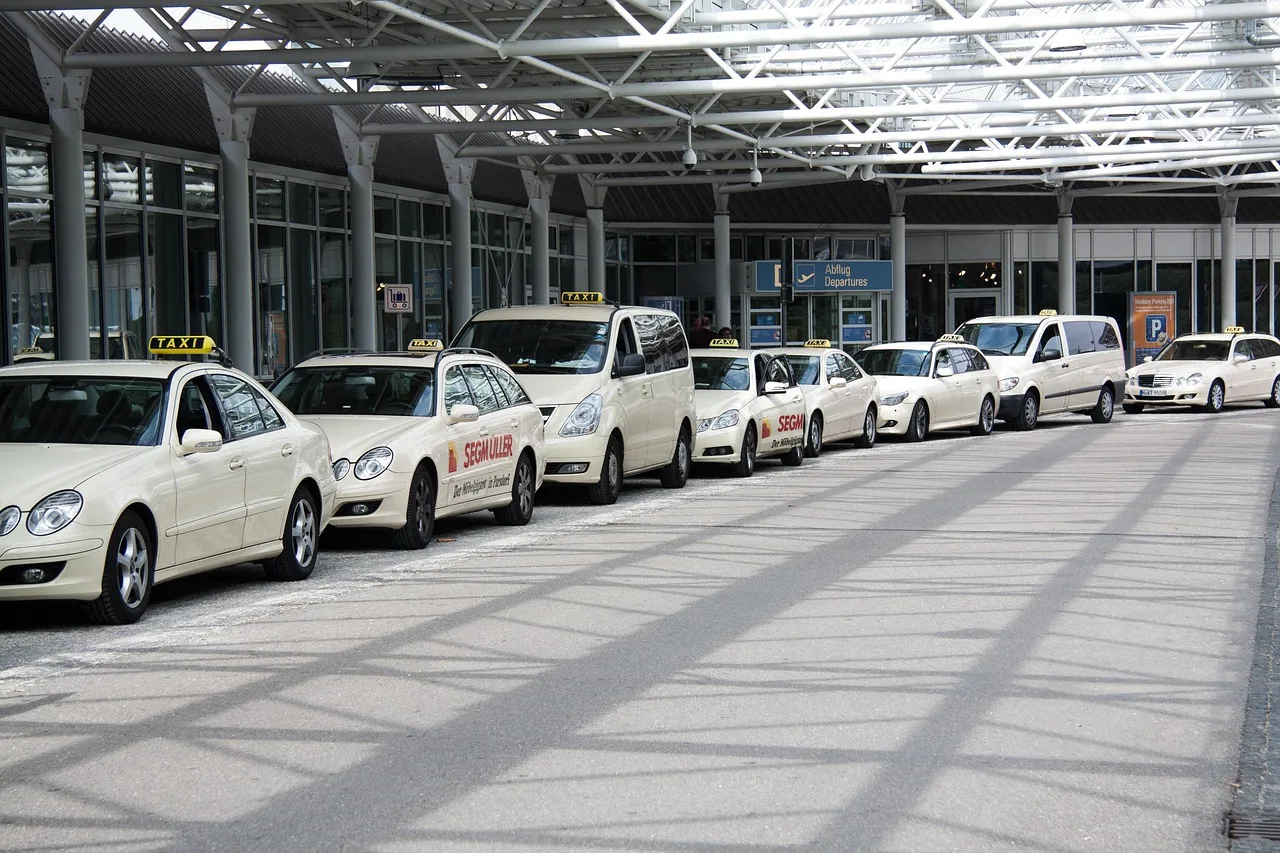
The person who approaches you inside the terminal offering a car is, by definition, not at the taxi rank. Australia's government travel advice puts it plainly: unlicensed drivers work the inside of terminals, while licensed operators are generally outside, in their vehicles, at the official rank. The advice that follows is unglamorous and correct. Use licensed taxis only, follow the signage rather than the person, agree the fare or confirm the meter before the doors close, and note the vehicle number and company at the start of the ride.
Many airports remove the negotiation entirely by fixing fares by municipal decree. Rome is a good example of the mechanism: the city sets fixed fares between Fiumicino and defined destinations, caps what can be charged for journeys inside the ring road where no fixed fare exists, and sets a floor for everything else. The airport publishes the current table, warns that the municipality can change it without notice, and points passengers at the city mobility authority to check it. The number matters less than the fact that a number exists and is public. Two minutes on the airport's own transport page before you land tells you what the sanctioned answer is, which turns a negotiation into a verification.
App-based cars have removed some of this friction, though not all of it: the pickup point at a large airport is often a level and a walk away from where the app's map puts it, and that walk is worth locating before you order rather than after. If a hotel is collecting you, make the driver identify themselves properly before you set off, and note the vehicle the same way you would with a taxi.
The errands with a deadline
This is the part the arrival sequence usually forgets. Some errands cannot wait until morning, because morning may be closed.
Germany makes the principle visible, though not in the way most travel guides tell it. Shop opening hours have been the states' business since the federalism reform of 2006 took them out of federal competence. Fifteen of the sixteen Länder have written their own Ladenöffnungs- or Ladenschluss laws since; the old federal Shop Closing Act survives as operative law only in Bavaria, which never replaced it. There is no single German rule to memorise, and the state next door may genuinely differ.
What does not vary is Sunday. The Basic Law absorbs Article 139 of the 1919 constitution, which keeps Sundays and recognised public holidays legally protected as days of rest and spiritual elevation. Every state's shop law is written under that ceiling. The details move; Sunday is the part you can plan around.
The carve-outs are the useful thing to know, and the federal text still in force in Bavaria is the model the others vary from. Under it, pharmacies may open every day, and shops at passenger railway stations serving the needs of travel may open all day, every day, restricted during general closing times to selling Reisebedarf, goods for the journey. Arrive on a Sunday evening and the main station is where you buy dinner, within the limits of what counts as travel supplies. Check the state you have landed in before assuming its list matches.
The pharmacy rota is the genuinely elegant part, and that one is national. The Pharmacy Operations Ordinance obliges every pharmacy to be permanently ready for duty, then has the competent authority release a portion of them from that obligation at specified times: overnight, Saturday afternoons, Sundays and public holidays. Coverage is shared out in rotation rather than switched off. Every pharmacy that is not on duty must display, at a clearly visible spot and in legible form, a notice naming the nearest ones that are. If you need medicine at eleven at night in Germany, you do not need an app. You need to walk to the nearest pharmacy door and read it.
Medicine is also where arrival goes wrong in a way that no amount of improvisation fixes, because the problem started before you boarded. What is sold in a supermarket at home can be a controlled substance where you land. Japan's law on stimulants is strictly enforced, and it is illegal to carry some ordinary prescription and over-the-counter medicines: Vicks inhalers, various allergy and sinus treatments, cold and flu medication containing pseudoephedrine, some painkillers containing codeine. Visitors carrying them have been detained and deported over exactly this. Check the destination's rules against the actual contents of your medicine cabinet, and do it while you still have the option of leaving something at home.
What not to do
An arrival sequence is as much about restraint as diligence. Three things are worth deliberately not doing in the first two hours.
Do not buy the multi-day transit pass at the airport counter before you know your actual routes. The airport is where the passes are sold hardest and understood least, and city networks usually give you at least a day to work out whether the pass beats single fares.
Do not change a week's worth of cash. You will be converting at whatever rate is available in the least competitive retail environment in the country, and modern arrival almost never requires it.
And do not start sightseeing on the way to the hotel. It sounds efficient and it is the reason people end up dragging a suitcase around a cathedral. The two hours after landing have one job: get you, your luggage and your money to the place you are sleeping, connected, fed and legal. Everything you do in those two hours is either in service of that or it is a tax on the next day.
The stamp is gone from most of Europe, and with it the moment that used to mark arrival. The compensation is that almost everything that used to be discretionary at a border is now written down somewhere public: the fare table, the pharmacy rota, the declaration form, the list of card networks a given bank honours. The information is not hidden. It is just usually read afterwards.
Sources
- Entry/Exit System (EES), European Commission - that as of 10 April 2026 the EES replaces the stamping of passports in 29 European countries, registers non-EU nationals travelling for a short stay, and records name, travel document data, biometric data and the date and place of entry and exit, allowing automatic detection of overstayers
- A Modern, More Efficient Border Management System for Europe (EES traveller leaflet), European Union - the named list of the 29 countries using the EES, which is 25 EU member states plus Iceland, Liechtenstein, Norway and Switzerland, and that in Cyprus and Ireland passports continue to be stamped manually
- Regulation (EU) 2017/2226 establishing the Entry/Exit System, EUR-Lex - that fingerprint data means four fingers of one hand (Article 2(16)), that the file created for a visa-required traveller contains the facial image and not fingerprints because verification runs against the Visa Information System (Articles 16 and 23), that visa-exempt travellers give facial image and fingerprints (Article 17(1)), and that children under twelve are exempt from giving fingerprints (Article 17(3))
- Incoming Passenger Card (IPC), Australian Border Force - the card's statutory basis, the English-language requirement, intended address, its role as a health and character declaration and as the Special Category Visa application, the graded penalties for citizens and non-citizens, and the limited Australia Travel Declaration pilot
- Bringing or mailing goods to Australia, Department of Agriculture, Fisheries and Forestry - that declared goods are taken to the clearance point to be assessed and possibly inspected by a biosecurity officer, and that you will not face a penalty if you declare goods even where they are not allowed into Australia
- Infringement notices at the airport, Department of Agriculture, Fisheries and Forestry - that an infringement notice may follow when a biosecurity officer finds goods you did not declare on the Incoming Passenger Card
- Roaming: connected anywhere in the EU at no extra charge, European Commission - the countries where Roam Like At Home applies, the United Kingdom exception and voluntary operator continuation, and the regulated fair use data limit with advance warning
- Emergencies and the single European emergency number, Your Europe - that 112 is free from fixed and mobile phones everywhere in the EU, reaches police, ambulance and fire, and coexists with national numbers in some countries
- Dynamic Currency Conversion, Visa - that Visa requires both currency amounts, the exchange rate and any fee or markup to be displayed on screen and receipt, that merchants and ATMs should give a choice and must not choose on the cardholder's behalf, that providers should not use font size or colour to influence the decision, and the recommendation to decline and report
- Ten Golden Rules for Bureau-de-Change Clients, Czech National Bank - the three-hour free right of withdrawal from an exchange transaction up to the equivalent of 1,000 euros, the confirmation slip, and the written pre-transaction information above that threshold
- International ATM Service, Japan Post Bank - which foreign card brands can withdraw cash at Japan Post Bank ATMs, and that balance inquiry is not available
- Fiumicino Airport taxi: fares and pick-up points, Aeroporti di Roma - the fixed municipal fares to defined destinations, the ceiling for journeys inside the ring road with no set fare, the minimum fare elsewhere, that fares are set by the municipality and may change without notice, and the referral to the city mobility authority
- Scams that affect travellers, Smartraveller (Australian Government) - that unlicensed drivers approach passengers inside terminals while licensed operators wait at the official rank outside, and the advice on meters, agreed fares and noting vehicle details
- Ladenschlussgesetz (LadSchlG), Gabler Wirtschaftslexikon - that the 2006 federalism reform removed shop closing from federal concurrent competence, that all Länder except Bavaria have since passed their own laws, and that the federal Act continues only as partial federal law where no state statute exists
- Art. 140 Grundgesetz and Art. 139 Weimarer Reichsverfassung - that Article 139 WRV is part of the Basic Law and keeps Sundays and state-recognised public holidays legally protected as days of rest and spiritual elevation
- Gesetz über den Ladenschluss, § 3 and § 8 - the federal text still in force in Bavaria: closure on Sundays and public holidays under § 3, and under § 8 that shops at passenger railway stations serving the needs of travel may open on all days throughout the day, with sales during general closing times limited to Reisebedarf
- Apothekenbetriebsordnung, § 23 Dienstbereitschaft - the nationwide rule that pharmacies must be permanently ready for duty, that the competent authority exempts a portion of them at specified night, Saturday, Sunday and public holiday hours, and that pharmacies not on duty must post a clearly visible, legible notice naming the nearest pharmacies that are
- Japan travel advice: Health, UK Foreign, Commonwealth and Development Office - that it is illegal to carry certain common prescription and over-the-counter medicines into Japan, including pseudoephedrine cold remedies, codeine painkillers and Vicks inhalers, and that foreign nationals have been detained and deported