Tokyo Is More Step-Free Than It Looks, With Two Big Exceptions
LineCast Networks
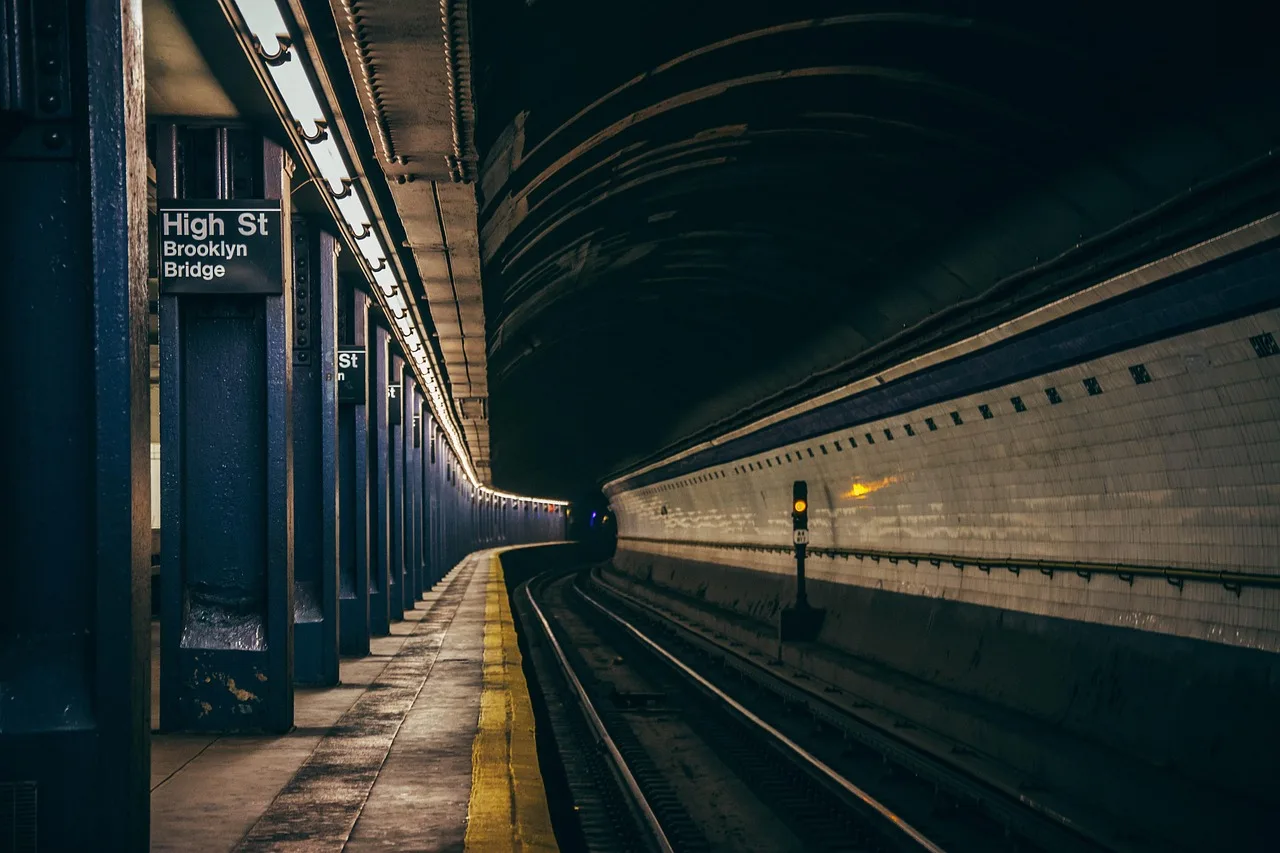
Tokyo Metro's own station pages award Ginza station a tick for step-free access on the Ginza Line, and a second tick for step-free access on the Marunouchi Line. The same company's accessibility guide, describing the transfer between those two lines inside that same station, says this: "This station has no step-free routes. Please consider other journey plans."
Both statements are correct. A wheelchair user can get from the pavement to a Ginza Line platform without meeting a step, and from the pavement to a Marunouchi Line platform without meeting a step. Getting from one to the other, underground, inside the fare gates, is a different problem, and the operator says so in plain English rather than hiding it. The distance between those two facts is where a day in Tokyo is won or lost.
The network is in better shape than its reputation
Tokyo Metro's own boarding guide publishes one page per station, 144 of them, covering the nine lines that the company describes as 195 kilometres and 180 stations. Read those 144 pages one after another and a single sentence repeats 141 times: "Elevator access between street and platform."
Three pages break the pattern. Hatchobori and Nakano hedge, declining to promise a lift from the street and telling you to find a member of staff, though Nakano at least has the excuse of being above ground, where its platforms have no stairs to speak of. Ayase, out at the eastern end of the Chiyoda Line's main line, lists five platform entries, of which two read, flatly, "No step-free access."
That is the honest shape of the thing. Not a step-free city, and not the assault course that visitors are sometimes warned about, but a network where the ordinary case has been solved and the awkward cases are documented.
The national picture behind it is a policy machine grinding slowly. Japan's transport ministry sets barrier-free targets for every station handling 3,000 passengers a day or more, plus smaller stations that a municipal barrier-free plan singles out, roughly 4,900 of them nationally. In its June 2025 review of progress, the ministry recorded that about 94 per cent of those had eliminated steps by the end of the 2023 financial year, and was unusually candid about the remaining 6 per cent: in many of those cases the step has effectively gone but the route still fails the standard, often on ramp gradient, or the work is being held back until a larger rebuild of the station happens anyway.
The same document sets out what the state now considers unfinished. Not lifts, but second lifts. Stations are to duplicate their barrier-free routes where they can, so that older and disabled passengers are not forced into excessive detours, and a new numerical target has been attached to shrinking the step and gap between platform and train, counted in platform edges rather than stations.
There is money behind that, and the mechanism is worth understanding because it explains the pace. Since December 2021 railways in urban areas have been allowed to add a small, ring-fenced supplement to fares, earmarked for lifts, platform doors and the like, with student season tickets exempted and operators required to publish both their spending plans and their annual results. As of April 2026 thirteen operators had set such a charge, Tokyo Metro first among them. Every lift shaft cut into a 1930s concrete box is being paid for, a few yen at a time, by everyone tapping through the gates.
What "step-free" is allowed to mean
The vocabulary matters here, and Tokyo Metro defines its terms openly. A station qualifies as "one-route" when it "assures one or more route connecting the Ground to Gate to Platform using an elevator, slope, stairlift, or a wheelchair-accessible escalator".
Three of those four are not lifts. A stairlift is a folding platform that runs on a rail bolted alongside a staircase, operated by a member of staff, carrying one person at a time, at walking pace, after someone has been found to work it. A wheelchair-accessible escalator only becomes one when staff halt the machine and set it up for a single chair, which stops everyone else on it too.
The transport ministry's own barrier-free railway map for the Tokyo area, drawn for wheelchair users, sorts stations into four states, and it places stairlifts and convertible escalators firmly in the difficult column: routes that "require assistance or advance notice to use". Its guidance for transfers is blunter still, warning that some stations have only stairs that are not wheelchair accessible even when you are travelling with a companion.
Tokyo Metro publishes a list of stations where a stairlift is part of the furniture. On the Ginza Line there are eight: Gaiemmae, Akasaka-mitsuke, Toranomon, Ginza, Kyobashi, Ueno-hirokoji, Inaricho and Asakusa. Read that list as a map of the oldest tunnels in Asia and you have most of the first exception already.
Exception one: the transfer, not the station
Look again at Ginza station, where three lines meet under the crossing. The Ginza Line to Marunouchi Line transfer: no step-free route, plan around it. The Ginza Line to Hibiya Line transfer: possible, but you must leave through the fare gates and speak to staff beforehand. The Ginza Line to the Yurakucho Line at Ginza-itchome: a stairlift. Three transfers, three different kinds of difficulty, one station that looks perfectly accessible in the summary.
It is not an isolated case. Shin-ochanomizu, whose interchange with Awajicho is one of those walks that looks trivial on the coloured map, carries the same sentence: no step-free routes, consider other journey plans.
The reason is chronology, and it is legible in the dates. The Ginza Line opened in 1927 as a 2.2 kilometre run from Asakusa to Ueno, the first subway in Asia. The Marunouchi Line followed in 1954, and the Hibiya Line was completed in time for the 1964 Olympics. Those lines were built when a lift was not a design input at all, and their connecting passages were fitted around whatever was already under the road. By contrast the Namboku Line, opened in 1991, had platform doors at every station from its first day, because it was designed after the industry had changed its mind about what a station owes its passengers.
The practical instruction that falls out of this is simple and slightly counterintuitive: plan the interchange, not the station. Two lines that both show step-free access can still refuse to connect to one another. Where the underground link fails, the surface often works, and the ministry's map treats a street-level transfer, out of one station and along the pavement into the next, as a legitimate step-free route rather than a failure. It costs you a few minutes and some weather.
Exception two: the gap between platform and train
The second exception is not in the station at all. It is the gap between the platform edge and the train floor.
Japan's transport ministry publishes guideline values for the point at which a wheelchair user can board without help: a step of no more than 3 centimetres and a gap of no more than 7. Tokyo Metro then does something unusually exposing. It publishes, station by station and door by door, whether its platforms meet that standard, and marks the boarding positions where they do.
Counted across all 144 station pages, twelve stations meet the guideline at every designated boarding point. Seventy-two meet it at some. Sixty meet it at none, which is to say that at those stations, at every marked door, the step or the gap is over the line. Nakano is one of them. So are Iidabashi, Takadanobaba, Kinshicho and Ueno.
The operator is careful to explain why a number like this is soft. The ministry's own footnote lists the reasons the figures wander: how loaded the carriage is, the rocking that uneven boarding sets off, wear on rails and wheels, distortion in the rails. The published values describe the best position on the railcar and the platform on a good day, not a promise. The new target for closing that step and gap is set in platform edges rather than stations, 4,000 of them nationally.
What this means in practice is that boarding is often a staffed operation rather than a solo one. The ministry's map notes that at some stations ramps are placed at the points suitable for a wheelchair to board, and Tokyo Metro's guide repeats one instruction across the whole site: staff can help you get from one place to another, and where no accessible route exists, find someone in uniform, station employee or guard, and ask. The same guide names the car nearest the lift or the transfer passage, so you can wait at the right point rather than at the end of a 200 metre platform.
Prams have their own signage
For anyone pushing a pram there is a national mark, agreed by a council the transport ministry convened in March 2014 and made a Japanese Industrial Standard in May 2015. Where you see it, on a lift or on a space inside a carriage, that is somewhere the ministry has marked as a place a pram user can use with confidence. There is a second, less-photographed mark in the same family, the prohibition version, which marks places and equipment where a pram must not be used at all. The example the ministry gives is the escalator.
That second mark is the one that changes your route. If the escalator is out of bounds and the lift is at the far end, the lift is your route, and it will be shared with wheelchair users, luggage and everyone else who has worked this out. Tokyo Metro's own advice on the point is a request to give way to each other when the lift is busy, which is about as close as a railway comes to admitting the machine is undersized.
Before you go, two pages worth having
Lifts come out of service for inspection, and Tokyo Metro and Toei both publish those schedules on their websites, so a route that works on Tuesday can fail on Thursday. You have to read the Japanese top page of the guide to be told this; the English one does not mention it. The boarding guide itself is the other page worth keeping open: it is the operator's, not a hobbyist's, and it answers the two questions that matter at the level of the individual door.
One caveat about the station-by-station data, since the whole argument above rests on it: the accessibility site's most recent published data refresh is dated March 2022, and works have continued since. Treat the counts as a map of where the problems are, not as a live feed. The direction of travel is one way, so the errors will be in your favour.
The failure mode for a visitor is not Tokyo. It is arriving at Ginza with a pram and a wheelchair and a plan drawn from the coloured line map, which is a diagram of where trains go and not of where people can. The information that would have saved the afternoon is published, in English, door by door, by the company running the trains.
Sources
- Barrier-Free Facilities, Ginza Station, Tokyo Metro - one-route confirmed for both the Ginza Line and the Marunouchi Line at Ginza
- Ginza Station: Station information, smooth metro (Tokyo Metro) - the three Ginza transfers, including "This station has no step-free routes"
- Shin-ochanomizu Station: Station information, smooth metro - second instance of a transfer with no step-free route
- Ayase Station: Station information, smooth metro - five platform entries, two of them "No step-free access"
- Nakano Station: Station information, smooth metro - the staff-help wording, the above-ground platforms, and a station meeting the step and gap guideline at no designated boarding point
- smooth metro, top page in English (Tokyo Metro) - operator and scope of the guide, the March 2022 data refresh, request to share lifts
- smooth metro, top page in Japanese (Tokyo Metro) - lift suspension and inspection schedules published by Tokyo Metro and Toei
- Search Station by Barrier-free Facility, Tokyo Metro - the "one-route" definition including stairlifts and convertible escalators
- Stations with stairlifts, Tokyo Metro - the eight Ginza Line stations with stairlifts
- Value Creation Process, Tokyo Metro - 1927 opening, 1954 Marunouchi Line, 1964 Hibiya Line, 1991 Namboku Line platform doors, network size
- Tokyo Metropolitan Area Barrier-free Railway Map, how to use (MLIT) - the four-state legend, 3 cm and 7 cm guideline values, the footnote on why the values wander, ramps at suitable boarding points, street-level transfers
- Final report on the fourth barrier-free targets, June 2025 (MLIT) - the roughly 4,900 stations covered, 94 per cent step elimination, the reasons for the remainder, duplicate routes, the 4,000 platform edge step and gap target
- Barrier-free projects, Railway Bureau (MLIT) - the ring-fenced barrier-free fare, exemptions, disclosure duties, operators as of April 2026
- Notice on the pram mark (MLIT) - the 2014 council decision, 2015 JIS standardisation, what the mark indicates, and the no-prams-on-escalators mark