The Small Things That Read as Rude in South Korea
LineCast Networks

On 28 June 2023 most South Koreans started giving a smaller number when asked their age. Article 158 of the Civil Act, rewritten the previous December, now says age is counted by including the date of birth, reckoned as full age and expressed in completed years. The article it replaced said the same thing more briefly: full-age reckoning was already the legal standard. Seoul's notice to foreign residents is blunt about it, that "the legal age used in South Korea refers to 'international age' unless in a situation applying special rules as an exception."
What the December 2022 revisions changed is the default everywhere the courts were not looking. A new Article 7-2 of the Framework Act on Administrative Affairs applies full age to every dealing with the state, with one hedge: unless another statute provides otherwise. From that Wednesday the count Koreans actually use, in which a baby is one at birth and the whole country ages together on 1 January, stopped being the number that contracts, ordinances and official communication would quietly assume. Seoul put the announcement out in thirteen languages.
Almost every English-language guide to Korean manners describes the country's age hierarchy as fixed, ancient and unyielding. Korea spent 2022 and 2023 legislating a piece of it out of official use, and Koreans went on asking each other what year they were born the next morning. Both things are true at once, and the space between them is where a visitor actually gets into trouble. The rules that catch you out are small and physical, and they are mostly about hands, floors and seats.
The question about your age is a grammar question
Korean verbs carry the relationship between speaker and listener in their endings. You cannot finish a sentence without having decided, at some level, who is senior. English lets you defer that indefinitely. Korean does not let you defer it at all.
So when someone asks your age, or more often what year you were born, treat it as a request for a setting rather than an intrusion. The person is trying to work out how to conjugate at you. Answering plainly is the polite move. Deflecting is what creates the awkwardness, because it leaves the other person with no grammatical footing.
The 2023 reform did not tidy this up, and it did not even tidy up the law. Article 7-2's escape clause is doing real work. The Youth Protection Act still defines a young person as anyone under nineteen, excluding those who have passed 1 January of the year in which they turn nineteen. That is a calendar-year line, not a birthday line. Two people born eleven months apart in the same year cross it on the same night. A clerk checking identification at a convenience store is reading the birth year, not counting backwards from today.
Nobody knows what to call anybody, including Koreans
The National Institute of Korean Language publishes a volume called Standard Language Etiquette. It carries a 2011 imprint and was announced in March 2012, which is why you will see both years attached to it. It revised a 1992 guide after twenty years because, by the institute's own account, people kept running into confusion and difficulty with terms of address, terms of reference and honorific speech. A government body surveyed the public across 2009 and 2010, sat a panel of linguists, journalists and Confucian scholars eleven times, and published the results because ordinary Koreans could not agree on what to call their brother-in-law.
The changes are worth knowing, because they run in the opposite direction to the received story. The 1992 standard held that at work you used the honorific infix for superiors and dropped it for peers and juniors. The revision instructs you to use it for everyone, regardless of rank. Calling your parents by the informal words for mum and dad had been reserved for childhood; the revision permits adults to keep using them in unbuttoned settings. The document also flags, as an error, the sentence you will hear in any Korean coffee shop, the one that grammatically honours the coffee rather than the customer it is being made for.
The institute runs a public helpline for this. There is a phone number, open for a couple of hours in the morning and a few more in the afternoon, and a messaging channel. In March 2025 a man wrote in to ask what his father-in-law ought to call his sister's husband. The official answer was that no norm has been fixed by rule for terms of address, that the family should agree among themselves, and that here, for reference, is a booklet.
The practical consequence for a visitor is liberating. If the state's own language authority declines to rule on what your relatives should call each other, nobody is grading you on it.
Two hands, and what the second hand is actually doing
This is the one to get right, because it costs nothing and it is visible in every transaction of the day.
The clearest description I have found sits on Korea.net, the government's site, though the piece is an Honorary Reporter contribution rather than a ministry statement. Its Nigerian author, writing in December 2019 on what Yoruba and Korean respect have in common, gives the mechanics: an older person hands you something, you take it in both hands and bow. If the thing is small enough for one hand, you take it with one hand and tuck the other under that forearm, or against your own lower chest, as a support.
That second version is what you will see hundreds of times a day and probably will not register. The cashier hands your card back with the right hand while the left rests lightly on the right forearm. The hotel clerk does it with your passport. Ceremony does not come into it. This is simply the default posture for passing an object to another person, the way a handshake is a default in other places, and it applies to money, cards, documents, business cards, a bottle, a bag.
Do it, and you will not be praised for it. That is the point. Do not do it, and nothing will be said either, but you will have handed over your credit card the way you would toss keys to a valet.
The pouring rules are older than the drink
The Korean drinking etiquette that gets summarised in listicles has a traceable source, and the original is stranger and better than the summary.
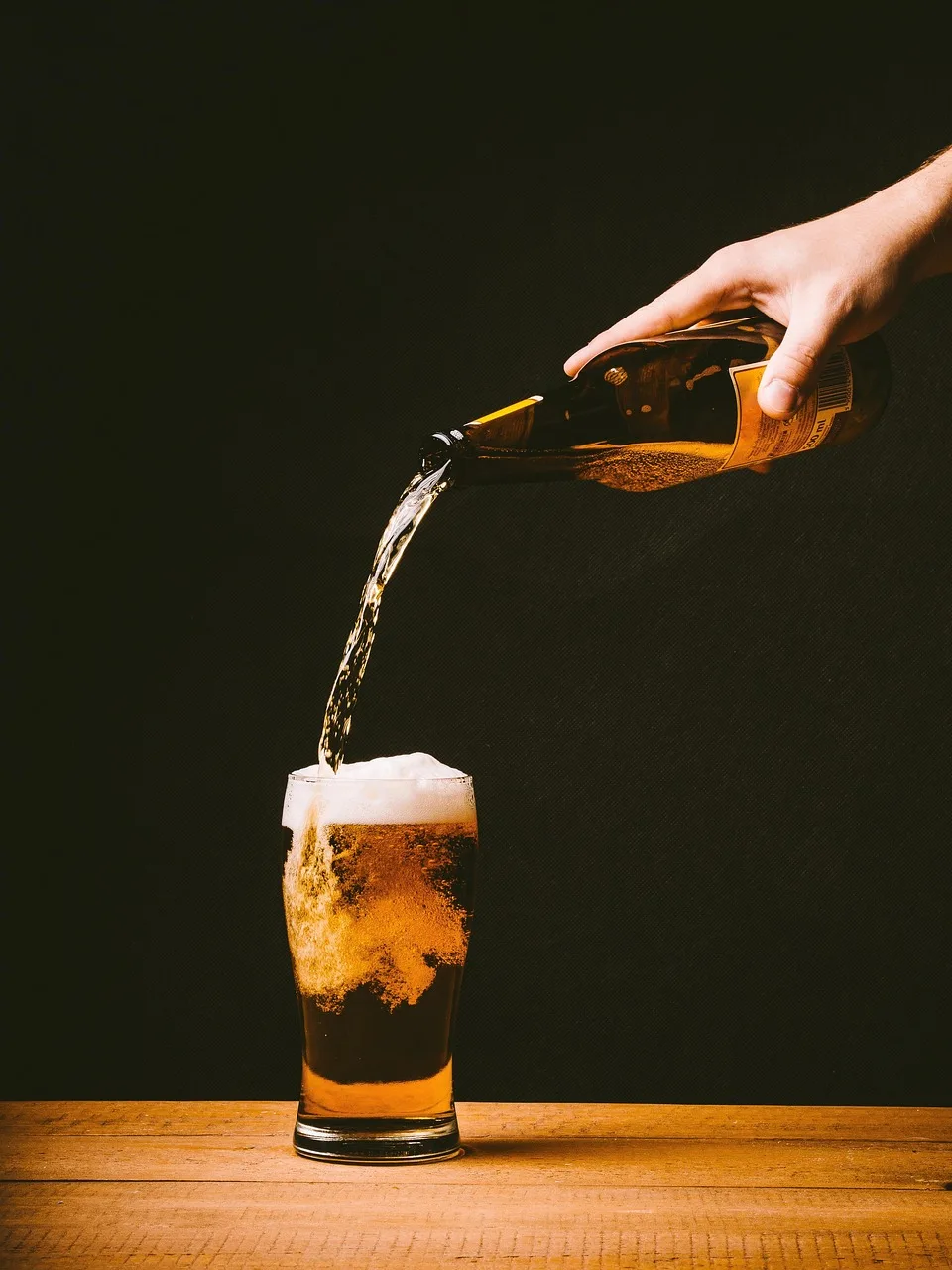
Korea.net traces the rules to the Sohak, the Lesser Learning, a Confucian primer of everyday conduct used through the Joseon period. Its instruction on topping up another person's cup is specific: hold the bottle in the right hand and use the left hand to roll back the right sleeve. The reason is not deference. It is so that your clothing does not trail into the food and drink.
It is tempting to run a line from that sleeve to the gesture you see today, the free hand resting on the pouring forearm, and say the garment went while the hand stayed. I like the story and I cannot support it. The Korea.net piece that gives the sleeve instruction describes two-handed cup handling separately and never derives one from the other. A resemblance, then, not a descent.
The rest of that passage is Joseon prescription throughout, and the account claims nothing about what survives. Offered a cup by an elder, the younger man received it with thanks, emptied it only after the elder had drunk, and drank with his face turned away and a hand shielding the cup. The same account records that women were present at drinking gatherings but barred from pouring for men, which should settle how far any of it reads as current advice.
For what is in force now, Seoul's official etiquette page for visitors is the better test, and it gives its rules in the present tense. "Firstly, never pour your own drink," it says, "let someone else pour for you." The junior at the table is still expected to turn his head aside as he drinks, which is the one instruction here that runs straight back to the Sohak. So keep an eye on the glasses near you, because someone is keeping an eye on yours. And if you find yourself turning slightly away from the table to drink, you have been paying attention.
The empty seats are not empty by accident
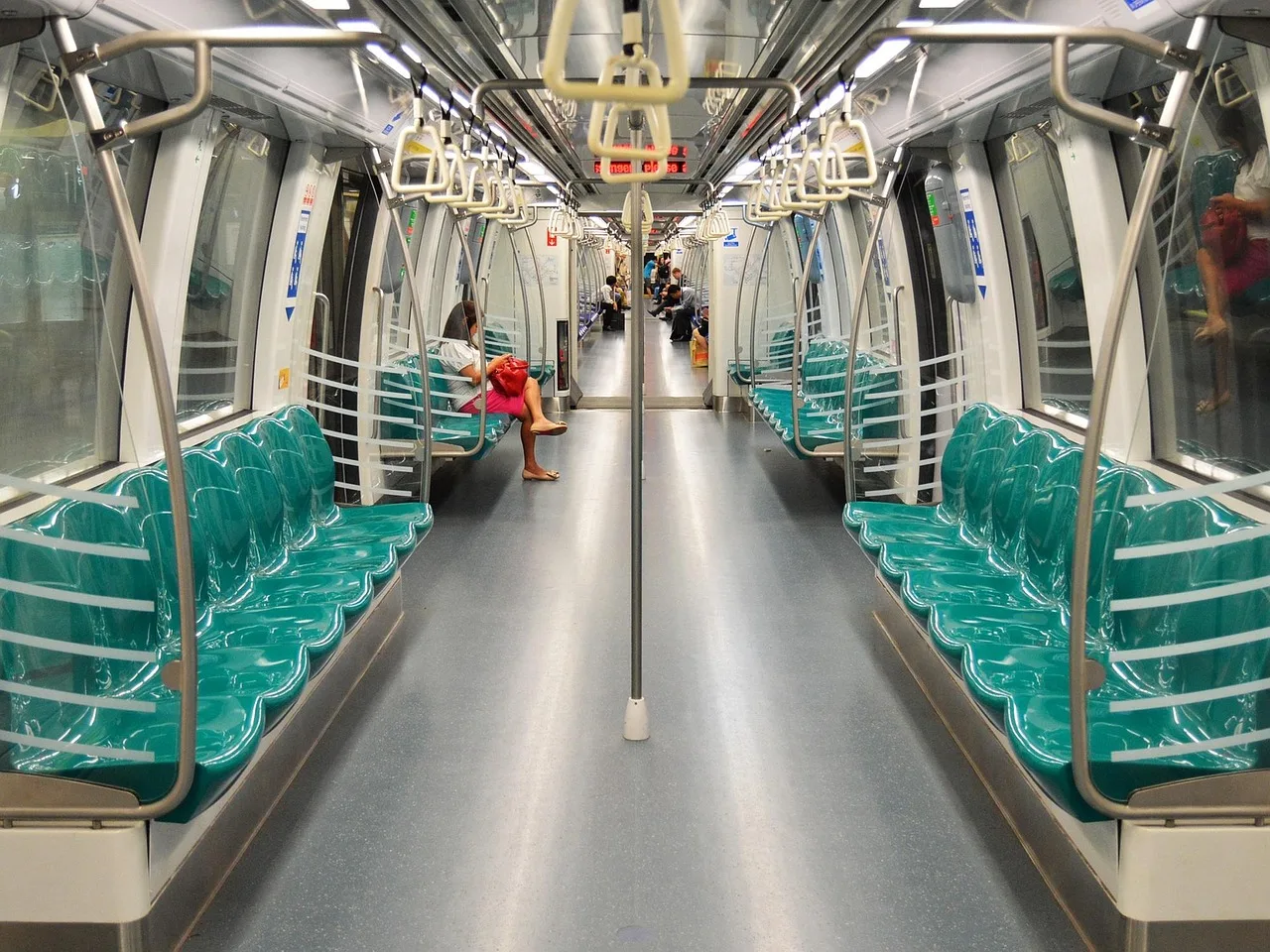
Seoul's official tourism guidance puts priority seating at roughly thirty per cent of every subway seat in the country. The seats sit in blocks at either end of the car, typically upholstered in yellow so you cannot miss them. They are not only for elderly passengers: the categories named are the elderly, the disabled, people travelling with infants, children and people who are unwell. There are pink seats as well, for pregnant passengers, and the same guidance adds that they are "also available to women in early pregnancy who do not look pregnant."
That last clause explains the behaviour that puzzles people most. On a packed Seoul train at rush hour, with commuters standing shoulder to shoulder, a pink seat will sit conspicuously empty for six stops. Nobody in that carriage has failed to notice it. Leaving it empty is the point of it.
Two other pieces of the same advice are worth carrying. Wear a large backpack on your front or set it down, which is a genuine grievance in Seoul rather than a nicety. And let passengers off before you board, standing aside from the doors rather than in front of them.
There is also a rule about drinks that is narrower than most people assume, and the narrowness matters. Under an amendment to a Seoul city ordinance on bus operating standards, since 4 January 2018 a city bus driver may refuse to carry a passenger holding food or drink that could spill from a light knock, or unpackaged food that could be eaten on board. Sealed and packaged things are fine: the city's guidance gives boxed pizza and chicken, capped bottles and bagged groceries as examples of what you may bring. This is Seoul city buses. Not the subway, and not a national law, and stating it as one would be wrong in both directions.
The floor is furniture
Korea's underfloor heating, ondol, was designated a national intangible cultural heritage on 30 April 2018. The heritage portal's record gives the date and the classification and nothing else: intangible heritage, traditional living customs, dwelling life. The reasoning sits in the Cultural Heritage Administration's advance notice of 16 March that year, which argues that Korean ondol is plainly distinguishable from the floor heating of Chinese Manchuria, and announces that no holder and no bearer organisation would be recognised, because ondol has been shared across the whole peninsula and made customary among Koreans generally. That puts it in a group of five with arirang, tea-making, ssireum, the work of the haenyeo divers and the making of kimchi.
A state does not list a heating system as living heritage because of the plumbing. It lists it because of what the heated floor does to the room above it. When the floor is the warm surface, the floor is where you sit, eat and sleep. Chairs become optional. And a surface people sleep on is a surface that shoes do not touch.
Which is why the shoe rule is not really about shoes. Look for the step. A raised platform in a restaurant, a lip at the doorway of a guesthouse, a rack of slippers by a clinic entrance: the change in floor level is the boundary, doing the same job as a threshold in a house. Cross it in shoes and you have walked on the table. Seoul's guidance names where this bites: homes, temple buildings, inns, and restaurants that seat you at a low table.
The corollary catches people out. If you are taking your shoes off in strangers' rooms all day, your socks are now public. I would not turn up barefoot to a temple hall or somebody's living room, though I can point you to no rule saying I am right. Pack accordingly, and consider slip-on shoes, which is advice about your own knees as much as anyone's opinion of you.
Where you are quietly forgiven, and where you are not
Here is the reassuring asymmetry. Most of what the etiquette lists call rudeness in Korea is encoded in the language: the wrong verb ending, the familiar form to a stranger, the honorific attached to the wrong noun. Speak English and you cannot commit any of it. The offence requires the grammar, and nobody expects you to have the grammar. Seoul's etiquette page for visitors says as much in writing, that Koreans give foreigners "a pass on many cultural faux pas committed out of ignorance rather than malice." A visitor who says thank you in English and hands over a card with two hands has cleared the bar.
What does not get waved through is anything that needs no language at all. Sitting in the pink seat. Standing in the doorway while people are trying to get off. Volume, in a subway car that is quieter than you expect. A backpack swinging into three people's ribs. These are not cultural subtleties. They are the same offences everywhere, committed in a place where more people are paying attention.
There is a reason to be generous about the whole business, and it runs both ways. A government that publishes an age-counting notice in thirteen languages for its residents, and separately runs a phone line so its own citizens can ask what to call their sister's husband, is not a government that expects newcomers to arrive fluent in its manners. Korea has been explaining itself to itself for at least thirty years, in writing, at public expense.
So take the cup with both hands. Nobody at the table could tell you where the gesture came from, and it will not occur to any of them that the question was worth asking, which is roughly how every set of manners on earth actually works.
Sources
- Civil Act, Article 158 (Korean Law Information Center) - text of the age-counting provision as wholly revised on 27 December 2022 (Act No. 19098), in force from 28 June 2023; the article's revision history shows the earlier provision, which read only that age counting includes the day of birth
- Framework Act on Administrative Affairs, Article 7-2 (Korean Law Information Center) - full-age counting for administrative purposes, and the clause excepting other statutes
- Youth Protection Act, Article 2 (Korean Law Information Center) - the calendar-year definition of a young person, excluding those who have passed 1 January of the year they turn nineteen
- A National Law on Standardizing International Age Will Take Effect on June 28, 2023 (Seoul Foreign Portal) - Seoul's notice to foreign residents, posted 6 July 2023 with the text attached in thirteen languages, and the statement that Korean law already used international age except where special rules apply
- National Institute of Korean Language press release, 13 March 2012 - announcement of Standard Language Etiquette: the 1992 guide revised after twenty years to relieve public confusion, public surveys across 2009 and 2010, eleven advisory sittings in 2011 with linguists, journalists and Confucian scholars, the honorific infix extended to everyone regardless of rank, informal words for mother and father permitted to adults, and the honorific-on-the-coffee sentence flagged as an error commonly heard in coffee shops
- Standard Language Etiquette (2011): Terms of Address and Reference in Society - the institute's catalogue record, giving the volume a 2011 imprint
- National Institute of Korean Language online consultation, terms of address - question posted 28 March 2025, answered 31 March 2025: no norm is fixed by rule, families should agree among themselves. The page also carries the counselling phone line, its morning and afternoon hours, and the messaging channel
- Showing respect in Korean and Yoruba cultures (Korea.net Honorary Reporters, 17 December 2019) - a reader contribution, not a ministry statement: receiving with both hands and a bow, and the one-handed version with the other hand supporting the forearm or lower chest
- Alcohol in Korean Life, part 8 (Korea.net) - the Sohak origin of Joseon drinking etiquette, the sleeve instruction, receiving the cup with thanks, drinking with the head turned aside, and the historical bar on women pouring for men
- Korean Etiquette (Visit Seoul, Seoul Metropolitan Government) - current guidance to visitors: never pour your own drink, the junior turns the head aside while drinking, shoes off in homes, temple buildings, inns and low-table restaurants, keeping your voice down in public, and the allowance made for foreigners' mistakes
- Public Transportation Etiquette in Korea (Visit Seoul, Seoul Metropolitan Government) - the thirty per cent figure, the categories covered, yellow priority seats and pink seats including early pregnancy, backpacks worn in front, and letting passengers off first
- Seoul sets detailed standards for the ban on food brought onto city buses (Seoul Metropolitan Government) - the ordinance amendment in force from 4 January 2018, the driver's discretion to refuse carriage, and the worked lists of what may and may not be carried aboard
- Advance notice of the designation of Ondol Culture as national intangible cultural heritage (Cultural Heritage Administration, 16 March 2018) - the distinction drawn from the floor heating of Chinese Manchuria, and the decision to recognise no holder and no bearer organisation, as with arirang, tea-making, ssireum, haenyeo and kimchi-making
- Ondol Culture, National Intangible Heritage (Korea Heritage Service portal) - the designation record: 30 April 2018, classified under intangible heritage, traditional living customs, dwelling life