The Gestures That Are Friendly at Home and Obscene Somewhere Else
LineCast Networks
In September 1941, Winston Churchill visited Coventry and raised two fingers at the crowd. Jock Colville, one of his assistant private secretaries at Number 10, wrote up the visit in the diary that later became The Fringes of Power, and he wrote it in the present tense of a man who had already lost this argument more than once: "The PM will give the V-sign with two fingers in spite of the representations made to him that this gesture has quite another significance."
Churchill knew perfectly well what the other significance was. The International Churchill Society, which is not in the business of embarrassing him, notes that as a former soldier and a former Harrow schoolboy he understood that the same two fingers with the knuckles turned outward had served for more than five hundred years as an insult. He was, the Society says, careful "(mostly)" to keep his knuckles facing in. Mostly is the operative word. A hand photographed as often as any in the century, attached to a man who had personally repurposed the gesture, still needed staff to keep an eye on which way round it was pointing.
That is the honest starting position for anyone reading a list of gestures to avoid abroad. The lists exist, they circulate endlessly, and they are wrong in a specific and predictable way: they are confident about the items that have quietly changed meaning, and silent about the items that never change at all.
The thumb, and the trouble with the canon
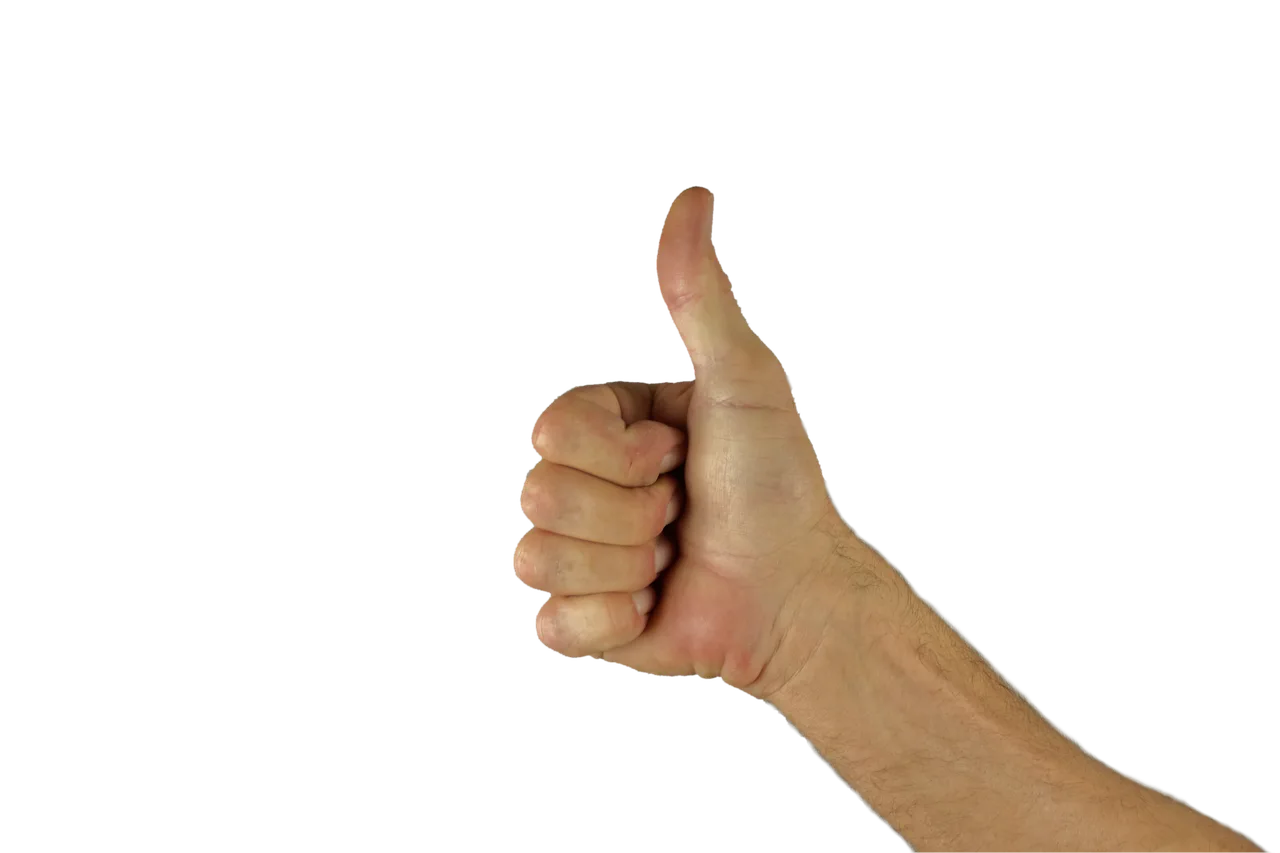
Take the thumbs up, the reliable headline act of every such list. The claim has a real academic pedigree. Dane Archer, writing in Qualitative Sociology in 1997 after assembling a video anthology of gestures from informants around the world, put it flatly: the American raised thumb, meaning good luck, is "a vulgar gesture meaning 'sit on this' in Sardinia, and 'screw you' in Iran." He was not guessing.
He was also not making the argument I am about to make. Archer went into the project expecting to watch global media flatten the world's hands into one shared vocabulary, and he came out reporting the opposite. The section where he says so is headed "IT'S NOT SUCH A SMALL WORLD AFTER ALL," and he closes it by predicting that whatever else gets homogenised, "people all around the world definitely will NOT all be smiling warmly while giving one another the 'thumbs up' gesture." So the man who supplied the canonical thumb fact spent a section of the same paper refuting the convergence story he is now used to set up. That is worth respecting rather than quietly ignoring, because the drift I want to describe is a much narrower thing than the one he ruled out.
Now look at how carefully the claim gets stated by the reference works that handle it today. The Cultural Atlas is a joint project of the broadcaster SBS, the state agency Multicultural NSW and a consultancy called Mosaica, and it is written for Australians working with migrant communities rather than for tourists, which is part of why it is more careful than the listicles. Its Iran entry, from 2016, says the thumbs up "is considered rude and has the same connotation as raising one's middle finger for traditional Iranians." Traditional. Its Iraq entry, from 2018, names the mechanism outright: "Some older Iraqis consider the 'thumbs-up' gesture to be obscene, but the younger generation has taken up the Western understanding of it."
Be careful about what that pair does and does not prove. Iran in 2016 and Iraq in 2018 are two countries, not one country photographed twice, and a difference between them is not a change over time. The claim that survives the objection is the smaller one the Iraq entry makes inside a single country and a single sentence: older Iraqis one way, younger Iraqis the other. That is a gesture caught mid-migration, and both halves of it are true at once, which is precisely the problem, because a travel list has no way of telling you which half of the room you are standing in. The thumb has not stopped being rude in Iraq. It has stopped being reliably rude, which is a different and much less useful fact than the one you were sold.

The one that really does travel badly
The exception, the gesture that genuinely earns its reputation, is the ring made by touching thumb to forefinger. It is dangerous not because of one meaning but because it has collected several unrelated ones, and they are all live at the same time.
In Greece it is simply an obscenity. The Cultural Atlas entry says so without qualification, and sets beside it the móutza, the open palm with fingers spread held up at someone's face, which it calls "severely insulting" and which, performed with both hands at once, is understood to double the offence caused. In Saudi Arabia the ring also carries an offensive meaning, though there the same source, in an entry revised in 2024, records the drift: "the Western meaning is becoming more common."
And in English-speaking countries the gesture acquired a further meaning from nowhere. The Anti-Defamation League's entry on it is worth reading closely, because it is an unusually careful piece of writing about a symbol the ADL itself added to a hate-symbol database. The gesture, it says, is "obvious and ancient," has turned up across many cultures carrying different meanings, and matters in Hindu and Buddhist practice as a mudra. The approving sense is not modern either: the ADL traces it to seventeenth-century Britain at the latest, with the association to the word "okay" arriving in the 1800s. Then, in 2017, users of 4chan invented, as a hoax, the claim that it stood for white power. The hoax worked so well that some white supremacists eventually adopted it sincerely. The ADL's own conclusion is the part that never makes the listicles: "The overwhelming usage of the 'okay' hand gesture today is still its traditional purpose as a gesture signifying assent or approval," and someone using it "cannot be assumed" to mean anything else without other evidence.
So one gesture, four meanings, three of them old, one of them literally fabricated by bored people on a message board. If you wanted a demonstration that emblematic gestures are unstable, this is it.
The part of the map that does not move
Underneath all of this sits a completely different category, and it is the one worth actually learning, because it is not arbitrary and therefore does not drift.
Across an enormous belt of the world, from the Arab peninsula through South Asia to Southeast Asia, the country-level sources describe the same pattern: the body is ranked. The head is the high, pure end. The feet are the low, dirty end. The left hand is assigned to cleaning. None of that is a code you could get wrong by a decade, because it is not a code. It is a set of ordinary consequences of how the body is understood.
Thailand states it most explicitly. The Thailand Foundation's guide, titled with admirable directness "Feet Low, Head High," explains that the feet are the least pure part of the body both by position and by history, going back to the era when Thai people still went about barefoot and every dwelling kept a large earthen jar outside it so that feet could be washed before anyone stepped in. The head is the opposite, and not only as a matter of height: Thai belief holds that the crown of the head houses a person's khwan, a form of spiritual energy. Touching an adult's head is offensive. Children are not the exemption a visitor assumes they are, which is the trap, because the impulse to ruffle a small stranger's hair is exactly the impulse a visiting foreigner arrives with; the Foundation's instruction is that even the most charming child is off limits. Passing an object over someone's head is to be avoided. Standing over a seated elder is a form of assertion, which is why people crouch or shuffle on their knees to cross a room. The observation is not new. The Foundation cites Amédée Gréhan's 1868 book on the kingdom of Siam, which recorded that Siamese of every rank, slaves included, refused to let anybody lay a hand on their head.
India runs on the same map with one beautiful inversion. Feet are the dirtiest part of the body, soles are never pointed at a person or a deity, you do not sit higher than an elder. And yet the highest gesture of respect available is to touch a revered person's feet with your hands. The pollution and the reverence are the same fact seen from two ends. If you have ever wondered why the rules seem contradictory, that is why: they are not a list of prohibitions, they are a geometry.
The left hand follows from the same logic and is the one you will be caught breaking first. In Indonesia the left hand "is not used for actions such as waving, eating or offering items." In India objects are passed with the right hand or with both, and if you are eating with your hands, which much Indian food invites, you use the right. The United Arab Emirates puts it on its own government portal, in the plainest terms available: "It is customary to accept food and drink with your right hand; this is also the hand you should eat with."
Feet close the set. Showing the soles is rude in Iran, Iraq, Saudi Arabia, Indonesia, India and Thailand, and the practical consequence is about sitting rather than gesturing. The Cultural Atlas gives the most usable version of the rule for Indonesia: if you cross your legs, put knee over knee, not ankle over knee, because the second one aims your sole across the room. In Thailand the equivalent floor-sitting posture is feet tucked away under the body, or cross-legged. Nobody will announce that you have got this wrong. They will simply revise their estimate of you.
Learn the replacement, not the prohibition
The lists get this backwards at the level of structure. They tell you what not to do with your hands and leave you holding a hand you now cannot use. The more efficient move is to learn the two or three things people in a given place do instead, because the substitutes are few and they repeat across many countries.
Beckoning. The Western palm-up curl of the index finger is the global outlier, not the global default. Iraqis beckon "by putting their hand out with the palm facing the ground and curling their fingers back towards themselves." Saudis "place the right palm downwards and use a clawing motion." Filipinos use "the hand facing downwards and waving fingers towards oneself." That is one gesture, learnable in a second, and it covers much of Asia and the Arab world at once.
You have probably also read that beckoning the wrong way in the Philippines is an arrestable offence. Here is what is genuinely underneath that. The provision everyone is groping towards is Article 287 of the Revised Penal Code, whose second paragraph sweeps up "any other coercions or unjust vexations" and which, since Republic Act 10951 revalued the old fines in 2017, carries arresto menor, meaning one to thirty days, or a fine of one thousand to forty thousand pesos, or both. The article is real and it is famously elastic. Philippine law firms publish explainers on applying it to offensive gestures, the middle finger very much included. What nobody produces is a prosecution for beckoning. And the country entry that actually describes Filipino non-verbal habits does not flag the palm-down beckon as an offence at all: it presents it as "the common way to beckon someone," with no warning attached, and saves its warning for something else entirely, index-finger pointing, which it says is often read as an expression of anger. The travel claim takes a genuine light-offence statute and welds it to a scenario nobody can document.
Pointing. Almost nowhere in this belt is the index finger acceptable, and the replacements are more interesting than the rule. The UAE government tells visitors: "Do not point with your finger. If you need to use a hand gesture, use the whole hand." Traditional Javanese speakers point with the thumb, hand loosely closed. Saudis frequently do not use a hand at all: they "raise their chin and look in the general direction" of what they mean. Filipinos point with the mouth, pursing the lips towards the thing in question. Once you have seen someone give directions with their lips you will find the finger looks crude for the rest of your life.
There is also a reason to take this more seriously than manners. The same UAE portal that advises on pointing notes that "making obscene gestures and showing disrespect in any way to the UAE, its leaders or religion are all forbidden and may land you in legal trouble and deportation." Britain's Foreign Office says the same thing to its own nationals without the diplomatic cushioning: swearing and rude gestures, including online ones, are illegal in the Emirates as obscene acts, and you can be jailed or deported for them. The road is where this bites hardest, because the road is where tempers go. Gulf News, reporting in 2018 on the steady run of such cases through the Emirates courts, quoted a chief judge who sat on one of Dubai's misdemeanours benches on how little discretion he had once the finger was proven: "A deportation order is mandatory and inevitable unless the suspect is pronounced innocent." In the Emirates, a hand signal at the driver who just cut you off is not a social error. It is a case.
The gesture lists will keep circulating, and they will keep leading with the thumb, because the thumb makes a better headline than the observation that most of the planet passes things with the right hand. But the thumb is the part that is moving. The body map is the part that has stayed still for centuries, and it is also the part that will be visible to you within an hour of arriving anywhere, if you spend that hour watching hands instead of consulting a table about them.
Sources
- Churchilliana: The Leader Commemorated, Winston Churchill's V-sign - Colville's Coventry entry from The Fringes of Power, Churchill's awareness of the knuckles-out insult, the "more than 500 years" figure, and the "(mostly)" qualifier
- The Private Secretaries, Finest Hour 183, International Churchill Society - Colville's actual wartime post, assistant private secretary, held twice and interrupted by RAF service
- Dane Archer, "Unspoken Diversity: Cultural Differences in Gestures", Qualitative Sociology 20:1 (1997) - the raised thumb as "sit on this" in Sardinia and "screw you" in Iran, and Archer's own section arguing that gestures would not converge
- Anti-Defamation League, "Okay" Hand Gesture - the gesture as "obvious and ancient", the assent meaning dated to at least 17th century Britain, the mudra, the 2017 4chan hoax, and the caution against assuming intent
- Cultural Atlas: About - the Mosaica, SBS and Multicultural NSW partnership and the project's Australian, migrant-focused purpose
- Cultural Atlas: Iranian Culture, Communication (2016) - thumbs up as middle-finger equivalent "for traditional Iranians"; index-finger pointing; soles of the feet
- Cultural Atlas: Iraqi Culture, Communication (2018) - the generational split on the thumbs up, palm-down beckoning, and the separation of hand functions
- Cultural Atlas: Greek Culture, Communication - the ring gesture as an obscenity in Greece, the móutza as "severely insulting", and the two-handed version doubling the offence
- Cultural Atlas: Saudi Arabian Culture, Communication (2024) - chin-raising instead of pointing, the clawing palm-down beckon, and the ring gesture's Western meaning "becoming more common"
- Cultural Atlas: Filipino Culture, Communication - lip-pointing, the palm-down beckon given as "the common way to beckon someone" with no warning, and index-finger pointing read as anger
- Cultural Atlas: Indonesian Culture, Communication - the left hand's restricted use, Javanese thumb-pointing, the head, and the knee-over-knee sitting rule
- Cultural Atlas: Indian Culture, Etiquette - right-hand eating and passing, the top of the head as most important, and touching a revered person's feet as the highest respect
- Social responsibility, The Official Portal of the UAE Government - the official instruction not to point with a finger, right-hand eating, and obscene gestures risking legal trouble and deportation
- UK Foreign, Commonwealth and Development Office, United Arab Emirates travel advice: safety and security - swearing and rude gestures treated as obscene acts, with jail or deportation as the stated risk
- Bassam Za'za', "Flashing your finger is no middling matter", Gulf News - the road-rage scenario, the run of cases through the courts, and the Dubai judge on mandatory deportation
- Republic Act No. 10951 (2017), section 73, amending Article 287 of the Revised Penal Code - unjust vexation punishable by arresto menor or a fine of P1,000 to P40,000; arresto menor is defined as one to thirty days in Article 27 of the Code
- Feet Low, Head High: A Guide to Thai Etiquettes, Thailand Foundation - the ranking of feet and head, khwan at the crown, the barefoot era and the earthen jar, children's heads as no exception, and Gréhan's 1868 account of Siam