The Georgian Supra Has a Toastmaster, and He Decides When You Drink
LineCast Networks

The Georgian word for the person who runs the feast is not Georgian. Tamada is a loanword, probably from Circassian, specifically Kabardian, where the source form means roughly "father of the gods". Its older rival, t'olumbaši, comes from Turkish and means chief of the wineskin. Neither appears in Georgian sources before the nineteenth century. Supra, the word that now names the feast itself, meant tablecloth, and in the medieval Georgian version of the Shahnameh that is all it means: the cloth on the table, exactly as in the Persian original. The pre-tsarist Georgian words for a banquet were nadimi and p'uroba, the second built on p'uri, bread.
That summary comes from the anthropologist Kevin Tuite, a linguist by training who has spent decades at Georgian tables, and it complicates the version visitors are usually given, in which the supra descends unbroken from Colchis. The philologist Levan Bregadze pushed the point harder. He traced sadghegrdzelo, the word for a toast, no further back than a poem by Grigol Orbeliani, a Georgian nobleman serving in the Russian imperial army, written around the middle of the nineteenth century. An earlier draft of that poem was labelled on its title page as an imitation of a Russian original, Vasily Zhukovsky's verse of toasts pronounced in a soldiers' camp. Bregadze concluded that the supra acquired its present shape at the beginning of the nineteenth century and had spread everywhere by its end.
Georgian ethnographers went for him, chiefly Giorgi Gociridze in 2001, whose charge was that Bregadze had not done his ethnographic homework and had missed tamada-like practices surviving in folk usage and in the conservative highland regions. Tuite reports that objection and declines it in the same sentence, saying he proceeds "without endorsing Gociridze's traditionalist, and not especially convincing, critique of Bregadze's thesis". By his closing pages he is calling the supra an indigenous art form "even if it is only two centuries old". So the dating is qualified, not overturned. Feasting in Georgia is ancient. The specific machine of toastmaster, fixed sequence and thematic toast may be about as old as the railway.
Knowing this will not help you at the table. The machine works, it will be switched on within ten minutes of your arrival, and it does not care that its parts have foreign names.
What is actually happening
A supra is not a dinner party with speeches. It is a meal in which the drinking is governed, and the governor is one person. Tuite puts the principle plainly: "In principle, at every occasion where wine is to be consumed, even if only two men are present, one of them is selected to be tamada." The choice usually falls to the most eloquent and respected person at the table, and Georgia's national tourism board describes the resulting toast as a genre of praise and plea, close to a prayer.
That "two men" is not a slip of mine. Both scholarly sources behind this article describe the classical supra as a male institution: Tuite's ideal table is gender-segregated, with the women going to and from the kitchen, and Laura Joy Linderman's paper is called "The Gendered Feast" precisely because she thinks that ideal has been allowed to stand in for the whole practice. She notes Florian Mühlfried's finding that in post-Soviet Tbilisi a few women are celebrated tamadas too, though it stays rare. At an actual mixed table today you may well find the rules applied to everybody. Where the sources say men, I have left the word where they put it.
A round works like this. The tamada announces the theme and speaks on it, at length, well past the point where an English-speaking guest expects a clink. He drinks, and only he drinks. Then each of the others speaks on the same theme, in turn, and drinks after speaking. Only when the theme is exhausted does the tamada open a new one. The single rule underneath all of this is the one most visitors break in their first hour: no wine is drunk unless the person drinking it has first pronounced a toast. Nursing a glass through the conversation, the standard Western defensive manoeuvre, is not a way of drinking less. It is a small breach of the only rule that matters.
Refilling is somebody's job. The merikipe, the tamada's assistant, keeps the glasses charged, and large supras appoint more than one. In Linderman's fieldwork in Guria, the merikipe tops up even the people who have stopped drinking, adding a symbolic drop or two to a glass that is already full, because it is bad form to toast with a half-empty glass. Read that carefully, because it is the most useful sentence in this article. A full glass is a precondition for speaking, not an instruction to empty it.
Scale: Tuite records anything from three rounds, the bare minimum he has seen, to three dozen or more. His own hedged figure is that "a typical evening supra in a private home might go on for three or four hours". One that begins at seven or eight in the evening and ends at three in the morning is not at all rare. He once sat in on part of a Georgian wedding banquet in a Moscow hotel and was told it was in its third day.
The heritage question, briefly
The tourism board's own page on the supra says it holds an honourable place on the world intangible heritage list. It does not. UNESCO's register for Georgia carries five elements: Georgian polyphonic singing, inscribed in 2008 and proclaimed earlier, in 2001; the qvevri winemaking method, 2013; the "Living culture of three writing systems of the Georgian alphabet", 2016; chidaoba wrestling, 2018; and Georgian wheat culture, 2025. The supra is not among them.
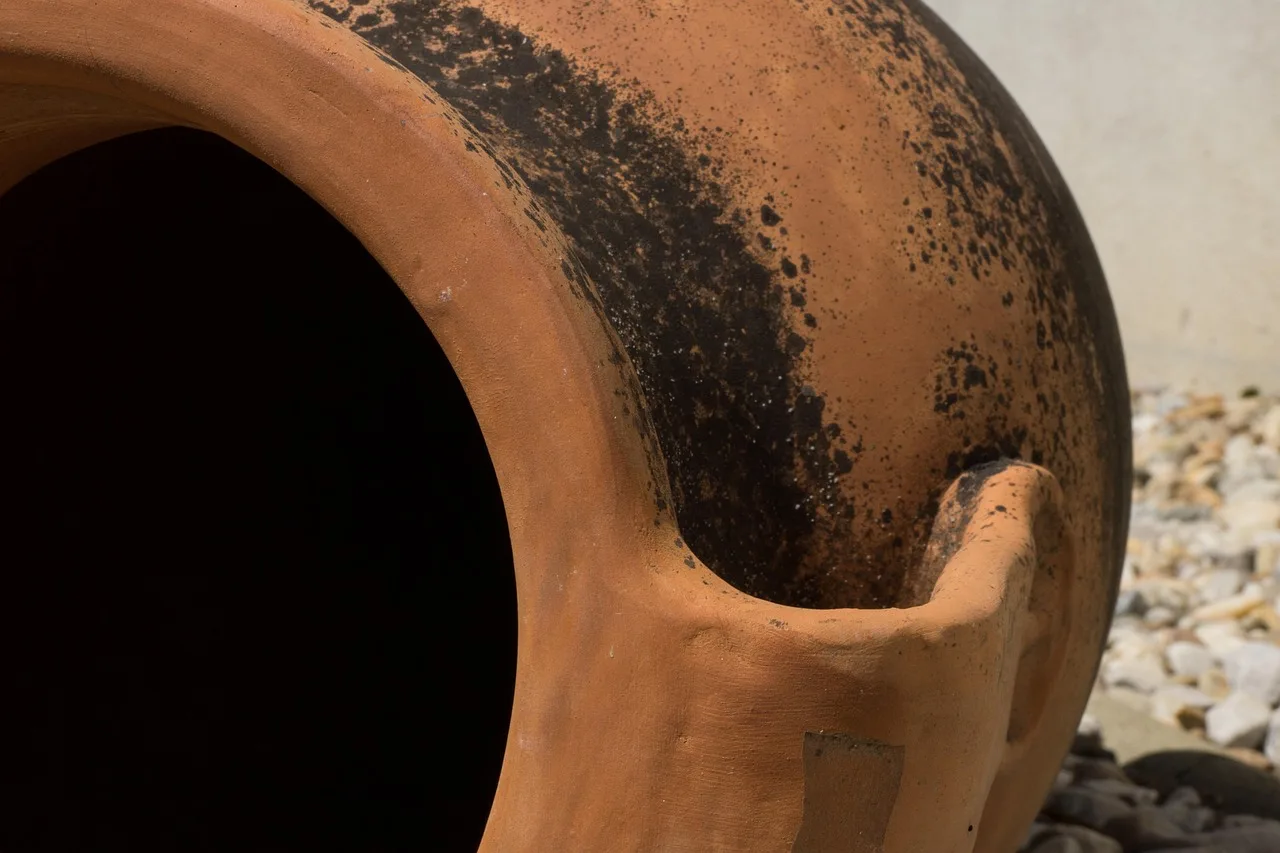
What is true is that the National Agency for Cultural Heritage Preservation of Georgia entered "the culture of the Georgian traditional supra and p'uroba" onto the country's own register of intangible cultural heritage monuments, by order of the director general, in March 2017. A national listing, not a global one. The distinction is worth holding on to, because the supra sits inside a wine culture whose credentials genuinely are exceptional: chemical residues from pottery at Gadachrili Gora and Shulaveris Gora, two Neolithic villages about fifty kilometres south of Tbilisi, produced the oldest biomolecular evidence for grape wine yet found in the Near East, around 6000 to 5800 BC. That is the claim the peer-reviewed paper makes, and it is scoped to a region rather than to the planet. The same paper is careful to note that the Neolithic culture those villages belong to extends into what is now western Azerbaijan and northern Armenia. So the claim is regional twice over. It does not need inflating.
What the tamada wants from you
Not silence, and not stamina. Eloquence, mostly, and specificity.
When your turn arrives, the failure mode is to raise the glass, say the theme back at everybody, and sit down. What is wanted is a small piece of composition on the announced subject: a story, a memory, a line of verse, a named person rather than a category. The tamada may hand you an alaverdi, which is an invitation to take the previous toast and extend it in your own direction. The tourism board says outright that variations offered by foreign guests are welcome, and there is no expectation that you produce this in Georgian. There is also tamadobit, the move by which a general toast, to children, say, is narrowed onto one particular child at the table. That narrowing is the whole art.
The opening toasts are not yours to choose. They come in a fixed block that varies by region and by occasion, and in Guria the first is usually to peace, mshvidobis gaumarjos. Once the obligatory block has been paid off, the middle of the evening opens into free toasting, which is where a good tamada earns his position. Near the end come the closing toasts that signal the feast is winding down. In the sequence the tourism board describes, the kvelatsminda, the toast to all saints, comes last, and then the guests toast the tamada, and it is over.
He will also be watching the pace. The toasts run fast at the start and slow through the middle as the table gets tipsy, and adjusting that rate is explicitly part of the job. If you are struggling, the person who can fix it is the person causing it.
How to drink less without insulting anybody
Six mechanisms, all of them internal to the tradition rather than smuggled in against it.
Do not drain the glass unless the tamada does. The ideal is to empty your vessel in a single draught, but in practice, Tuite writes, only the tamada is obliged to do that; the other men at the table aim to get through at least half of what is in the glass. At least half is a floor, not a target you may shade downward. Draining is called bolomde, "until the end", and it is a statement rather than a default. Once the tamada goes bolomde he has to keep going bolomde for the rest of the evening, which is why he picks his moment with care. Follow the tamada's glass, not the table's mood.
Let the merikipe do his job. A full glass in front of you is not an accusation. Refusing the refill is a louder act than accepting it and sipping.
Eat steadily, and stop short of the last spoonful. The toasting rule governs wine, not food. Paul Manning's formulation, which Linderman quotes, is that food, unlike wine, is "theoretically unregulated", and the word doing the work there is theoretically. Linderman's own fieldwork turns up a rule nobody states out loud: do not take the end of a dish unless the hostess puts it into your hands, because the table is supposed to look full and fresh all evening and she may have nothing left to replace it with. Not touching a dish at all is an insult to whoever spent the afternoon on it; clearing one is worse. What is actually wanted is restraint, pacing, and praise for particular dishes by name. That gives your hands and your mouth something to do that is not drinking.
Talk long. A four-minute toast is four minutes not spent drinking, and it raises your standing rather than lowering it. The competitive element at a supra is rhetorical at least as much as alcoholic.
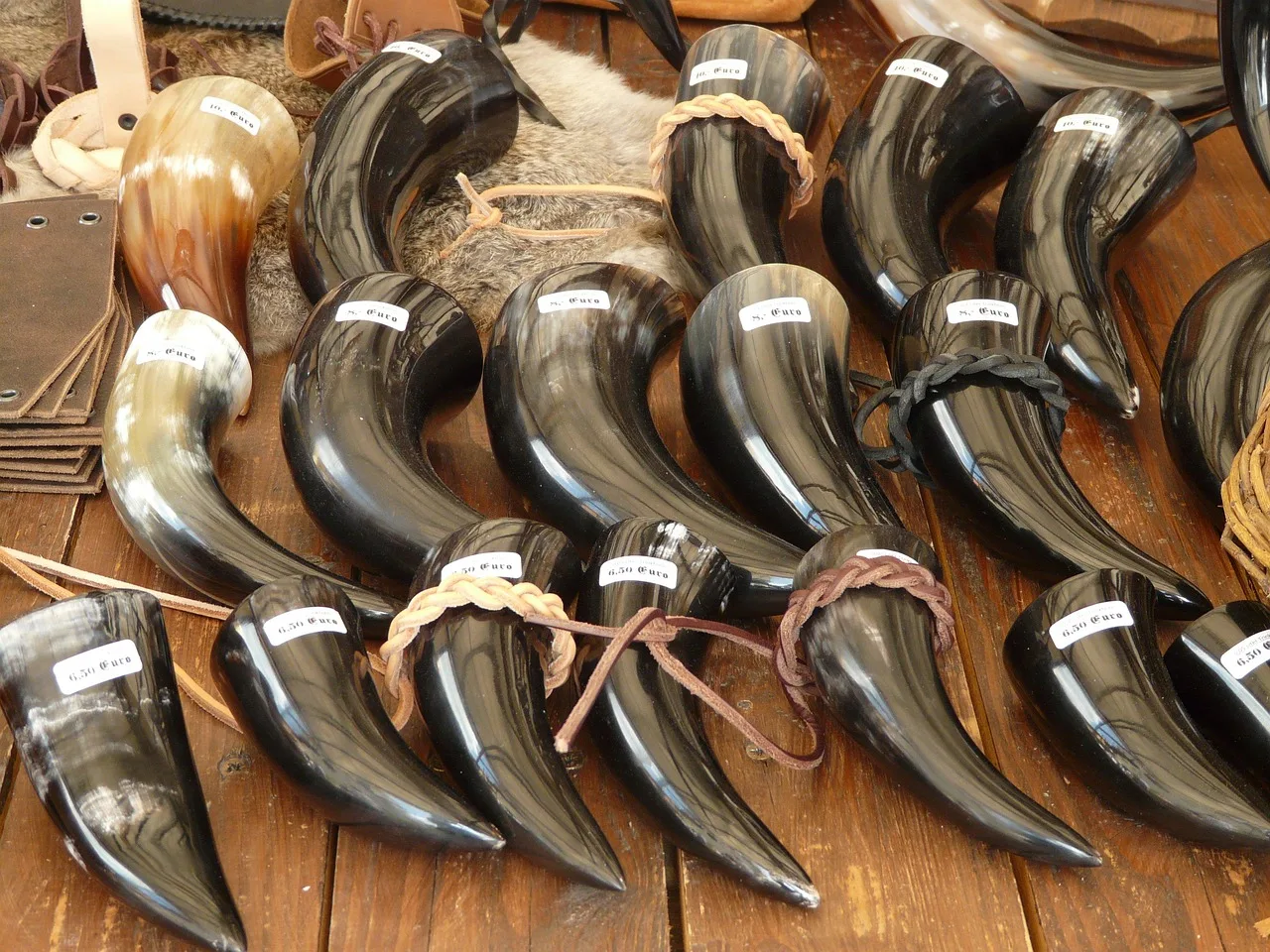
Watch for the vessel changing. The kantsi, a horn, was traditionally an essential piece of the tamada's kit, and once toasts start being drunk from horns or from any other unusual drinkware, Tuite writes, "all men at the table were obliged to follow suit, to the best of their ability". He describes a tamada at a christening who ran out of interesting vessels, settled his gaze on a vase of flowers, poured out the water and the flowers, filled it from a pitcher with a litre at least of wine, got most of it down himself and passed it on. The moment to decline is before the vessel changes, not after.
Ask for beer, and understand why it works. Beer occupies a strange position in Georgian drinking. Tuite calls it the one alcohol-containing drink that requires no ritual framing, and gives that exceptional status as part of the reason its popularity has risen. Linderman puts the other half of the same fact in a parenthesis: "toasting with beer is forbidden". Outside the system means outside it in both directions. You can drink beer without making a speech, and you cannot make a speech with it. Hold beer for yourself; hold wine for the toasts.
And if you are driving, say so and stop there. The British Foreign Office notes that Georgia's blood alcohol limit is lower than the UK's and that drink-driving punishments can be severe, which makes the designated driver an explanation the table will accept without argument, because it is a real constraint rather than a preference.
One last thing about the shape of the evening. On the strength of a Georgian proverb, the supra is often described as a table with a dictator at the head of it. Linderman, relaying Manning, records that around the time of her fieldwork in Guria in the second half of the 2000s, the Georgian government of the day and Western-funded NGOs both treated the institution of the tamada as the source of the country's political backwardness, and argued that reforming Georgian politics meant reforming everyday life, beginning with the abolition of the supra. She watched the effect at a Tbilisi birthday dinner with friends who worked for exactly those bodies: Chinese food, no toasts, no alcohol whatsoever. That government has been out of power since 2012 and the supra has not gone anywhere.
Anyway, look at how a supra ends. The last act of the feast is that everyone toasts the tamada. Whatever authority he held for those four hours, it is returned to the table by a vote of thanks, and tomorrow it will be somebody else's turn.
Sources
- The Autocrat of the Banquet Table: the political and social significance of the Georgian supra (Kevin Tuite, Université de Montréal) - loanword origins of tamada and t'olumbaši, supra as "tablecloth" in the Georgian Shah-Nameh, nadimi and p'uroba, Bregadze's nineteenth-century thesis, Gociridze's objection and Tuite's refusal of it, the "two centuries old" line, the structure of a toasting round, the rule that no wine is drunk before a toast, the at-least-half floor, duration and number of rounds, the Moscow wedding banquet, the flower-vase escalation and the obligation on all men to follow suit, beer as the drink requiring no ritual framing. Note that this URL is http-only: port 443 on that host refuses connections, so a browser set to force HTTPS will fail on it
- The Gendered Feast: Experiencing a Georgian Supra (Laura Joy Linderman, Anthropology of East Europe Review 29:2, 2011) - fieldwork in Ozurgeti, Guria; the merikipe and the symbolic drops; the rule against toasting with a half-empty glass; bolomde as a strategic affirmation; the obligatory opening block, then free toasting, then closing toasts; pace management by the tamada; the first toast in Guria usually to peace; alaverdi and tamadobit; Manning's "theoretically unregulated" food and Linderman's own rule against finishing a dish; restraint and praise of specific dishes; "toasting with beer is forbidden"; the government and Western-funded NGOs arguing for abolishing the supra; Mühlfried on the rare but real female tamadas of Tbilisi
- Georgian Supra (Georgian National Tourism Administration) - the toast as praise and plea, selection of the most eloquent and respected guest as tamada, alaverdi as an opportunity to expand a toast, foreign guests' toasts welcomed, kvelatsminda as the closing toast followed by a toast to the tamada, and the claim about world heritage status that the UNESCO register does not support
- Winepress, Pitcher and Horn: Satsnakheli, Qvevri and Kantsi (Georgian National Tourism Administration) - the kantsi made from animal horn and traditionally an essential accessory of the tamada
- Georgia on the UNESCO Intangible Cultural Heritage lists - the five inscribed Georgian elements and their years, confirming the supra is not among them
- Ancient Georgian traditional Qvevri wine-making method, UNESCO - 2013 inscription, the buried egg-shaped vessel, fermentation of juice with skins, stalks and pips over five to six months
- Georgian polyphonic singing, UNESCO - 2008 inscription, originally proclaimed 2001, the three regional types of polyphony and songs tied to the cult of the grapevine
- Intangible cultural heritage register, National Agency for Cultural Heritage Preservation of Georgia (PDF, Georgian) - entry 35, the culture of the Georgian traditional supra and p'uroba, granted monument status by director general's order of March 2017
- Early Neolithic wine of Georgia in the South Caucasus (McGovern et al., PNAS) - the abstract's claim to "provide the earliest biomolecular archaeological evidence for grape wine and viniculture from the Near East, at ca. 6,000-5,800 BC"; Shulaveris Gora and Gadachrili Gora, within two kilometres of each other in Kvemo Kartli, roughly 50 km south of Tbilisi; the Shulaveri-Shomutepe culture extending into western Azerbaijan and northern Armenia
- Georgia travel advice: safety and security (UK Foreign, Commonwealth and Development Office) - the advice, verbatim, that "Drink driving punishments can be severe. Georgia has a lower blood alcohol content limit than the UK, so avoid alcohol if driving."