The Famous Sights Worth Skipping
LineCast Networks
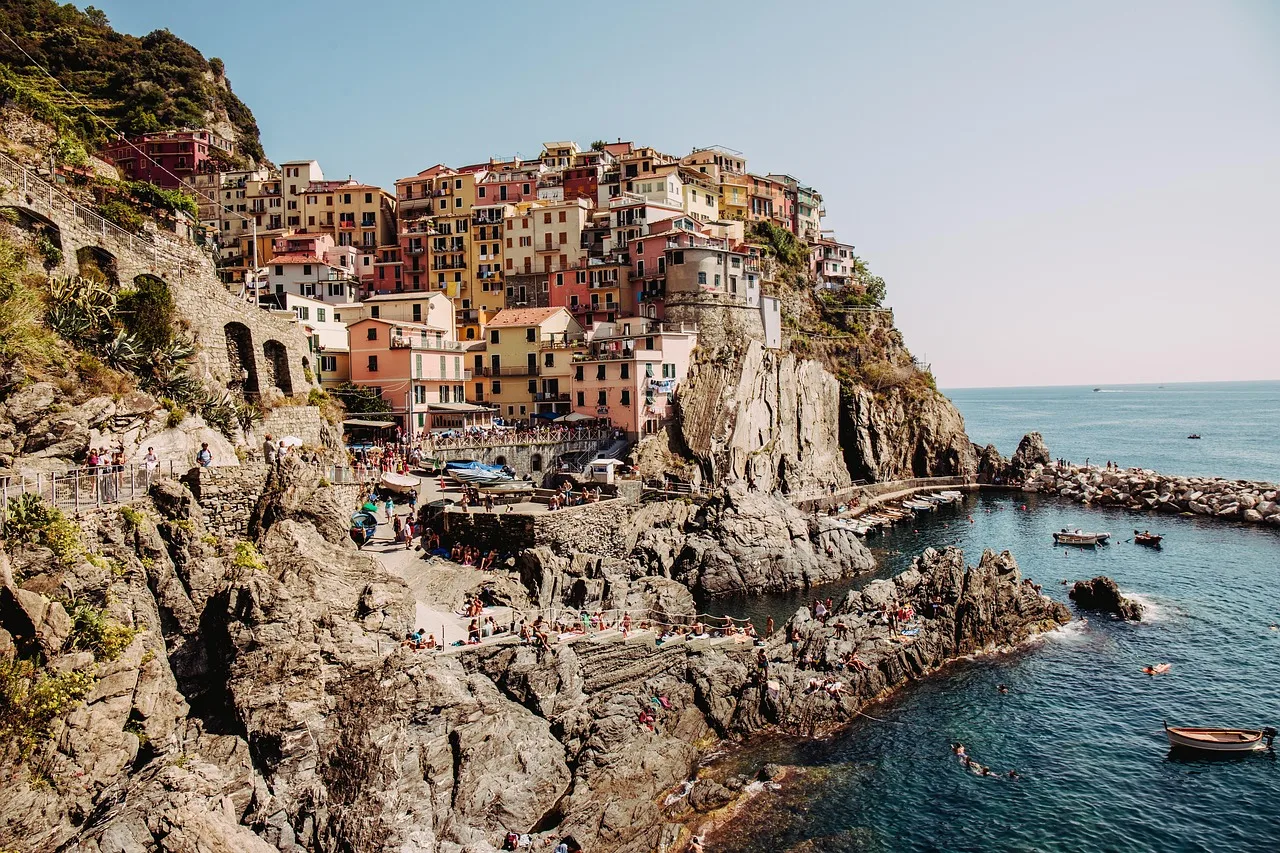
The Cinque Terre National Park lets 200 people onto the Via dell'Amore every thirty minutes. The path is 900 metres long. In high season it runs one way, Riomaggiore to Manarola, on a booked time slot, with groups capped at thirty and guides posted along the route. Thirty minutes is the stated maximum walking time, because the next 200 need the space.
None of that is a scandal. It is a sensible answer to a real problem, and the park deserves credit for publishing the mechanics in plain language on its own site. It is worth reading them for what they describe, though, which is a corridor with a throughput target rather than a walk.
A small number of famous sights have crossed the line where the logistics became the experience. This is not a general complaint about crowds. It is a complaint about ratio: minutes of admin against minutes of payoff, and how much of the thing you came for is left once you get there. In every case below there is something better within about a kilometre, and in three of the five it is the thing the famous sight was made out of in the first place.
Cinque Terre
The five villages are genuinely beautiful and the terraces above them are a thousand years of hand-stacked stone. The problem is that almost everyone arrives with the same plan, which is to walk the coastal Blue Trail from end to end, and the full end-to-end coastal route is not what the park currently sells.
Look at what the park's own Trekking Card actually buys you: access to the Blue Trail from Monterosso through Vernazza to Corniglia, plus the Via dell'Amore. The stretch between Corniglia and Manarola is not on the list. The park's trail network page marks individual sections open or closed and the labels change, so the honest advice is to check it the week you travel rather than trust any article, this one included.
The better hours are above the villages. The park catalogues dozens of numbered routes, most of which carry a fraction of the coastal traffic: 587 climbs from Corniglia up to Cigoletta in a bit over two hours, 586 runs from Volastra to Case Pianca through the terraces, and 590 works the headland from Monterosso out to Sant'Antonio Mesco. The Levanto leg of 591 reaches the same point from the other side. Its Il Termine leg is marked closed as I write, which is the whole argument for reading the park's page rather than mine. The Levanto to Monterosso section passes Podere Case Lovara, a restored farm holding that the Trekking Card gets you into for nothing. You get the same coast, the same vineyards, the same sea, without a timed entry and a guide moving you along.
If you want the Via dell'Amore anyway, book it and enjoy it. Just do not build the day around it. It is nine hundred metres.

Hallstatt
Hallstatt has done something quietly remarkable: it has published the exact terms on which a coach tour is admitted. Since June 2020, buses bringing visitors into the World Heritage region have had to book an entry slot and an exit slot, and the exit cannot fall earlier than two hours and twenty minutes after the entry. Since May 2026 the coach pays 126 euros for the privilege. At the terminal, passengers get twenty minutes to get off, then the driver clears out to the P3 lot.
Read that carefully, because it is the opposite of a ration. Two hours and twenty minutes is a floor, not an allowance. The rule exists to stop coaches making a forty-minute photo stop and driving on, which means the town is using its one lever to force the visit to be longer. What the rule cannot do is make anyone walk away from the lakeside lane, and most groups appear to spend the entire two hours and twenty minutes within sight of it. The town's own tourist site lists the postcard view as an attraction in its own right, which tells you how much of the average visit is that single frame.
Now the awkward part. The reason Hallstatt exists at all is about three hundred and thirty metres above it and up a funicular, and until very recently you could not get to it. Salzwelten Hallstatt, the Salzbergbahn funicular, the Skywalk and the Bronze Age staircase have all been shut while a new funicular is built. The operator's own page gives the reopening as Saturday 29 August 2026 at nine in the morning, with online tickets on sale from 1 September; other regional listings have carried a later reopening date, so confirm it before you build a day around it. Until the 31st, the operator is running a daily shuttle to the working mine at Altaussee instead.
It is worth the wait. The mine is the oldest in the world on its operator's own reckoning, worked on and off for seven thousand years. In 2002, archaeologists from the Natural History Museum in Vienna found a timbered wooden staircase preserved in the salt, more than eight metres of it, complete. Dendrochronology dated the timber to 1344 BC, which makes it the oldest European evidence of stairs built that way and more than two centuries older than anyone had guessed. It was taken apart, studied, reconstructed, and returned four hundred metres underground inside a climate-controlled case that opened to visitors in 2015. Hans Reschreiter, who runs the archaeological dig in the mine, gave the best description of it: "After the excavation, the staircase makes such an intact impression as if miners had walked over it for the last time only yesterday."
The third thing needs no funicular and never closed. Walk to St Michael's Chapel, which is twelfth century and stands beside the parish church. Inside is the Beinhaus, more than 600 painted skulls, decorated with names, initials, ivy and flowers when graves were reused and the bones moved on. Most of the painting is nineteenth century, the earliest of it runs to the end of the eighteenth, and a few pieces are twentieth. It opens daily from ten until six through September, it costs two euros, and it takes about fifteen minutes.
Mine, staircase, ossuary. Three things nobody photographs, all of them the actual town.
The Blue Lagoon
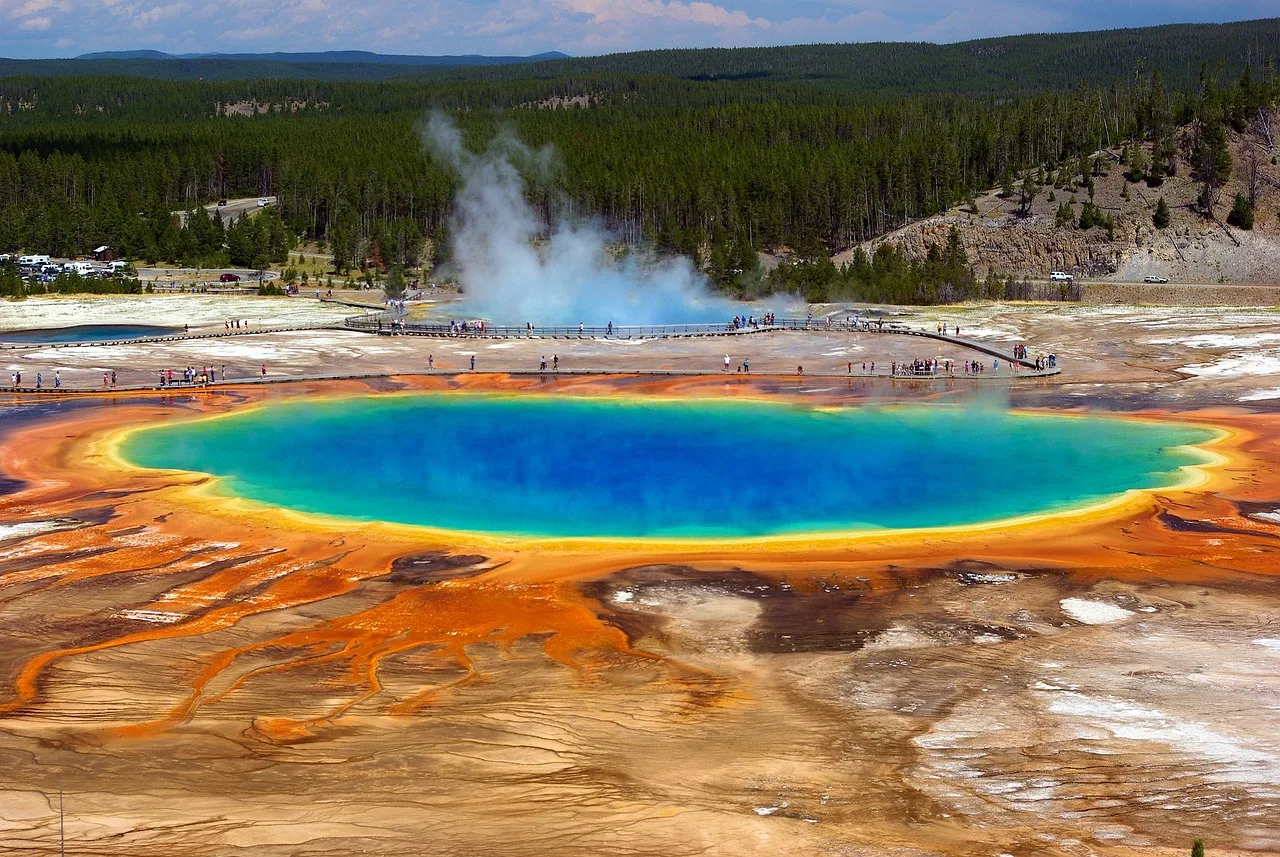
The Blue Lagoon is a very good story badly served by the way it is sold. It is not a hot spring. It is the outflow of the Svartsengi geothermal power station. The plant pulls a mix of seawater and fresh water from more than two kilometres down, heated to around 250 degrees and loaded with silica, runs the heat through its turbines and releases the spent water into the lava field. The silica sealed the pores in the rock, the water stopped draining away, and a lagoon appeared where nobody designed one. People with psoriasis noticed their skin improved. Everything after that is commerce.
There is also a structural problem with planning a trip around it. Svartsengi is where the magma is. The Icelandic Meteorological Office publishes running hazard assessments for the Reykjanes Peninsula and reports magma steadily accumulating beneath the site, with the likely next move being an intrusion towards the Sundhnúkur crater row. Their published warning times for previous eruptions there range from about twenty minutes to a little over four hours. Closures are not bad luck. They are a feature of the address.
Reykjavík has eighteen public geothermal pools and they are where Icelanders actually go. Sundhöllin, the city's oldest, opened in 1937, is a piece of white Art Deco a short walk from Hallgrímskirkja, with rooftop hot tubs. Vesturbæjarlaug in the West End is the neighbourhood one, worn in the right places, full of regulars. Laugardalslaug is the big one, Olympic pool, slides, and a hot tub fed with seawater pumped in from the Atlantic. You shower properly and without a swimsuit before you get in, which is not negotiable and is why the pools can run on far less chlorine than pools elsewhere.
A pool is 1,500 krónur, about the price of two coffees. It sits ten minutes from wherever you are staying and it is the closest thing the city has to a village square. The lagoon is a day trip. The pool is a habit you can pick up on your first evening.
Manneken Pis
The thing you queue to photograph on the corner of Rue de l'Étuve is a copy. The original bronze was commissioned from Jérôme Duquesnoy the Elder by the Brussels authorities in 1619 and cast over the following year, and the city has since moved it indoors for security. What stands on the fountain is an identical copy. Visitors are also, reliably, surprised by the size.
The interesting half of the story is two minutes away in the GardeRobe MannekenPis. The statue has a wardrobe of more than a thousand outfits, of which roughly 150 are on display at a time, rotated through themed cases, with the full collection searchable on a database in the museum. He receives twenty to thirty new costumes a year, each formally presented and fitted at the fountain before it enters the collection. In the eighteenth century he was dressed at least four times a year. He is now dressed on about 180 days a year, twenty-three of them fixed dates, on a calendar the city publishes in advance.
That is a genuinely strange and specific civic tradition, several centuries deep, and the museum tells it properly. The corner tells you nothing. While you are in the neighbourhood, the Musical Instruments Museum is up on the Mont des Arts in the Old England building, which is one of the better Art Nouveau interiors in a city full of them, and its instrument collection ranks with any on earth.
The Hollywood Walk of Fame
The Walk of Fame is a pavement, and the pavement runs on paperwork. The Hollywood Chamber of Commerce takes nominations in six categories, though its own nomination procedure page has never been updated past five: "Motion Pictures, Television, Radio, Recording, Live Theatre/Performance." Sports entertainment joined them with the class of 2022. Michael Strahan got the first sports entertainment star, the 2,744th on the pavement, in January 2023. Anyone can nominate, including a fan, but the application is dead on arrival without a signed letter of agreement from the honoree or their management, and filing it costs $275. The criteria include at least five years in the category and a guarantee that the celebrity will turn up to the dedication ceremony. A committee picks around thirty names a year, the Chamber's board approves them, and the list goes to the City of Los Angeles Board of Public Works for final sign-off. Then a sponsor pays $85,000, which covers making the star, laying it, staging the ceremony and maintaining the landmark for life.
Knowing the process does not ruin it exactly, but it does explain why the stars under your feet feel less like a hall of fame and more like a very long list of people who filed correctly and found eighty-five thousand dollars. Meanwhile you are looking down, in a crowd, on a hot street.
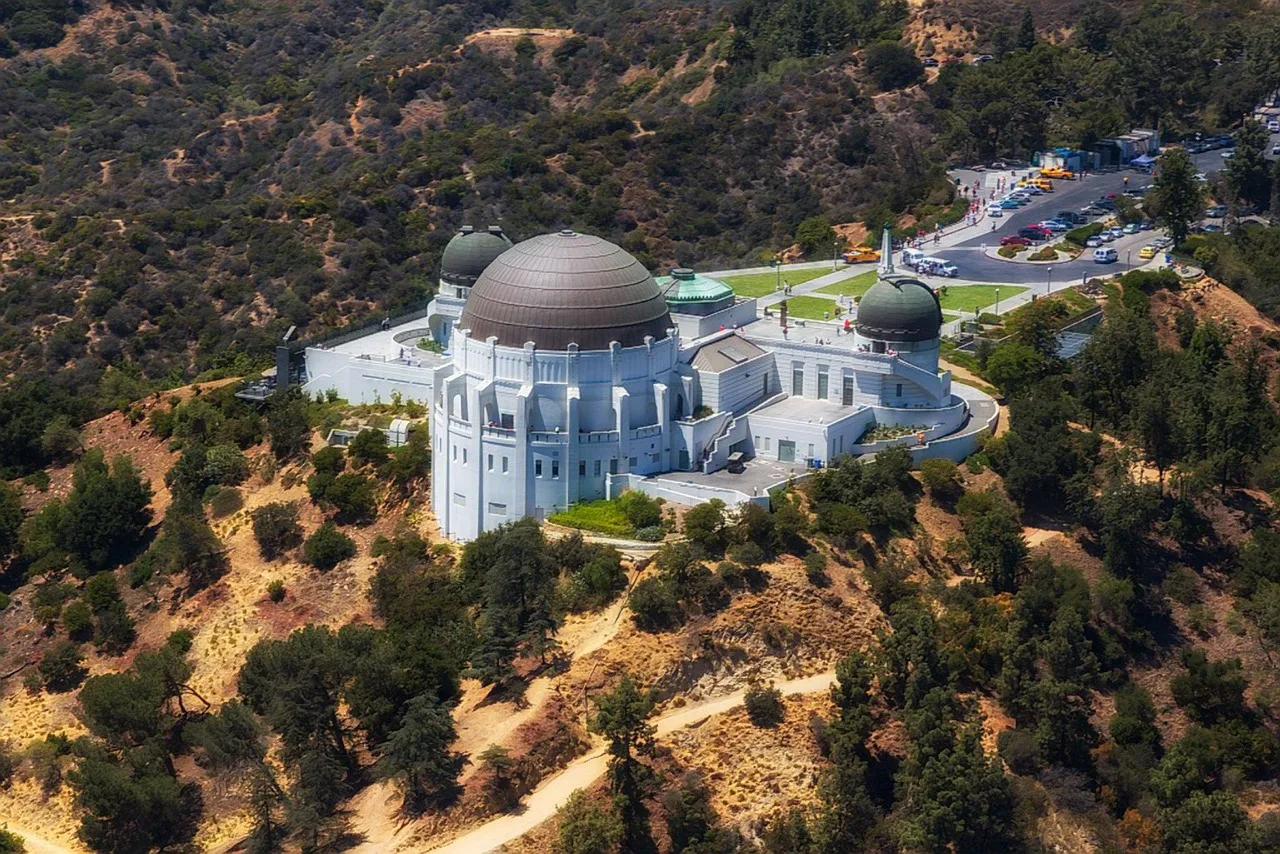
Take the bus up to Griffith Observatory instead. LADOT runs the DASH Observatory service from the Vermont/Sunset Metro station every day from ten in the morning to ten at night, including days the Observatory building is closed, and it costs fifty cents, or thirty-five with a TAP card. The Observatory's own directions page recommends it and then explains why: parking up there is limited and the road closes when traffic backs up. Nobody charges you to walk in, wander the site, or queue for the telescopes on the lawn. You pay for parking and for the planetarium, and nothing else. Even on the days the building itself is shut, the terraces and the paths around them stay open. You get the Los Angeles basin laid out below you, a working set of telescopes with staff who will point them at something, and the view that half the films shot in this city have used.
For dead celebrities specifically, Hollywood Forever is an operating historic cemetery that also runs concerts and screenings. The residents there did not have to file an application.
One test travels well. When a place publishes a number describing how it moves people through, believe the number, and plan the day as though it is the experience rather than a detail of it. Two hundred people every thirty minutes is not a walk. Hallstatt's number runs the other way and is the more honest for it: two hours and twenty minutes is the least a coach is allowed to stay, and a group that spends all of it on one lane has nobody to blame but itself. The good hours are almost always a short climb uphill from wherever the coach parks, and nobody is counting you in.
Sources
- How to use the Via dell'Amore, Comune di Riomaggiore - 200 people per 30-minute slot, one-way in high season, groups of 30, current season hours
- Via dell'Amore FAQ, Cinque Terre National Park - 900 metres, 30-minute maximum walking time, guides stationed along the route
- Via dell'Amore access rules, Cinque Terre National Park - the park's own page on group rules and prepayment; note it still carries the previous season's schedule
- Cinque Terre Trekking Card, Cinque Terre National Park - what the card actually covers, including free entry to Podere Case Lovara
- Cinque Terre National Park trail network - numbered inland trails, durations, and the per-section open and closed labels
- Coach parking in Hallstatt - bus slot booking since June 2020, the 2 hour 20 minute minimum stay, the 126 euro fee, 20 minutes to get off the bus
- Salzwelten Hallstatt - closure for funicular reconstruction, reopening 29 August 2026, online tickets from 1 September 2026, Altaussee shuttle, 7,000 years of salt mining
- A staircase makes history, Hallstatt - the 1344 BC dendrochronological date, oldest European timbered stairs, the excavation leader's quote
- Natural History Museum Vienna press release on the Hallstatt staircase - discovered 2002, over eight metres, returned to a display case 400 metres underground, opened 2015
- Hallstatt charnel house - twelfth-century chapel, over 600 painted skulls, painting periods, opening hours and the 2 euro admission
- Situation on the Reykjanes Peninsula, Icelandic Meteorological Office - magma accumulation at Svartsengi and warning times of 20 minutes to just over four hours
- How the Svartsengi power plant created the Blue Lagoon, Perlan - the lagoon as power station outflow, silica, depth and temperature
- Reykjavík hot springs and pools, Visit Reykjavík - 18 public pools, Sundhöllin, Vesturbæjarlaug, Laugardalslaug
- Swimming culture in Iceland, Visit Reykjavík - the naked shower rule exists to protect water quality and minimise the use of chlorine
- Fees for swimming pools, City of Reykjavík - adult single admission 1,500 kronur under the schedule in force since 5 May 2026
- Manneken-Pis, musea.brussels - commissioned from Duquesnoy the Elder in 1619, dated 1619-1620, and the identical copy on the fountain
- GardeRobe MannekenPis, Brussels Museums - about 150 costumes on display from more than 1,000, 20 to 30 new a year, the interactive database
- Manneken-Pis, City of Brussels - dressed at least four times a year in the eighteenth century, 23 dressings now planned on fixed dates
- Happy 400th birthday Manneken-Pis, City of Brussels press kit (PDF) - more than 1,030 costumes, dressed around 180 times a year on an official calendar
- Musical Instruments Museum, Brussels - the Old England building on the Mont des Arts
- Hollywood Walk of Fame nomination FAQs - six categories, the letter of agreement, the $275 application fee, the $85,000 sponsorship fee
- Hollywood Walk of Fame nomination procedure - five-year criterion, guaranteed attendance, roughly 30 selections, Chamber board then Board of Public Works; the page is out of date and still lists five categories
- Michael Strahan to be honored with first Sports Entertainment star, Hollywood Chamber of Commerce - the first star in the sixth category, the 2,744th overall, January 2023
- Griffith Observatory, getting here - free admission to building, grounds and telescopes; DASH Observatory fares and hours; limited parking and road closures
- Hollywood Forever - historic cemetery that also operates as a cultural events venue