The Bathroom Fittings Nobody Explains Before You Go
LineCast Networks
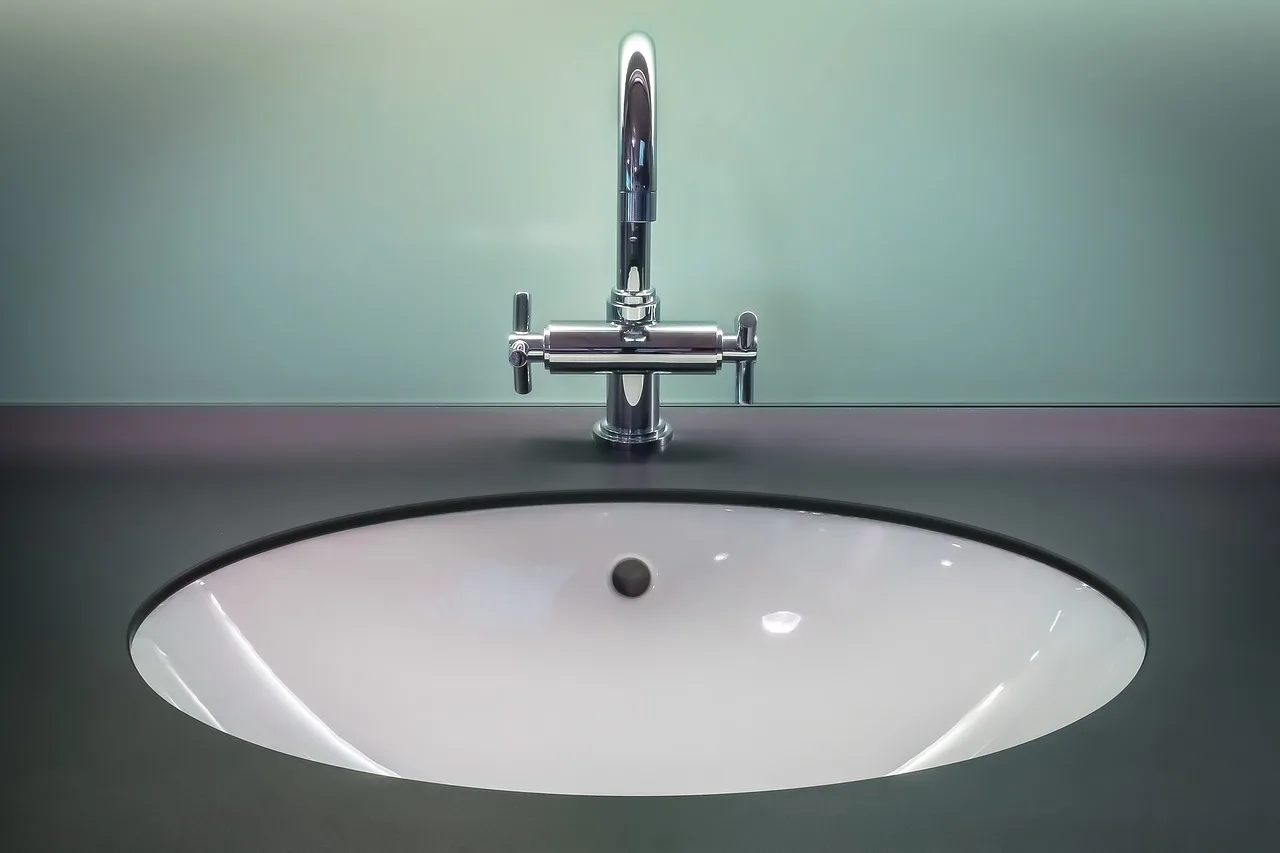
Somewhere in the schedules of an English and Welsh statutory instrument from 1999 there is a list of water quality categories. Category 1 is wholesome water from the mains. Category 2 is water whose aesthetic quality has been impaired by, among other causes, a change in its temperature, and Schedule 1 adds a clarifying phrase in case anyone missed the point, "including water in a hot water distribution system".
In the law of England and Wales, hot water is slightly worse water. Scotland's byelaws say it in exactly the same words, which is the only respect in which the two taps are a national arrangement. What that sentence does not do is explain the taps. Separate hot and cold taps were standard in British bathrooms for decades before 1999, and the regulations permit a single-spout mixer today. What the sentence explains is why the rules were ever nervous about the two streams meeting.
The reason sits in the roof. Many older British houses have a cold water storage tank in the loft, and in the oldest arrangements the kitchen cold tap is the only one fed straight off the mains. Everything else, including the feed to the hot cylinder, comes out of that tank. The Drinking Water Inspectorate, the government body for England and Wales that worries about this, still publishes a test you can run with your thumb: open a tap fully, put your thumb over the outlet, and if you can hold the water back, the tap is probably fed from a tank rather than the mains. Tank water is fine if the tank has a close-fitting lid, screened vents and no dead pigeon in it. Regulators do not like to bet on all three.
So the house was built around a rule of keeping stored water and mains water in separate pipes with separate outlets, all the way to the end. Water Regs UK, the industry body for the fittings regulations, still names the fault the arrangement guards against: cold water pressurising the hot, and hot water getting into the cold mains under fault conditions. There are two legal cures. One is a bi-flow tap, which looks like a mixer but keeps two water paths apart to the tip of the spout. The other is a pair of single check valves on the pipes feeding an ordinary mixer. Neither was a cheap thing to buy when the habit set, so the habit was two taps, one scalding, one arctic, and a basin with a plug in it. The plug is not decorative. In an old British bathroom the basin is the mixer. Newer homes with unvented systems run everything at mains pressure and have ordinary mixer taps, which is why the fitting reads as a period detail rather than a national eccentricity.
The porcelain pony
The bidet has a better origin story than it usually gets.
In French, the word turns up in 1564 in Rabelais meaning a small, stocky post-horse, the sort couriers rode. The furniture sense arrives about a hundred and seventy-five years later: by 1739 a Paris turner on the rue aux Ours was advertising bidets, double bidets and two-backed chairs on his trade card. The name transferred because of the posture. You mounted the thing and sat astride it, as if in a saddle.
The Swiss National Museum places the invention at the French court in the first quarter of the eighteenth century, in an era when educated opinion held that water was dangerous and entered the body through the pores. The bidet was a luxury object made by skilled artisans. Madame de Pompadour had one in rosewood in 1751, carved with flowers and fitted with gilt bronze.
It became normal plumbing in some countries and a rumour in others. In Italy it is required. A ministerial decree of 5 July 1975 specifies that for each dwelling at least one bathroom must be fitted with a toilet, a bidet, a bath or shower, and a washbasin. That is why Italian flats built since have four fixtures in a room that would hold three comfortably.
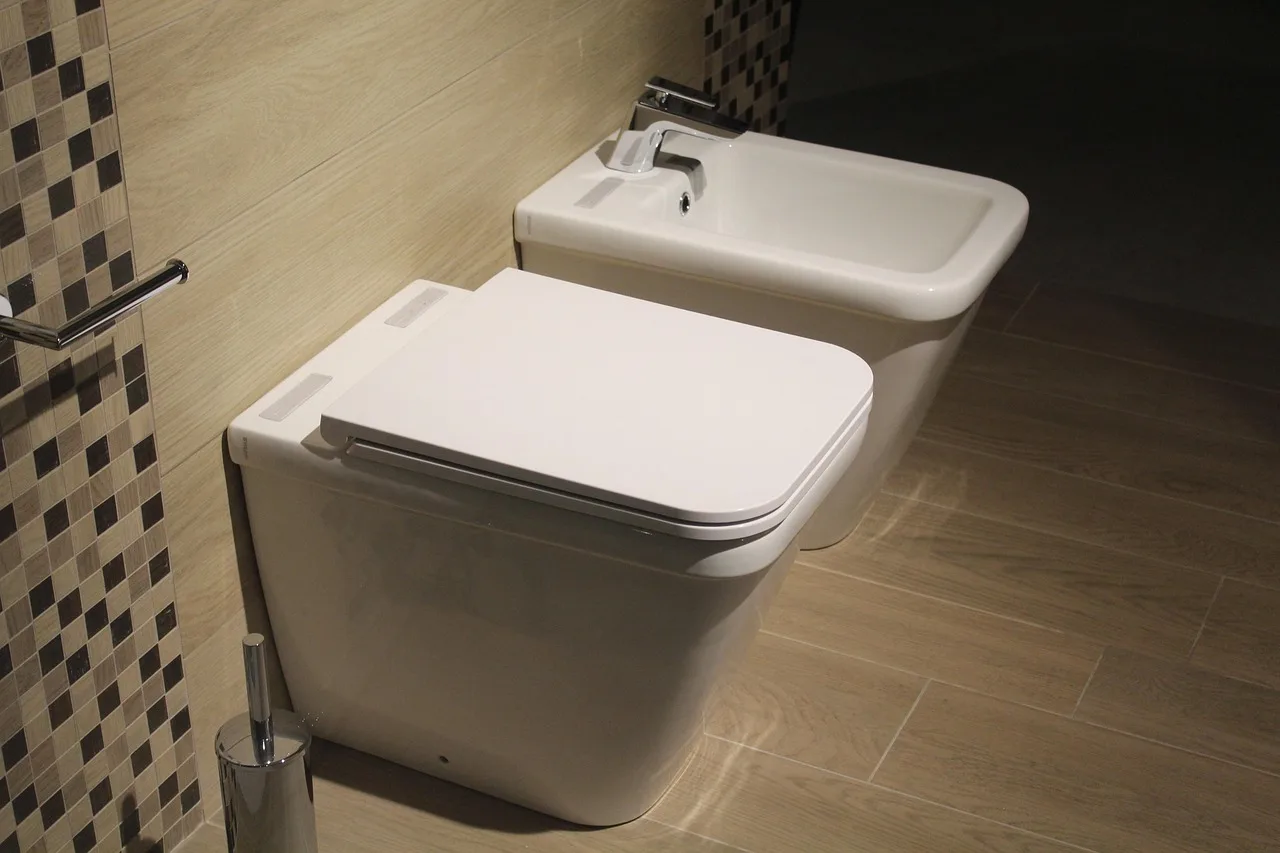
Britain went the other way, and again the reason is backflow. Water Regs UK typically classes bidets as a fluid category 5 risk, the top band, the one that covers faecal material, other human waste, animal waste and pathogens from any other source. Some designs with taps above the spill-over level drop to category 3, and it is ultimately the local water undertaker who decides what protection a given installation needs. A bidet with an ascending spray or a hose handset needs a break tank with a Type AB air gap, and installing one is notifiable work, unless an approved contractor does it, in which case the legal duty to make the job compliant sits with the owner or occupier instead. Either way a plumber who fits your handheld spray straight onto the supply has done something the water undertaker gets to have an opinion about. Very few British bathrooms are worth that paperwork.
Practically: a bidet is a basin, not a second toilet. It has a plug and a drain, you sit astride it, and nothing goes in it that would not go in a sink.
The hose
Across a very large part of the world the answer is simpler and better: a trigger nozzle on a flexible hose, clipped to the wall beside the toilet. English-speaking visitors to Thailand call it the bum gun, which the Bangkok Post has printed without visible embarrassment.
The Thai version replaced a bowl of water poured by hand. The Bangkok Post dates the first Thai-made bidet spray to 1972, from a firm called Narong Lohakij, now trading as HANG. Today you will find one in almost any Thai bathroom you walk into, and the Bangkok Post names Cambodia, China, Vietnam, India and Indonesia among the other places where the same device is ordinary, along with the Middle East.
There is a fixed version too, with the nozzle built into the bowl itself and a small isolator valve on the wall within reach. It is associated with Turkey firmly enough that manufacturers selling it to the rest of the world label it a Turkish toilet. One of them, which sells the handheld type as well, is candid about why you might prefer the built-in nozzle: the water stays inside the bowl instead of going onto the floor, where it is unpleasant and a slip hazard, and a nozzle inside the bowl cannot be stolen.
Three things nobody tells you. The pressure is whatever the building's pressure is, so the first squeeze of the trigger should be gentle and aimed low. The temperature is whatever the cold supply is, and the Bangkok Post warns that in Thai hot season the line can run hot enough to be unpleasant. And the paper, where there is paper, is for drying rather than cleaning, which is a different job and a much smaller quantity.
The control panel
Japan industrialised the idea rather than inventing it. The washing seat, the thing English speakers call a washlet after TOTO's trademark, started as an American product: a Japanese trading company was importing and selling the American Bidet Company's Wash Air Seat in the early 1960s, and in 1967 it bought the patent and asked TOTO to become the domestic manufacturer. That is the year the Japan Sanitary Equipment Industry Association gives for the seat's arrival on the Japanese market as a Japanese product. TOTO decided the imported design was bad, spent the mid-1970s rebuilding it around an integrated circuit, and launched the electronic version in 1980. According to the same association, citing the Cabinet Office's consumption survey, penetration in households of two or more people passed 80 percent in March 2016.
The panel is less frightening than it looks. Find the stop button first, before you press anything. The flush usually offers a large and a small option, dai and sho, meaning exactly what you think. One button plays a running-water sound to cover other sounds, which is a genuinely thoughtful piece of engineering and, I suspect, the button most visitors press by accident.
Squat toilets have not disappeared. Japan's national tourist organisation notes that older izakaya still have them, as does the occasional train station, and makes a fair point in the fixture's defence, which is that used correctly, no part of you touches it. What it does not tell you is the thing people most often get wrong, which is which way to face. You face the hooded end, the front of the fixture, with the door behind you. This is the opposite of how you sit on a Western toilet.
There is a modest research literature here too. A 2003 paper in Digestive Diseases and Sciences had 28 healthy volunteers time six bowel movements each in three positions: a standard seat, a low seat, and a squat. Both the time to a sense of satisfactory emptying and the self-rated effort dropped sharply in the squat. It is one small self-reported study by a single author, so it is evidence rather than proof, but it is the study everyone is loosely referring to when they tell you squatting is better.
Japan's oldest surviving toilets, incidentally, are the tosu at Tofuku-ji temple in Kyoto: orderly rows of evenly spaced holes in a wooden building near the Zen meditation hall, which the monks were already using in the early Muromachi period.
The bin
In a lot of countries the paper does not go down the toilet. It goes in a lidded bin beside it, and the bin is emptied often.
The most useful official document on this comes from Taiwan, which is actively trying to change the habit in the other direction. Its Environmental Management Administration runs a campaign to persuade people that flushing paper is safe, and publishes the arithmetic: the toilet's trap is about two inches across, sewer pipes are over four, and toilet paper meeting the national CNS1091 standard is made of short fibres that disperse on contact with water. The same page lists what must never go down regardless: facial tissue, kitchen towel, hand-drying paper, wet wipes.
Greece is the case visitors hear about most, and the explanation offered is almost always narrow older drainage. I could not find an official Greek figure for pipe diameters, so treat the two-inch number that circulates online as folklore with a plausible basis rather than a fact.
The rule that travels everywhere is the one British water companies print. Thames Water asks for three Ps: pee, poo and paper. Wipes, cotton pads, period products and dental floss go in the bin whatever the packet says, and the company is blunt that flushable wipes are not a real category. It clears about 75,000 blockages a year, which cause more than 60 percent of its sewer floods and cost roughly 40 million pounds.
So the practical instruction is short. Read the sign. If there is a lidded pedal bin beside the toilet and no sign, the bin is the sign.
The mystery cloth
Small folded textiles in bathrooms mean different things in different countries, and almost nobody explains them.
In a Japanese onsen or public bath the small towel is for washing yourself and for modesty on the walk to the water. It does not go in the bath. The national tourist organisation's guidance is to fold it and put it on the side of the tub, or on your head, which is what the regulars do.
In France the equivalent object is not a flat square but a mitt. The standard dictionary definition of a gant de toilette is a terry-cloth pocket, with no separate compartment for the thumb, that you slip your hand into to wash. French linen makers sell them alongside towels. Visitors who have never seen one tend to assume it is a very small towel that has gone wrong.
Further north, do not assume a washcloth will be provided at all. In Germany and its neighbours plenty of people are reported to treat it the way they treat a toothbrush, as something you bring.
The other unexplained fitting, in parts of German-speaking Europe and the Netherlands, is the shelf toilet: a bowl with a dry ledge that catches the deposit above the water line before the flush carries it away. It is a real engineering category, not an accident. There is an Austrian patent from the 1970s whose title translates as flat-flush, deep-flush or suction closet. The shelf is there to cut the splash. It also explains the brush.
Every one of these fittings is a local answer to a local problem: a rusting tank in a loft, a narrow drain, a hot country with good water pressure and cheap plastic hose, a regulator who has thought harder about backflow than you ever will. None of them were designed to be legible to somebody who landed at midnight. Look at the room before you commit to a plan. The bin with the foot pedal is telling you something.
Sources
- The Water Supply (Water Fittings) Regulations 1999, Schedule 1: Fluid Categories - the wording that puts hot water in fluid category 2, and the full definition of category 5
- Water Regs UK: Requirements Scotland, Water Supply (Water Fittings) (Scotland) Byelaws 2014 - Schedule 1 of the Scottish byelaws, word for word the same fluid categories
- Drinking Water Inspectorate: Water Storage Tanks and Cisterns - loft tanks, the mains kitchen tap, the thumb test
- Water Regs UK: Bathrooms, backflow protection for bath and basin taps - single-flow mixers, bi-flow taps, check valves, and the fault they prevent
- Water Regs UK: what backflow protection is required for a bidet? - fluid category 5 typically, category 3 sometimes, the undertaker's discretion, Type AB air gap, notification and the approved-contractor exception
- CNRTL, entry BIDET - 1564 post-horse, 1739 trade card, sitting astride
- CNRTL, entry GANT - definition of the gant de toilette
- Swiss National Museum: the bidet as hygiene furniture - French court origins, Madame de Pompadour's 1751 model
- Decreto ministeriale 5 luglio 1975, article 7 - Italy's required bathroom fixtures, bidet included
- Bangkok Post: Thailand's bidet spray - the bowl it replaced, the 1972 origin, the country list, the hot-season warning, the bum gun nickname
- WuduMate: Turkish Toilet - the in-bowl nozzle, the wall isolator valve, and the two advantages the manufacturer claims for it
- TOTO USA: the little-known history of Washlet bidet seats' development - the Wash Air Seat import, the 1967 patent purchase, the 1970s redesign
- Japan Sanitary Equipment Industry Association: about the spray seat - 1967 as a Japanese product, penetration above 80 percent as of March 2016
- JNTO: Beyond the Bidet, Japanese toilets - Washlet 1980, dai and sho, the modesty sound, squat toilets at stations and izakaya, no contact with the fixture, Tofuku-ji
- Japan Guide: toilets in Japan - how to use a Japanese-style squat toilet, including which way to face
- JNTO: How to Best Enjoy Japan's Onsen - what the small towel is for and where it must not go
- Taiwan Environmental Management Administration: flush toilet paper without worry - trap and sewer diameters, CNS1091, what never to flush
- Thames Water: bin it, don't block it - the three Ps, blockage and flooding figures
- Sikirov, Comparison of straining during defecation in three positions (2003) - the 28-volunteer squatting study
- Austrian patent AT348449B, Flachspuel-, Tiefspuel- oder Absaugeklosett - the shelf toilet as a recognised class of fixture