Prices Without Tax and Other American Habits That Confuse Visitors
LineCast Networks
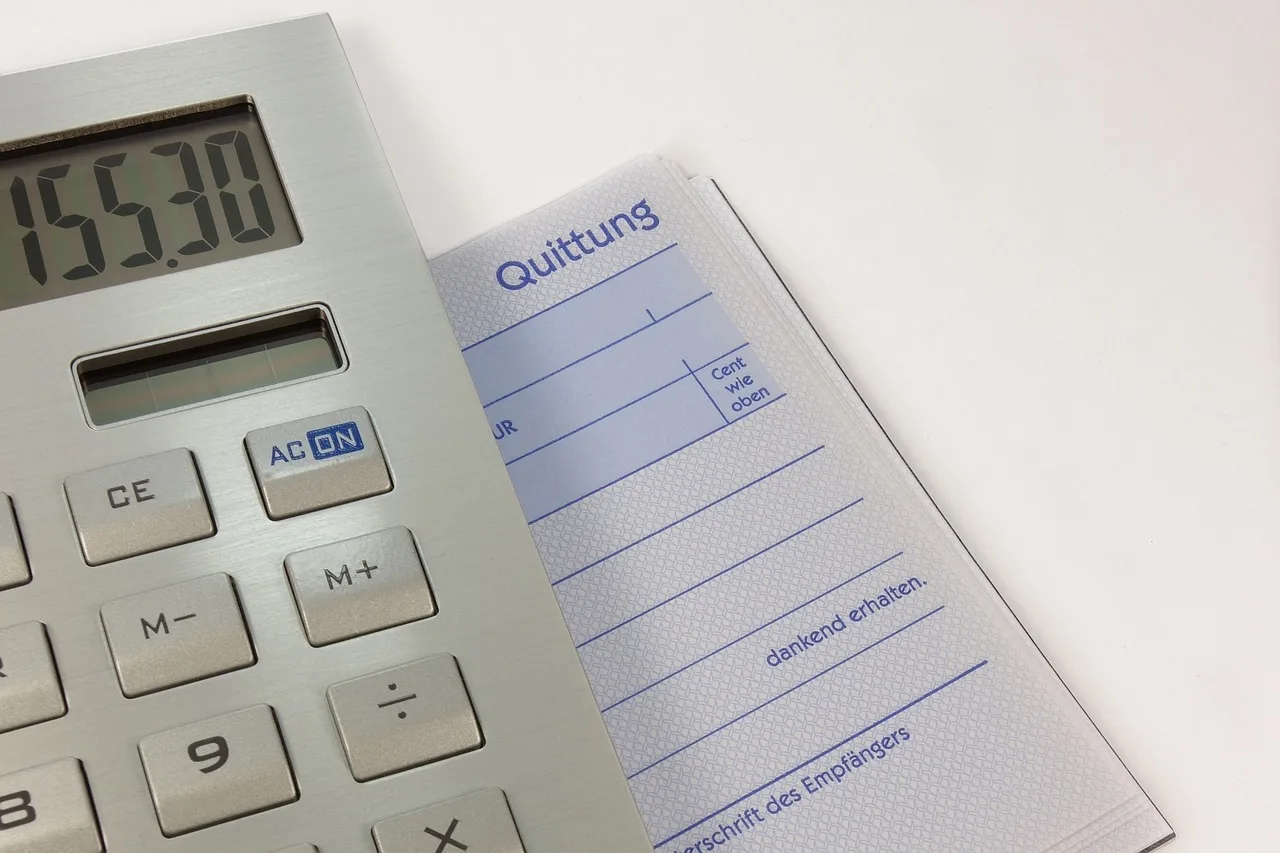
On 30 June 2024, three refund desks in Louisiana closed for the last time: two of them in New Orleans, the third in Kenner. They were what remained of the Louisiana Tax Free Shopping programme, created by state lawmakers in 1988, which for thirty-six years had handed state sales tax back to overseas shoppers who bought something at any of the nine hundred-odd enrolled shops, through counters that had at one time or another also stood in Baton Rouge, Lafayette, Metairie and Shreveport. Act 255 of the 2023 Regular Session shut the whole thing down. Anyone still holding receipts had until 30 June 2025 to post a claim, and then that was that.
The reason this matters to a first-time visitor has nothing to do with Louisiana. It is that the refund desk was the closest thing America ever had to the arrangement a European shopper takes for granted, the one where the tax comes off at the airport because it was baked into the price at the till. In the United States it was never baked in, which is why it could never be neatly extracted. That single structural difference explains the most common moment of confusion in American retail, and several others besides.
The number on the shelf is not the number you pay
The OECD keeps a country note on the United States which puts the position plainly: it is the only OECD member whose principal consumption tax is a retail sales tax rather than a value added tax, and that the federal government does not levy it. States do, and so do counties and cities. There is no national rate, no national exemption list, and no national anything.
Compare the European rule. Directive 98/6/EC, the one that governs how prices are shown to consumers across the EU, defines the selling price as "the final price for a unit of the product, or a given quantity of the product, including VAT and all other taxes". In Europe the tax-inclusive shelf label carries the force of law behind it. A shopper raised in that system reads a price as a promise.
Here is the part that surprises even Americans. The American convention is a convention, not a law. California's Civil Code section 1656.1 says that a shop's freedom to put sales tax reimbursement on top of the ticket "depends solely upon the terms of the agreement of sale". The statute then sets out the ways a shop can signal that it intends to add tax: putting it on the receipt, writing it into the agreement, or posting a notice. It also sets out, in the very next subsection, the wording a retailer can post if it wants to do the opposite: "All prices of taxable items include sales tax reimbursement computed to the nearest mill." Do that, and your prices are tax-inclusive and entirely lawful.
Notice the word the statute keeps using. Reimbursement. In California the sales tax is legally owed by the retailer, not by you. The line on your receipt is the shop recovering its own tax from you, by agreement, because you agreed to it by walking up to the counter. Almost nobody exercises the tax-inclusive option, because a shop that quotes the true price sits next to a competitor quoting a smaller number, and loses.
Practical consequence: budget for a receipt larger than the shelf, and expect the size of the gap to change when you cross a city or county line, because the local layer is stacked on the state layer. Two branches of the same chain, twenty minutes apart, can charge differently for the same shirt. This is not a mistake. It is the system working.

The second uninvoiced charge
Tipping runs on the same logic, which is why it feels so unreasonable and is so hard to argue with.
Federal law, at 29 U.S.C. 203(m)(2)(A), lets an employer satisfy its minimum wage obligation to a tipped worker in two parts: a cash wage, plus "an additional amount on account of the tips received by such employee". The clause that does the damage is the definition of the cash wage. The statute pegs it to "the cash wage required to be paid such an employee on August 20, 1996". Not to inflation, not to the current minimum wage, but to a date in 1996 that has receded ever further into history while the language sat unamended. The tip is the difference. The customer covers it.
That is the federal floor, and it is not the rule everywhere. California's Division of Labor Standards Enforcement is blunt about the divergence: "Unlike under federal regulations, in California an employer cannot use an employee's tips as a credit towards its obligation to pay the minimum wage." A server anywhere in California is owed at least the state minimum, $16.90 an hour since January 2026, and tipped on top of that. A server working inside the city limits of Los Angeles is owed the city's own higher minimum, $18.42 since 1 July 2026, and tipped on top of that. A server in a tip-credit state is being paid partly by you, and knows it.
So the honest advice concerns posture, not percentage. Treat the tip as a charge you owe rather than a verdict you are delivering, look at the bottom of the bill before you add anything in case a service charge has already been applied to your table, and do not conduct an argument about American labour policy with a person who is not setting the policy.
Refills, and the reason the cup is that size
Free refills at a soda fountain or a diner coffee pot are a commercial habit, not a legal entitlement, and they are less universal than the reputation suggests. Sit-down restaurants and fast food counters commonly offer them, and self-service dispensers make the offer easy to extend. Cafés selling single-origin coffee at a serious price generally do not. Nobody will explain the rule to you, because there is not one.
What is documented is the size of the vessel. When the US Food and Drug Administration rewrote the Nutrition Facts label, it had to reset the reference amounts that define a serving, and its explanation of why is quietly damning: "By law, serving sizes must be based on amounts of foods and beverages that people are actually eating, not what they should be eating." Consumption had moved on since the previous reference amounts were published in 1993. So the reference serving of soft drink went from 8 ounces to 12. Ice cream went from half a cup to two thirds.
The direction is not uniformly upward, and that is the detail that keeps the exercise honest instead of merely gloomy. The reference amount for yoghurt went down, from 8 ounces to 6. The agency was measuring, not moralising.
Two things follow for a visitor. The small is not small, and ordering the smallest available size is not a statement about your appetite, it is arithmetic. And a shared main course is a normal request in most American restaurants, as is taking half of it away with you, which nobody will find remarkable.

Why everyone wants to see your passport
Congress has never set a national drinking age directly. What it did instead sits at 23 U.S.C. 158, and it is fiscal arm-twisting rather than criminal law. If a state allows "the purchase or public possession" of alcohol by anyone under 21, the Secretary of Transportation withholds 8 percent of what that state is apportioned under two specific federal highway programmes named in the statute. Not 8 percent of its highway money as a whole, which is the way the figure usually gets repeated, but 8 percent of two large slices of it, which was quite enough. The threat worked, and 21 became the effective national floor without Congress ever legislating one. The mechanism also explains the texture of enforcement: what the federal lever targets is buying and public possession, not the act of drinking, which is left to the states to define around the edges.
The consequence for a visitor is that you will be asked to prove your age far more often than you expect, and that what counts as proof is decided by whichever state you happen to be standing in. Washington State's Liquor and Cannabis Board publishes its list, and it is instructive. The document has to be unexpired, and it has to carry a photograph, a date of birth and a signature, with an express exception on the signature for US military IDs. As for what the document may be: a driving licence, instruction permit or ID card from any US state, territory or the District of Columbia; the same three from a Canadian province; a valid Washington temporary driving licence; a US Armed Forces card; a Merchant Marine card, which the Coast Guard issues; a Washington tribal enrolment card; or one of a short list of federal travel documents, namely an official passport, a passport card, a Global Entry card, a green card or a NEXUS card.
Read that list again for what is absent. A German driving licence is not on it. Neither is a French, Australian or Japanese one. Your national photocard, the thing you carry every day and think of as your identity, is not identification in a Seattle off-licence. Your passport is.
The same principle governs domestic flights. The Transportation Security Administration's list of acceptable documents includes "foreign government-issued passport" and, among driving licences, only Canadian provincial ones. Since 7 May 2025 the agency has also stopped accepting US state licences that are not REAL ID compliant, which is a domestic quarrel you get to watch from the side, holding the document that was always going to work.
Carry the passport. Consider a photograph or a photocopy for the evenings when carrying the real one feels unwise, and accept that a photocopy will not satisfy a careful bartender.
The gap in the lavatory door
The stall partitions are the detail nobody warns you about, and the explanation is split in two.
The gap under the door is required, at least in one stall. Section 604.8.1.4 of the ADA Standards for Accessible Design states that in a wheelchair accessible toilet compartment, "the front partition and at least one side partition shall provide a toe clearance of 9 inches minimum above the finish floor and 6 inches deep minimum beyond the compartment-side face of the partition". Compartments for children's use need 12 inches. The requirement is waived only where the compartment is unusually deep or wide, on the reasoning that there is then enough room to manoeuvre without borrowing space from next door. The gap is not indifference. It is a turning circle.
The other gap, the vertical one at the hinge through which you can make unwilling eye contact with a stranger at the basins, has no code behind it at all. It survives because of the way American partition hardware is made and hung, and because replacing every partition in the country would cost money that nobody is obliged to spend. Full-height enclosures exist, and newer American buildings appear to use them more often. They cost more, and the gap is what you get when nobody has to pay the difference.
While you are in there, one more piece of American law worth knowing. Illinois passed the Restroom Access Act in 2005. It requires a retail establishment that keeps a toilet for its staff to let a customer use it during normal business hours, provided the toilet is reasonably safe and five separate conditions all hold at once: the customer has an "eligible medical condition", which the Act defines to cover Crohn's disease, ulcerative colitis, other inflammatory bowel disease, irritable bowel syndrome and anything else needing immediate access to a toilet, or else uses an ostomy device; three or more employees are on shift at the moment of asking; the shop does not normally make a lavatory available to the public; letting the customer through would raise no obvious health, safety or security problem; and, the one most likely to sink a real request, "a public restroom is not immediately accessible to the customer". Filling and service stations of 800 square feet or less that have a staff toilet inside are excluded from the Act's definition of a retail establishment altogether.
The statute is generous and specific. It is also proof of the underlying position: absent a condition like those, there is no general American right to a lavatory. Public provision is thin, and the working solution is a chain coffee shop, a department store or a hotel lobby, entered with confidence.
The through-line
The pattern in all of this is that America decides at the smallest possible unit. The price is decided by the retailer and the county. The wage is decided partly by the customer, and partly by whichever city the restaurant happens to sit in. The serving size is decided by what people were measured doing in the last survey. The age check is decided by the state, and the privacy of the lavatory stall by whoever last signed off on the partitions.
A visitor's mistake is to keep looking for the national answer, then to conclude that the country is being obtuse when no national answer arrives. It is not obtuse. It is federal, in the technical sense, all the way down to the door hinge. Once you stop asking what the rule is in America and start asking what the rule is here, in this city, at this counter, the place becomes much easier to read, and the receipt stops being a surprise.
Sources
- Louisiana Tax Free Shopping Program for International Visitors to end July 1 - Louisiana Department of Revenue announcement confirming the programme ended 1 July 2024 under Act 255 of the 2023 Regular Session, that it was established in 1988 and covered more than 900 retailers, that the last three refund centres closed 30 June 2024, and that mail claims ran to 30 June 2025.
- Consumption Tax Trends: United States (OECD country note) - Confirms the US is the only OECD country whose principal consumption tax is a retail sales tax rather than VAT, and that it is a state and local tax, not federal.
- California Civil Code section 1656.1 - Text confirming that adding sales tax reimbursement depends solely on the terms of the agreement of sale, and giving in subsection (b) the exact wording for lawful tax-inclusive pricing.
- Directive 98/6/EC on consumer price indication, consolidated text - Article 2(a) defines selling price as the final price including VAT and all other taxes, the European contrast used in the article.
- 29 U.S.C. 203, Fair Labor Standards Act definitions - Subsection (m)(2)(A) sets the tip credit and pegs the tipped cash wage to the level required on 20 August 1996.
- Tips and Gratuities FAQ, California Division of Labor Standards Enforcement - States that, unlike federal law, California employers may not credit tips against the minimum wage obligation.
- Minimum Wage FAQ, California Division of Labor Standards Enforcement - Confirms the California minimum wage is $16.90 per hour from 1 January 2026 for employers not covered by a higher industry or local rate.
- Office of Wage Standards, City of Los Angeles - Confirms the Los Angeles city minimum wage rose to $18.42 per hour on 1 July 2026, above the California state floor.
- Changes to the Nutrition Facts Label, US Food and Drug Administration - Source for serving sizes being set by what people actually eat, the 1993 baseline, and the soda, ice cream and yoghurt reference amounts.
- 23 U.S.C. 158, National minimum drinking age - Subsection (a)(1)(B) withholds 8 percent of the amount apportioned to a non-compliant state under paragraphs (1) and (2) of section 104(b), and subsection (a)(1)(A) identifies the trigger as state law permitting purchase or public possession under 21.
- Acceptable Identification, Washington State Liquor and Cannabis Board - The state list of valid ID for alcohol purchase, including the date of birth, signature and photograph requirements, the signature exception for US military IDs, the Washington temporary licence, and the absence of any non-Canadian foreign driving licence.
- Identification, Transportation Security Administration - Confirms foreign government-issued passports are accepted for domestic flights, that only Canadian provincial licences qualify among foreign licences, and the 7 May 2025 REAL ID change.
- ADA Standards for Accessible Design, US Access Board - Section 604.8.1.4 on toe clearance at toilet compartment partitions, including the 9 inch and 12 inch figures and the depth and width exceptions.
- Restroom Access Act, 410 ILCS 39, Illinois General Assembly - Full statutory text: the Section 5 definitions of eligible medical condition and retail establishment, including the 800 square foot filling station carve-out, and the five conditions in Section 10 for customer access to a staff toilet.