Ordering in a British Pub Without Anyone Having to Explain It to You
LineCast Networks
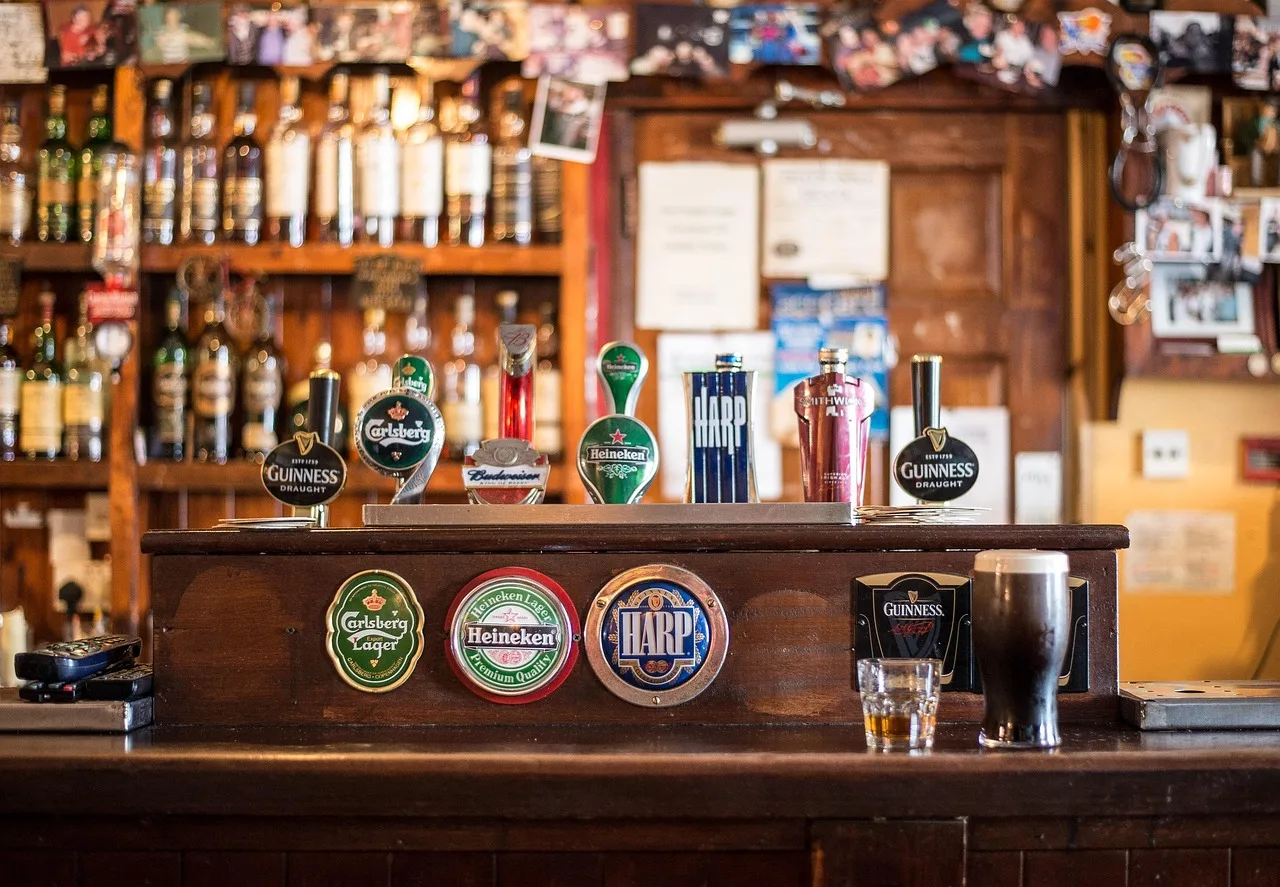
The Licensing Act 1988 did two things to weekday drinking hours that almost nobody remembers. It moved closing in England and Wales from half past ten in the evening to eleven, and it struck out the words "with a break of two and a half hours beginning at three in the afternoon". Until then, pubs shut for most of the middle of the day. After it, they did not. The same section rearranged Sunday hours and club hours as well, but nobody has ever written a song about that.
Then the whole apparatus went. The Licensing Act 2003 repealed the 1964 Act that carried those permitted hours, and the repeal took full effect on 24 November 2005. There has been no national closing time in England and Wales for twenty years. A pub's hours are whatever its own premises licence says, and that licence is a document filed with a local council.
And still, by widespread report, at around eleven in a great many pubs someone rings a bell.
That is the whole institution in one gesture. Very little of what feels like a rule in a British pub is a rule. A small number of things genuinely are rules, written down and enforceable, and they are almost never the ones people warn visitors about. What follows separates the two, because the anxiety about pubs is nearly always misplaced: people worry about the etiquette and get surprised by the law.
The counter is the till
You order at the bar and you pay at the bar, at the moment of ordering, for that round only. Usually that is the end of it: no tab, no bill arriving later, nobody with a card machine standing between you and the door. You can run a tab if you want one, and plenty of places will hold a card behind the bar, but the default is that you are square with the house the second your drink is poured. This single fact reshapes an evening. You are never trapped. You can arrive, drink one thing, and leave nine minutes later without any transaction taking place except the one you already completed.
It also means the bar is a queue that is not a queue. There is no line, no ticket, no rail. People stand along the counter in a loose crowd, and the person serving keeps a mental register of who arrived when. That register is usually accurate and it is generally respected. The way to enter it is to stand at the bar, face the servers, and be visibly available. That is it. Do not wave a note, do not call out, do not tap a coin on the wood, do not lean past someone who was there first. If you are served out of turn, the correct move is to say so and point at whoever was ahead of you, which costs nothing and buys a surprising amount of goodwill.
When your turn arrives, name the drink and the size. "A pint of the pale ale, please." Naming the pump is enough; you do not need the brewery, the style or a preamble. If you are buying several things, say them all at once rather than in instalments, because the person serving is pouring, pricing and watching the queue simultaneously.
If you do not specify a size, you may get a question back. That is not fussiness, it is a mandatory licensing condition. Premises in England and Wales must keep available a half pint of beer or cider, a twenty-five or thirty-five millilitre measure of spirits, and a 125ml glass of still wine; must print them somewhere a customer can read them, on the menu or a price list; and must make sure that anyone who names no quantity is told the small ones exist. Asking for "a glass of wine" and getting "small one or large one?" back is the law working as intended.
What the law is actually strict about
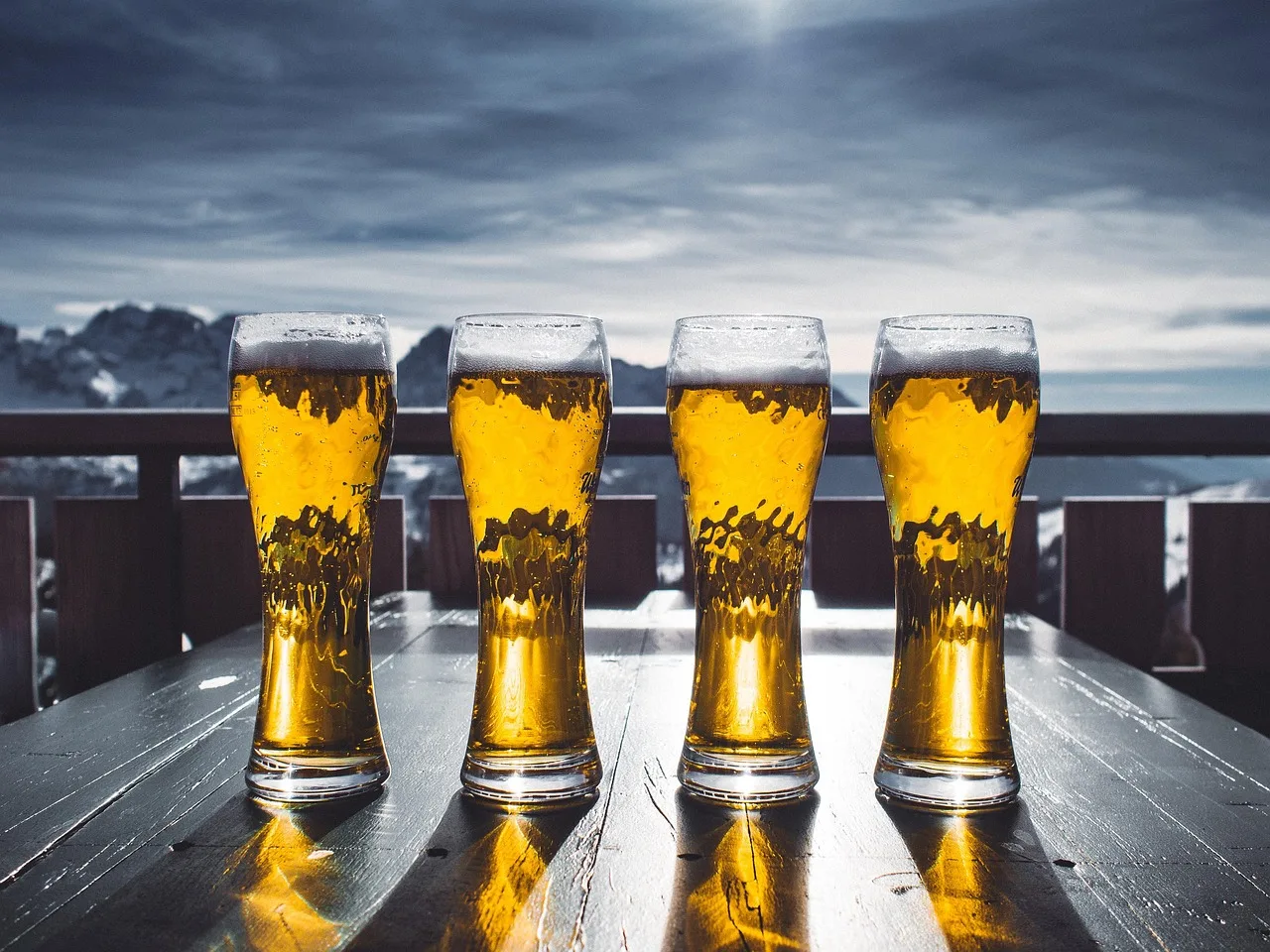
Sizes, mostly. Draught beer, lager and cider must be sold in a third of a pint, a half, two thirds, or multiples of a half. That is the entire permitted list. The two-thirds pint, which the trade calls a schooner, is a recent arrival: it only became lawful for trade in Britain on 1 October 2011, when an order that also deregulated the sizes of unwrapped loaves quietly slipped it into the imperial capacity measures. The name is much older than the permission. CAMRA's history of the glass turns up a publican in Greenock selling schooners in the 1870s, to customers who called the thing a wee pint.
The glass in your hand is usually a measuring instrument. Stamped glasses come in two forms: brim measures, filled to the top, and lined glasses, with a line and space above it for foam. The exception is a pub pouring through an automatic meter, where the meter does the measuring and the glass is deliberately left unstamped so that nobody argues with a line the beer was never aimed at. Either way, guidance for licensees is explicit that a customer who thinks the head is excessive can ask to have the glass filled up further. This is worth knowing because visitors assume asking is rude. It is not. It is provided for.
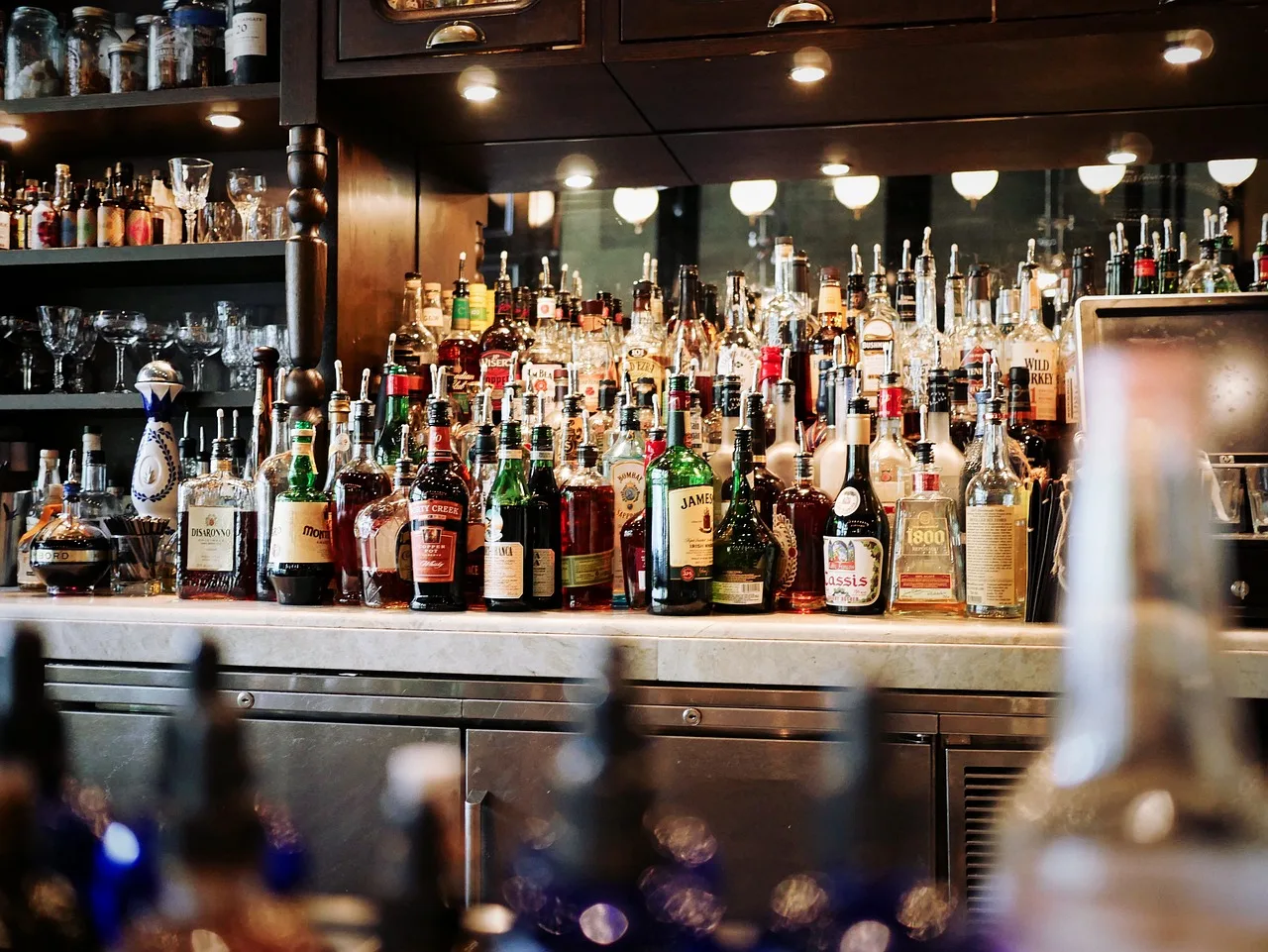
Spirits are stranger. Only four are regulated by quantity: gin, rum, vodka and whisky. They must be served in twenty-five or thirty-five millilitres, or multiples, and the pub has to pick one of those two as its house measure, use it across every bar on the premises, and display a notice saying which. That notice is usually a small printed card near the optics, and it is the single most useful thing on the wall, because a house that pours thirty-five is pouring you forty per cent more than a house that pours twenty-five for a price that may not differ by much. Other spirits sit outside all of that: brandy, tequila, every liqueur, no specified quantity whatsoever. Wine does not get the same freedom. By the glass it must be 125 or 175 millilitres or multiples of those, port and sherry must be 50 or 70, and the house has to tell you which it uses.
The list of mandatory licensing conditions in England and Wales is short, and two items on it are worth carrying in your head as a customer. One is water. The premises have to hand over "free potable water" to anyone who asks, although the duty bites only "where it is reasonably available", so a pub with a working tap has no business selling you a bottle. The other hides inside the condition on irresponsible promotions, which bans, among other stunts staged to shift drink, "dispensing alcohol directly by one person into the mouth of another", excepting anyone "unable to drink without assistance by reason of disability". The duty there falls on the staff and not on you. Somebody, at some point, made it necessary. Scotland and Northern Ireland license under their own statutes and set their own conditions.
When somebody brings it to you
Table service exists and is spreading, but it is not distributed evenly, and the table itself usually tells you which regime you are in.
Drinks are usually ordered at the bar. Food is where it varies. In a great many pubs you still order food at the bar, give a table number, and the kitchen finds you. In a dining-led pub, someone will take the order at the table and run a bill. In the larger chains, the order goes through a phone: Wetherspoon, to take one big operator that publishes how its own system works, offers two routes, a company app and a QR code printed on the table or the menu, either of which gets food and drink carried to your seat while you stay in it.
Reading the room takes about four seconds. A numbered disc, card or metal stand on the table means the pub needs that number, which means you are ordering at the bar. A QR code on the table means you can order from where you sit. A menu handed to you by a person who then walks away means they are coming back. If none of those apply, go to the bar and ask; one question ends the ambiguity permanently and nobody thinks less of you for it.
The round
Here we leave the statute book entirely. Round-buying is custom, it varies by group and region, and no one will produce a document. It is also the part visitors most reliably get wrong.
The mechanism: one person buys a drink for everyone present, and later somebody else does, and so on. It is not a system for splitting costs evenly. It is a system for making sure everyone takes a turn, which is a different thing and produces different obligations. If you accept a drink from a round, you have joined it, and the expectation is that you will buy one before the group breaks up.
That produces some practical arithmetic. In a group of three, a round is trivial. In a group of eight, joining the round commits you to staying for eight drinks or buying a round you do not get repaid for. Both are fine, but choose knowingly. The clean exit is at the beginning: say "I'll get my own, I'm only staying for one" before the first round is bought. Said at the start, that is unremarkable. Said after you have drunk two of other people's drinks, it lands badly.
You do not have to match anyone's drink or spending. Buying your round while drinking soda water is entirely normal and nobody audits the total. The one genuine offence is leaving before your turn comes around, and even that is forgiven if you announce it early.
Tipping
The received wisdom is that you never tip in a British pub. That is closer to true than in almost any other drinking culture, but it is not the whole picture, and the picture changed recently.
For drinks bought at the bar, no tip is expected. None. The transaction is complete when you pay. Card readers may present a tip prompt, which is the terminal's software talking and not the house asking, and declining is entirely normal. The traditional alternative is to offer the person serving a drink rather than money, usually by adding "and one for yourself" when you order. They may take it as a drink or as its value. Pure folklore, much less common than it once was, and in a busy city pub it may not land at all.
Food served to your table is different, and closer to restaurant convention. A service charge may be added to the bill. Consumer law requires that any compulsory service charge be disclosed to you before you order, along with prices and quantities, so if a charge appears that you were not told about, you have grounds to query it. If it is described as discretionary, it is discretionary.
What has genuinely changed is where the money goes. Since 1 October 2024, employers must pass on all tips to workers without deductions, must have a written tipping policy, and must keep records, under a statutory code of practice. Tips do not count towards the minimum wage, so they cannot be used to make up a worker's basic pay. One jurisdictional caveat, since these things are never uniform across the UK: the regulations bringing that code into effect extend to England, Wales and Scotland, and not to Northern Ireland.
Ages, and the border that catches people out
Eighteen to buy alcohol, anywhere in the UK. That part is uniform. What happens next is not, and this is the single most common place where a rule true in one part of Britain is confidently asserted about another.
In England and Wales, a sixteen or seventeen year old accompanied by an adult may drink beer, wine or cider alongside a meal, though not buy it. Scotland has an exemption too, and it is drawn on a different axis. Section 106 of its 2005 Act lifts the consumption offences for beer, wine, cider or perry taken "along with a meal supplied on relevant premises", with no accompanying adult written into the provision at all: in Scotland the meal does the work that the adult does south of the border. Northern Ireland has no such exemption. There, under-eighteens may not drink alcohol on licensed premises at all, and the rules on simply being present are tighter: an accompanied young person may be in the bar area, though not at the bar itself, only until nine in the evening, or stay until half past nine if they are finishing a meal bought before nine.
Bring photographic identification if there is any chance of being asked. Licensed premises in England and Wales must operate an age verification policy, and the mandatory condition fixes what the policy has to demand: identification carrying a photograph, a date of birth, and either "a holographic mark" or "an ultraviolet feature". That second limb was added in 2014, and it is the half that saves most visitors, because a national identity card with no hologram on it will usually still carry a UV feature. Many houses run the check on anyone who looks well over eighteen. A passport clears it everywhere.
Leaving
There is nothing to settle, which is the pleasure of the whole arrangement. You paid as you went, so you can stand up and go at any moment, and the only expected gesture is a word of thanks to whoever served you.
Empty glasses can be carried back to the bar or left on the table. Returning them is a small courtesy nobody will demand of you, and in a genuinely packed pub it is a real kindness.
As for closing: the licence, not the country, sets the hour. And because the 2003 Act made the sale of alcohol a licensable activity while leaving consumption off the list entirely, the law has nothing to say about the drink already in front of you. Last orders is the end of selling. How long you get to finish is decided by the licence and by the person behind the bar, which is why "time, please" carries no statutory force whatsoever, and why it is nonetheless the wrong thing to argue with. Someone wants to go home.
Wherever the bell still rings at eleven, it has been legally meaningless since 2005. It survives because the pub was never really governed by the acts of parliament that governed it. What parliament contributed was a guarantee that your glass is honest and your water is free. The rest, the queue that is not a queue, the turn you are expected to take, the drink you buy for somebody who bought one for you, is a set of arrangements a few thousand rooms made for themselves and then kept.
Sources
- Licensing Act 1988, section 1 (as enacted) - s.1(1) moved weekday closing from half past ten to eleven and removed the compulsory afternoon break; s.1(2) to s.1(6) also altered Sunday hours, the justices' power over morning opening and the club-hours provision
- Licensing Act 1964, section 63 - the 1964 Act, which carried the permitted-hours regime, repealed by the Licensing Act 2003 with effect from 24 November 2005
- Licensing Act 2003, section 1: Licensable activities and qualifying club activities - the licensable activities are sale and supply; consumption of alcohol is not among them
- The Licensing Act 2003 (Mandatory Licensing Conditions) (Amendment) Order 2014 - substituted the whole Schedule of the 2010 Order from 1 October 2014, replacing the pre-2014 wording still served on the 2010 Order's own revised page: the four conditions in the substituted Schedule are irresponsible promotions (with mouth-dispensing at paragraph 1(2)(e) and its "by reason of disability" exception), free potable water on request where reasonably available, the age verification standard of photograph plus date of birth plus either a holographic mark or an ultraviolet feature, and the required availability of half pints, 25ml or 35ml spirits and 125ml still wine, set out in printed material for customers
- Selling alcohol in licensed premises (Business Companion) - permitted draught quantities, stamped brim and lined glasses, unstamped glasses on metered dispense, topping up an excessive head, the four regulated spirits and the house-measure notice, the 125ml and 175ml wine measures and 50ml and 70ml fortified wine measures, and the requirement to disclose prices, quantities and compulsory service charges before purchase
- The Weights and Measures (Specified Quantities) (Unwrapped Bread and Intoxicating Liquor) Order 2011 - art.2 added the 2/3 pint to the imperial capacity measures lawful for trade and art.3 replaced the fixed sizes for unwrapped loaves with a quantity-indication requirement, in force 1 October 2011
- Glass half full (CAMRA, What's Brewing, August 2024) - the schooner name in trade use, the Greenock publican of the 1870s and the "wee pint", and the glass reaching general acceptance after 2011
- Alcohol and young people (GOV.UK) - 16 and 17 year olds accompanied by an adult may drink, but not buy, beer, wine or cider with a meal
- Licensing (Scotland) Act 2005, section 106 - s.106(3) disapplies the consumption offences for beer, wine, cider or perry taken along with a meal supplied on relevant premises, with no accompanying-adult requirement
- Alcohol and the law (nidirect) - Northern Ireland rules: no consumption by under-18s on licensed premises, accompanied young person in the bar area but not at the bar until 9.00pm, until 9.30pm when finishing a meal bought before 9.00pm
- Tips at work (GOV.UK) - all tips must be given to workers without deductions under a statutory code of practice, and tips do not count towards the National Minimum Wage
- The Employment (Allocation of Tips) Act 2023 (Code of Practice on Fair and Transparent Distribution of Tips) Regulations 2024 - the Code came into effect on 1 October 2024 and the regulations extend to England, Wales and Scotland
- Wetherspoon app and QR ordering - the operator's own description of two table-ordering routes, its app and a QR code on the table or menu