Old Tokyo Survives in Yanaka, and You Can Walk All of It in an Afternoon
LineCast Networks
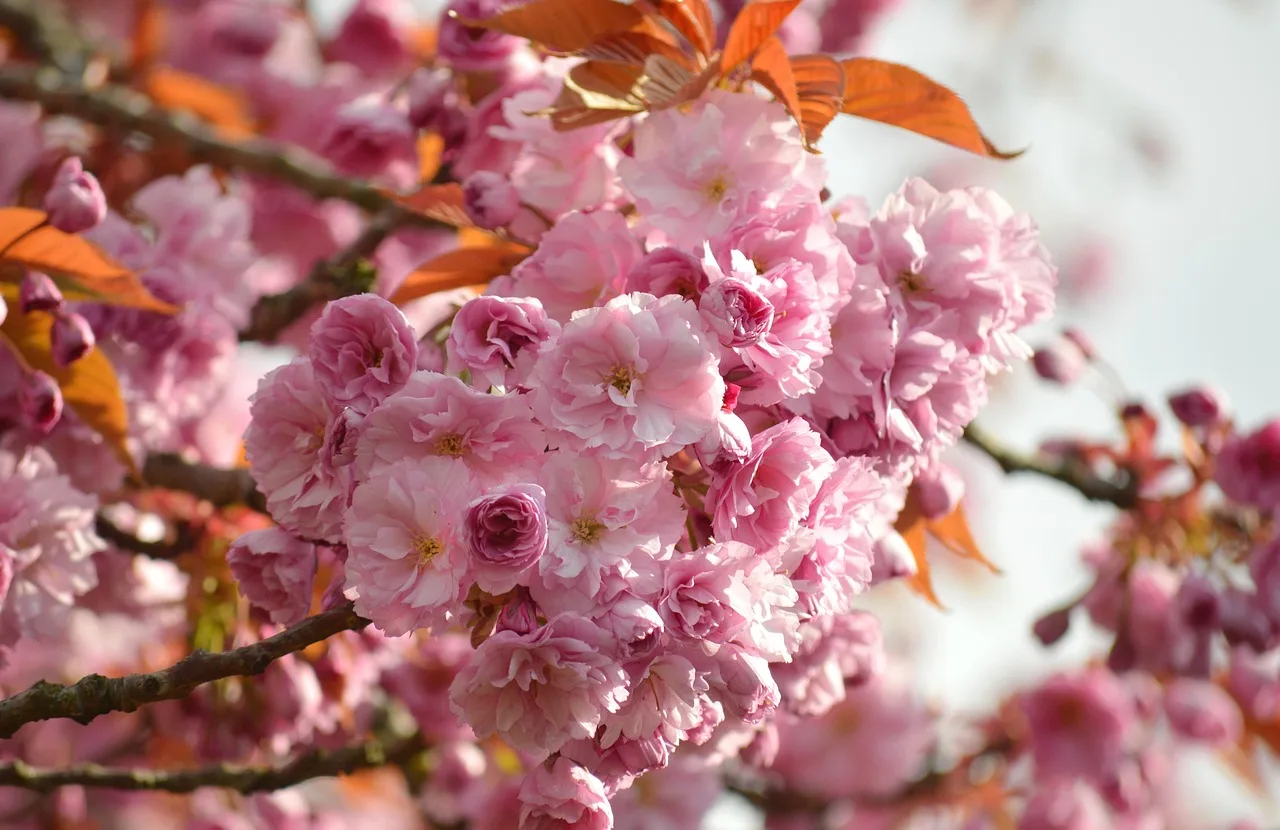
Yanaka's most famous building is a rectangle of stones in the grass.
They sit in the metropolitan cemetery, a low foundation with an explanatory board beside it, and until the early hours of 6 July 1957 they carried a five-storey pagoda. That pagoda was the one Koda Rohan wrote about in his novel The Five-Storied Pagoda, and Tenno-ji had handed it to the city of Tokyo in June 1908. A couple set fire to it at about a quarter to four in the morning and died inside; the police found the two bodies in the ruins and put the blaze down to a suicide pact. What remains is the plinth, the sign, and a lot of visitors who arrive expecting a tower.
That is worth knowing before you start walking, because the received account of Yanaka is that this is the corner of Tokyo where nothing was lost. The reality is more interesting, and Taito City puts it in writing.
Why the alleys are two metres wide
The ward's own Yanaka district planning policy states the mechanism without sentiment: the neighbourhood suffered little damage in the 1923 earthquake and little in the wartime air raids, and because it was never destroyed, almost none of it was ever rebuilt. The wide-road, fireproof reconstruction programmes that reshaped the rest of central Tokyo simply passed it by. The same document measures the district at roughly 100 hectares and, from its 2011 land use survey, counts 3,669 buildings in it, of which about 66 per cent are timber-framed and about 68 per cent stand one or two storeys high. Temples, shrines, schools and other educational and cultural facilities, together with parks, sports grounds and burial grounds, account for something like 43 per cent of the total area. Some of the lanes are about two metres across.
The consequence is not only charm. Yanaka 2, 3 and 5-chome are designated a fire-resistance priority zone, and about 60 per cent of the residential plots inside it are under 100 square metres. Preservation and fire risk are the same fact seen from two sides. The lanes you came to photograph are the lanes a fire engine cannot enter.
Then, on 27 October 2020, the arrangement changed. On that single day Tokyo formally abolished the planned trunk road, Auxiliary Route 92, that had hung over the temple quarter for decades, and Arakawa City abolished Route 188 next door; and Taito City brought its Yanaka District Plan into force across 99.7 hectares, with the detailed building controls, minimum plot sizes, height ceilings, wall setback lines and restrictions on the form, colour and design of new buildings, applying inside a 32.6-hectare core. The reprieve is not total. The same ward policy still carries Ring Road 3 and Auxiliary Route 95 over the district as live planned roads, with their alignment under review rather than cancelled. Yanaka had spent a century surviving by accident. It now survives on purpose, under a rule book, over about a third of its area.
You can walk the whole of it between lunch and dusk. Almost everything below sits within about ten minutes of Nippori station on foot.
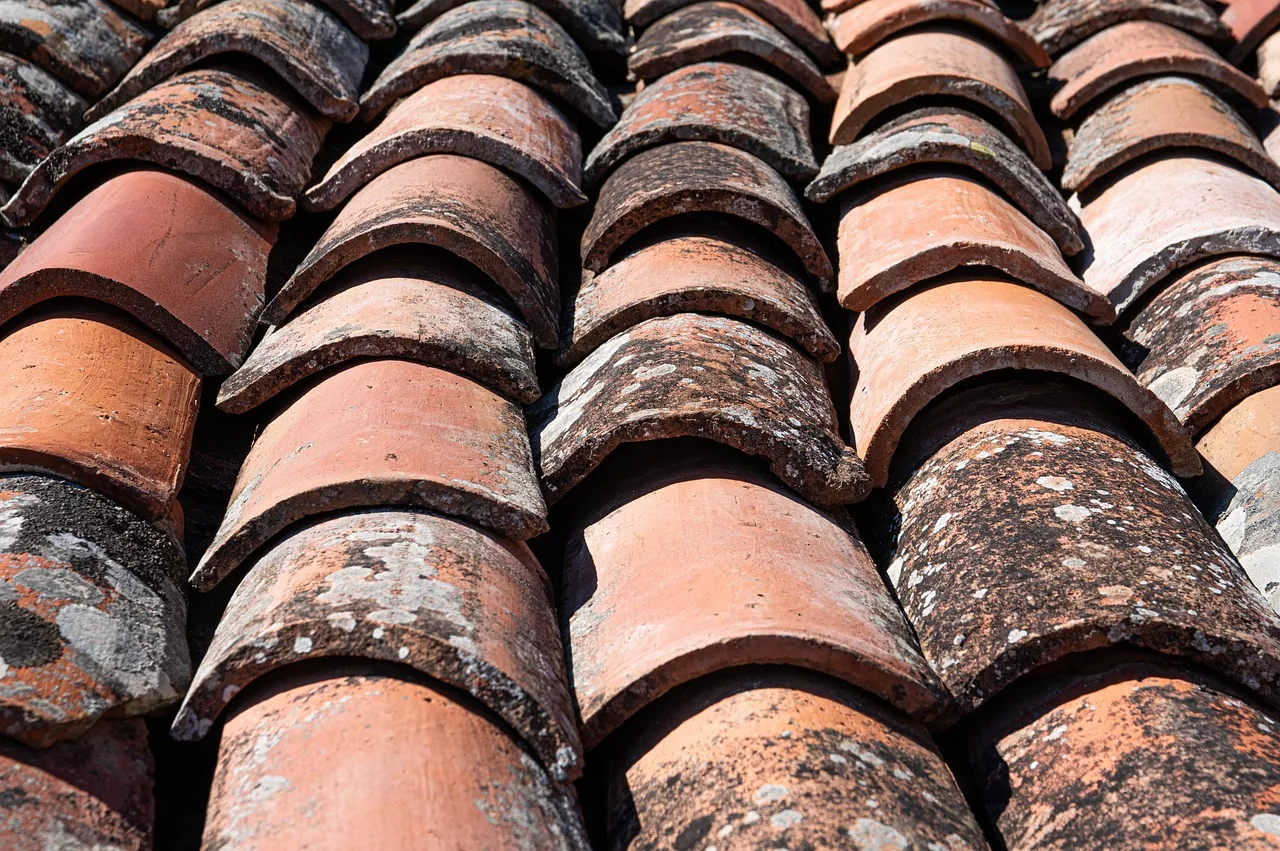
Start in the cemetery, and start early
Come out of the west or south side of Nippori and you are on the plateau within five minutes. Yanaka Cemetery opened on 1 September 1874 and covers 102,537 square metres. Cherry trees line the paths, and the central avenue is the one people mean when they talk about cherry blossom in Yanaka. The northern edge runs along the top of the railway cutting, high ground with a clear line east to the Skytree.
Treat it as what it is. This is a working burial ground with an on-site office, not a park with graves in it, and on any given morning somebody is scrubbing a headstone and changing the water in a flower holder. Walk the avenues, keep off the plots, and keep your voice down.
The correction most guides need is here. The last shogun, Tokugawa Yoshinobu, is routinely described as lying in Yanaka Cemetery. He is not in the metropolitan cemetery. His grave sits in the Kan'ei-ji burial ground, one of the temple plots interleaved with the metropolitan one inside the area everybody calls Yanaka, and it is designated a historic site by the Tokyo government. It also looks nothing like the stone monuments around it: two low round earth mounds side by side, his and his wife's, in the manner of an imperial tumulus. Yoshinobu left instructions that his funeral be conducted by Shinto rather than Buddhist rites, as thanks to the Meiji Emperor for granting him the highest rank in the new peerage. The man who ended the shogunate is buried like a courtier.
Tenno-ji is a short walk from the station. It is said to date from the Kamakura period, and in the Edo period it ran one of the three great licensed lotteries of the city, alongside Ryusen-ji in Meguro and Yushima Tenjin. The pagoda stones are a short walk from its gate.
South to the bathhouse
Drop off the plateau towards Ueno-Sakuragi and you reach a crossroads that functions as the eastern doorway into Yanaka proper. The corner is held by Kayaba, a coffee house of long standing, and it is the turn SCAI THE BATHHOUSE names in its written directions for anyone walking up the slope from Nezu station. Coming the other way, from Nippori, the gallery routes you out of the south exit, left along the bridge and stone steps onto the broad avenue, straight for about five minutes to the end of the road, then left. It is a minute further on your right, opposite a police box.
Its postal address begins with the words Kashiwayu-ato: site of the Kashiwa bathhouse. It is a contemporary art gallery that took over a former public bathhouse, and the address is the evidence. It opens at noon and closes at six, which is later than most of this walk starts and earlier than a leisurely one ends. Two warnings. It is closed on Sundays, Mondays and public holidays, and it also closes entirely between exhibitions, which is a schedule no calendar app will predict for you. Check what is hanging before you route your afternoon through it.
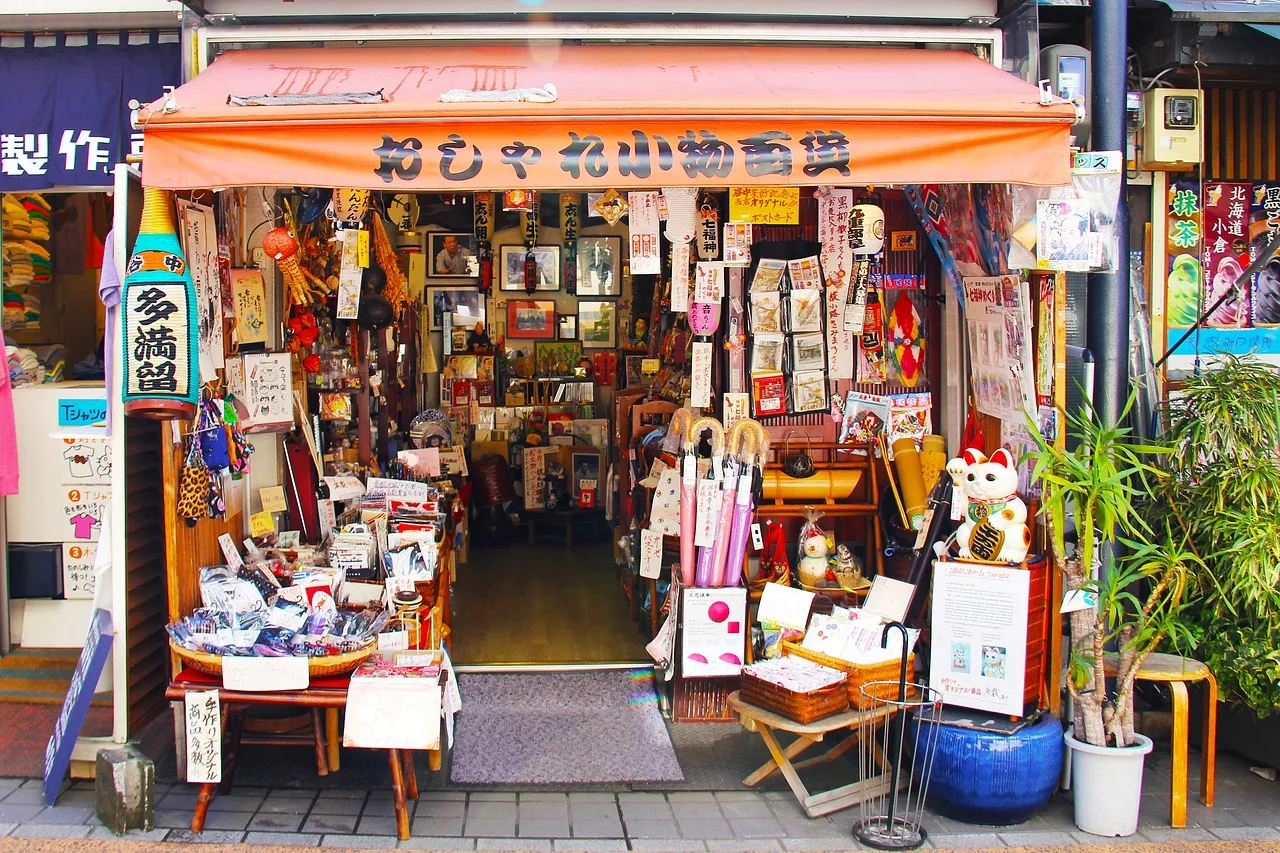
West along Sansaki-zaka
Zenshoan was founded in 1883 by the swordsman Yamaoka Tesshu, to pray for those who died in the upheaval of the late Tokugawa years and the Meiji Restoration. In its grounds lies the grave of Sanyutei Encho, the rakugo storyteller widely credited with shaping modern Japanese ghost storytelling, and the temple holds fifty hanging scrolls of ghost paintings associated with his collection.
The scrolls go on public view from 1 to 31 August and at no other time. The reason is practical rather than theatrical: the display began as a mushiboshi, the airing out of stored scrolls, timed around Encho's memorial day on 11 August. Arrive in October and there is a quiet temple and nothing on the walls.
A few streets west, Kannon-ji has the wall. The tsuiji-bei runs 37.6 metres along the southern boundary of the precinct, built of clay and roof tile laid in alternating courses with a tiled cap and a single low doorway let into it, and it was registered as a Tangible Cultural Property in April 2000. That southern face is the whole of it. It is the shot everyone comes for, it photographs badly with people in front of it, and that is the argument for the first hour of the day.
If you have appetite for a detour south towards Nezu, the Daimyo Clock Museum holds Edo-period clocks made for daimyo households: tower clocks, table clocks, pillow clocks. It is also the most likely thing on this walk to be shut. It opens 10:00 to 16:00, closes on Mondays, closes right through the summer, and closes again from 25 December to 14 January. Confirm before you commit the twenty minutes.
The one appointment
The Asakura Museum of Sculpture is the fixed point around which a Yanaka afternoon has to be built, and it is minutes from Nippori, which makes people leave it too late.
It is the house and studio of the sculptor Fumio Asakura, who designed it himself, and it is a genuinely strange and rewarding building, with a pond at its centre and a garden on the roof. The constraints are specific. It closes on Mondays and Thursdays and over the new year, with one useful exception: when a Monday or Thursday is a public holiday the museum opens and takes the following weekday instead. It opens at 9:30 and closes at 16:30, with last admission at 16:00. You take your shoes off, and the museum asks that you bring socks, because of the lacquered floors and tatami corridors, and asks that those socks not have rubber soles. It is not barrier-free. The roof garden may be closed in bad weather. At the time of writing the museum's own front page carries a notice that exterior repainting is under way, bringing occasional unscheduled closures, restricted areas, paint fumes and noise.
None of that is a reason to skip it. It is a reason to go at 10:00 rather than 15:45, and to check the closure calendar on the museum's own site rather than a third-party listing.
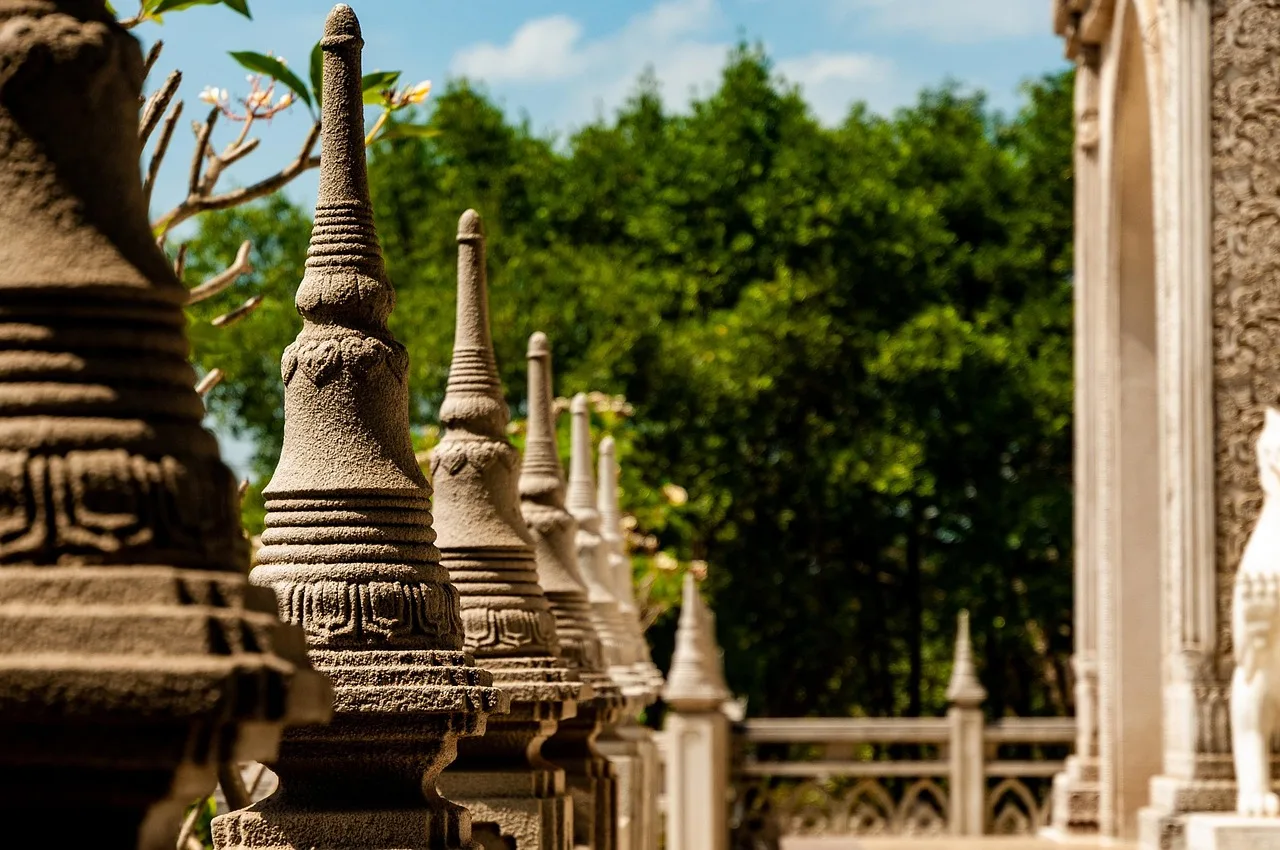
The steps, and the sunset that is no longer there
Yanaka Ginza is one of three shopping streets in the district, along with Yomise-dori and Sansaki-zaka, and it is the one everybody photographs: a short, densely packed run of small shops commonly described as straddling the boundary between Taito and Arakawa wards.
It is approached from the Nippori side down a flight of steps called Yuyake Dandan, sunset steps. Thirty-six of them, fifteen metres long, four point four metres wide, with a fall of four metres. They look ancient and they are not. Before the war this was a dead-end cliff. Stone steps were cut after the war once the shopping street had formed and people needed a route to the station. Arakawa City adopted the path as a ward road in 1980, rebuilt the steps in their present form in 1990, and the local neighbourhood association ran a public competition to name them. The winning entry came from Mori Mayumi, editor of the celebrated local magazine covering Yanaka, Nezu and Sendagi.
Here is the part no guidebook has caught up with. Two apartment buildings, one of seven storeys for sale and one of six to rent, are going up immediately to the south. When the Tokyo Shimbun walked the steps with Mori at dusk in late 2025, both were still wrapped in construction sheeting, the setting sun was hidden behind them, and only a thin band of orange sky was left. Mori told the paper the nickname no longer suits the view. Arakawa City's position was that it had no legal means to stop the buildings, and that is not a bureaucratic dodge: the steps stand in Nishi-Nippori, in Arakawa, outside the boundary of the Taito district plan and its rules on height, setback and design altogether. The line between a neighbourhood with a rule book and a neighbourhood without one runs straight through the thing people come to see.
So do not build your afternoon around the sunset. Go down the steps in the middle of the day, when the shops are open and the street is doing its actual job.
The day to avoid
Monday. SCAI is closed on Mondays, the Asakura Museum is closed on Mondays, and the Daimyo Clock Museum is closed on Mondays. Thursday takes the Asakura Museum out as well. Arrive on a Monday and Yanaka is reduced to its streets, its wall, its temples and its cemetery, which is not nothing, but it is not the walk you planned. The one loophole is a public-holiday Monday, which flips the Asakura Museum open and closes it on the Tuesday instead. SCAI shuts on public holidays regardless, so a holiday Monday buys you one building, not three.
Kannon-ji keeps its grounds open from 9:00 to 16:00 with no closing days, and the cemetery office opens 8:30 to 17:30 and shuts only over the new year, 29 December to 3 January. Between those two you always have something. Everything else, plan around.
Sources
- Yanaka Cemetery, Tokyo Metropolitan Park Association - opening date of 1 September 1874, area of 102,537 square metres, the cherry avenue, the Tenno-ji pagoda site, the interleaving of the Kan'ei-ji and Tenno-ji plots with the metropolitan cemetery, the Skytree view from the northern high ground, the five-minute walk from Nippori, and the management office hours of 8:30 to 17:30 with the only closure 29 December to 3 January
- Yanaka District Machizukuri Policy, Taito City (PDF) - the statement that the area suffered little earthquake and war damage and so was never rebuilt, the roughly 100 hectares, the 43 per cent in educational and cultural facilities including temples and shrines plus parks, sports grounds and burial grounds, the 3,669 buildings and the 66 per cent timber and 68 per cent one or two storey splits (all from the fiscal 2011 land use survey), the two-metre lanes, the fire-resistance priority zone and the sub-100 square metre plots, the three shopping streets, and the continuing planned status of Ring Road 3 and Auxiliary Route 95
- Yanaka District Plan, Taito City - decision date of 27 October 2020, the 99.7-hectare plan area with a 32.6-hectare district development plan area inside it, and the controls on minimum plot size, height, wall position and building form and colour
- Notice of city planning decision, abolition of planned roads, Arakawa City - the 27 October 2020 abolition of Auxiliary Route 92 by the Tokyo Metropolitan Government and of Auxiliary Route 188 by Arakawa City, and the lifting of the associated building restrictions
- Yanaka, Taito Culture Exploration Archives, Taito City - the Tenno-ji pagoda's 1791 rebuilding, its donation to Tokyo City in June 1908, its survival of both the earthquake and the war, its destruction by arson on 6 July 1957, and the surviving foundation stones as a Tokyo-designated historic site
- 6 July marks the day the Tenno-ji five-storey pagoda burned down, Bunshun Online - the 3:45am start of the fire on 6 July 1957, the two bodies found in the ruins, and the police finding of arson in a suicide pact
- Grave of Tokugawa Yoshinobu, Taito City tourism - that the grave lies in the Kan'ei-ji burial ground within the area called Yanaka cemetery, the paired round mounds, the Shinto funeral instruction and the peerage rank, and the Tokyo historic site designation
- Tenno-ji, Taito City tourism - the reputed Kamakura-period founding, the three great Edo lotteries, and the 1957 loss of the pagoda that inspired Koda Rohan's novel
- Kannon-ji tsuiji-bei, Cultural Heritage Online, Agency for Cultural Affairs - the 37.6-metre length along the southern face of the precinct, the alternating tile and clay construction with its single low doorway, and the registration as a Tangible Cultural Property on 28 April 2000
- Kannon-ji, Taito City tourism - the temple's grounds hours of 9:00 to 16:00 with no closing days
- Opening hours and admission, Asakura Museum of Sculpture - the Monday, Thursday and new year closures with the public holiday exception, 9:30 to 16:30 with last admission at 16:00, the shoes-off and socks requirement, the lack of barrier-free access and the roof garden weather closures
- Asakura Museum of Sculpture, front page - the notice of exterior painting works and the unscheduled closures, restricted areas, fumes and noise they bring
- Access, SCAI THE BATHHOUSE - the Kashiwayu-ato address, the 12:00 to 18:00 hours, the Sunday, Monday and public holiday closures, the closure between exhibitions, the walking route from Nippori south exit, and the Kayaba turn in the directions from Nezu
- Daimyo Clock Museum, Taito City tourism - the collection of tower, table and pillow clocks, the 10:00 to 16:00 hours, and the Monday, summer and 25 December to 14 January closures
- About the Encho ghost painting collection, Zenshoan - the fifty scrolls, the 1 to 31 August display, and the origin of the display as an airing timed around Encho's memorial day on 11 August
- Zenshoan, front page - the founding of the temple in 1883 by Yamaoka Tesshu for those who died in the late Tokugawa and Meiji Restoration years, and the presence of Sanyutei Encho's grave in the precinct
- The view lost from Yuyake Dandan, Tokyo Shimbun, 11 January 2026 - the 36 steps, 15 metres by 4.4 metres with a 4-metre fall, the pre-war dead-end cliff, the 1980 ward road adoption and 1990 rebuild, Mori Mayumi's winning entry in the naming competition, the seven-storey and six-storey blocks under construction and sheeted to the south at the paper's late-2025 visit, Mori's comment that the nickname no longer suits the view, and the ward's statement that it had no legal means to stop them. Note for the desk: the article is paywalled, though the free portion carries every figure and quotation used here