Nairobi Runs on Matatus, and They Have Rules
LineCast Networks
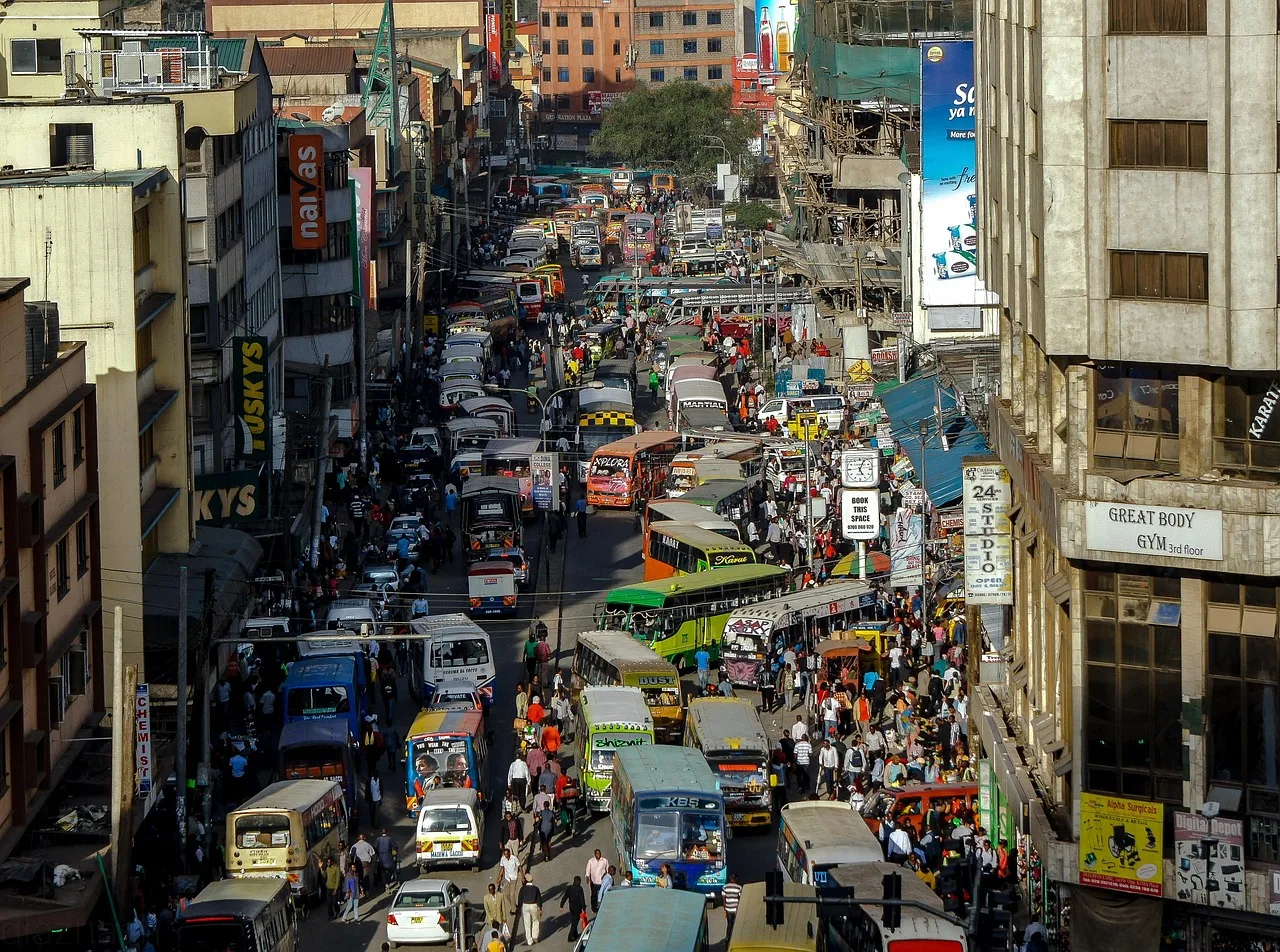
Kenya Bus Service did not win Nairobi. It was handed the city. On 8 January 1934 the town clerk, F.S. Eckersley, announced that from 1 March no omnibus could operate within the municipality without an agreement with the council, and the Overseas Motor Transport Company was the party that got one. Thirteen Albion buses, twelve routes, a city of about fifty thousand people. Almost everything Nairobi's transport system has become in the ninety years since is a reaction to that single piece of paper.
The reaction arrived in the 1950s as small vans that were faster and cheaper than the licensed buses and entirely illegal. The authorities called them pirate taxis. Passengers named them after the fare: thirty cents to anywhere in town, three ten-cent coins, and out of that arithmetic came the word matatu. They stayed outlaws for two decades. In 1973 the government exempted light vehicles from the Transport Licensing Board's requirements, and the pirate fleet became, by omission, the country's public transport system.
That origin explains what visitors usually get wrong. Matatus are described as lawless. In fact they are among the most minutely regulated vehicles in Kenya, on paper. Legal Notice 23 of 2014 requires the operator to keep the driver on the approved route and the approved stops, to ensure passengers are treated courteously, to keep the music below a prescribed limit, to issue every passenger a ticket or receipt, and to display the operating company's name on the vehicle's front, rear and both flanks in letters at least ten inches high, in a colour visible by day from two hundred and seventy-five metres. The same regulation told operators to run, from 1 July 2014, what the gazette calls a "cash light fare system by the use of a contactless integrated circuit card".
Only one of those provisions reliably describes a matatu ride. The gap between the gazette and the road is not a scandal, it is the operating system, and the parts of it that hold are the parts worth learning before you get on.
Reading a matatu before you board
Two things are painted on every legal matatu and both are useful. The first is the route number, usually in the windscreen. The second is the name of the sacco or company, in the outsized lettering the regulation demands. That name matters more than the vehicle. Under the 2014 rules an individual cannot hold a public service licence at all: you must be a member of a body corporate that runs at least thirty serviceable vehicles, employs a driver for each vehicle and an inspector for each route, keeps an office manager and an accounts clerk, has a mechanic either on staff or under an outsourcing contract, and files quarterly reports on its crashes and its passenger complaints. The name on the side is the accountability trail. If something goes wrong, that is who you name.
The numbers are less precise than they look. Around 133 matatu routes serve Nairobi. They were first mapped properly for the city-wide maps released in January 2014, traced by University of Nairobi students riding the routes with phones, then re-surveyed in 2017 by a second group carrying paper maps they checked against drivers and touts at the major stops. The numbering itself is inherited and it collides. Published route lists have Route 46 as both a Juja Road run to Huruma and a run out through Hurlingham and Lavington to Kawangware, and Route 33 covering both Ngummo and Utawala, which are on opposite sides of the city. The 34 group is a family of eastern routes with letters attached. The number narrows the field. The destination the conductor is shouting settles it, and asking twice costs nothing.
The look of the fleet is currently unstable. The elaborately airbrushed vehicles, the ones with sound systems and screens that riders choose on aesthetics alone, are running against the same 2014 regulation, which bans decoration on windows and windscreens, forbids tinting, and prohibits lighting the manufacturer did not fit. In April 2026 the High Court upheld the transport authority's power to enforce that, Justice Bahati Mwamuye calling its removal notice "a lawful administrative reminder of existing legal obligations". The petitioner asked for fourteen days to mount an appeal and was given a limited stay, due to lapse on 17 May 2026 unless a higher court extended it. Expect the painted fleet to look different from the photographs.
Where you get on, and where that is this month
Matatus leave from stages, and in the central business district the stages are named after buildings rather than streets: Kencom, Ambassadeur, Odeon, Railways, Muthurwa. This is the part of the system most likely to have moved since anything you read was written. Railways is the one to watch. Kenya Railways is clearing that land for its Nairobi Railway City redevelopment, and has an agreement with the transport authority to move the operators using it out to Green Park, the terminus on the western edge of the centre.
Green Park is also the reason not to assume any such move has finished. It cost around a quarter of a billion shillings, it was pushed into service for long-distance vehicles in 2022 over the objections of the Matatu Owners Association, whose chairman said the operators had never been consulted, and the Kenyan press was asking whether it was a white elephant before that year was out. Confirm the stage on the day, from a hotel desk or a Kenyan you are talking to, rather than from a map.
Google Maps has carried Nairobi's matatu routes since August 2015, the first time an informal transit system anywhere was navigable there. It is genuinely useful for working out which number you want. Treat the stop positions as advisory. The people who built that dataset found on their second pass that road construction had shifted many routes and moved stops, and in some cases a route had changed terminus entirely.
Paying
Understand the money and everything else makes sense. The owner sets a daily figure the vehicle must bring in. The driver and conductor split whatever comes in above it. Nobody is on a fixed wage in practice, whatever regulation 9 says about a regular salary and the ban on paying commission by the trip. That single arrangement produces most of what outsiders find baffling: the conductor working the queue like a barker, the refusal to leave until the seats are full, and fares that rise when it rains and again at the evening peak, because a wet commuter has fewer options and both parties know it.
So the fare is stated, not metered. The conductor names a price at the door. That is the price for that vehicle at that moment, and there is no posted tariff to appeal to. Ask before you step in rather than after, and ask a person already waiting what they are paying if you want a sanity check.
The cash-light card rule is a good illustration of how regulation lands here. Schemes launched with government and corporate backing, BebaPay from Google and Equity Bank the best remembered of them, and the whole campaign was dead within about eighteen months. Crews had every incentive to sabotage a system that would route their surplus to the owner, and the accounts of what killed it come back to exactly that. Mobile money then took over anyway, route by route, with no mandate at all, because a till number taped by the door beats carrying a day's float of coins through Nairobi. By 2025 the shift was far enough along that a conductor handed a thousand-shilling note for a hundred-shilling fare is as likely to ask whether you have M-Pesa. If you have a Kenyan line, that is the smoothest way to pay. If you do not, carry small notes. Nobody wants to break a large one.
The signals
The signalling is loud rather than choreographed. There is no secret semaphore to decode. The conductor, the donda, hangs out of the open door and shouts the destination or the vehicle's name, whistles, gestures, and slaps the bodywork; the driver answers on the horn. To stop one on the road, put your arm out and hold it out.
Getting off is the part visitors fumble. Tell the conductor where you are going when you pay, then say it again as you approach. Commuters describe the summons to the driver as a knock, on the roof or on the rail by the door, which is why you may hear coins rapped on metal. Timing matters more than technique. At peak hours a matatu is running as an express service: it loads at a single place, sets everyone down at a single place, and will not break the run for you. Off-peak the same vehicle will make multiple stops and is far more accommodating. The rule as written, in regulation 9, is designated bus stops only. The rule as practised depends entirely on the hour.
Which routes suit a visitor
Route 111, which runs the Ngong Road corridor from the city centre out to Ngong town, is the sensible first ride. It is the corridor the metropolitan transport authority and its Japanese partner chose for a pilot in which rival operators agreed to run to a schedule at a fixed fare with trained crews and marked terminals, precisely because it is the kind of route a nervous passenger can use. The Ngong Hills are at the far end of it.
Otherwise the short, busy, daylight runs to the western suburbs are the easy ones: Westlands and Kangemi, or the 46 out through Hurlingham and Lavington. Ride in daylight, ride without luggage, and do not ride into a neighbourhood you would not walk in. British government advice names the central business district itself, along with Eastleigh, Mathare and Kibera, among the areas of Nairobi where the risk of street crime is higher.
When to take a taxi instead
To and from Jomo Kenyatta International, always. There is a matatu that reaches the airport, and taking it is a poor trade. That same British advice tells travellers to use Mombasa Road or the Nairobi Expressway between the airport and the city, and flags a higher carjacking risk on the old airport road and on Jogoo Road, which is exactly where the eastern matatu routes run. Add luggage and a flight time and the argument ends.
Take a taxi after dark, and take one in heavy rain, when fares spike and driving standards do not improve. The same advisory is blunt about the vehicles themselves: serious accidents involving minibuses, often down to poor maintenance and speeding, minibuses that are frequently uninsured, and hijackings and robberies that are not rare.
If you use a ride-hailing app, book in the app and keep the trip there. Kenya's 2022 regulations cap the platform's commission at eighteen per cent of a trip's earnings, which forced Uber down from twenty-five. Even capped, that cut is what makes some drivers suggest cancelling and settling in cash. Declining that keeps the trip recorded. The transport ministry was drafting rules on a minimum payment per trip through 2026, so the arithmetic may move again.
The Nairobi Metropolitan Area Council gazetted five bus rapid transit corridors in 2019 and gave them animal names: Ndovu, Simba, Chui, Kifaru, Nyati. Seven years later the metropolitan transport authority's own published status for Line 1 is preliminary designs shared and "no concrete timeline yet". Line 3 has finished detailed designs on its first phase. Line 2 is a highway upgrade. The red lanes painted on Thika Superhighway in 2018 have faded where they lie. Not one of the five is carrying a passenger. In the meantime up to 25,000 matatus work Nairobi on a given day, by industry estimate, and they are not waiting for anything. The gazette describes the city somebody intends to build. The matatu describes the city that is there, in ten-inch letters, on the side.
Sources
- The National Transport and Safety Authority (Operation of Public Service Vehicles) Regulations, Legal Notice 23 of 2014 - the operating rules quoted throughout: corporate membership, the thirty-vehicle minimum and the staffing list including the outsourced-mechanic option (reg 5); route adherence, courtesy, music limits, tickets and the cash-light contactless card, ten-inch company lettering visible by day at 275 metres, and the decoration, tinting and lighting bans (reg 7); quarterly reports on accidents and passenger complaints (reg 8); regular salary rather than per-trip commission, and designated bus stops only (reg 9)
- Kenya travel advice: safety and security, UK Foreign, Commonwealth and Development Office - higher-crime areas of Nairobi including the CBD, Eastleigh, Mathare and Kibera; minibus accidents, poor maintenance, speeding and uninsured vehicles; frequent minibus hijackings and robberies; and the JKIA routing advice on Mombasa Road, the Nairobi Expressway, Airport South Road and Jogoo Road
- Moving in Nairobi: Matatus, urbanNext with MIT Civic Data Design Lab - the owner's daily target and the crew's share of the surplus, fare negotiation at the door, and express running at peak against multiple stops off-peak
- Digital Matatus, MIT Civic Data Design Lab - the city-wide route maps released to the public in January 2014 and the phone-app method University of Nairobi students used to collect the data
- The Latest Nairobi GTFS Feed is Now Available, Digital Matatus - 133 matatu routes in Nairobi; the February 2017 re-survey by twelve students using paper maps checked with drivers and touts at major stops; and the finding that road construction shifted routes and stops and in a few cases changed a route's terminus
- Digital Matatus Now on Google Maps, MIT Civic Data Design Lab - Google's announcement of Nairobi matatu data on Google Maps in August 2015, the first informal transit system navigable there
- Jomo move that drove matatu sector down the road of chaos and mayhem, Daily Nation - the 1934 town clerk's notice, the Overseas Motor Transport Company monopoly from 1 March, thirteen Albion buses on twelve routes, and the thirty-cent fare behind the name matatu
- On Kenya's streets, minibuses are a rolling gallery of art and culture, The Christian Science Monitor - legalisation in 1973, the industry estimate of up to 25,000 matatus circulating daily in Nairobi, the Kencom stage, and the conductor called donda who whistles, gestures and shouts
- Matatus to be moved as Sh30bn Nairobi railway project kicks off, The Star - Kenya Railways clearing the Railways bus terminal for the Nairobi Railway City project, and its agreement with the NTSA to move those operators to Green Park
- Is Green Park terminus a white elephant?, The Star - the Sh250 million cost, the 2022 push of long-distance vehicles into the terminus, and Matatu Owners Association chairman Simon Kimutai's complaint that operators were moved without consultation
- X-raying Kenya's Second Stab At Cashless Public Transport After Botched First Try, WeeTracker - BebaPay and the other card schemes, the campaign's collapse after roughly eighteen months, and the account that crews sabotaged a system denying them the cash they did not remit to owners
- Kenyan Matatus Have Finally Gone Cashless, And M-PESA Is King, tech-ish - the unmandated, route-by-route move to M-Pesa tills, the conductor who would rather not break a thousand-shilling note, and the card schemes that preceded it
- Kenya's competition bill would let a regulator police how Uber and Bolt treat drivers, tech-ish - the 2022 Transport Network Companies regulations capping platform commission at 18 per cent of trip earnings, Uber's cut from 25 per cent, and the ministry's 2026 drafting of a minimum payment per trip
- Bus Rapid Transit, Nairobi Metropolitan Area Transport Authority - the five corridors gazetted by the Nairobi Metropolitan Area Council in 2019, their animal names, and the published status of each line including "no concrete timeline yet" for Line 1 and completed detailed designs for Line 3 Phase I
- BRT: An ambitious transport system or just faded red lines on Thika Superhighway?, Citizen Digital - the 2018 Thika Superhighway lane markings and their fading, and the record of BRT launch promises made and missed with no line in service
- JICA Kenya Office and NaMATA launch pilot public bus operation on Ngong Road, Route 111 - the Route 111 pilot, the rival operators involved, and the fixed fare, scheduled operation and crew training
- NAMATA Launches Ngong Road Route 111 Pilot Project, Ministry of Roads and Transport - the government account of the same pilot and the corridor it covers
- Court upholds NTSA ban on matatu graffiti and tints, The Star - Justice Bahati Mwamuye's April 2026 judgment, the finding that the enforcement notice was lawful and did no more than restate obligations already on the books, and the fourteen-day appeal window with interim orders set to lapse on 17 May 2026
- List of All Nairobi Matatu Routes and Their Assigned Numbers, Kenyans.co.ke - the compiled route list showing duplicated numbers such as 46 and 33 and the lettered 34 family