Most Visitors Never Cross to Kadıköy, and That Is the Whole Point
LineCast Networks
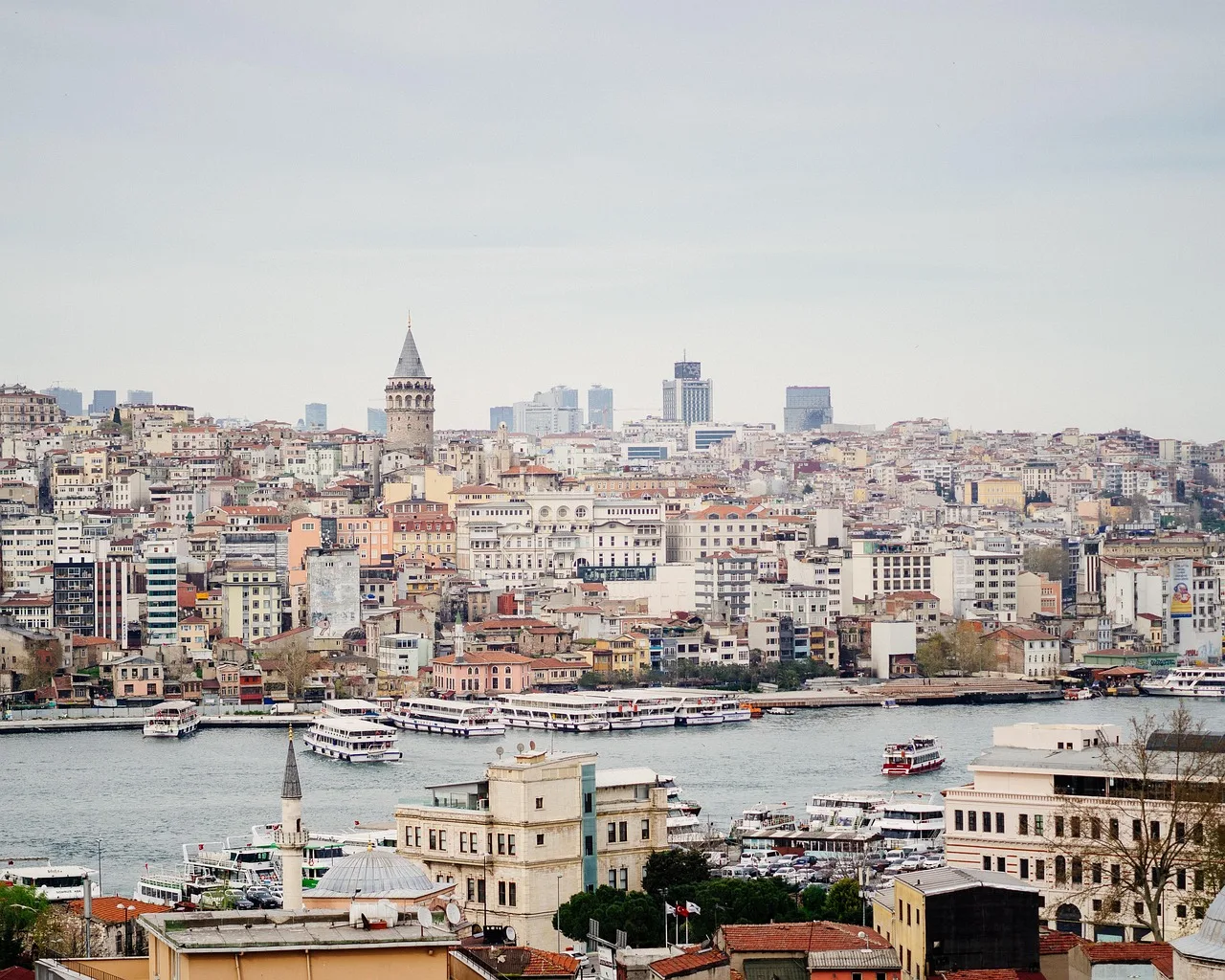
In 685 BC a party of colonists from Megara sailed up through the Sea of Marmara, looked at the two shores that face each other at the mouth of a strait, and picked the eastern one. They called their town Chalcedon. Two decades or so later a second Greek expedition arrived, took the western headland with its long sheltered inlet, and founded Byzantium. The ancient dates disagree about the size of that gap: the conventional reckoning puts Byzantium at around 667 BC, while the passage that carries the oracle puts it at 657. Strabo and Pliny both preserve the instruction the oracle of Apollo is supposed to have given the newcomers: build opposite the blind. Nobody needed to ask who the blind were. A century and a half after that, a Persian general named Megabazus is said to have looked at the same two shores and reached the same verdict without any help from Delphi.
Chalcedon is Kadıköy now, and the insult has outlived Greek, Latin and Ottoman. Its modern form contains no oracle. It is a week in Istanbul spent entirely inside the rectangle bounded by Sultanahmet and Taksim, with one Bosphorus cruise that turns around before it lands anywhere, and a general impression that the eastern shore is the bit you drive through on the way to the airport.
The Megarians were not blind. They were early, and they took the shore with the flatter ground, the fresh water and the fish. What they did not take was the harbour that would eventually be worth an empire, which is a different criticism. Two and a half thousand years later the eastern shore is where a very large share of the city actually lives, and a day spent there, arriving and leaving by boat, is the most legible day Istanbul gives you.
The boat is not the attraction
Start with the correct mental model of the ferry, because most itineraries get it wrong. The white and orange boats are not a tour. They are the municipal ferry service, descended from the Şirket-i Hayriye of 1851, and they exist to move people who are going to work. Treat the crossing as transport and it becomes free sightseeing. Treat it as sightseeing and you will pay for a cruise that shows you the same water at four times the price and does not let you get off.
From the European side, boats reach Kadıköy from Eminönü, Karaköy, Beşiktaş and Kabataş. Pick your pier by where you are standing rather than by which is prettiest: Eminönü sits at the foot of the old city, Karaköy across the Galata Bridge, Beşiktaş and Kabataş further up the strait. Payment is by Istanbulkart, the city's contactless card, and there is no cash option on board. A contactless bank card will also open the turnstile, but it pays a fresh full fare on every tap. The card earns its keep across a full day out instead: a second and a third journey made within two hours of the first are charged at a reduced transfer rate, so a ferry followed by a metro followed by a tram does not cost three full fares. Fare guides published this year disagree over whether that discount still reaches the anonymous cards most visitors buy, so treat it as a saving to check rather than to count on. Buy the card at any pier or station machine and stop thinking about it.
The geography of the crossing is worth ten seconds of attention, because it is stranger than it looks. The Bosphorus is defined at its southern end by a line drawn between the Ahırkapı lighthouse below the old city and the Kadıköy İnciburnu light on the opposite point. Your ferry runs just inside that line, a few hundred metres to the north of it, and every one of the piers it might have left from sits inside it too. You are not going up the strait, you are crossing its doorway, out where the Bosphorus empties into the Sea of Marmara. Under the hull, the water is doing two things at once: fresher Black Sea water running south along the surface, saltier Mediterranean water running north along the bottom, in opposing volumes that a hydrologist can measure and a passenger cannot feel at all.
Go in the morning. Not for the light, though the light is better with the sun behind you, but because the boats are commuter vehicles and the crush is at the beginning and the end of the working day. Mid-morning, you will get an outside seat on the eastern rail, which is the seat you want. The old city detaches itself from the shore behind you and arranges its domes and minarets into the silhouette that every postcard has been trying to reproduce since photography. It takes about twenty minutes. You will spend most of them looking backwards.
Landing
Kadıköy square is a transport machine before it is anything else. The M4 metro terminates here, an entirely underground line of twenty-three stations running out to Sabiha Gökçen airport, carrying something in the order of three hundred thousand people a day. That number is the honest answer to why the eastern shore feels different: it is not a quarter, it is a catchment. Nobody has arranged Kadıköy for visitors, because it is busy handling the people who live behind it.
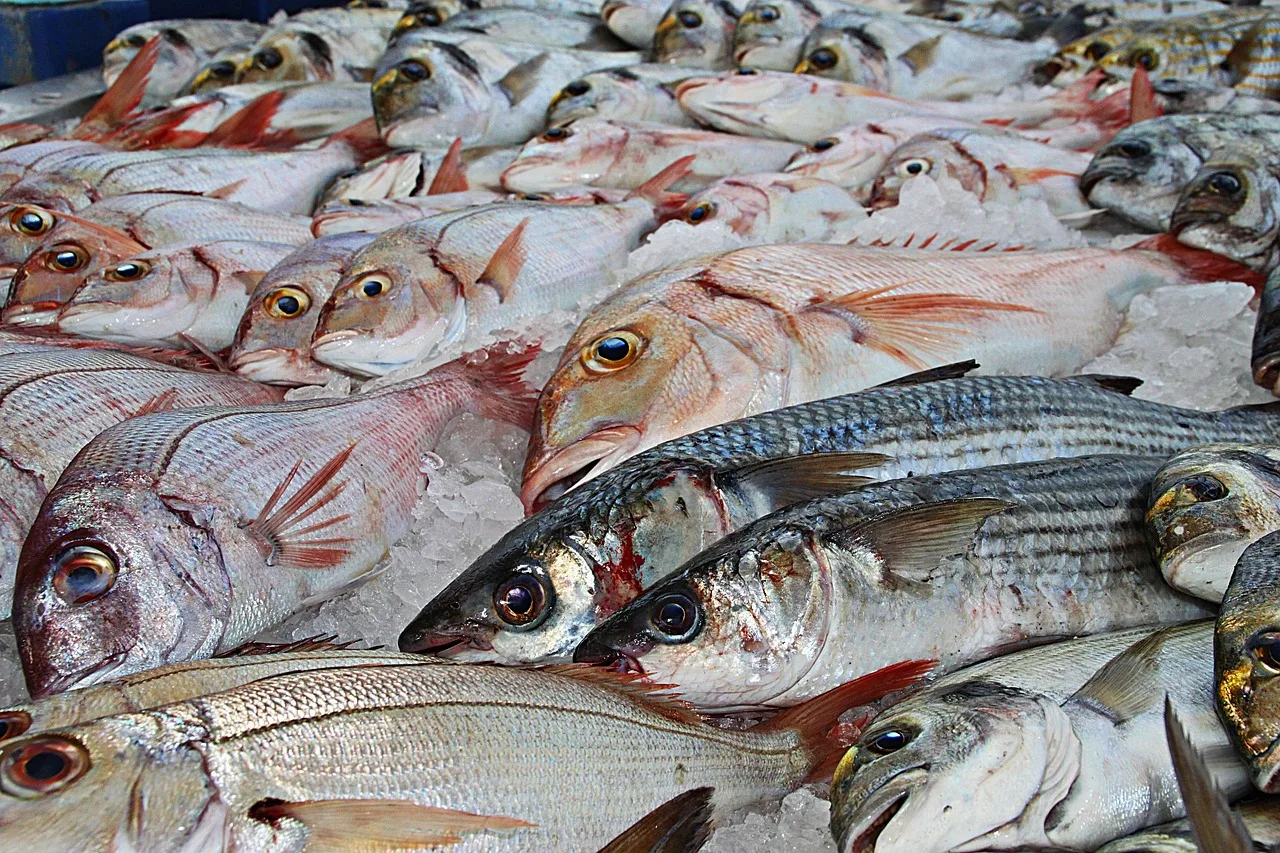
The market begins about two minutes from the water. You can navigate to it by tram stops, which is a small pleasure in itself: the heritage tram's first three stations out of the square are named for the pier, the pier mosque and the market, in that order. The lanes are narrow, roofed in places by awnings and washing lines, and they sell food to people who are going to cook it that evening. Fishmongers hose down sloping trays and rearrange the ice. What is lying on the ice changes with the month, which is the point of a fish market and the reason it is worth walking through twice on the same day. Around the fish are the pickle shops with their jars of green almonds and stuffed aubergine, the coffee grinders, the delicatessens selling twelve kinds of white cheese, and the shops that sell nothing but nuts.
Uphill from the market, at the six-way junction the city calls Altıyol, stands a bull, commonly described as bronze. It has an excellent claim to being the most travelled object in Istanbul. It also has a contested birth certificate: the sculpture carries the signature of the French animalier Isidore Bonheur, but it is at least as often credited to Pierre Louis Rouillard, in whose Paris workshop Bonheur worked and whose team Sultan Abdülaziz commissioned for a set of animal figures in 1864. How it reached Ottoman territory is disputed on the same terms. One popular account has it seized by Germany after the war of 1870 and passed east from there; another makes it a wartime gift to Enver Pasha. Take your pick.
What happened after it arrived is better attested and considerably funnier. It stood in a palace garden, first at Yıldız and then at Beylerbeyi. Enver Pasha removed it to a private farm in the Belgrade Forest. It turned up next in a school yard in Kadıköy, then outside the newly opened Lütfi Kırdar congress hall in Harbiye in the 1940s, then briefly at the door of the Hilton in the 1950s, then back to Lütfi Kırdar. In 1971 it crossed the water to the Asian side and spent about fifteen years outside the old Kadıköy municipal building, a library these days. It reached Altıyol in 1987 and has not moved since. A Turkish heritage inventory files it under a category it calls "Cultural Assets That Have Been Relocated", which is putting it mildly.
Behind the bull, Bahariye Caddesi runs south, and about halfway along it is the Süreyya. It opened in March 1927 to a design by the Ottoman Armenian architect Kegham Kavafyan, meant to give the Asian shore its first musical theatre and the city its sixth opera venue. The stage was never finished and no dressing rooms were built, so the operettas never happened. From 1930 the place screened films instead, and went on doing so for seventy-five years. It was restored and reopened as a working opera house in December 2007, eighty years late. The foyer is Art Deco lifted from the Théâtre des Champs-Élysées in Paris and the interior leans German, and the whole thing sits on a shopping street among the bookshops and bakeries, which is how Kadıköy tends to arrange its monuments.
The harbour under the railway
Walk north instead and you reach Haydarpaşa, the enormous stone terminus standing on reclaimed ground at the water's edge, built for the railways that ran to Baghdad and Medina and inaugurated in November 1909 on a foundation of eleven hundred timber piles driven into soft shore. It has not dispatched long-distance trains since February 2012. It is a building site, currently emerging from a restoration run jointly by the culture ministry and the state railway company, its three sea-facing facades unwrapped from scaffolding in June 2026. Do not read that as a retirement from railways. The standing plan is a cultural complex wrapped around a restored rail function: the building is meant to work as a terminus and a museum at the same time. What is true today is that you cannot catch a train here, and you should not plan on going inside. You should look at it from the outside, because of what is underneath it.
When work began for the rail upgrades, the ground was opened and the excavation stopped being a railway project. Archaeologists found early Byzantine structures including a large bath complex, and a church, and confirmed what had been suspected: this was one of the two harbours of ancient Chalcedon, with ships once able to dock far enough inland to reach what is now a suburban station. The second harbour lay at the mouth of the stream a little to the south. Greek substructures from the fifth century BC have been excavated behind the terminus, and remains of an older Phoenician port have turned up in Moda.
Sit with that for a moment. The city that got mocked for being unable to see a harbour had two of them, and one is directly beneath the most famous piece of railway architecture in Turkey.
Moda, and the loop that does not go back
Moda is the headland south of the market, and the walk out to it takes twenty minutes through streets of tall shuttered apartment blocks and bookshops. There is also a tram, and it deserves an explanation before you rely on it, not least because Turkish transport sites have reported spells of suspended service. The T3 opened in 2003 and runs 2.6 kilometres around eleven stops using six second-hand Tatra cars bought from the German city of Jena. It is a one-way ring. You cannot ride it back the way you came. You either complete the circuit, which takes about twenty minutes, or you get off and walk, and walking is generally the better instinct.
At the end of the headland is the Moda pier, designed by Vedat Tek and built between 1916 and 1917, a small domed neoclassical building sitting out over the water on its own jetty. Over the years it has been a restaurant, a working ferry pier and a casino. Falling passenger numbers took it out of service in 1986, and it survived through a rescue project and a spell as a café before the metropolitan municipality restored it and reopened it in August 2022. It is now a pier again and also a public library, with a modest collection and a terrace, which is a considerably better outcome than most historic ferry buildings get.
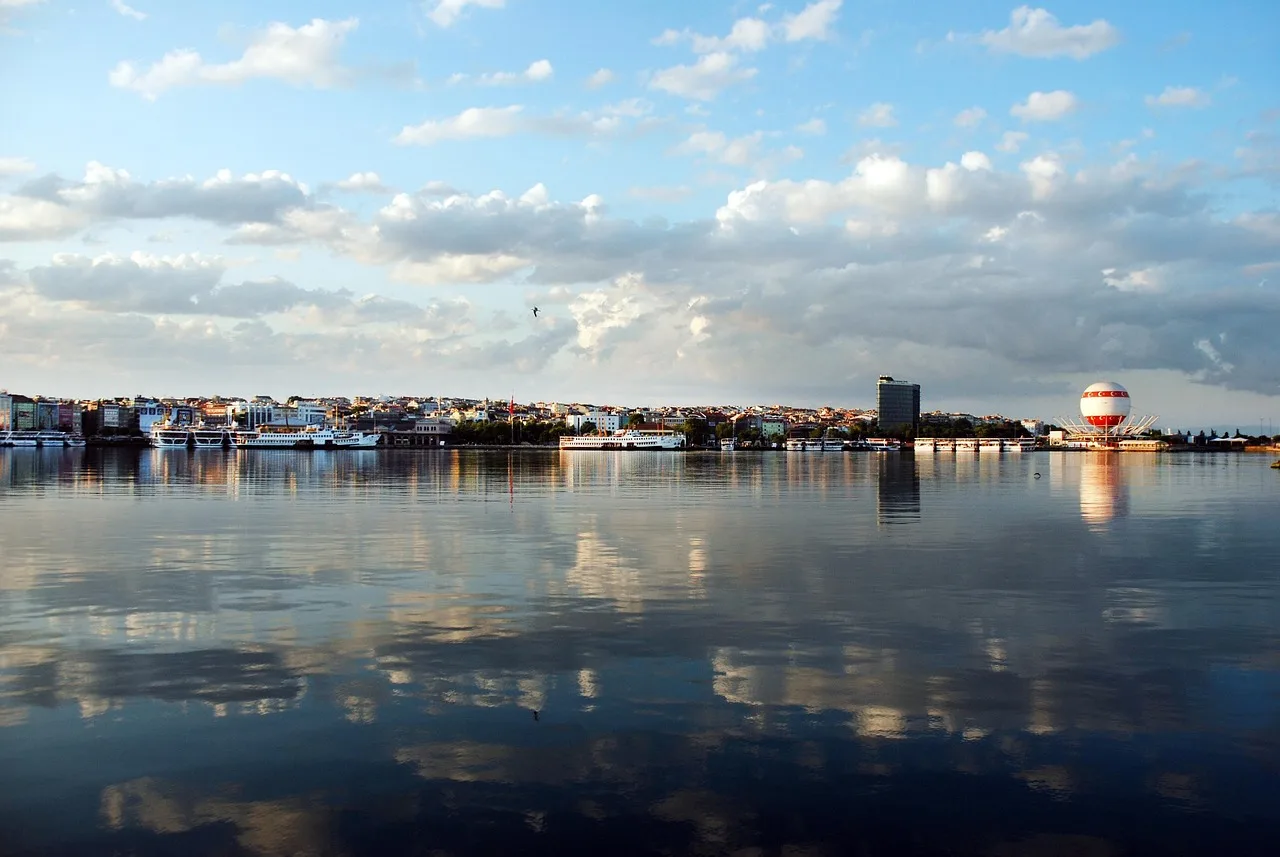
The waterfront either side of it is a long grassy promenade with the Marmara on one side and the tea gardens on the other. The tea garden, the çay bahçesi, is the local institution that repays the most patience. You order tea in a tulip-shaped glass, and then another, and then another, and what you are really buying is a chair, a table and an uninterrupted view of the water for as long as you want it. Families come with children and stay for hours. Nobody hurries anybody. It is the least monetised good time available in a city this size, and it happens to face west.
Going back
Which brings us to the timing of the return, the part most people get wrong in the other direction.
From Moda you are looking due west across open water at the far shore, with the historic peninsula and its skyline of domes off to the north-west. The Princes' Islands are behind you, low on the south-eastern horizon, and worth turning round for on the way out. The sun goes down over the water in front of you, its landing point sliding north through the spring until, around midsummer, it drops almost onto the old city itself. Sit through it with a glass of tea, then walk back to the square and take the last of the light on a ferry pointed at the peninsula while it turns black against an orange sky. Aim to be on a boat between forty minutes and an hour before sunset. This is the single best-value ninety minutes in Istanbul, and its entire cost is one fare on a card you already own.
Keep one thing in reserve. Ferries are weather-dependent, and a hard southwesterly is widely reported to suspend sailings at short notice. The fallback is under your feet: the Marmaray tunnel, whose Asian gateway at Ayrılık Çeşmesi opened in October 2013 and sits one metro stop from Kadıköy square. It runs beneath the strait, indifferent to wind, and puts you back on the European side in minutes. Knowing it is there is what lets you stay for the sunset rather than nervously catching an early boat.
On the way over, the far shore assembles itself on the horizon exactly as the oracle promised, in the correct order, with the light behind it. It occurs to you that the people of Chalcedon never seem to have mounted much of a defence against the accusation. They may not have felt one was needed. They had, after all, the better view of the thing everyone was praising.
Sources
- Chalcedon - Chalcedon founded from Megara in 685 BC; Byzantium given variously as c. 667 BC and 657 BC on the same page; the oracle of Apollo reported by Strabo and Pliny; Megabazus in Herodotus; fifth-century BC Greek substructures behind Haydarpaşa and Phoenician port remains at Moda
- Uncovering secrets of ancient Chalcedon beneath modern Kadikoy - the 2018 excavations, the early Byzantine bathhouse and church, Haydarpaşa as one of Chalcedon's two harbours, the second at the Kurbağalıdere mouth
- Haydarpaşa railway station - the terminus inaugurated 4 November 1909, its 1,100 timber piles and reclaimed ground, closure to long-distance trains on 2 February 2012, and the plan as of 2025 to use the building as both a terminal station and a museum
- Istanbul's Haydarpaşa Station moves closer to cultural revival - June 2026: the three Marmara-facing facades completed and the scaffolding removed, under a joint protocol between the Ministry of Culture and Tourism and TCDD
- Bosporus - the strait's southern limit drawn between the Ahırkapı and Kadıköy İnciburnu lighthouses, and the opposing surface and deep flows
- Ferries in Istanbul - Şehir Hatları's descent from the Şirket-i Hayriye of 1851 and the lines linking Kadıköy to Eminönü, Karaköy, Beşiktaş and Kabataş
- Istanbulkart - card valid across buses, ferries, rail and trams, no cash payment on those systems, reduced fares on transfers within a two-hour window
- Istanbulkart ferry prices 2026 - 2026 payment methods at Şehir Hatları turnstiles: Istanbulkart, Istanbulkart Mobile QR, or a contactless credit or debit card, with transfer discounts not applied to bank-card taps and working fully on the Bosphorus crossings
- M4 Kadıköy-Sabiha Gökçen Havalimanı Metro Hattı - official operator data: Kadıköy terminus, 23 stations, fully underground, roughly 300,000 passengers a day
- T3 Kadıköy-Moda Tramvay Hattı - official operator data: opened 1 November 2003, 2.6 km, 11 stations, six ex-Jena Tatra GT6 cars, one-way ring, 20-minute circuit, stop names including İskele Camii and Çarşı
- Süreyya Opera House - Kegham Kavafyan's design, opened 6 March 1927 as the first opera venue on the Asian side and the sixth in the city, unfinished stage and absent dressing rooms, cinema from 1930, reopened as an opera house on 14 December 2007, the Champs-Élysées-inspired foyer and the German-influenced interior
- IMM Moda İskele Library - Moda Pier designed by Vedat Tek in 1916-1917, former uses as restaurant, pier and casino, restored and reopened as pier and library on 19 August 2022
- Moda İskelesi, Kültür Envanteri - the pier's withdrawal from service in 1986 as passenger numbers fell, the 2000 rescue project, and its 2022 reopening
- Kadıköy Boğa Heykeli, Kültür Envanteri - the Isidore Bonheur signature photographed on the sculpture, and the entry's classification under relocated cultural assets
- Kadıköy's landmark bull statue finally earns its resting place - the competing Rouillard and Bonheur attributions and the two arrival stories; the sequence from Yıldız and Beylerbeyi through Enver Pasha's Belgrade Forest farm, a Kadıköy school yard, Lütfi Kırdar in the 1940s, the Hilton in the 1950s, the old Kadıköy municipal building from 1971, and Altıyol from 1987