Jordanian Hospitality Is Generous and Slightly Binding
LineCast Networks
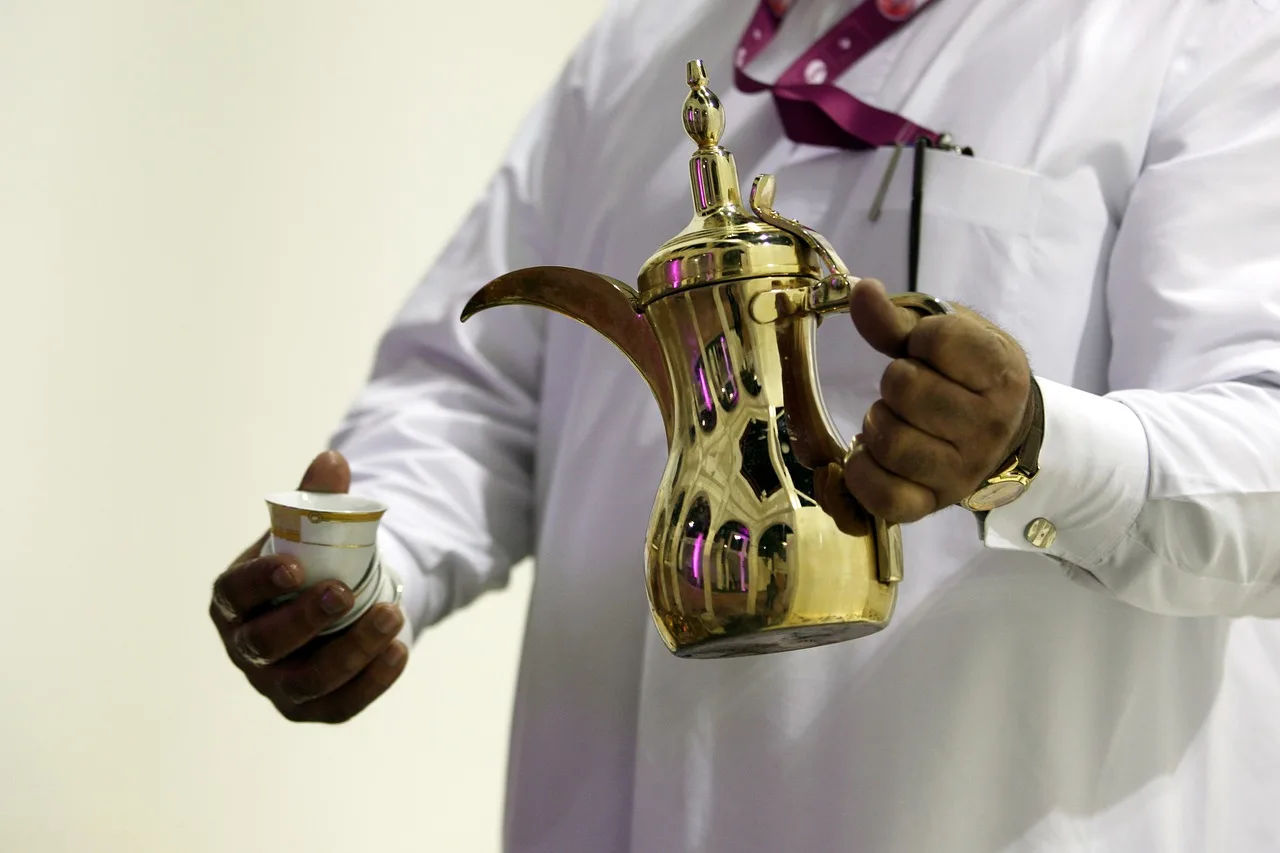
At a Jordanian reconciliation ceremony, the decisive act is a cup of coffee that nobody drinks.
The delegation from the offending family arrives at the house of the aggrieved family. The host pours the first cup of coffee and hands it to both sheikhs. The sheikh who has come to apologise does not drink his. He puts it down in front of him, full, and leaves it there while he speaks: praise for the other family first, then an admission of what his side did, then an offer of reparation. The cup sits in the middle of all that like a document waiting for a signature. He lifts it only once the aggrieved party has formally accepted and forgiven, and then the two sides drink together. In that room, not drinking the coffee is the most respectful thing he can do.
That is the far end of a system whose near end you will meet within about a day of arriving, usually in the form of a shopkeeper who will not let you leave without tea. The two things are the same system. Jordanian hospitality is warm, sincere, frequently overwhelming, and structured like a contract. Understanding the structure is what lets you accept it properly, and, more usefully, lets you decline it without insulting anyone.
Coffee is administrative procedure
In December 2024, at its session in Asunción, the UNESCO committee on intangible cultural heritage extended the listing of "Arabic coffee, a symbol of generosity" to include Jordan. The original 2015 inscription had been filed by four Gulf states: Saudi Arabia, the United Arab Emirates, Oman and Qatar. Jordan spent nine years outside a list describing a practice it had already entered on its own national inventory back in 2012, under its Ministry of Culture. The country was never in doubt about owning the custom. It simply had not filed the paperwork.
What the extended file says about Jordan specifically is worth reading twice. The coffee turns up at weddings and at the tribal gatherings where reconciliations get made, and then the text goes somewhere a heritage listing does not usually go. In Jordan, it says, Arabic coffee "is held in high regard as a symbol of generosity and hospitality in the offices of government officials and statesmen, including ministers, representatives, and directors". That is a state describing its own hospitality as a working instrument of administration, not a folk survival.
The etiquette in the same document is compact enough to memorise. Elders and guests get served before anyone else. The pour is made with the right hand. And the person drinking gives the cup a shake once they have had enough.
Those three rules will carry you a long way, and the third is the one that matters most to a visitor, because it is the off switch. The cups are tiny, handleless, and hold roughly a mouthful of bitter cardamom coffee. If you hand yours back without moving it, you are asking for a refill, and you will get one. If you wobble it from side to side as you return it, you are finished. Jordan's own tourist board puts both halves of the gesture in its list of things to do: shake the cup to decline a refill, hold the cup out to ask for more.
Three is the number everyone quotes, though the sources cannot agree on what it counts. Pro Peace, a German peace organisation with a programme in Jordan, says a guest is usually offered three cups. The Rough Guide says it is polite to take three refills, which is four cups. Accounts of what the three represent disagree as well, which is a useful sign that you are dealing with living practice rather than a rule book. The Pro Peace version names them al-heif, which marks the guest's arrival, al-seif, the sword, standing for Bedouin courage, and al-keif, for the mood. A Jordanian tour operator's account of the same ceremony opens it the other way round: there, al-haif is the cup the coffee maker drinks himself before anyone else is served, so the room can see the brew is neither cold nor, as that telling bluntly has it, "poisoned", and the guest's own cup, al-dheif, comes second. The sword arrives last, once whatever ill feeling was in the room has gone. A food-journalism account from the Gulf orders it differently again, giving al-dhaif to the most senior guest first, al-kaif second for the pleasure of the brew, and al-saif third, once trust has been established. Nobody is going to test you. Three is a safe number, one is not rude, and the wrist does the rest.
Tea is a different animal, because tea has no natural end. Your host considers it a duty to keep the glass filled. The escape is verbal: say "da'iman", a wish that things may always be so, and then leave the full glass where it is. Ignoring a full glass after that formula is not a slight. Draining it is a request.
The invitation, and what it actually costs
Offers arrive faster than you can accept them. Tea in a shop, tea in an office, dinner at a house you passed twenty minutes ago. They are, overwhelmingly, sincere. They are also not all meant to be taken up, and the culture has a built-in mechanism for polite insistence that a foreign visitor tends to misread as pressure. An offer repeated is not a fresh offer. It is one offer, made properly.
The refusal is equally formalised, and here the most reassuring source is the Jordan Tourism Board itself. If you are invited and cannot attend, the board says, "it is perfectly acceptable to decline. Place your right hand over your heart and politely make your excuses." That is the whole move. A slight bow of the head, the hand on the chest, "shukran, shukran". You may need to do it more than once, because the insistence is part of the ritual and not a negotiation. Adding "marra okhra, insha'allah", another time, God willing, softens it further by leaving the offer open rather than killing it.
What is genuinely rude is not refusing. It is walking on past in silence, or brushing someone off with an impatient hand, even if they are the twentieth to stop you that day. Thirty seconds of civil conversation costs you nothing and is the actual currency being asked for.
The reason to be deliberate about this is arithmetic. A cup of tea in a shop is fifteen minutes. A meal in a home is an afternoon and possibly an evening. If the meal is mansaf, which for a guest of honour it may well be, the commitment is larger still.
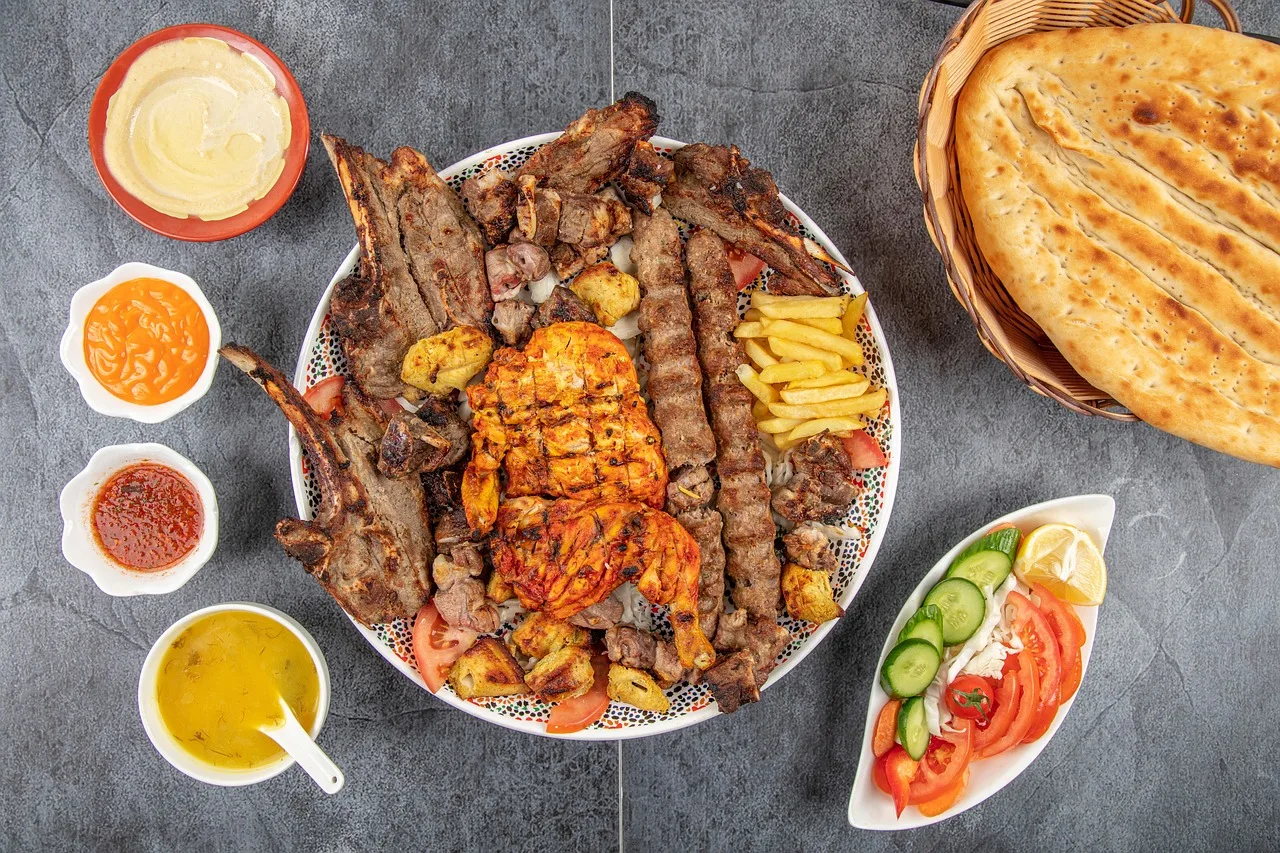
Mansaf went onto the UNESCO list in its own right in 2022, as "a festive banquet and its social and cultural meanings". The description is precise about the shape of the event. Large pieces of sheep or goat, boiled with spices in a yoghurt sauce, go over rice, or sometimes bulgur, on a bed of thin bread, with fried almonds scattered on top. Relatives of the host bring the platters through to the reception hall, and guests gather round them, five to seven to a platter. Custom puts the right hand into the food and the left behind the back, though plates and spoons are common now. The cooking itself is a social occasion, with the cooks talking, telling stories and singing while they work.
Notice what that implies. Somebody bought and cooked a sheep. The platters were assembled for a specific number of people. Nobody does this at short notice for one passing foreigner without it becoming an event. Accepting a mansaf invitation is not accepting a meal, it is accepting a role in somebody's day, and the correct response to that is to give it the time it deserves or to decline it warmly at the outset.
The practical trick is to set the boundary at the beginning rather than the end. Saying on arrival that you have to be somewhere by six is usually unremarkable and easily absorbed. Standing up to leave at six, with tea in progress, is a small social rupture your host will feel obliged to argue with.
Gifts, and the compliment that costs your host a vase
Money is not a gift. Attempting to pay a host for feeding you is an insult, and there is no amount small enough to make it acceptable.
What works is a token, handed over on arrival and never mentioned again. A box of sweet pastries is the standard, and the standard fate of the box is to vanish immediately into another room without comment. That is not rejection. Acknowledging a gift too warmly is its own kind of awkwardness, because the etiquette in the other direction requires a gift to be refused several times before it is accepted, and nobody wants to run that loop over a kilo of baklava. Small presents for children sidestep the whole problem: pens, notebooks, stickers, postcards from wherever you live. Their value to a household is not their price.
The trap that catches most visitors is the compliment. Admiring a specific object in a Jordanian home, a rug, a coffee pot, a piece of glass, can oblige your host to give it to you. Then you are in a genuinely difficult position, because refusing raises questions of dignity for everyone in the room. Some families keep their reception rooms deliberately sparse for exactly this reason. Praise the food, praise the house in general terms, and keep your eyes off the objects.
Why the code has teeth
It would be easy to file all of this under charming custom, and wrong.
Jordan legalised tribal courts in 1924, then abolished tribal law with the Tribal Laws Abolition Law of 1976. It did not go away. After serious crimes and bad accidents, authorised dignitaries from both families still negotiate a sequence of truces leading to a reconciliation agreement, with compensation attached, and the process runs alongside the police investigation and the court case rather than instead of it. A tribal settlement can reduce a sentence. It can also impose harsh terms on a suspect's family. Governors lean on the parties to comply, police attend truce ceremonies in uniform, and the royal court maintains a Tribal Advisory Bureau for cases that risk escalating. Critics argue the whole apparatus undercuts the written law and imposes collective punishment. Defenders argue it prevents revenge killings. Both are describing the same machinery.
That machinery runs on hospitality vocabulary. The truce is agreed in a reception room. The apology is made over coffee. The settlement is sealed when the sheikhs shake hands and drink together. The gesture of leaving a cup untouched is legible precisely because everyone in the room knows the grammar in which a cup is normally drunk.
And this is not a desert-only inheritance. By the late 1970s only around three per cent of Jordan's Bedouins were estimated to still be nomadic, yet the values attached to nomadic life had become the country's national self-description. The Bedu communities around Petra and Wadi Rum, the Bdul, the Ammarin and the Sa'idiyyin among them, went onto the UNESCO list in 2005 and again in 2008 as a cultural space where settled and mobile ways of living hold each other up. The code travelled from tents into flats in Amman intact.
A short list of things that are easier than they look
Shake hands on meeting, and stand to greet people. Veiled women may not extend a hand; wait rather than reach. Expect people to stand a little closer to you in conversation than you are used to. Cheek kisses between acquaintances are ordinary. The left hand does not serve food or coffee, and passing a cup with it is a real insult rather than a technicality.
Do not eat, drink or smoke in public during daylight hours in Ramadan. Alcohol is legal and available in bars, clubs, hotels and private homes, but drinking it on the street is not. Do not interrupt or walk in front of someone praying in a public place.
And when a host insists on refilling your plate long after you are full, take it as the intended compliment rather than a test of stamina. Food is a measure of a household's generosity, and generosity is being measured in front of the family.
The system asks less of you than it appears to. It does not require you to give up your afternoon every time somebody waves you towards a chair. It requires you to treat the offer as real, answer it with the same seriousness it was made with, and know which gestures close the transaction. Hand on the heart. Another time, God willing. And a small shake of the wrist, which means thank you, that was enough, and which everyone in the room understands.
Sources
- Arabic coffee, a symbol of generosity, UNESCO Intangible Cultural Heritage - the 2024 extended inscription, file No. 02111, carrying the etiquette of right hand, elders and guests first, and shaking the cup, and the passage on Arabic coffee in the offices of Jordanian officials
- Decision of the Intergovernmental Committee 19.COM 7.B.55 - the 2024 session in Asunción that extended the Arabic coffee inscription to include Jordan and replaced the 2015 file No. 01074, plus Jordan's 2012 national inventory entry under the Ministry of Culture
- Al-Mansaf in Jordan, a festive banquet and its social and cultural meanings, UNESCO - 2022 inscription, the composition of the dish, five to seven guests per platter, eating with the right hand, and preparation as a social event
- Decision of the Intergovernmental Committee 17.COM 7.B.19 - the 2022 Rabat session text describing mansaf and its service by the host's relatives
- Cultural space of the Bedu in Petra and Wadi Rum, UNESCO - the Bdul, Ammarin and Sa'idiyyin communities, settled and nomadic groups in complementary relationship, proclaimed 2005 and inscribed 2008
- Local Customs, Jordan Tourism Board - shaking the cup to decline and holding it out for more, standing to greet, conversational distance, Ramadan, praying in public, and hosts who overfeed
- Values and Tradition, Jordan Tourism Board - the official statement that declining an invitation is acceptable, with the right hand over the heart
- Conflict Resolution and Coffee, the Jordanian Way, Pro Peace, formerly forumZFD - the first cup served to both sheikhs and left undrunk as a formal request, three cups usually offered, the naming of al-heif, al-seif and al-keif, the left-hand insult, and the structure of atwa and sulha
- Coffee in Jordan, the Art and Culture, Wonders Travel and Tourism - the competing sequence in which the coffee maker drinks al-haif himself before serving, al-dheif goes to the guest, and al-sseif comes last
- The First Cup of Coffee Is the Host's Gift, Whetstone Magazine - a third ordering, with al-dhaif offered to the eldest or most important guest, al-kaif for pleasure, and al-saif once trust is established
- Tribal Justice Persists Alongside Jordan's Law Courts, New Lines Magazine - tribal courts legalised in 1924 and abolished in 1976, continued state enforcement, the Tribal Advisory Bureau, and the estimate that only three per cent of Jordan's Bedouins were nomadic by the late 1970s
- Customs and etiquette in Jordan, Rough Guides - the refusal formulas, polite insistence repeated several times, three refills of coffee, "da'iman" for tea, gift practice and the obligation created by admiring an object
- Jordan travel advice, safety and security, GOV.UK - alcohol permitted in bars, clubs, hotels and private homes but not on the street