In Dubai, Good Manners and the Law Are the Same Thing
LineCast Networks
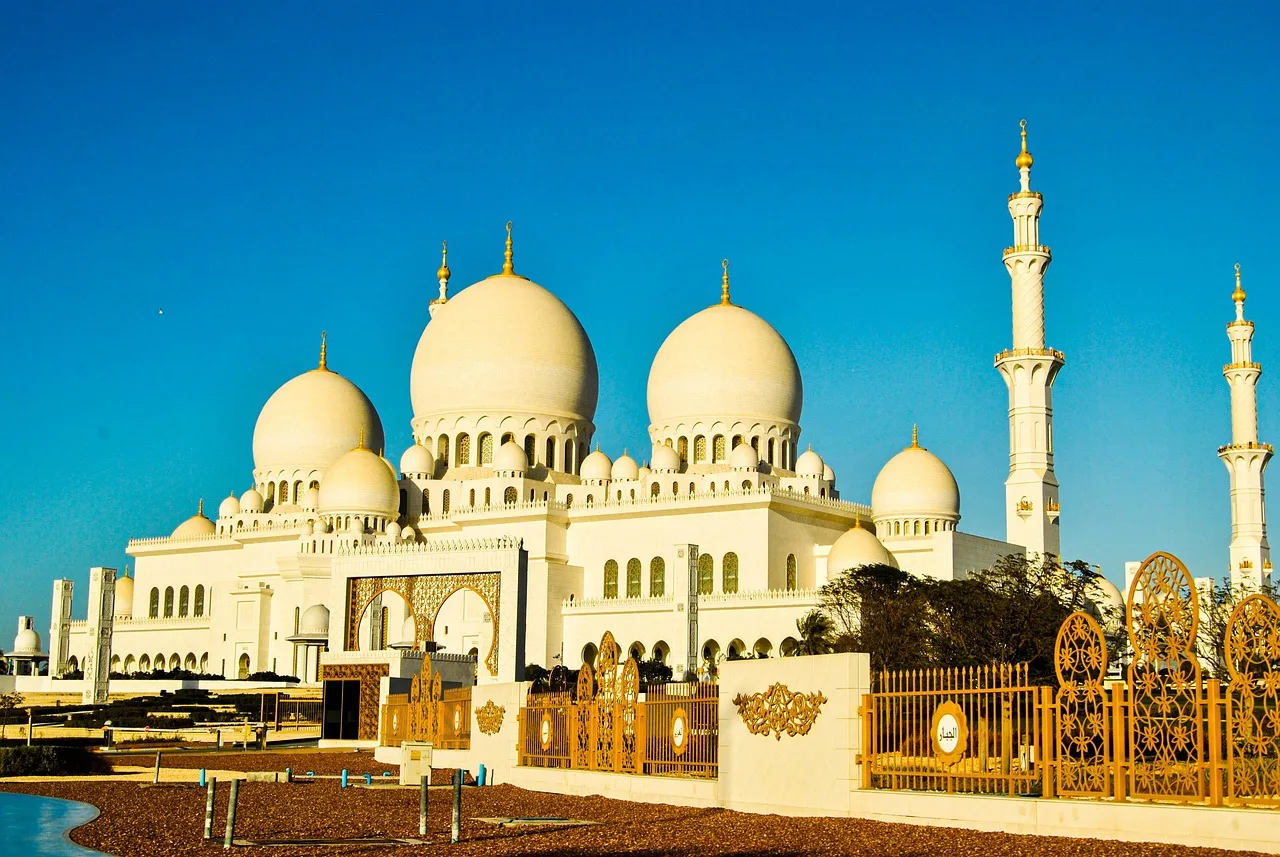
The Jumeirah Mosque in Dubai keeps a rack of clothes by the door. Abayas and sheilas for women, kanduras for men, all of them, in the words of the cultural centre that runs the visits, "hygienically cleaned and maintained", and all of them there to be borrowed. The mosque's dress-code page requires modest clothing in the same breath as it tells you where to get some. Women are asked to bring a headscarf of their own; if you have not got one, that is on the rack too.
That rack is the single most useful thing to know about Dubai, and it is the opposite of the version most people arrive with. The received story is of a city waiting to catch you out, a place where an unwritten rule you never heard of ends with a police station and a confiscated passport. The actual arrangement is stranger and much easier to live with: the rules are written down, in English, on government websites, before you get on the plane. What visitors miss is not the content. It is that a fair number of them are not suggestions.
The state publishes the etiquette guide
The UAE government's official platform hosts a page titled Social responsibility. It is a manners guide of the sort a thoughtful host might write. Food and drink are taken with the right hand, and eaten with it. Stand up when an older or higher-ranking guest arrives. Do not cross your legs in front of an important guest, and do not point with a finger; use the whole hand. When greeting a Muslim of the opposite sex, do not offer your hand unless they extend theirs first.
Then, in the same calm register, on the same page: "Public displays of affection should be minimal; holding hands is acceptable but kissing and hugging in the public is not." And: "Do not photograph people without their permission." And: "Photographing aircraft and plane spotting are illegal."
Nothing on the page flags which sentences carry a criminal penalty and which are just good form. That is the trap, and it is worth naming plainly, because the country does not draw a bright line where a British or Australian visitor expects one. The current penal code, Federal Decree-Law No. 31 of 2021, the Crimes and Penalties Law, is listed by the UAE legislation portal as in force from 2 January 2022, and it is the instrument the government's own pages cite when they need one. It covers acts against public decency. Etiquette and statute are not neighbours here. They overlap.

Affection
The British Foreign, Commonwealth and Development Office manages it in eight words: "You can be arrested for kissing in public." Australia's Smartraveller is no gentler, warning that intimate displays of affection in public, kissing included, are grounds for arrest and will draw official attention. The Emirati government's own line, quoted above, is the softest of the three and still says kissing and hugging in public is not acceptable. Holding hands is fine.
There is a real and recent change here that gets reported badly. Heterosexual sex and cohabitation outside marriage, for people aged 18 or over, have been decriminalised across the Emirates with the exception of Sharjah. Unmarried couples sharing a hotel room in Dubai are not committing an offence. That is a genuine liberalisation and it is often stated as though the whole subject had been settled.
It has not. Adultery remains illegal. If either person's spouse, or a parent or guardian, files a criminal complaint, both parties in a consensual extra-marital relationship can face a prison sentence of six months or longer. The reform removed the state's initiative, not the offence. And same-sex sexual activity remains illegal throughout the UAE, with same-sex marriages unrecognised. Both the British and Australian governments say so directly. Private life is in practice respected; a public element changes that, and the British advisory notes that foreign residents and visitors alike have been punished.
Dress, and what a mall actually asks of you
The government's guidance on clothing is more specific than the folklore. Dress modestly in public places such as shopping malls. Clothing should not be see-through, should not indecently expose the body, and should not carry pictures or slogans that give offence. Loose clothes covering the shoulders, arms and legs will make most people of either sex more comfortable. Nudity of any kind is forbidden, topless sunbathing included, and swimwear should not be worn anywhere outside a beach, a pool or a water park.
Two things the folklore gets wrong. Women are not expected to cover their heads in general public spaces; the government portal says so outright. And the British advisory adds a rule almost nobody anticipates: cross-dressing is illegal.
Smartraveller offers the practical instruction that matters most, which is to read the sign. Dress codes for malls, attractions and beaches are usually posted at the venue or published on its website. In a city with this many separately operated venues, the venue is the authority, and it will tell you.
The geography matters too, and this is where confident wrong answers do damage. Sharjah and Ajman are separate emirates with their own enforcement, and Australia's advice singles them out as places to dress more conservatively than you would in Dubai. A rule you learned at a Dubai beach club is not a rule anywhere else in the country.
Mosques
The Jumeirah Mosque, opened in 1979 as a gift from Sheikh Rashid bin Saeed Al Maktoum, is the one in Dubai built around receiving non-Muslim guests. Visits are run by the body the mosque names in full as the "Sheikh Mohammed bin Rashid Al Maktoum Centre for Cultural Understanding", operating under the banner "Open Doors. Open Minds." Guided visits run daily except Friday, at 10am and 2pm, with registration opening half an hour beforehand and no prior booking required.
The published dress code is exact. Men should avoid shorts and sleeveless tops. Women's clothing should cover arms, legs and hair. And then the borrowed garments, which is the part that reframes everything: the institution with the strictest standard in the city is also the one that solves the problem for you at the door.
Do not confuse it with the Sheikh Zayed Grand Mosque, which is in Abu Dhabi, a different emirate roughly an hour and a half down the road, and which asks visitors to pre-book and obtain an online access pass. Same country, different rules, different queue.

Alcohol, described as a mechanism
Money and licensing details age badly, so treat the numbers you find elsewhere with suspicion and learn the structure instead, because the structure has been stable.
Alcohol in the UAE is regulated at the emirate level, and drinking in public is treated separately from drinking at all. Anywhere in the country it is an offence to drink in public, and an offence to be drunk there. Britons have been arrested and charged under it, most often after coming to police attention for something adjacent, such as disorderly behaviour. Australia's advice is blunter about where this actually happens: people have been arrested at airports for becoming intoxicated on a flight or in transit, and a dispute with a taxi driver, or being sick in the cab, can end at a police station with an intoxication charge attached.
Inside licensed venues in Dubai, hotel bars, restaurants and pubs, no personal licence is required to buy or drink. The legal age for buying and drinking is 21 in Abu Dhabi, Dubai and the Northern Emirates other than Sharjah. Residents of Dubai who want to drink at home still need a liquor licence, and visitors can obtain a temporary licence valid for one month from either of the two official distributors, usable only in Dubai. A licence issued in one emirate is not valid in another.
Sharjah is the exception that catches people, and it sits about 30 kilometres north of Dubai, close enough that a day trip crosses the line without anyone noticing. Drinking or possessing alcohol there is illegal. Not licensed, not restricted to hotels. Illegal. Australia's advice extends it to the boot of your car: you cannot carry alcohol through Sharjah, or into it from Oman.
Ramadan, where the rules have genuinely moved
This is the area where old advice is most likely to be wrong, and where being wrong is embarrassing rather than dangerous.
The UAE government's current Ramadan guidance says non-Muslims are not required to fast. It says mall restaurants and food courts keep designated areas set apart from people who are fasting, that some restaurants shorten their hours or shut in the daytime but open fully at iftar, and that amusement parks, cultural sites and tourist attractions stay open all day. The era of screened-off dining rooms and shuttered cafés has substantially passed in Dubai, though the British advisory still warns that a hotel or restaurant serving during fasting hours may separate you from fasting guests.
What has not changed is the courtesy, and both the British and Australian governments still frame it as conduct rather than convenience: avoid eating, drinking, smoking or chewing gum in public during daylight, including in your car, and avoid doing any of it in front of someone who is fasting. Loud music, dancing and swearing in public are all singled out as capable of causing offence during the month. Expect erratic driving around dusk, when people are hurrying home to break the fast.
Two details give you the shape of the month. The iftar cannon, fired to mark the end of the daily fast, carries around eight to ten kilometres. And under federal labour law the working day is cut by two hours, for Muslim and non-Muslim employees alike, with no deduction from wages. Ramadan moves eleven days earlier each Gregorian year, and its start is confirmed by the UAE Council for Fatwa's moon-sighting committee, so the dates are announced rather than scheduled.
Photographing strangers
Of everything here, this is the rule most likely to be broken by a well-behaved visitor within an hour of landing.
The government portal's instruction is one line: do not photograph people without their permission. Federal Decree-Law No. 34 of 2021, the statute covering cybercrime and the spreading of rumours, in force since 2 January 2022, lists invading the privacy of others among its offences. Australia's advice draws out what that means for a phone camera in a public place: photographing anyone without consent is illegal, and putting photos of people on social media without their consent, or of what belongs to them down to their cars, can be illegal too. Then Smartraveller adds the clause that should stop you: "This includes people in the background of photos."
Then the specific, and it is specific for a reason. The British advisory records that men have been arrested for taking pictures of women on beaches. Taking photographs of people, and of women in particular, without permission can lead to arrest or a fine, and that applies to people you have only just met.
There is no exemption for uploading later, from home. Publishing is publishing.
The categories of thing, as opposed to person, are a separate list, and it is worth knowing whose list you are reading. Photographing aircraft is illegal outright, and plane spotting with it; that is the Emirati portal's own wording. The portal and the British advisory both put certain government buildings and military installations out of bounds. Australia's list runs longer: bridges, embassies, palaces, airports and transport infrastructure, and any scene of military conflict. And the British advisory adds the trap for the entirely harmless, warning that hobbies like plane spotting and birdwatching can be misread near military sites, government buildings and airports.
Speech, and whose advice you are reading
Swearing and rude gestures are treated as obscene acts, including online, and can lead to jail or deportation. Both governments advise particular care when dealing with police and officials, which is exactly the moment a frustrated person is most likely to say something they cannot take back. Insulting individuals, ethnic or religious groups, the country, its leadership or its flag falls in the same bracket. So does crossing a road anywhere other than a designated crossing, which carries a fine or worse.
One honest caveat about all of the above. The two advisories leaned on here are written by the British and Australian governments for their own citizens, and some of what they contain is nationality-specific: the note that a UK photocard driving licence is accepted, for instance, tells an Irish or Canadian visitor nothing. Entry requirements differ sharply by passport. And the practical difference your nationality makes is usually not in the rule but in what happens afterwards, in which consulate answers the phone and what it is able to do. Read your own foreign ministry's page for the UAE before you go, alongside the Emirati government's own.
During Ramadan, the working day shrinks by two hours for people who are not fasting, at full pay, because they live here. A country that shortens your hours for a fast you are not keeping is not, at bottom, trying to catch you out. It is including you, in the courtesies and in the penalties, on identical terms. The rack of borrowed robes by the mosque door says the same thing in cloth.
Sources
- Social responsibility, The Official Platform of the UAE Government - the government's own etiquette, dress code, public affection and photography guidance
- Ramadan, The Official Platform of the UAE Government - non-Muslims not required to fast, mall dining arrangements, attractions open all day, two-hour reduction in working hours, iftar cannon audible around 8 to 10km, moon-sighting committee
- United Arab Emirates travel advice, printable version, UK Foreign, Commonwealth and Development Office - arrest for kissing in public, dress code, cross-dressing, alcohol licensing and the Sharjah ban, Ramadan conduct, photographing people and secure areas, swearing, pedestrian crossings, sex outside marriage
- United Arab Emirates, Australian Government Smartraveller - public intoxication and airport arrests, carrying alcohol through Sharjah, liquor licences valid only in the issuing emirate, photographs including people in the background, the longer list of prohibited photographic subjects, dress in Sharjah and Ajman, decriminalisation of cohabitation and the adultery exception, insults to people, groups, the state and the flag
- Delinquent juveniles and those at risk of delinquency, The Official Platform of the UAE Government - the government citing Federal Law by Decree No 31 of 2021 Promulgating the Crimes and Penalties Law as the operative penal instrument
- Federal Law by Decree Promulgating the Crimes and Penalties Law, UAE legislation portal - the portal entry for Federal Decree-Law No. 31 of 2021, which commenced on 2 January 2022
- Cyber safety and digital security, The Official Platform of the UAE Government - Federal Decree Law No. 34 of 2021 on Combatting Rumours and Cybercrimes, in force from 2 January 2022, with invasion of privacy among the offences it lists
- Dress Code for Jumeirah Mosque - modest clothing required, what men and women should wear, and the kanduras, abayas and sheilas hygienically cleaned and maintained by the centre
- Jumeirah Mosque, official site - opened 1979 as a gift from Sheikh Rashid bin Saeed Al Maktoum, the "Open Doors. Open Minds." banner, visit times, registration 30 minutes ahead, closed Fridays, ladies asked to bring their own head cover with covers also available
- Visitors, Sheikh Zayed Grand Mosque Centre, Abu Dhabi - the site-wide instruction to book ahead and collect an online access pass