How a Rio Beach Day Works, Chair by Chair
LineCast Networks
Rio's beaches are divided into circles. Under a joint resolution of the municipal cleaning company and the public order secretariat, each licensed stand on the sand is responsible for a disc of beach centred on itself, with a radius equal to half the distance to the next licensed stand along. Where there is no neighbour, the radius is fixed at 25 metres. Inside that circle the operator must keep the sand free of solid waste, plastic, bottles and packaging, before opening and again after closing, and he must hand disposable bags to the people sitting in his chairs. The city gives him up to four 240-litre bins and collects the contents at the end of the day. Fail once and he gets a written warning. Fail again and there is a fine. Fail a third time and he can lose the authorisation that lets him work at all.
So the stretch of Copacabana that reads, from the promenade, as a happy free-for-all of striped umbrellas is in fact a surveyed grid, and the man renting you a chair is standing at the centre of a circle he is legally answerable for. Once you know that, a Rio beach day stops looking improvised and starts looking like a system you can read.
The numbers on the concrete
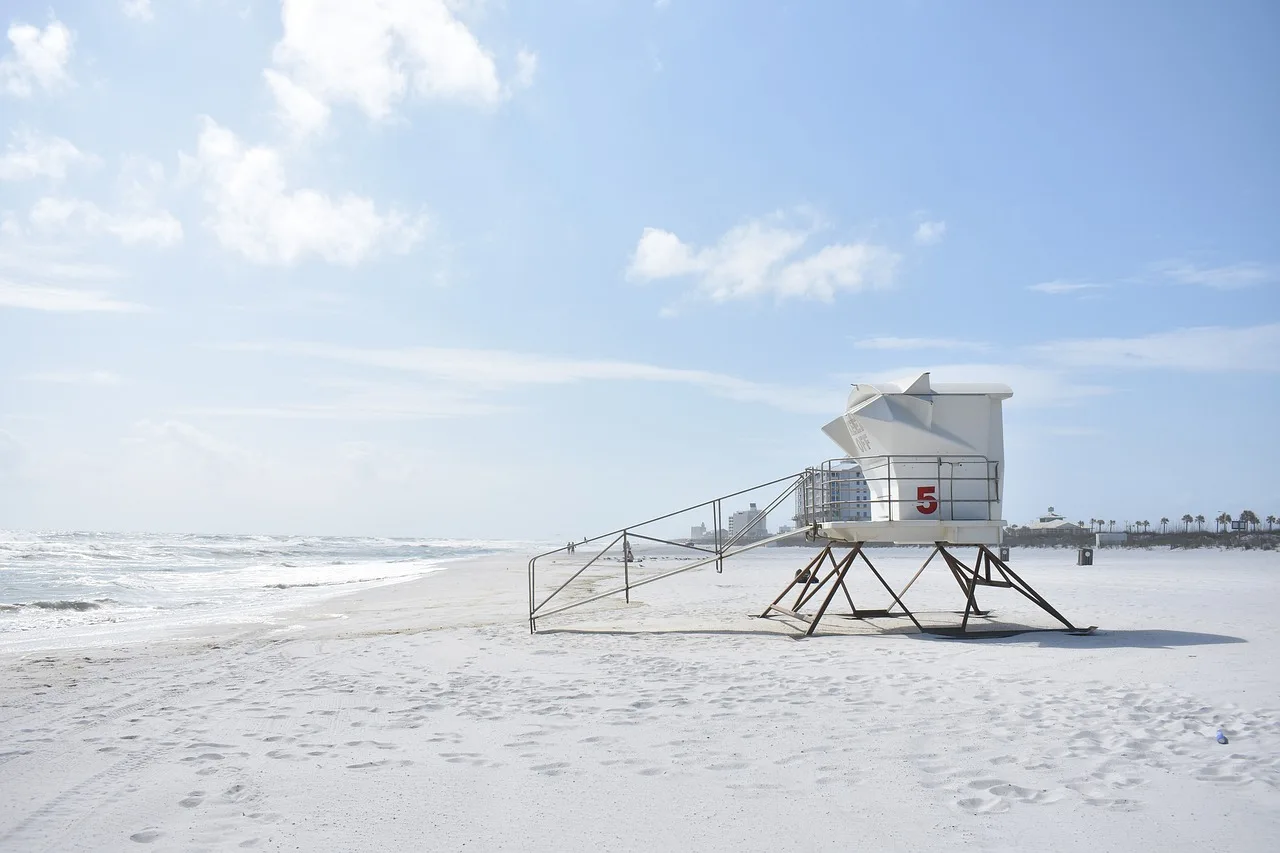
Everything on this coast has a number. A city count published in 2021 put it at 24 lifeguard posts strung along 36 kilometres of ocean front, from Leme in the east to the far end of Recreio dos Bandeirantes in the west; Orla Rio, the company that holds the concession on the buildings, now advertises 27 posts along 34 kilometres. Take the exact figure with a pinch of salt and keep the point, which is that these squat concrete drums are the address system for the entire shoreline. Nobody arranges to meet at a street corner. They meet at a post: Posto 4 or Posto 6 in Copacabana, Posto 8 at the Arpoador end of Ipanema, Posto 9 further along the same beach. Municipal paperwork uses the same shorthand. So do the kiosk operators, and so will the person giving you directions. Agree the beach as well as the number and you will not lose an afternoon.
The buildings and the people inside them belong to different organisations, which is worth knowing when you want an answer. The structures are run by Orla Rio, which by its own account also administers 309 kiosks along the same 34 kilometres of promenade. The lifeguards are military firefighters of the state fire brigade. If you have a question about the sea, the person to ask is in the uniform, not behind the counter.
The posts also anchor the local geography of habit. The city treats the sand at Postos 8 and 9 and neighbouring Praia do Diabo as a single cleaning area with its own crew of 61 street sweepers, and the Arpoador rock next door is now run like a park, opening at four in the morning, closing at nine at night, with a controlled exit flow afterwards and the small hours reserved for the machines.

Reading the flags
Rio's beach flags are set by the fire brigade and run to a six-colour code, which Orla Rio publishes in full. Green means the water is calm and the risk is minimal. Yellow means the spot has hazards, heavier waves or currents. Red, in Orla Rio's rendering, "aponta que o local não é adequado para banho e, portanto, oferece alto risco de afogamentos", and its instruction is not to enter the sea where you see one. Black means there is no lifeguard post covering that area at all, so nobody is watching. Two red flags on a single mast mean the beach is shut outright, and every other flag comes down when they go up. Lilac means marine animals in the water that can hurt you. The flags are spaced across a 300-metre span, 150 metres either side of the lifeguard post, which is also a fair description of how wide the watched patch is.
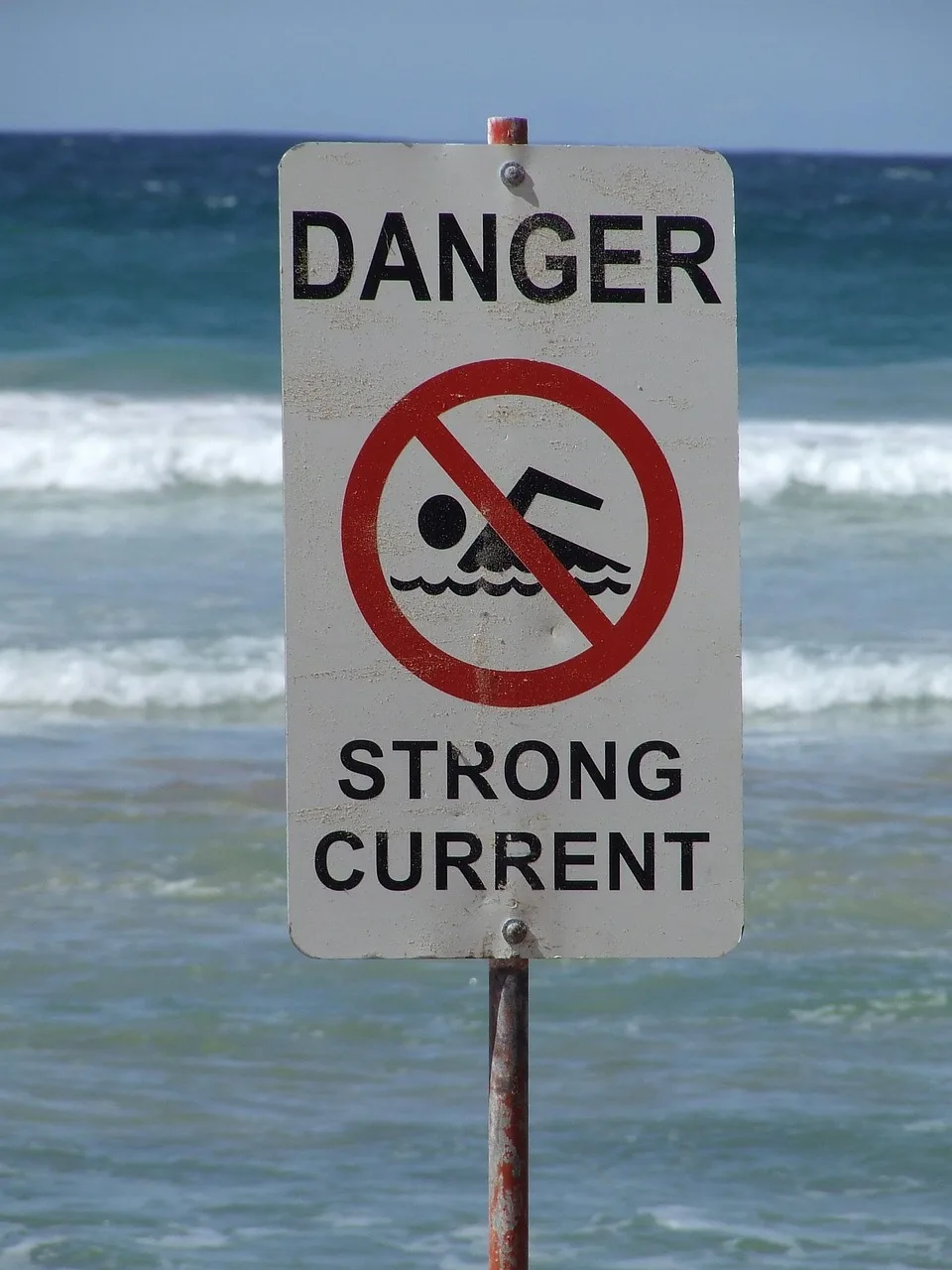
The red flag is worth dwelling on, because it does two jobs at once. It marks a place. In rough seas the lifeguards signal the particular stretches where rip currents are running, which locally are called valas, and the fire brigade explains why they matter: the force of the water makes it hard for a swimmer to get back out. It also issues an order, and the order is to stay out of the water there. What a red flag is not is an invitation to pace along the sand until you decide the rip has ended. The fire brigade's first instruction in bad conditions is to find the lifeguard and ask what the actual danger is at that moment, then to ask yourself whether you need to be swimming at all.
British consular guidance says much the same in flatter language: currents off some Brazilian beaches are dangerous, get advice locally before you go in, and pay attention to the warning flags and to where the lifeguards are standing. The fire brigade adds one observation about who ignores all this. In heavy seas, the bathers who take the most risk are young men.
There is a second signal, and it is not a flag. Brazilian federal rules classify bathing water as either própria or imprópria, fit or unfit, and require the environmental agency to publish the result and to close and sign a stretch when the water justifies it. The same rules require the bulletin to record when the deterioration was caused by rainwater washing off the streets. That is the mechanism behind the advice every resident will give you: after a heavy summer downpour, give the sea a day or two. The local habit and the official classification are tracking the same event, which is why they agree.
Hiring the chair
The people who rent chairs and umbrellas are barraqueiros, and they are licensed. In 2022 the city put the number at roughly 1,100 working authorised fixed points along the shoreline. To collect their equipment they must produce photo identification and a current TUAP, the fee for occupying public space, and they are required to keep two documents on display at the stand: the price list and the municipal authorisation itself. When the city last re-equipped them, in that same 2022 handover, the legal allocation was 40 umbrellas per operator, in seven patterns the public order secretariat had approved by resolution.
Look for the paperwork. It takes three seconds and it is the whole test. A stand with a visible price table and a visible authorisation is a business the city can find again. A cool box that appeared from behind a wall is not, and inspectors on the summer operation spend their weekends looking for exactly that, along with unlicensed parking attendants and clandestine equipment stores.
A shoreline decree published in May 2025 tightened all of this considerably, with 16 separate prohibitions covering the promenades, the sand, the public equipment, the kiosks and the stands. One of them governs identity: a beach stand is required to carry a sequential number assigned by the city, which is to say a licence plate. Whatever else is painted on the awning, that number is what identifies your man to an inspector, and it is what you quote if the transaction goes wrong.
The decree also banned the cercadinho, the practice of fencing off an area of public sand with a ring of chairs so that only paying customers can get through. This is the point where the whole arrangement makes sense. Under federal law dating from 1988, Brazilian beaches are public property in common use, and free access to them and to the sea is guaranteed in any direction. You are not renting the spot. You cannot rent the spot. You are renting a chair, a parasol and, in practice, a working relationship with the man who has to sweep that circle at the end of the day.
What the sand is allowed to sell you
The same decree quietly rewrote the beach menu, though it is worth keeping two different rules apart.
Some things are simply out. Glass bottles may no longer be sold or handed over on the sand or the promenade, by kiosks, by stands or by anyone else. Amplified sound on the sand is prohibited at any hour, musicians included, unless the city has authorised the event. The summer enforcement operation adds barbecues and improvised camps to the list of what will not be permitted on the sand, on the authority of the same decree.
Other things are targets rather than rules. Food sold on skewers, cooking equipment of any sort, and the improvised polystyrene coolers and thermal trays that sellers work from are named in the decree as part of the crackdown on unlicensed street trading, which is a different offence from having a barbecue at your own towel. In practice both routes end at the same inspector. The summer operation runs two drones every weekend to check the stands, and 200 city cameras have been redirected to show the promenade and the strip of sand.
Insistent selling is prohibited too. The decree bans abusive or misleading commerce and names persistent approaches specifically. You are entitled to say no once.
How paying actually works
Two rules do most of the work here, and both are enforceable.
The first is disclosure. Kiosks and beach stands must display, clearly and visibly, their prices, their menu, the conditions of sale, any additional charges and any other services offered. This mirrors Brazil's consumer code, which requires offers to carry correct, clear, precise and conspicuous information about price, in Portuguese. The additional-charges clause is the one to read twice. Service charges and hire fees belong on that board, not in the total at the end.
The second is the ban on strong-arming. The consumer code prohibits conditioning the supply of one product on the supply of another, and prohibits imposing "limites quantitativos", quantity limits, without just cause. A minimum consumption charge is one of those limits. The city's consumer protection body launched a summer operation on the shoreline in January 2026 aimed at precisely these practices: excessive prices, minimum consumption requirements, tied selling and misleading advertising. Stands and kiosks caught at it can be notified, fined and stripped of their authorisation, and the operation runs a WhatsApp line, (21) 96608-0664, for reporting it from the sand while it is happening.
In practice this reduces to a habit. Ask what something costs before you accept it, and ask for the total before you hand over a card. British government advice on Brazil warns that payment machine and beach vendor scams turn up in busy tourist areas, where the sum charged is not always the sum agreed, and it tells travellers to keep their card in sight and read the figure on the terminal before approving anything. Carry some cash as well. A card reader on an open beach is only as good as the mobile signal underneath it.
What you can leave while you swim
Honestly: less than you would like.
The arrangement where you leave your bag with the chair man and walk into the water is real, and it is the reason people go back to the same stand every summer for a decade. It is also entirely informal. Nothing in his municipal authorisation makes him the custodian of your possessions. It covers chairs, umbrellas, a price list and a circle of sand.
The formal advice is unambiguous. British consular guidance warns that theft is especially common on Brazil's public beaches, the arrastão included, where a large group of thieves sweeps through a stretch of sand taking whatever is loose. It tells visitors to keep belongings close and to leave valuables behind, and it is blunt about the hours: "Do not go on to city beaches after dark."
So take the smallest possible kit. Enough cash for the day, one card if you must, a phone you can stand to lose, and nothing else that cannot be replaced from a pharmacy. Leave the passport where you slept. If you are on the sand with children, the municipal guard distributes free identification wristbands during its shoreline patrols, for the specific purpose of getting lost children back to their families faster.
Long after the last parasol has come down, the cleaning crews strip the containers and reset them, and at Arpoador the tractors work the sand between two and four in the morning. By mid-morning the next day a man has planted his numbered stand, unfolded his umbrellas, and the circle has appeared again, exactly half-way to his neighbour's.
Sources
- Lei nº 7.661, de 16 de maio de 1988 - Article 10: Brazilian beaches are public property in common use, with free access to them and to the sea always assured
- Comlurb promove ação de fiscalização e orientação a barraqueiros - the cleaning circle of half the distance to the neighbouring stand, 25 metres where there is none, the bag and bin obligations, and the escalating penalties
- Prefeitura publica decreto com novas regras de ordenamento para toda orla da cidade - published 16 May 2025: the 16 prohibitions, the ban on cercadinhos, the glass bottle and amplified sound bans, the sequential numbering of stands, the ban on insistent selling, the duty to display prices and additional charges, and the enforcement against unlicensed trading in skewered food, cooking equipment, improvised coolers and thermal trays
- Prefeitura inicia a Operação Verão na orla do Rio - camping, glass bottles, barbecues and amplified sound boxes not permitted on the sand under the May 2025 decree; two drones every weekend; 200 cameras redirected to show the promenade and the sand; enforcement against unlicensed vendors and clandestine stores; the municipal guard's children's wristbands
- Seop e Riotur entregam novos guarda-sóis para barraqueiros - January 2022: roughly 1,100 authorised operators at fixed points, the TUAP and photo ID requirement, 40 umbrellas per operator as the legal allocation, seven patterns approved by SEOP resolution, and the duty to display the price table and the municipal authorisation
- Procon Carioca lança Operação Preço Justo na Praia - launched 15 January 2026: a summer task force against excessive prices, minimum consumption, tied selling and misleading advertising on the shoreline, the penalties available, and the WhatsApp reporting line
- Código de Defesa do Consumidor, Lei nº 8.078/1990 - Article 31 on clear, precise and conspicuous price information in Portuguese, and Article 39 I on tied supply and quantity limits without just cause
- Imagens do Rio Antigo são expostas nos postos de salvamento da orla - the 2021 count of 24 lifeguard posts along 36 kilometres from Leme to Recreio, numbered posts in Copacabana, and Orla Rio as concessionaire of the post buildings
- Orla Rio: um pouquinho sobre a Orla Rio - the concessionaire's current figures of 27 lifeguard posts, 309 kiosks and 34 kilometres across nine beaches
- Conheça o significado das bandeiras dos bombeiros nas praias do Rio - the six-colour flag code, the red flag as high drowning risk and an instruction not to enter the sea, and the 300-metre span 150 metres either side of the lifeguard post
- Bombeiros orientam sobre os perigos de mergulhar em mar de ressaca - lifeguards signal rip currents, known locally as valas, with red flags on the stretches where they occur; ask the lifeguard about the real danger first; young men take the most risk
- Resolução CONAMA nº 274 de 2000 - the própria and imprópria classification of bathing water, the duty to publish results and to sign closed stretches, and the requirement to record when rainwater runoff caused the deterioration
- Brazil travel advice: safety and security - beach theft and arrastões, advice not to take valuables or go onto city beaches after dark, warnings about payment machine and beach vendor charges, and guidance on currents and warning flags
- Prefeitura e PM anunciam operação conjunta e novas regras de uso noturno no Arpoador - the Arpoador rock run to park hours of 4am to 9pm with controlled exit, mechanical cleaning of the sand preferably between 2am and 4am, and Postos 8 and 9 with Praia do Diabo as a single 61-sweeper cleaning area