Haggling Without Insulting the Person You Are Haggling With
LineCast Networks
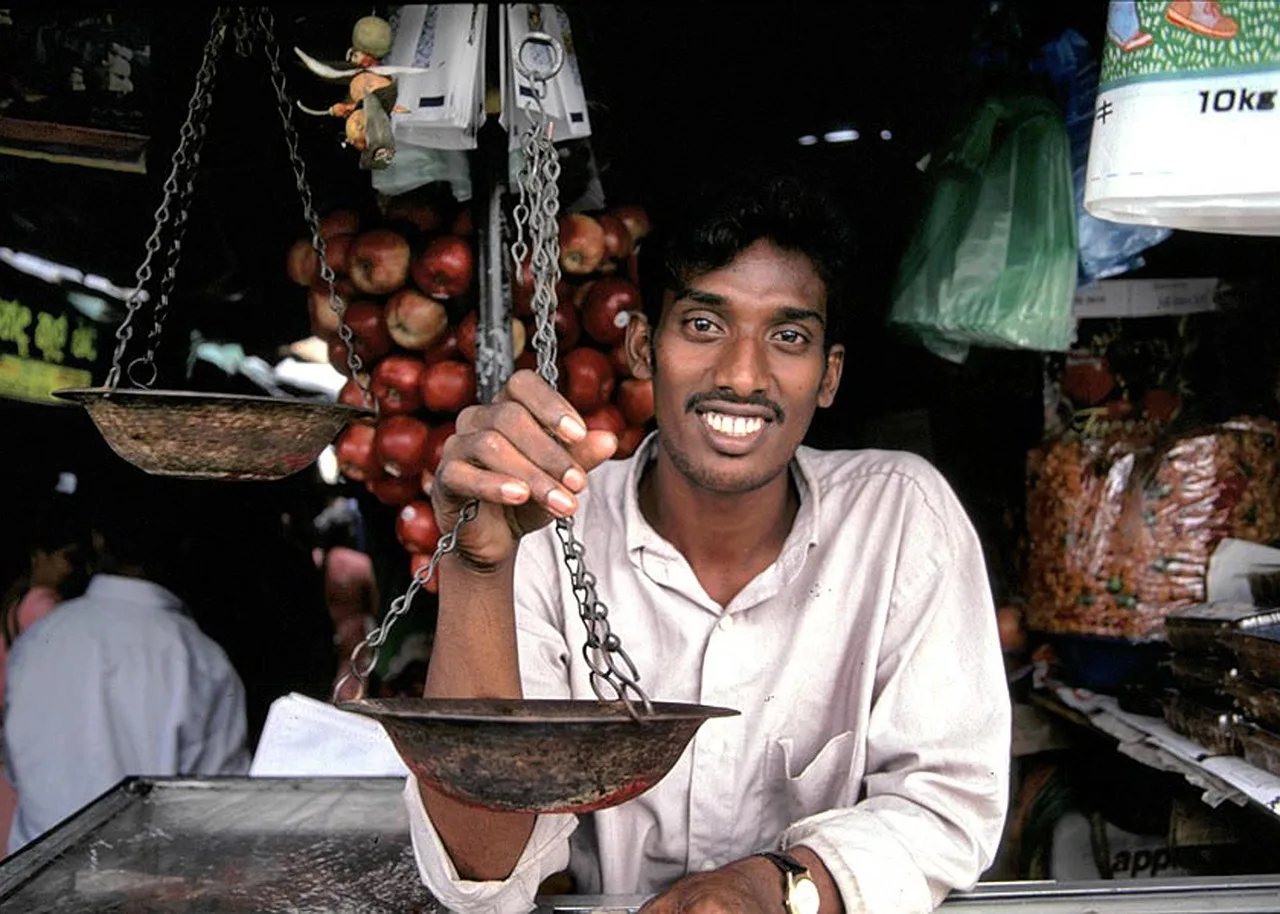
Article 5 of Turkey's Price Tag Regulation leaves very little room for interpretation. Goods offered for retail sale must carry a label, written, digital or electronic, that is easy to see and easy to read, and the label has to be in Turkish. Among the things it has to state: the country of origin, the item's distinguishing features, the selling price including all taxes, the unit price, and the date on which that selling price and unit price began to apply. Where a label cannot physically be attached to the thing, a list carrying the same information has to be posted somewhere the customer can read it. Article 11 handles discounts. The reduced price has to appear alongside the price before the discount, both of them visible and readable, and for sales of goods the pre-discount figure has to be the lowest price the seller actually applied in the ten days before the discount started. For things that spoil quickly, fruit and vegetables and the like, and for services, the comparison runs against the immediately preceding price instead. Either way, proving it is the seller's problem, not yours.
That regulation covers the Kapalıçarşı, the covered bazaar in Istanbul that the city's own tourism office calls the largest in the world, with more than four thousand shops. It does not cover everything those shops sell, and the exception is the interesting part. Article 6 lets goods off the label requirement when the required information is already printed on the item or its packaging, when the price is printed on the thing itself as it is on books, magazines and newspapers, and when the sale is by auction. Then a further paragraph exempts goods made of precious stones or metals whose selling price is set by a national or international exchange, or by commercial custom. Those sellers do not have to tag anything. What they must do instead is show unit selling prices by type, somewhere in the shop where you can easily see and read them, and state separately whether the workmanship charge, the işçilik bedeli, is included in the figure. The tourism office's own page lists what the bazaar sells and puts jewellery first. So the untagged jewellery a visitor meets in there is not an enforcement failure. It is written into the statute, and what the statute demands in its place is a posted rate plus an honest answer about the labour.
Morocco has its own version: Law 31-08 obliges every supplier to inform the consumer of the price by marking, labelling, display or any other appropriate means, with value added tax and any compulsory extra service costs included in the figure shown. Egypt's Consumer Protection Law, Law 181 of 2018, requires under Article 7 that suppliers announce the prices of the goods and services they offer clearly, with legally imposed taxes and any other financial charges inside the announced figure. Vietnam goes further than any of them, and we will come back to that.
The received version sorts the world into two kinds of country: the ones with price tags and the ones with haggling. The statute books do not cooperate. Every market on the standard bargaining itinerary sits inside a legal regime that requires prices to be shown, and has done for years. What differs between Osaka and Marrakech is not the law. It is which objects the law actually gets attached to, and what the seller has already worked out about you before either of you says a number.
The insult is not the discount
Begin with the thing that causes offence, because it is narrower than people assume.
Japan's national tourism organisation answers the question on its own site, and it answers it in an order the received version reverses. The concession comes in the middle and the caveat comes last. "In general, most shops won't haggle about prices," it says, and at a big-name shop, "at best, they have a price-matching system." Then: "In the smaller, privately owned shops you will occasionally find places willing to make a deal. If something is a bit too pricey it doesn't hurt to ask, but generally, expect to pay what's marked."
So the rule is not "never in Japan". The rule is "not against a tag".
That distinction does the work everywhere. Asking a shopkeeper to come down on a marked, mass-produced item in a fixed-price shop is not received as a request for a discount. It tends to be received as a claim that the number on the tag is a lie, and that the person standing behind it is the sort of person who posts lies. In the European Union, a directive on the books since 1998 makes every trader show shoppers two figures on anything put in front of them, what the item costs and what it costs per unit of measurement, so that number is a regulated declaration. Arguing with it invites the seller to admit the declaration was fiction.
Turn it around and the offence evaporates. Where nothing is posted, the first number spoken is not a declaration. It is an opening, and both parties know it. Taking an opening number without comment is not good manners. It is a small refusal to participate, and it is sometimes read as the shrug of someone with more money than attention.
The workable rule across all of these jurisdictions, and it travels better than any country list: if a number is displayed, that is the price. If no number is displayed, the first number is an opening.

What the opening number is tracking
The folklore says start at a third, or a half, and the folklore is unreliable because the multiplier is not a cultural constant. It is a function of what the seller thinks you know.
The clearest evidence for it is not a guidebook but a piece of fieldwork. The anthropologist Kirsten W. Endres worked at Cốc Lếu Market in Lào Cai, on Vietnam's border with China, for about eight months spread across two stints between October 2010 and September 2012, and published the results in Market Frictions, which Berghahn has made freely available. She records a transaction over a torch. The vendor opens at 180,000 đồng. The customer, a young Vietnamese woman, tells him that is outrageous, that a stall over there is selling the same thing for 80,000. He does not move: "80,000 is impossible; nobody here sells at this price. Tell me how much you're willing to pay and I will see." Endres offers the exchange as a demonstration that an informed client can get a vendor down below half the opening. Note how much work it takes. The buyer only gets there by walking out, being called back, and then converting the deal into two units for 170,000.
Then she records what the vendors say about foreign visitors. Whatever price we tell them, one said, they agree immediately, or bargain a little. Chinese customers, by contrast, would counter 100,000 with 30,000, because they assume they are being overcharged.
The uncomfortable corollary is that the opening is not simply a national custom applied to everyone alike. Endres watched a vendor called Mai let a young Hmong couple have a toiletries case with no haggling at all, at barely more than she had paid for it herself, and explain afterwards that they were honest people with little money who did not know how to bargain, so she did not sell dear to them. She only milked the rich. The opening number is an estimate of your information and your wallet, adjusted for how much trouble the seller expects.
So the most useful thing you can do before opening your mouth is remove the information asymmetry. Walk the lane. Ask three sellers what the same object costs before you engage with any of them. Clifford Geertz, an anthropologist rather than an economist, put information and search at the centre of peasant-market pricing in a five-page note for the American Economic Review in 1978, and the point holds: the walking is not preamble to the negotiation, it is most of the negotiation.
The first sale of the day, and why it is not a bargain hunt
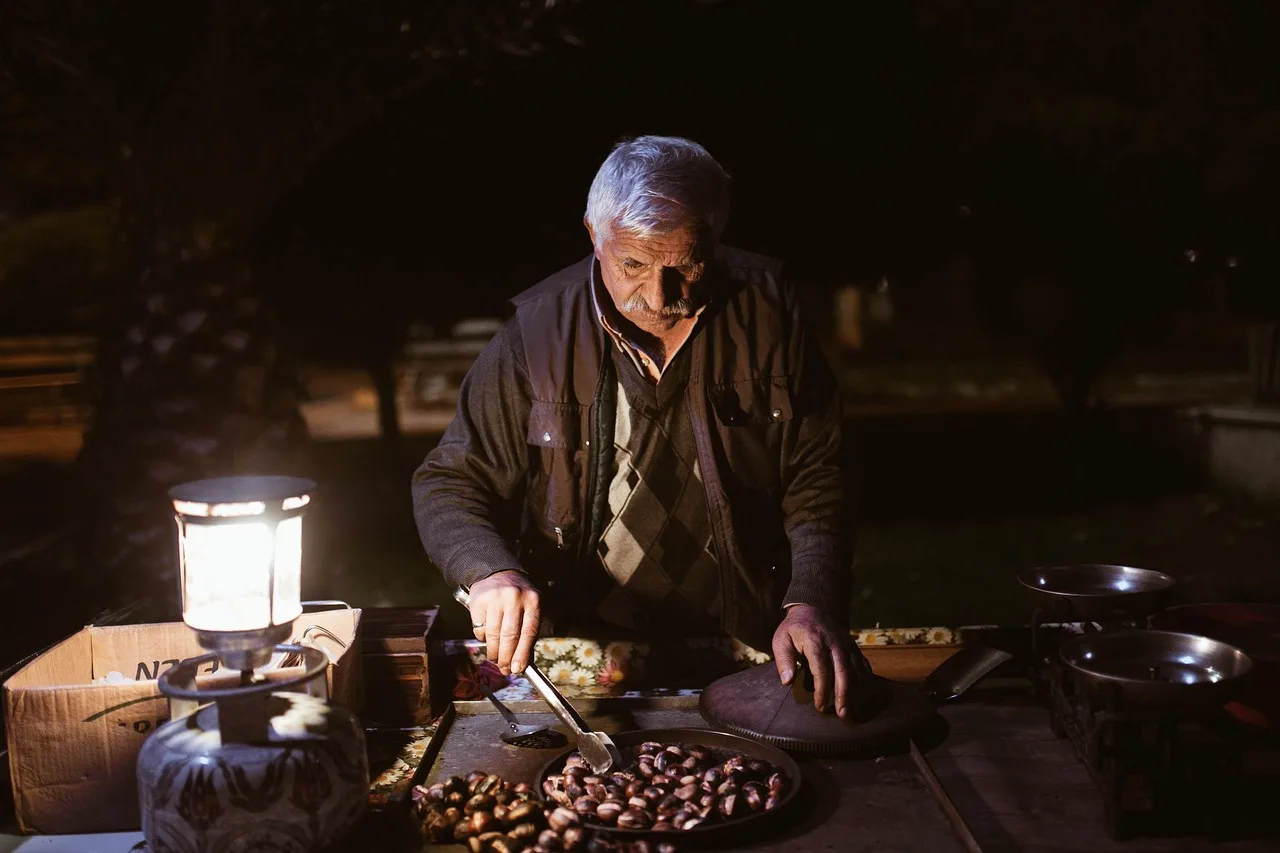
Turkish has a word, siftah, inherited from Ottoman Turkish and ultimately from the Arabic istiftāḥ. It means the first sale of the day. English has a word for it too, handsel, which almost nobody uses any more.
The concept is alive across a much wider area than the etymology suggests, and it changes the etiquette in a way visitors routinely get wrong. Endres describes the Vietnamese version, mở hàng, literally opening the goods. The first customer of the day matters enormously. If that person arrives with a good and nimble soul, the vendor expects to sell well and feel easy for the rest of the day. One vendor put the arithmetic of it plainly to her: "For the first sale of the day it is not important to make a big profit. One may sell for the cost price or even with a small loss, because it's only for good luck on that day."
This is the part worth carrying with you. The same belief that hands you a good first price also carries an obligation. Endres notes that many Vietnamese deliberately avoid the market in the early hours precisely because they do not want to be cornered into buying something they consider overpriced, or just not good enough, purely to open a vendor's stall. And she describes what happens when the first encounter goes badly: the vendor may perform đốt vía, burning the material soul of the offending customer. She watched a stallholder named Xuân do it after a shopper handled every item on display and then haggled at length over a keychain nail clipper without buying. Xuân set fire to a small sheet of wrapping paper, waved the flame back and forth over her goods, and whispered for the gentle soul to remain and the wicked soul to fly away. In the market Endres studied between 2010 and 2012, the practice was still going on, notwithstanding that the marketplace's fire regulations prohibited it.
You do not have to believe any of it to see the shape of the transaction. If you are a seller's first customer, you may well be offered a better number than anyone else gets that day. In exchange, you are expected to close. Working someone over for twenty minutes at eight in the morning and then walking out empty-handed is, in that frame, not a hard bargain. It is a small act of vandalism against the rest of their day.

Where walking away works, and where it is just rude
Walking away is a real instrument and it has a narrow range.
It works where the object in front of you exists in quantity and the seller knows it. Thirty stalls in the same lane sell the same brass tray, the same scarves, the same lanterns. Leaving is not theatre, it is search, and the seller reads it correctly as search. The counter-offer that follows you down the alley is the market functioning.
It works badly, and reads badly, in three situations. When the object is genuinely one of one, made by the person selling it, walking out is not price discovery, and can read as a verdict on the work. Morocco's tourist office describes souks organised by craft, with the metalworkers of the Attarine, the tanners and dyers turning out leather, and artisans across the country producing zellige, thuya marquetry, silver from Tiznit and Taroudant, blue ceramics from Fez and green from Meknes. Some of what you are looking at came out of a workshop upstairs. Second, when you have already been given a first-sale price. Third, and this is the one that actually causes lasting offence: when you have named a number.
Here is the rule I would carry into any of these markets, and it is my reading rather than anything a statute or an ethnographer says outright: your last offer is a commitment. If the seller takes it, you buy, at that price, without a fresh objection about the colour or the size or the exchange rate. Naming a figure you have no intention of honouring is the genuine insult, because it converts a negotiation into a theft of the seller's morning. Do not open at a number you would be embarrassed to pay.
The tea is not a trap, but it is not free of consequence either. Accepting an hour of someone's hospitality raises the cost of leaving, which is what hospitality is for. Take it when you are serious, decline it politely when you are browsing.
The legal levers nobody uses
Three of these countries hand you tools that almost no visitor picks up.
Morocco's Law 31-08 does more than require a displayed price. For any sale where the price is above a statutory threshold and delivery or performance is not immediate, the supplier has to state in writing the date by which the goods will be delivered, on the contract, invoice or receipt. The supplier is expressly forbidden from fixing the price at the moment of delivery, and cannot reserve a right to raise it without giving the consumer a matching right to walk away from the contract. Any clause that does is void. If you are commissioning a rug, or having something made to measure, or shipping a heavy purchase home, that is the provision that matters, and it is worth getting the agreed figure onto a piece of paper before anything is cut or crated.
Egypt's Law 181 of 2018 obliges the supplier, under Article 10, to hand the consumer an invoice recording the transaction, carrying, in particular, the tax registration number of the supplier, the date the deal was struck, the price of the product, its specifications, its nature and quality, and how much of it you bought. Articles 5 and 6 make Arabic the mandatory language for invoices, contracts and documents and for the data written on the goods themselves, with additional languages permitted alongside it. Asking for a proper receipt in Cairo is not an accusation, it is a legal entitlement, and a price that has to be written onto an invoice is a price that has stopped moving.
Vietnam is the strictest of the four, and the least understood. Under Decree 87/2024/ND-CP, which the government issued on 12 July 2024, failing to list prices at all, or listing them so unclearly that customers are misled, draws a fine of 500,000 to 1,000,000 đồng, and the seller can be ordered to display prices properly. Selling above the listed price is a separate offence, running from 5 to 10 million đồng for ordinary goods, and the penalty comes with a remedy attached: the seller has to give the customer back the amount collected above the listed figure, and has to announce that remedy publicly in the mass media within thirty days. Only if the customer cannot be identified, or refuses to take the money, does the difference go into the state budget instead.
Read that carefully and the etiquette resolves itself. In Vietnam, a displayed price is not an aspiration, it is a legal ceiling. If there is a card on the fruit, pay what the card says and expect the vendor to honour it. If there is no card, you are in the other regime, and the first number is an opening.
Which is, in the end, the whole of it. The distinction is not between countries that bargain and countries that do not. It is between an object that has been declared and an object that has not. Learn to tell one from the other on sight, arrive early enough to be somebody's siftah, and never say a number you would not pay.
Sources
- Fiyat Etiketi Yönetmeliği (Turkish Price Tag Regulation), official consolidated text - Article 5(1) on written, digital or electronic labels and posted lists; Article 5(2)(a) to (f) on the mandatory label contents in Turkish, including the date the selling price and unit price took effect; Article 6(1) on goods exempt from labelling; Article 6(3) on precious stone and metal goods priced by exchange or commercial custom, requiring posted unit prices and a separate statement of whether the workmanship charge is included; Article 11(1) as amended on 11 October 2025, giving the ten-day lowest-price rule for goods, the immediately-preceding-price rule for perishables and services, and the seller's burden of proof
- Grand Bazaar, Istanbul city tourism portal - Kapalıçarşı described as the largest covered bazaar in the world, with over 4,000 shops selling jewellery, carpets, textiles and souvenirs
- L'affichage des prix, Moroccan consumer portal fact sheet on Law 31-08 - price must be shown by marking, labelling or display including VAT and compulsory extras; written delivery date above a statutory threshold; ban on fixing or raising the price at delivery
- Consumer Protection Law No. 181 of 2018, Arabic text hosted by Egypt's Economic Courts portal - Article 7 on announcing prices clearly with taxes and other financial charges included; Article 10 on the invoice and its required contents; Articles 5 and 6 on Arabic as the mandatory language
- Law No. 181 of 2018 on Consumer Protection, WIPO Lex record - catalogue record carrying both the Arabic text and an English translation of the Egyptian law, which WIPO offers for reference only, the Arabic prevailing in case of discrepancy
- Vietnamese market surveillance authority on Decree 87/2024/ND-CP price-listing penalties - decree issued 12 July 2024; Article 13(1) fines of 500,000 to 1,000,000 đồng for failing to list or listing unclearly, with an order to list correctly; 5 to 10 million đồng for selling above the listed price; refund of the excess, public announcement of the remedy in the mass media within 30 days, and payment into the state budget only where the customer is unidentifiable or refuses
- Directive 98/6/EC on consumer protection in the indication of prices, EUR-Lex - general EU obligation to indicate selling price and unit price; shown as in force with a consolidated version
- Japan Shopping Q&A, Japan National Tourism Organization - the quoted answer in full: most shops will not haggle, big-name shops offer price matching at best, smaller privately owned shops will occasionally deal, and generally expect to pay what is marked
- siftah, Wiktionary - Turkish siftah, from Ottoman Turkish and Arabic istiftāḥ, glossed as handsel, the first sale of the day. A dictionary entry, not a primary source
- Kirsten W. Endres, Market Frictions: Trade and Urbanization at the Vietnam-China Border, open access - fieldwork conducted October 2010 to March 2011 and August to September 2012, stated in the introduction; the torch bargaining transcript and the claim that informed clients can bargain below 50 percent of the opening (p. 47); vendor views of foreign and Chinese customers (p. 46); Mai and the Hmong couple (p. 48); mở hàng, the first-sale-at-cost quotation, and đốt vía glossed as burning the material soul, still observable despite the marketplace fire regulations (pp. 91 to 92)
- Clifford Geertz, "The Bazaar Economy: Information and Search in Peasant Marketing", RePEc record - bibliographic record only: American Economic Review 68(2), pages 28-32, May 1978, five pages, no abstract available
- Shopping in Marrakech, Moroccan National Tourist Office - souks organised by trade, the Semmarine and the Attarine, tanners and dyers working leather
- Moroccan traditional craftsmanship, Moroccan National Tourist Office - regional crafts including zellige, thuya marquetry, silver from Tiznit and Taroudant, blue Fez and green Meknes ceramics