Getting Into the Church, Mosque or Temple You Travelled to See
LineCast Networks
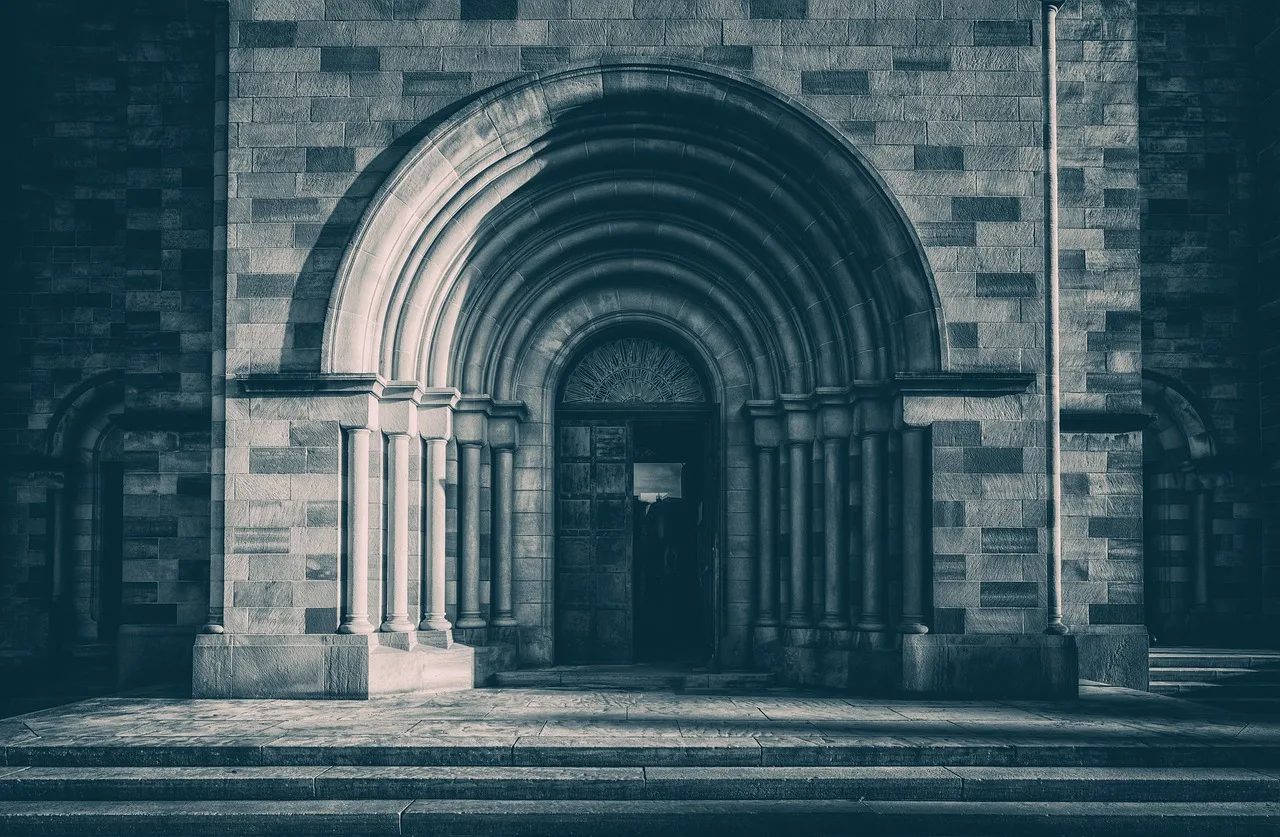
The Vatican Museums publish a clothing rule, and it is longer and stranger than the version people repeat to each other. Sleeveless tops are out. So are low-cut ones, shorts that stop above the knee, and miniskirts. Then the rule keeps going: the requirement of decorum "extends also to any visible personal objects as well as similarly visible distinctive personal signs (such as, for example, tattoos) that may offend Catholic morality, the Catholic religion and common decency." A forearm can fail the dress code. So can a hat, which the same paragraph bans outright.
That last item is the useful one, because it is a rule about your head rather than your clothes. Rome wants the head bare: hats are barred at the Museums and again inside the Basilica. At the Sheikh Zayed Grand Mosque in Abu Dhabi, the published visitor code requires a woman's hair to be fully covered. At the London gurdwaras that publish their protocols, everyone in the room is asked to cover their head, and a baseball cap will not count as a covering. One body part, three opposite verdicts. The belief that places of worship share a single conservative dress code, and that a pair of long trousers discharges it everywhere, is what leaves people standing outside the building they crossed a continent to see.
What follows is what the operators themselves put in writing.
Rome: decorum, not centimetres
The Vatican Museums do not write a separate rule per building. Their visitor page makes a single paragraph govern the lot, saying that entry "to the Vatican Museums, the Sistine Chapel, St. Peter's Basilica and the Vatican Gardens is permitted only to appropriately dressed visitors." One paragraph, four gates.
The Basilica publishes its own wording, and the two texts do not match in the way you would expect. The Museums ban shorts above the knee and miniskirts. The Basilica's rules for the common good ban "excessively short clothing, sleeveless tops, or hats." Excessively short is not a measurement. Neither text defines a strap width, a hem length in centimetres, or what counts as low-cut. This is a decorum standard, assessed by a member of staff, in a queue, in about two seconds.
The practical consequence is that arguing is pointless and pre-empting is cheap. Something that covers both shoulders and stays on solves the sleeveless problem for anyone in a vest. The hat comes off and stays off inside the church. And because the Museums also require knives, scissors and metal tools to be surrendered to the cloakroom, along with rucksacks and anything staff judge unsuitable by size, the entrance is a slower process than a museum entrance usually is. The Museums add one warning worth heeding: if you plan to continue into the Basilica afterwards, do not leave your bag in the Museums cloakroom, because you will not be passing back through.

Istanbul: the rule starts in the courtyard
Sultanahmet Camii, the Blue Mosque, is a working mosque with a visitor association that publishes its rules, and the rules are written by reference rather than as a checklist. Visitors are required to cover the parts of the body that the rules of worship require to be covered, and to do so in the mosque courtyard as well as inside the mosque.
That second clause is the one people miss. The obligation begins at the gate to the courtyard, not at the shoe rack. Nothing in the text spells out a headscarf, a sleeve length or a hemline. What the text does instead is provide for people who turn up unequipped: visitors without suitable clothing may take garments from the loan-clothing booth, and borrowed garments must be returned to the same booth. Whatever the booth hands you is the site's own answer to the question the rule leaves open.
Entry is free, unlike the Museums next door in Rome, and unlike Abu Dhabi and Casablanca. The constraint here is time rather than money, and it comes with the only hard numbers in this article. Visiting stops thirty minutes before the call to the noon prayer, and again thirty minutes before the call to the afternoon prayer, resuming fifteen minutes after each of those prayers ends. On Fridays the mosque is closed to visitors until 2.30pm while it is cleaned and made ready for the congregational prayer, though it stays open for worship throughout that window. Turning up at one o'clock on a Friday will not work. Last entry is half an hour before closing. Pushchairs are not allowed inside. The long restoration is over and the building is open again for worship and for visits, so the scaffolding in older photographs is no longer what you will find.
Abu Dhabi: the most specific list you will read
The Sheikh Zayed Grand Mosque Centre publishes a visitor code of conduct, and it is the most prescriptive document in this article by a wide margin.
For women: any type of attire, provided it is loose-fitting down to the ankles, sleeved as far as the wrist, with the hair fully covered and nothing transparent, tight-fitting or revealing. For men: any type of attire again, though the code prefers clothing that covers the whole leg, and rules out shirts that are transparent, tight-fitting or sleeveless. The code then goes past fabric altogether and asks visitors to refrain from excessive jewellery, heavy makeup and vividly colourful dress, and to avoid clothing carrying slogans or inappropriate drawings.
It also bans two things no other site on this list has thought to mention: dolls and stuffed animals, regardless of their nature, and masks, flags, slogans and symbols of every kind. The rest of its prohibitions rhyme with everyone else's. Smoking is banned here, and inside St Peter's, and in the Blue Mosque's courtyard, and for the duration of a Hassan II tour. Photography is constrained nearly everywhere, though the shape of the constraint differs: Abu Dhabi confines personal photographs to designated photo stops, while St Peter's asks visitors not to photograph inside the Basilica at all, even for their own use.
Two details are worth flagging because the Centre's own pages disagree. The code of conduct's clause on refreshments reads as though water is the exception to a ban on food and drink; the Centre's FAQ says flatly that visitors may not bring food and beverages, even water, and explains why: the marble and the carpet. Assume the stricter reading. The second detail is an absence. The word "shoes" does not appear in the published code at all. Shoe removal at the prayer hall is so assumed that nobody wrote it down. Admission is ticketed, and the Centre directs visitors to pre-book an online access pass.
Casablanca: where the outfit is not the obstacle
The Hassan II Mosque in Casablanca admits visitors on paid guided tours at times its foundation publishes, along a fixed route: prayer hall, minaret hall, ablutions hall. You do not wander in and you do not set your own pace.
Its dress rule is a third formulation again. Wear clothes that cover the shoulders and the torso and come below the knee. Shorts and sleeveless tops are absolutely forbidden. There is no published headscarf requirement. Shoes come off before you enter and you carry them with you, in bags provided at the entrance, rather than leaving them at the door.
The fare structure is worth understanding as a mechanism, because this is the place on the list where price depends most finely on who you are: the foundation sets separate rates for young children, for Moroccan children and Moroccan students, for Moroccans, residents and foreign students, and for foreign adults, with a reduction for large groups.
Set the two mosque codes side by side. Abu Dhabi wants wrists, ankles and covered hair. Casablanca wants shoulders, torso and below the knee, and says nothing about hair. Lifting one country's rule and applying it to another in the same broad region is a reliable way to be turned around at a gate.
Bali: two instruments, and only one of them is about clothes
The received version is simple: rent a sarong and a sash at the entrance and you are fine. The province has written down considerably more than that, across two instruments, and the sarong turns out to be the smaller half of the story.
Start with the older instrument. Governor of Bali Regulation No. 25 of 2020, on facilitating the protection of pura, pratima and religious symbols, says nothing about hemlines at all. It defines cuntaka, also called sebel, as a state of impurity arising from death, birth, menstruation and other matters regarded as impure. Article 45 bars two categories of person from entering a pura: anyone in that state, and anyone with no direct connection to a ceremony, a prayer, a piodalan or a temple protection activity. Article 13 makes preventing cuntaka part of a temple's upkeep and requires notice boards announcing both prohibitions. Article 46 makes a breach subject to customary sanction, which it lists as a fine, a formal apology, or a prescribed ceremony.
Read plainly, that regulation governs ritual fitness and who has business being inside. A recent bereavement or a birth in the family puts a Balinese Hindu in the same category as a menstruating visitor. Article 13 also requires a temple's Tri Mandala, its three zones, to be used according to religious, educational and socio-cultural function, which is the formal way of saying that access is not one decision. Standing in an outer court is not permission to enter an inner one.
The second instrument is the one a tourist will actually meet, and it does address clothing. In March 2025 the governor issued Circular Letter No. 7 of 2025, setting out obligations and prohibitions for foreign visitors. Foreign tourists are required to dress modestly and appropriately when visiting sacred areas, tourist attractions and public places. And the circular draws in hard terms the line that Regulation 25 only gestured at: foreign tourists may not enter the Utamaning Mandala or the Madyaning Mandala of a temple unless they are there to pray, wearing Balinese traditional dress, and not menstruating. The province says its civil service police, Satpol PP, will monitor compliance, and that serious offenders face the police and Indonesian law.
So the sarong is not a costume you buy your way past the gate with. It is the visible edge of a rule about which zone you are allowed to stand in. And what counts as Balinese traditional dress is itself defined provincially, in a third document with nothing to do with tourism: Regulation No. 79 of 2018, which sets the days on which government offices, private workplaces and schools wear that dress (Thursdays, the full moon, the new moon, and 14 August), names its elements, the kamen and the selendang, also called senteng, among them.
Which leaves the cloth handed to you at an ordinary temple gate on an ordinary day. That comes from neither instrument. It comes from village customary law, the awig-awig made by the desa adat, which Regulation 25 defines by name. That is exactly why the requirement varies from temple to temple, and why the sign at the entrance outranks anything you read before you arrived.
The gurdwara, which expects to dress you
Sikh practice is the outlier on this list in two ways, both helpful.
The published protocols at Gurdwara Sri Guru Singh Sabha in Southall, west London, are short. Before entering the Darbar hall you take off your shoes, wash your hands and cover your head. The text is explicit that this is not a rule for members only. "Non-Sikhs too must cover their head with a handkerchief or scarf," it says. The covering applies to everyone in the room whatever their gender, which is true of none of the other buildings here.
Whether the building hands you the cloth is a separate question, and Southall's page promises nothing either way. In practice most gurdwaras keep spare coverings by the door, and some say so. Gurdwara Sahib Woolwich, in south-east London, publishes its own rules and states that spare head coverings are available, with a caveat worth carrying into any gurdwara: "Hoodies, hats or caps are not regarded as head coverings." Woolwich also spells out why no single gurdwara's page can be read as the last word on all of them: each one is run by a committee its own congregation elects, and each sets its house rules through that committee.
The second point is a trap for people who think of prohibitions as applying only indoors. Tobacco, liquor and narcotics are not allowed on the gurdwara premises, not merely in the hall. The unopened packet in your bag is the problem, not just the cigarette in your hand. And every gurdwara has a free kitchen attached to it serving langar, which gives the visit a social shape that a cathedral visit does not have.
What actually goes wrong
Very little of this is about fabric. The scarf question is solved by carrying a large plain one: it covers a head in Southall, and it covers two shoulders in both Rome and Casablanca. What a scarf cannot fix is a hemline, and in Casablanca the hem has to reach below the knee on its own.
The failures are the other two. The first is timing: a mosque that stops admitting visitors half an hour before a prayer, or until half past two on a Friday, will not make an exception for a taxi already paid for. The second is transposition, taking the rule that applied at the last building and assuming it holds at the next one, when the institutions have never agreed on anything except that you should think about what you are wearing.
Which leaves one habit worth forming. Read the board at the entrance. In Bali the province requires that board to exist, and across all of these places it is the only text with jurisdiction over the spot where you happen to be standing.
Sources
- Vatican Museums: Useful information for visitors - the clothing clause covering the Museums, Sistine Chapel, St Peter's and the Vatican Gardens, the tattoo and hat wording, and the cloakroom rules on bags, knives and scissors
- St Peter's Basilica: Rules for the common good - the Basilica's own phrasing banning excessively short clothing, sleeveless tops and hats, plus the bans on smoking and on photography inside the church
- Sultanahmet Camii: Ziyaretçi Kuralları (visitor rules) - covering applies in the courtyard as well as inside, the loan-clothing booth and its return rule, no smoking in the courtyard, the ban on pushchairs, and the Friday closure to visitors until 14.30
- Sultanahmet Camii: Ziyaretçi Rehberi (visitor guide) - free entry, the closure window around the noon and afternoon prayers, the 14.30 Friday start and last entry before closing
- Sultanahmet Camii: Haberler (news) - the announcement that the restoration was finishing and the mosque would reopen for worship
- Sheikh Zayed Grand Mosque Centre: Mosque Manners and Visitor Code of Conduct - the ankle and wrist dress requirements, full hair coverage, jewellery and makeup guidance, the bans on dolls, stuffed animals, masks, flags and symbols, and photography only at designated photo stops
- Sheikh Zayed Grand Mosque Centre: FAQs - the plain-language dress answer, the statement that even water may not be brought in and why, no smoking anywhere on the grounds, and that admission is ticketed
- Fondation de la Mosquée Hassan II: Visites guidées payantes - the fixed tour route and times, the shoulders, torso and below-the-knee dress rule, the ban on cigarettes during the visit, shoe removal with bags provided, and the separate fare categories
- Peraturan Gubernur Bali Nomor 25 Tahun 2020 (protection of pura, pratima and religious symbols) - the Article 1(10) definition of cuntaka and sebel, the Article 45 entry prohibitions, the Article 13 upkeep and notice-board requirements, Tri Mandala, awig-awig, and the Article 46 customary sanctions
- Love Bali (Bali Provincial Government): Circular Letter No. 7 of 2025 - the province's own English text of the circular issued on 24 March 2025, including the modest-clothing obligation and the bar on foreign tourists entering the Utamaning Mandala and Madyaning Mandala
- Bali Membangun Cepat (Bali Provincial Government): SE Nomor 7 Tahun 2025 - the Indonesian text of the same circular, including the traditional-dress and menstruation conditions on the inner zones and the Satpol PP enforcement role
- Peraturan Gubernur Bali Nomor 79 Tahun 2018 (days for wearing Balinese traditional dress) - the named elements of Balinese dress including kamen and selendang (senteng), and the workplace and school days on which the rule applies
- Bali Government Tourism Office: Peraturan Gubernur index - the provincial tourism regulations published by the Bali government, the route to both regulations above
- Gurdwara Sri Guru Singh Sabha Southall: Visits - shoes off, hands washed and head covered before the Darbar hall, the explicit instruction to non-Sikhs, the ban on tobacco, liquor and narcotics on the premises, and langar
- Gurdwara Sahib Woolwich: Visitors - spare head coverings available, hoodies, hats and caps not accepted as head coverings, and the statement that every gurdwara sets its own governing rules through its own elected committee