Getting From the Airport Into Town Without Being Taken
LineCast Networks
Cairo International Airport publishes a line on its own passenger guide that no marketing department would have approved: "Tourists are often targeted by free taxi drivers in the arrival hall." The same page goes on to explain that the old black and white taxis usually have no meter and the price is negotiated before you travel, while the white ones are metered. That is an airport authority describing the hustle in its own arrivals hall, in writing, on the page it expects you to have read before you land.
Hardly anyone reads it. The ground transport page is the most useful document at any large airport, and it is the one thing arriving passengers skip, which is why the walk from immigration to the kerb remains the most reliably overpriced twenty minutes of a trip.
What a rank actually is
An official taxi rank is not a queue. It is a price mechanism, and the useful question at any airport is which mechanism you are standing in.
There are three in common use. The first is a metered fare plus a published airport surcharge, sold through a desk or a ticket machine that puts your name in a queue and hands the driver a docket. The second is a fixed price set by destination and vehicle class, published by the operator and offered where the cars wait, before you get in. The third is a fare fixed by the city or the region in law, which applies to every licensed vehicle at the rank whether you negotiate or not, and which you can look up before you fly.
Touting is the absence of all three. A man who approaches you inside the terminal has stepped outside whichever system the airport runs, and the price he quotes is the only number in the transaction that anyone has checked.
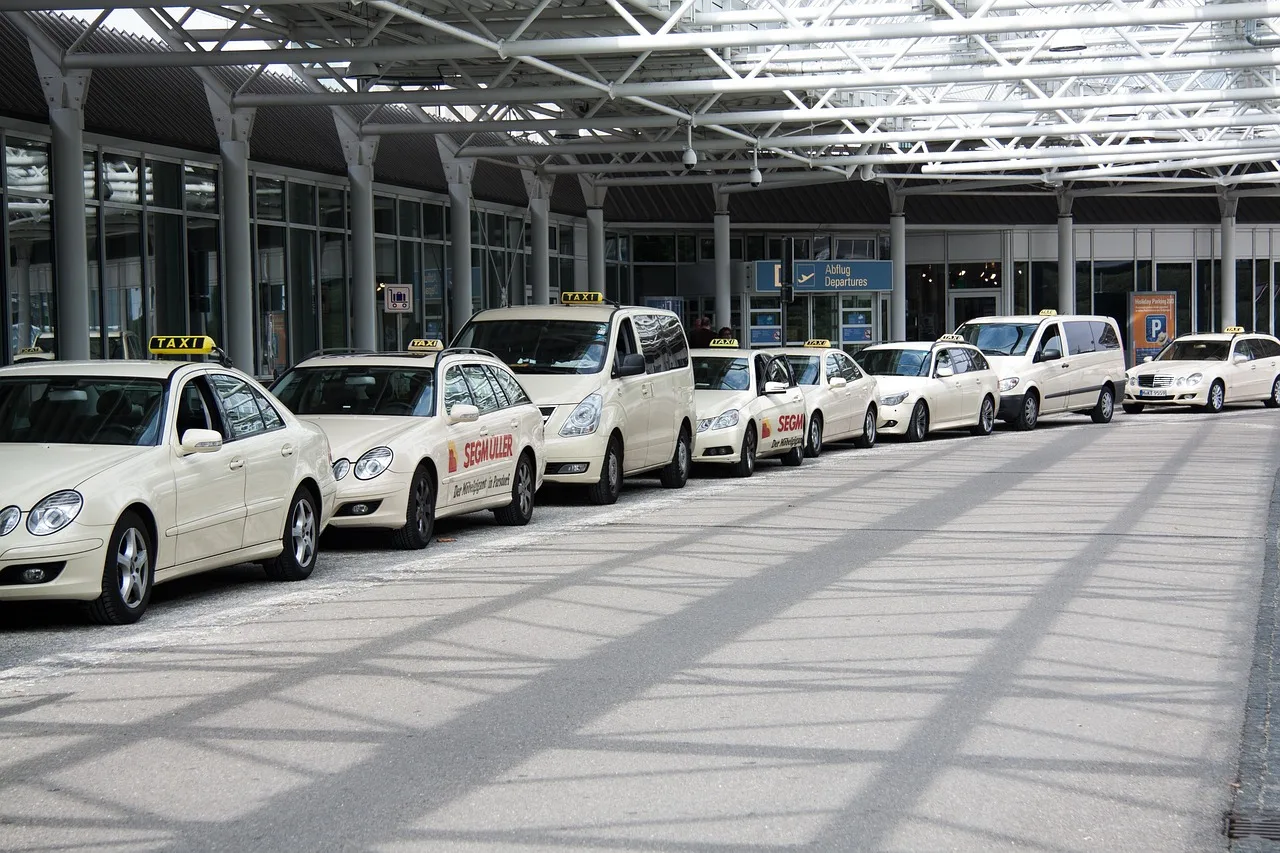
Bangkok: the docket and the surcharge
Suvarnabhumi runs the first mechanism, and the operator is precise about the geography. Airports of Thailand states that the public taxi service information counter and the ticket vending machines sit in the passenger terminal on Floor 1, between Gates 4 and 7. Note the floor. Airport ranks migrate as terminals are rebuilt, and a guide written three years ago may send you confidently to the wrong level, where the people who meet you are the ones with an interest in your being lost.
The fare mechanism is a meter plus an additional 50 baht for the driver, which AOT attributes to an announcement by the Ministry of Transport, and tolls are paid by the passenger. That last clause is where most of the confusion at Bangkok kerbs comes from. The expressway into the city has toll plazas, the driver will ask for cash at each one, and this is neither a scam nor an extra: it is the published arrangement, and it sits on top of the metered figure.
Two other details on that page are worth carrying. The airport lists a short distance product for trips of up to 20 kilometres around the airport, and a normal distance product where the Department of Land Transport permits a price to be agreed in addition to the meter. The note attached to it matters more than the sentence itself. The latitude comes from what the department calls the "Ministerial Regulation on Hired Cars Carrying No More Than Seven Passengers B.E. 2560", and the cases it describes are hires that leave Bangkok for Nonthaburi, Pathum Thani, Samut Prakan, Chachoengsao, Samut Sakhon or Nakhon Pathom. Those are the provinces that ring the capital, three of them landlocked, and the department gives its own reason for the flexibility: "facilitating hiring over long distances". Read plainly, a negotiated flat price is a sanctioned arrangement for a run out of Bangkok into the surrounding provinces, and the meter is the arrangement for a run to a hotel in Bangkok. A driver who wants to skip the meter for a trip to Sukhumvit is proposing something the queue system was built to prevent.
Don Mueang, the other Bangkok airport, works the same way through different doors: the taxi meter counters sit in International Terminal 1 on the first floor by Gate 8, and at the domestic terminal next to Gate 15 under the car park. Same 50 baht, same tolls on the passenger.
Ride apps in Bangkok are inside the system rather than around it. AOT's own page for Grab says the Department of Land Transport has certified the vehicles, and that while you may summon a ride from anywhere in the airport, you can only be collected at the pickup and drop off points the airport has designated. That is the model to expect wherever apps are legal at a big airport: the app is licensed, the kerb is not open, and the pickup happens at a numbered post that the airport chose. AOT also names a single official limousine partner at Suvarnabhumi, which is a useful phrase to remember, because the word limousine is otherwise available to anyone with a saloon car and a lanyard.
Cairo: the ceiling nobody prints
Cairo runs the second mechanism, and it runs it in the open. The airport's transport page describes numerous limousine services, prices fixed by destination and by car category: A for luxury cars, B for microbuses carrying up to seven, C for midsized saloons, D for London style taxis. There is no booth in this arrangement and the page does not pretend otherwise. "Pick-up points are in front of the terminals (curb side)", it says, which means the fixed price is quoted to you outdoors, in the open air, standing next to the car it applies to.
Then comes the sentence that repays the whole visit to the page. A category C price list, the airport says, "should give an idea of the upper limit for acceptable fares". Notice what the airport has done and what it has not. It has told you a ceiling exists and named the class of car that sets it. It has not printed a single figure, and nothing else on the site does either: the one Details link sitting beside the limousine text leads to the car rental companies, which is a different business entirely. So the ceiling is not a number you can carry off the page before you fly. It is a question to ask on arrival, and the useful move is to ask a limousine operator for the category C rate to your address before you engage anyone else, then treat that rate as the ceiling for everything on offer at that kerb. It converts an argument about a stranger's estimate of your wealth into an argument about the airport's own benchmark.
The rest of the page is equally plain. Old black and white cabs usually have no meter and the price is agreed beforehand. White cabs are metered. Buses to the city and to other governorates leave from the bus station in the car park in front of Terminal 1 only, not from wherever a driver tells you the bus stop has moved to.
What the page does not do is mention app based services at all. It lists taxis, limousines, buses and car rental, and stops. Where an airport's own page is silent on an app, treat the kerb rules as the airport's rather than the app's, find the designated pickup area if one exists, and expect the rank to be the arrangement the airport will actually defend if something goes wrong.
Rome: a fare boundary made of masonry
Rome runs the third mechanism, and it is the most misunderstood of the three, because the number everyone repeats is described loosely.
The fixed fare from Fiumicino is not a fare to a vaguely defined city centre. Both operators define the centre precisely: any address inside the Aurelian Walls, the ancient circuit that still rings the historic core. The boundary is legal rather than sentimental, and the fare table even names the resolution that pinned the walls as the outer limit, a Rome city council act of September 2006. Aeroporti di Roma and Roma Servizi per la Mobilità both publish the fare, and the tariff table Roma Capitale issued in June 2026 sets it out with the conditions attached.
Those conditions are where the money is. The fixed fare is per car, not per person, so a family of four splitting it are splitting one price. It includes the supplements, with the table making an exception for the fifth passenger and beyond, and it swallows any motorway tolls. And it applies, in the table's own English wording, only to "direct routes with a pick-up point for the user and a point of arrival for the same without any detour or stop". Ask the driver to pause at a friend's flat on the way and you have converted a fixed fare into a metered one, at which point you are in a different pricing world.
Ciampino has its own lower fixed fare into the walls. Rides that begin inside the Grande Raccordo Anulare and end at Fiumicino, or the reverse, are capped at a maximum where no fixed fare exists. Beyond those cases the meter governs, and the meter is a mechanism rather than a rate: a fixed start charge that varies between weekdays, weekends and the small hours, a per kilometre tariff that steps up through three bands as the fare accumulates, and an hourly rate that takes over whenever the car is moving below 20 kilometres an hour. Bangkok has the same idea with a stricter threshold, where the traffic jam rate applies below 6 kilometres an hour. Two cities, two speeds at which the meter admits that a taxi in traffic is renting you time rather than distance.
Rome also settles the ride app question in a way that flatters the taxi trade. The fare table treats three things as the same act: a call to the radio exchange, a booking through an app, and the telephone post at a rank. Each is simply a way of summoning a licensed taxi. What they have in common is that the meter starts somewhere other than where you are standing, so the table caps the damage. Where your pickup point is inside the Grande Raccordo Anulare, the sum charged to you at the moment you get in cannot exceed the fixed start charge plus five euros, and if the meter is already showing more than that when the car arrives, the driver has to tell you the difference will come off at the end. The approach is capped, the vehicle is a licensed taxi, and the app is a dispatcher rather than a parallel system. The city even runs its own booking service, one phone number and one app of its own, which is not something most municipalities can say.
The city's two documents do not quite agree on one point, which is instructive in itself. The mobility agency's page still lists a five euro radio taxi call charge in its supplements; the tariff table now in force contains no such line, only luggage, the fifth passenger onward, and that approach cap. Check the date on whatever table you are reading, and prefer the one that names the deliberation behind it.
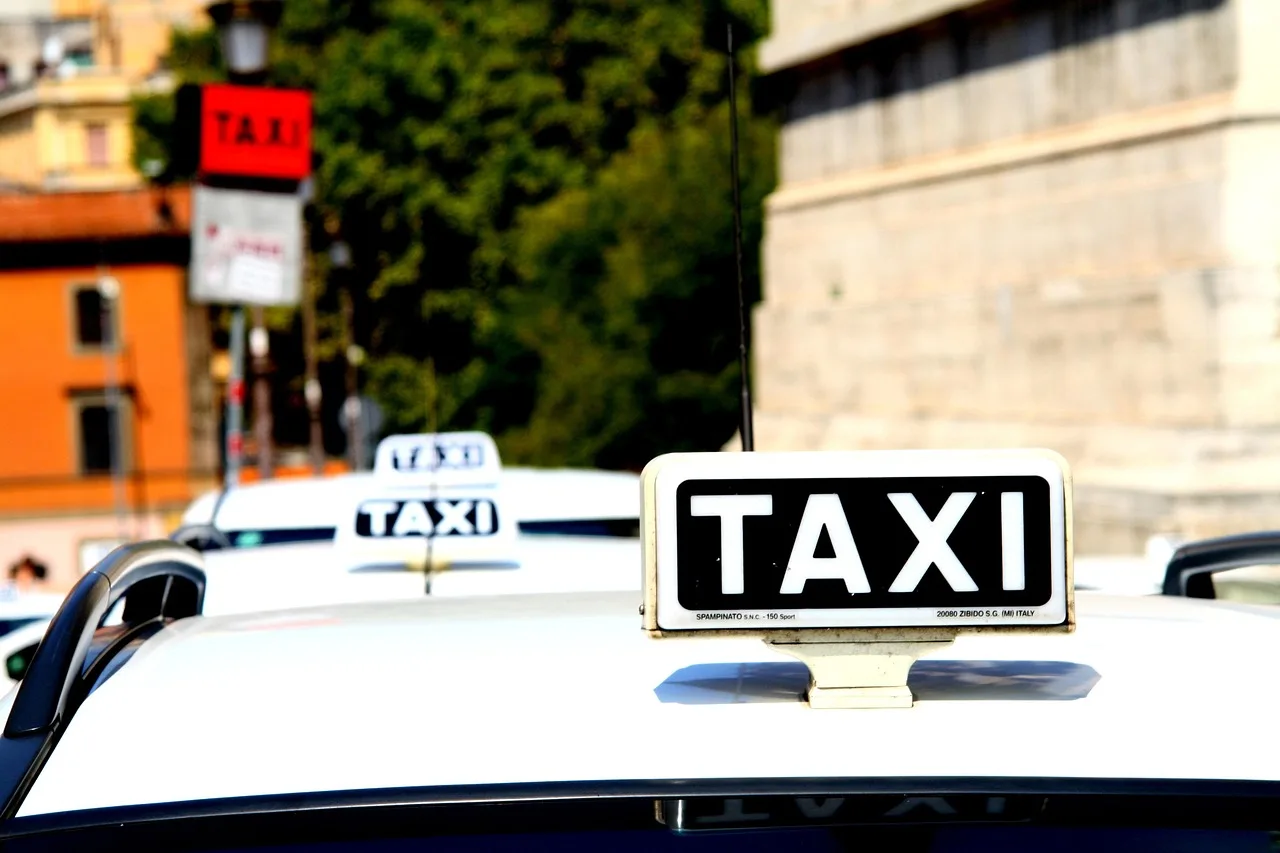
Identification is the last piece. Rome's taxis are white, they carry a TAXI sign up on the roof, the municipal symbol goes on the front doors, and the same licence number appears on the doors, on the rear and inside the cabin. The city's advice is to check that the meter is switched on before departure and to ask for the receipt. ADR's warning is blunter: any other vehicle in the arrivals area may not hold a taxi licence, and passengers should be suspicious of people inside the airport offering rides into the city.
For what it is worth, the rank is not the only sensible answer at Fiumicino. The station sits inside the airport area, with a non stop service to Roma Termini and regional trains to other Rome stations. A rank you have decided not to use is still a rank you understood.
The four questions
Before you reach the kerb anywhere, the operator's own ground transport page answers four things, and they take less time to read than the queue takes to move.
Who sets the price: a municipality, a ministry, the airport's concession, or the driver. Where the transaction happens: a desk, a machine, an app, or the open kerb. What the fixed price excludes: tolls in Bangkok, the fifth passenger in Rome, detours nearly everywhere. And where the rank physically is, floor and gate, because that is the detail that ages fastest and the one every tout depends on you not knowing.
Get those four and the arrivals hall stops being an auction. The people working it are not selling transport, which is abundant and cheap and forty metres away. They are selling the fact that you have not read the page.
Sources
- Move From / To Airport, Cairo International Airport - the airport's own warning about drivers targeting tourists in the arrival hall, metered white taxis versus unmetered black and white cabs, limousine categories A to D priced by destination and car class, kerbside pick-up points in front of the terminals, category C described as a reference for the upper limit of acceptable fares with no figures published, buses from the Terminal 1 car park only
- Public Taxi, Suvarnabhumi Airport (Airports of Thailand) - counter and ticket machines on Floor 1 between Gates 4 and 7, the 50 baht surcharge per Ministry of Transport announcement, tolls paid by passengers, the 20 km short distance service, the traffic jam rate below 6 km/h, and the Department of Land Transport note on agreed pricing for hires from Bangkok into six named provinces under the Ministerial Regulation on Hired Cars Carrying No More Than Seven Passengers B.E. 2560
- Taxi-Meter, Don Mueang International Airport (Airports of Thailand) - counter locations at International Terminal 1 Gate 8 and the domestic terminal by Gate 15, same surcharge and toll arrangement
- Grab taxi pick-up and drop-off points, Suvarnabhumi (Airports of Thailand) - Grab vehicles certified by the Department of Land Transport, rides requestable anywhere in the airport but only collected at designated points
- AOT Limousine, Suvarnabhumi (Airports of Thailand) - the sole official limousine partner at the airport
- Fiumicino Airport taxi: fares, pick-up points and authorised vehicles (Aeroporti di Roma) - the fixed fare to Rome city centre defined as the area within the Aurelian Walls, inclusive of supplements and valid per ride, the €80 ceiling for journeys to or from inside the ring road where no fixed fare applies, how to recognise an authorised taxi, and the caution about unlicensed vehicles and people offering rides inside the terminal
- Taxi at Ciampino Airport (Aeroporti di Roma) - Ciampino's lower fixed fare into the walls and the same identification and caution wording
- Taxi, Roma Servizi per la Mobilità - the fixed airport fares as per car prices, the condition that they apply only to a direct route without detours or additional pickups, white cars with the Roma Capitale symbol and licence number, checking the meter and asking for a receipt, the ChiamaTaxi 060609 booking number and app, and the five euro radio taxi call charge still listed among the supplements
- Tariffario Taxi, giugno 2026, Roma Capitale (Deliberazione della Giunta Capitolina n. 157 del 21 maggio 2026) - the fare table in force: start charges by day and hour, the single progressive metered tariff in three per kilometre bands stepping at €7 and €25, the hourly rate applied below 20 km/h, the €55 fixed fare from Fiumicino to inside the Aurelian Walls and €40 from Ciampino, predetermined fares inclusive of supplements and motorway tolls except from the fifth passenger onward, the requirement of a direct route "without any detour or stop", the cap of the fixed start charge plus €5 on a pick-up inside the Grande Raccordo Anulare originating from a radio, app or rank telephone call, the €80 maximum for journeys between the ring road and Fiumicino, and the Aurelian Walls boundary as designated by Rome city council resolution n. 493 of 6 September 2006
- Fiumicino Airport train: tickets and timetables (Aeroporti di Roma) - the station inside the airport area, the non stop Leonardo Express to Roma Termini and the FL1 regional trains to other Rome stations