Germany Runs on Rules Nobody Hands You at the Airport
LineCast Networks
On 1 August 2025, Bavaria became the last of Germany's sixteen states to bring its own shop-closing law into force. The Bayerisches Ladenschlussgesetz runs to thirteen articles and shuts ordinary retail at eight in the evening, which is exactly the window the old federal act had imposed and the window Saarland still keeps. Bavaria had nineteen years to widen it and chose not to. In Berlin, shops may trade from midnight on Monday to midnight on Saturday: six days, around the clock, no evening cut-off at all.
There is, in other words, no German shopping law. There are sixteen. The federal Ladenschlussgesetz stopped being the national rulebook when the 2006 reform of legislative competences handed the subject to the states, and the states took nineteen years to finish the job.
That pattern accounts for most of what visitors get wrong about the country. The rules are real and they are all written down. But the ones repeated as national facts are usually municipal, or state-level, or a federal ordinance about garden machinery that has been retold as a rule about human beings.
Sunday is constitutional, and older than the republic
The Basic Law of 1949 imported five articles of the Weimar constitution of 1919 wholesale. One of them is Article 139, eighteen words long in the German: Sunday and the holidays the state recognises stay under legal protection, as days on which work stops and the spirit is supposed to be lifted. That sentence, drafted in the year of the Treaty of Versailles, still sits above every state parliament. A state can liberalise its shop hours. It cannot legislate Sunday out of existence.
What survives the closure is more interesting than the closure. Bavaria's statute lets pharmacies open outside normal hours, and requires the state pharmacists' chamber to run a rota so that in any town with several pharmacies, some are shut and some are not. The ones that are shut must display a clearly legible notice, at a visible spot, naming the nearest pharmacy currently open. Bakeries get three hours on a Sunday. Newspaper sellers get five. Florists get two, except on Mother's Day and on Valentine's Day when it falls on a Sunday, when they get four, and on All Saints', the national day of mourning, Totensonntag and the first Sunday of Advent, when they get six, because those are the days Germans put flowers on graves. The law adds that Sunday trading should fall outside the hours of the main church service.
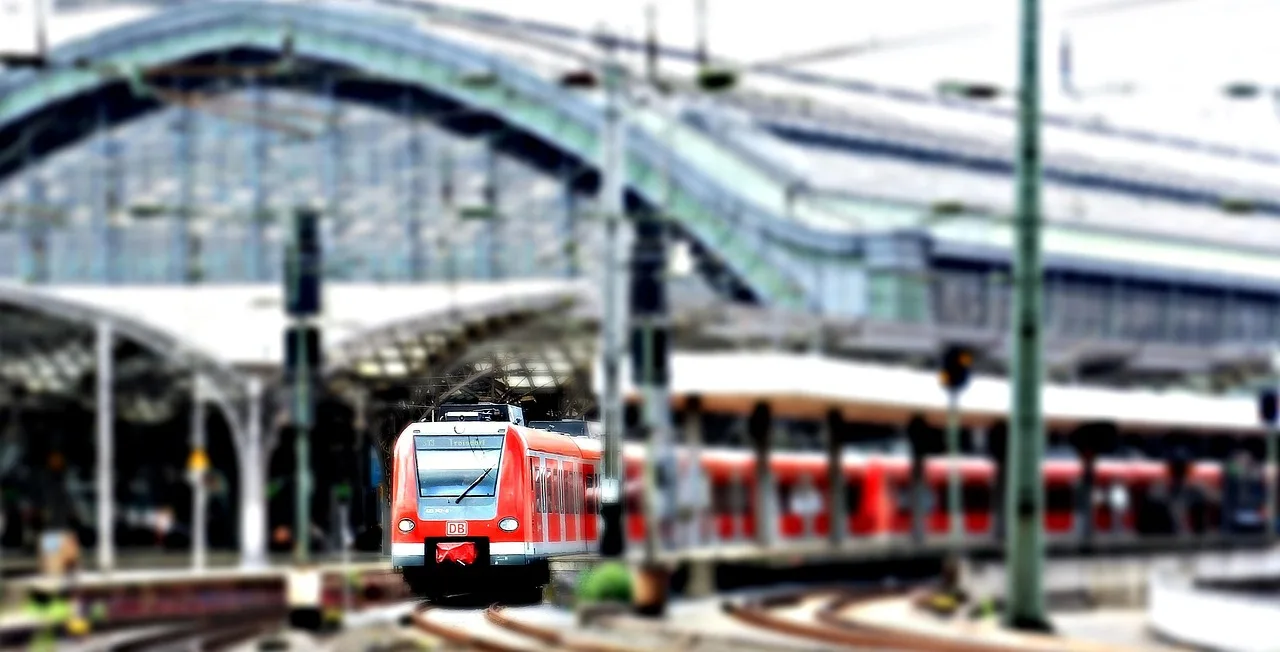
Travel is the reliable exception, and it comes in two grades. The lower grade is a term of art. Petrol stations, railway and long-distance bus stations and airports may sell Reisebedarf, and Bavaria's statute defines the word down to the item: newspapers, magazines and books, maps and stationery, tobacco, cut flowers, media carrying film, photographs or sound, batteries, charging accessories for small electronic devices, personal weather protection, first-aid, health and hygiene articles, souvenirs and low-value toys, food and drink in small quantities, and foreign currency. Every entry on that list is then qualified by whether the goods are the sort that usually serve the traveller in question. It is why the shop at the Hauptbahnhof will sell you an umbrella and a phone cable on a Sunday afternoon but not a shirt.
The higher grade is the airport, and it has a paragraph of its own. Munich, Nuremberg and Memmingen may sell everyday goods on a Sunday plus clothing, fan merchandise, sports gear and gifts, provided those are the sort of thing air passengers buy. What is capped there is floor space rather than product range: fifteen thousand square metres of selling area across Munich, three thousand each at Nuremberg and Memmingen, and as a rule no single outlet above five hundred, with large-format stores barred outright. So the shirt is available on a Sunday after all. You just have to be flying.
There are more seams. Bavaria's new law exempts unstaffed micro-supermarkets of up to 150 square metres where there is no personal contact and you serve yourself or buy from a machine. Under the same act, recognised spa towns, pilgrimage sites and designated excursion towns can be released by their local council for up to forty Sundays and holidays a year to sell goods for visitors. Berlin permits up to eight city-wide open Sundays a year, from one in the afternoon until eight in the evening, with two further Sundays or holidays available to an individual shop for a local occasion such as a company anniversary or a street festival. None of this is guessable from the pavement. All of it is published.
Quiet hours are not a national law
Here is the received version: Germany has quiet hours, ten at night to six in the morning, plus a compulsory afternoon hush between one and three. Here is the actual constitutional position, as the Berlin environment administration states it. Noise from installations, machinery and equipment is federal territory, and the federal rules are dense. Noise made by the behaviour of people, the examples given are applause and shouting, and noise made by animals, is left by the Basic Law to the states alone. There is no national quiet-hours statute for human beings because the federation is not permitted to write one.
What is genuinely federal is a 2002 ordinance on equipment and machinery noise, whose annex lists fifty-seven categories of device. In residential zones, small-holding zones, recreation and spa areas, hospital and care-home grounds and, relevant to anyone booking a guesthouse, districts zoned for visitor accommodation, none of those fifty-seven may be run outdoors on Sundays or public holidays at any hour, or on working days between eight in the evening and seven in the morning. Four of them attract an extra ban on working days from seven to nine, from one to three in the afternoon, and from five to eight in the evening: brushcutters, grass trimmers, leaf blowers and leaf collectors. That extra ban comes with a way out, and it is the most German clause in the document. A machine that has been awarded the EU Ecolabel, and carries the mark, buys those hours back. So the famous German afternoon rest, which Germans themselves often describe as a general rule, exists in federal law for four pieces of garden equipment, minus the certified ones.
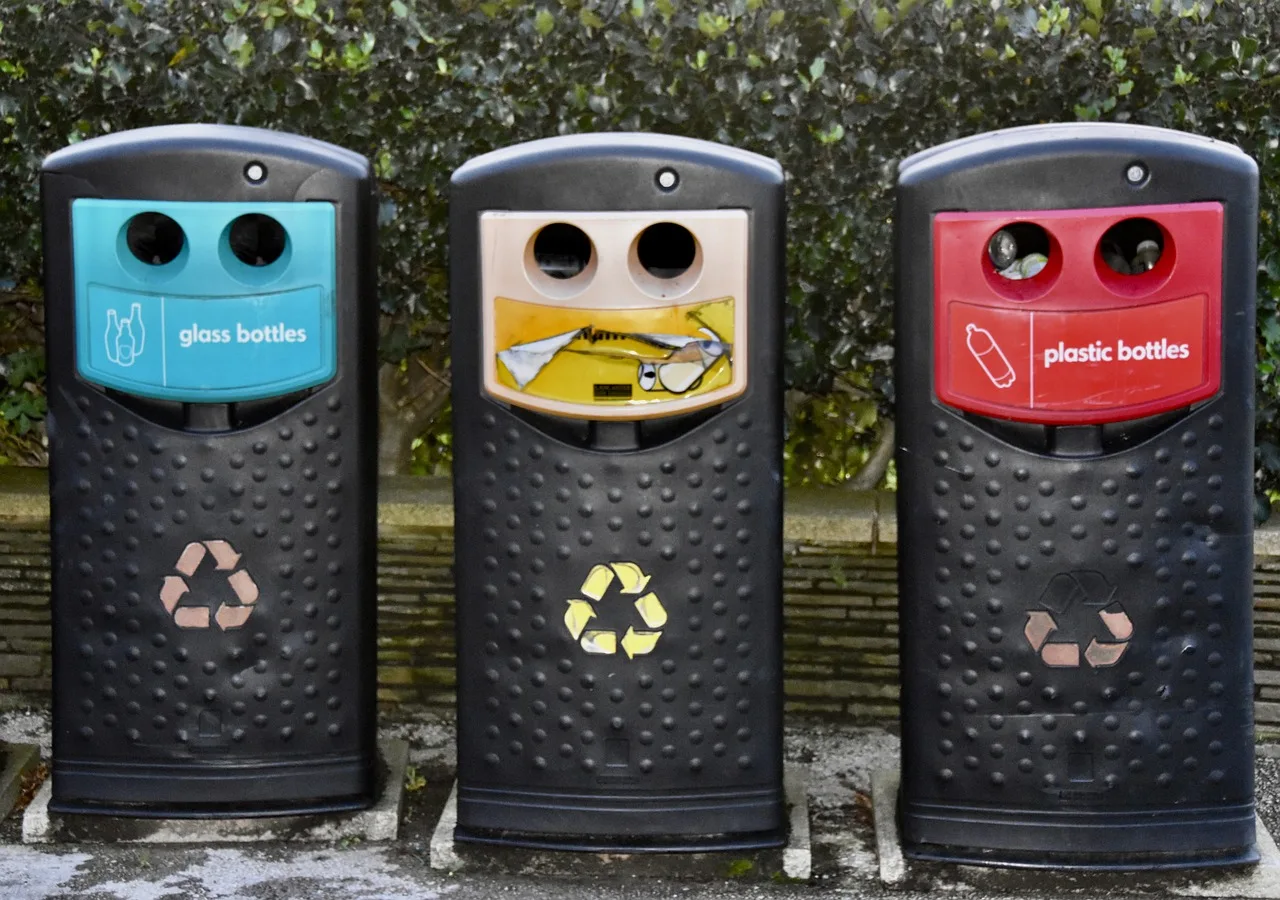
Item 22 on that annex is the bottle bank. Tipping a bag of empties into the glass container on a residential street on a Sunday morning is the precise act the ordinance forbids, in the precise places most visitors are staying. The neighbour at the window is quoting law, not etiquette.
Night rules come from state law and they differ. Berlin's immission control act protects night quiet from ten in the evening until six in the morning, and from eight until seven where building sites are concerned. It separately protects the daytime hours between six in the morning and ten at night against seriously disturbing noise from sound reproduction equipment, musical instruments, fireworks, outdoor events and the keeping of animals. Then it names its exemptions: church bells rung for religious purposes, emergency measures, the clearing of snow and ice, and agricultural harvesting and sowing. Whether the city you are in does the same has a published answer, and the answer is not always yes.
Crossing the road
The pedestrian statute is shorter and stranger than its reputation. It requires you to cross the carriageway briskly, by a short route, at right angles to the direction of travel, having regard to vehicle traffic. Note the wording: a short route, not the shortest. Only where traffic density, vehicle speed, sightlines or the flow of traffic require it must you confine yourself to junctions, marked areas at signals, crossing islands or a zebra crossing. Crossing an empty side street between junctions is not, by itself, forbidden. Climbing over a chain or a barrier is, and it gets its own sub-paragraph.
Signals are the part where the reputation is earned. Where a light shows the pedestrian symbol, the sequence runs green, red, green, and red is an instruction to wait. The one nuance most visitors never learn: if the light turns red while you are already in the road, the rule is to press on promptly rather than freeze on the white line. What you are likely to encounter when you step off the kerb against a red man is not a police officer. It is a stranger with a pushchair, telling you.
The bins are a legal taxonomy
Federal law requires public waste authorities to collect eight streams separately from private households: bio-waste, plastics, metals, paper, glass, textiles, bulky waste and hazardous waste. Textiles were added to that list on 1 January 2025, which is why bins and drop-off points changed in a lot of German towns and nobody explained why.
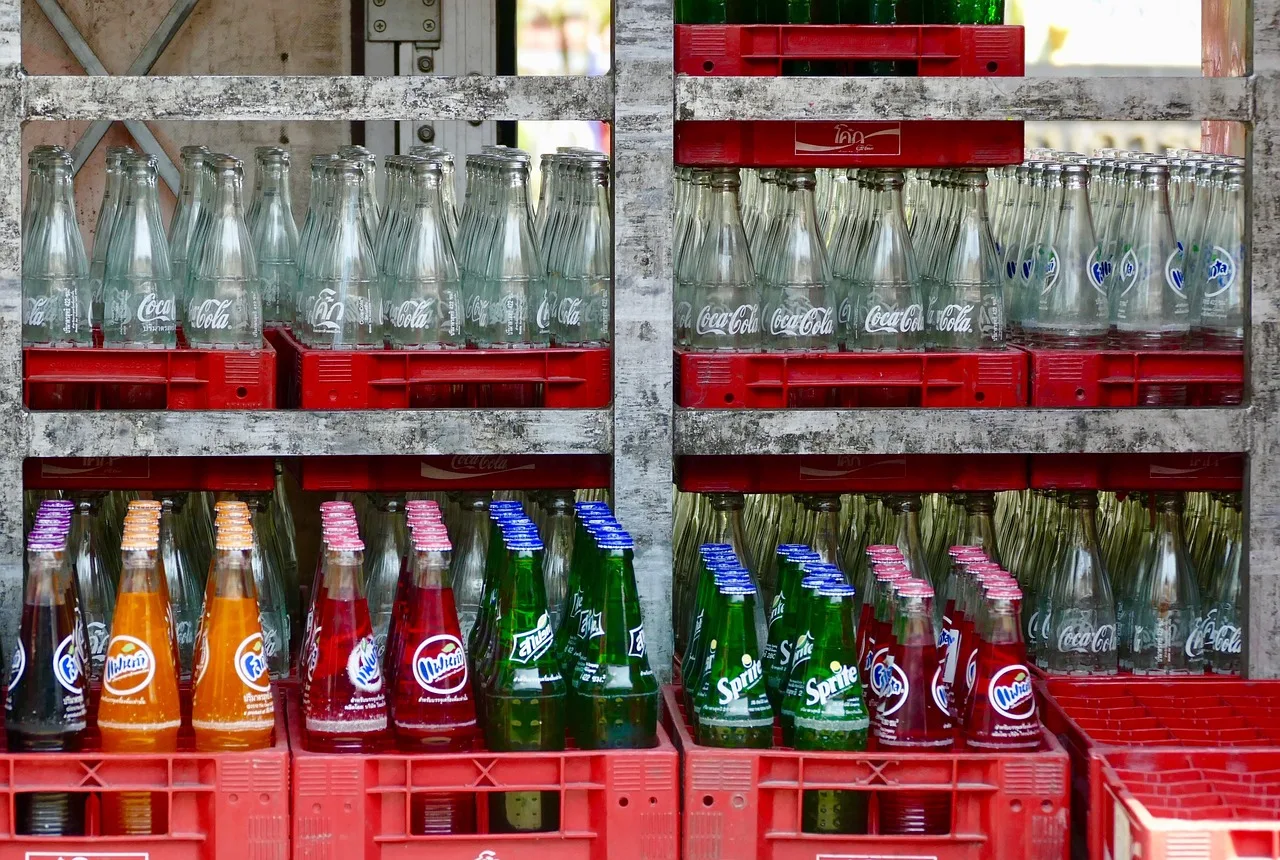
Deposits are a separate system, and the mechanism matters more than the amount. Whoever first puts a filled single-use drinks container on the German market has to charge at least 25 cents including VAT, every distributor down the chain charges it on, and the container must be marked as deposit-bearing, durably and somewhere you can actually read it. Scope is set by size and by drink, not by material: anything from 0.1 to 3 litres is in, with wine, sparkling wine, spirits and strong mixed drinks carved out, along with juices, still nectars and dairy drinks, and with beverage cartons, tube pouches and stand-up foil bags carved out by their shape.
Then the exception doubles back on itself. None of those drink-based exemptions survive if the drink has been put into a single-use plastic bottle or a can. The juice carton is deposit-free and the identical juice in a plastic bottle is not. Milk in a plastic bottle only joined on 1 January 2024; milk in a can had lost the exemption earlier. And single-use glass carries the deposit like anything else, so the beer bottle, the water bottle and the soft drink all come back to you at 25 cents. It is the wine bottle that walks free.
Taking it back has limits the pictogram does not mention. A shop owes you take-back only for the material types it actually sells, so a retailer with no cans on the shelf need not accept your can. Below two hundred square metres of selling area the duty shrinks further, to the brands that shop carries. The practical version: look for the deposit mark, and take the bottle back to a shop that sells that kind of drink.
Cash, correctly stated
Germany's attachment to cash is real and consistently mismeasured, and the measurement has just moved. The Bundesbank's payment diary study for 2025, published in July 2026, records the crossover: for the first time since the series began in 2008, most everyday payments in Germany were made without cash. Cashless took 55 per cent of transactions, against 49 per cent two years earlier. Cash took the remaining 45 per cent, which still leaves banknotes and coins the single most-used means of payment when you count transactions, with nothing else near it. Mobile payments almost doubled and now account for a tenth of everything.
Count money instead of transactions and the picture inverts. Cash covered 23 per cent of spending, behind the debit card at 28, because cash is what handles the small stuff. Acceptance is the figure that actually settles a traveller's question, and it is high on both sides: cash could be used in 94 per cent of in-person purchases, a cashless option in 86 per cent, five points more than in 2023.
So the cliché describes the small purchase, not the large one, and it is receding fast. The Bundesbank found cash still leading in everyday retail, in restaurants and bars, in leisure, and on markets and street stalls, which is a fairly exact description of the places that catch visitors out: the neighbourhood pub, the weekly market stall, the village bakery, the museum with one till. Carry notes for those and stop worrying about the rest.
What reads as rudeness
Notice what all of the above has in common. The closed pharmacy is required to post a sign telling you where the open one is. The noise law names church bells and snow clearance in the text so that nobody has to argue about them at eleven at night. The station kiosk's stock list is defined in a statute. The information is always there, in writing, at the point where you need it, and nobody softens it first.
German public dealing works the same way. A shop assistant who tells you flatly that the item is not in stock has given you the whole answer and no cushion. A neighbour who tells you the recycling is in the wrong bin is supplying the missing line of the manual, on the assumption that you would rather know than be spared. Read as English or American politeness, the delivery scans as cold. Read as what it is, a system in which the useful content arrives undiluted, it is closer to generosity than to rudeness. Germany treats the information as the obligation and the padding around it as decoration.
The one rule somebody does hand you
At the hotel desk you will be given a form. German nationals no longer have to complete one; the federal registration act now puts the duty on foreign guests alone, and the duty is exact: sign the special registration slip by hand on the day of arrival, and identify yourself to the management with a valid passport or recognised passport substitute. A travelling spouse, registered partner and minor children are entered only as a number. For a tour party of more than ten, only the group leader signs, giving the count and the nationality of everyone else.
It is the single German rule that arrives in your hands rather than in your peripheral vision. And it arrives after you have already walked past the bottle bank, crossed against the light, and tried to buy socks on a Sunday.
Sources
- Basic Law, Article 140, reproducing Article 139 of the Weimar constitution - the constitutional guarantee that keeps Sunday and the state-recognised holidays legally protected, as days on which work stops and the spirit is to be raised.
- Bayerisches Ladenschlussgesetz (BayLadSchlG) of 25 July 2025, as promulgated in GVBl. 2025 p. 246 - Bavaria's own shop-closing act in thirteen articles, in force from 1 August 2025: Art. 2 for the Monday-to-Saturday 6am to 8pm window and the unstaffed micro-supermarket exemption up to 150 square metres; Art. 3 for the pharmacy rota and the notice on the door, and for Sunday hours for newsagents, bakers and florists; Art. 4(1) and (2) for petrol stations, stations and airports selling Reisebedarf and Art. 4(5) for the statutory definition of the term; Art. 4(3) for the wider clothing, fan, sports and gift licence at Memmingen, Munich and Nuremberg airports with its 15,000 and 3,000 square metre caps; Art. 5 for the forty tourist Sundays.
- Ladenöffnungszeiten im Saarland, IHK Saarland briefing G06 - section 3 of the Saarland Ladenöffnungsgesetz, setting the same Monday-to-Saturday 6am to 8pm limit that Bavaria kept.
- Ladenöffnungszeiten in Berlin, Berlin Senate Department for Economic Affairs - round-the-clock Monday to Saturday trading in Berlin, and the cap of eight city-wide open Sundays plus two occasion-based days per shop.
- Section 7, 32nd Federal Immission Control Ordinance on equipment and machinery noise - the all-day Sunday and holiday ban, the 8pm to 7am weekday ban, the zones covered including visitor-accommodation districts, the extra restricted periods for four device types, and the EU Ecolabel clause that lifts those extra periods for a marked machine.
- Annex to the 32nd Federal Immission Control Ordinance - the list of fifty-seven device categories, including item 22, the glass collection container, and items 02, 24, 34 and 35, the brushcutter, grass trimmer, leaf blower and leaf collector.
- Rechtsvorschriften zum Lärmschutz, Berlin Senate Department for the Environment - the constitutional division that leaves behaviour noise and animal noise to the states, and Berlin's own night quiet of 10pm to 6am, its daytime protections and its listed exemptions.
- Section 25, Road Traffic Regulations (StVO), pedestrians - the duty to cross briskly by a short route at right angles, the narrow circumstances requiring a formal crossing point, and the ban on climbing barriers.
- Section 37, Road Traffic Regulations (StVO), light signals - the green-red-green sequence for pedestrian signals and the duty to continue promptly if the light changes mid-crossing.
- Section 20, Circular Economy Act (KrWG) - the eight household waste streams that must be collected separately, and the 1 January 2025 start date for textiles.
- Section 46, Verpackungsrecht-Durchführungsgesetz (VerpackDG) - the current deposit and take-back rules that replaced section 31 of the repealed Verpackungsgesetz: the minimum 25 cent deposit including VAT, the marking duty, the 0.1 to 3 litre range, the drink and packaging-form exemptions and the plastic-bottle and can exception to them, the material types a shop must take back from its own range, and the reduction to own-brand take-back below 200 square metres of selling area.
- Umweltbundesamt: extension of the deposit obligation from 1 January 2024 - cited for the date only: the Umweltbundesamt's December 2023 notice that milk, milk drinks and other drinkable dairy products in single-use plastic bottles would become deposit-bearing on 1 January 2024, cans having already lost the exemption.
- Deutsche Bundesbank: Zahlungsverhalten in Deutschland 2025, published July 2026 - cashless payments a majority of everyday transactions for the first time at 55 per cent against 49 per cent in 2023, cash at 45 per cent of transactions and 23 per cent of turnover against 28 per cent for the debit card, mobile payments at 10 per cent, cash usable in 94 per cent of in-person purchases and a cashless option in 86 per cent, and cash still leading in everyday retail, hospitality, leisure and market and street trading.
- Section 29, Federal Registration Act (BMG) - the hotel registration duty applying to foreign guests, the handwritten signature on the day of arrival, the passport check, and the rule for parties of more than ten.