Euljiro After Dark Is Where Seoul Actually Drinks
LineCast Networks
The fish gives it away. Nogari, the split and dried juvenile Alaska pollack that gets grilled over charcoal at every table in the alley that bears its name, is not Korean any more. Between 1975 and 1997, 91 percent of the pollack hauled from the East Sea were counted as juvenile nogari. In 1981 alone, out of 2.12 billion fish landed, 1.95 billion had not reached two years old. The catch peaked at around 160,000 tonnes in 1981, fell to 8,984 tonnes by 1995, and has run under a single tonne a year since 2004. Fishing myeongtae in Korean waters has been banned outright since 2019. In 2014 the government put 24.8 billion won into a restocking programme and predicted home-grown myeongtae would be back on the menu by 2020. It is not. Even the annual pollack festival in Goseong, on the east coast, self-described home of the fish, runs on Russian imports.
Why the fish left is the part that is still being fought over, which is awkward, because the losing side is the one everybody repeats. Eating the young ones was the official diagnosis for decades and it is the diagnosis the restocking money was spent against. More recent work points elsewhere. A 2019 report from the National Institute of Fisheries Science put warming in the East Sea at 1.43 degrees Celsius between 1968 and 2018, steeper than in any other water around the peninsula, and Cho Yang-ki of Seoul National University matched the late-1980s collapse to rising surface temperature and shifting currents shrinking the usable spawning ground, while allowing that fishing had some hand in it. Jung Suk-geun, a marine biologist at Jeju National University, is blunter. The revival project, he wrote, "was based on a faulty diagnosis of why it disappeared from the East Sea," and "there are no studies to support the myth that overfishing of nogari depleted the myeongtae stock."
Either way the fish is gone and now the programme is too. Gangwon province released roughly 1.9 million hatchery-raised juveniles over ten years. When it sampled its own sea in 2024 it landed 159 pollack and not one of them had come from the hatchery. In early 2026 the province suspended the releases and turned the tanks over to lumpfish, sandfish and flounder, on the grounds that its fishermen can sell those. Keep that in mind, because the alley operates on a comparable principle: a famous thing, a long official effort to preserve it, and an outcome nobody planned.
What the neighbourhood does before six
Euljiro is a working road, not a district with a brochure. It runs just over three kilometres east to west through Jung-gu, the central district of Seoul, from Sogong-dong to Sindang-dong, and for most of a century its business has been printing. Korea's first modern printing office was built in 1883 in what is now Euljiro 2-ga, and the trade never left. A 2016 count put 5,492 of the country's 18,523 printing-related businesses inside Jung-gu, which is 29.6 percent of the national total in one district of one city. Nobody has published a comparable figure since, and the intervening decade is the subject of this article, so read the number as a photograph rather than a measurement.
That statistic is the reason the streets look the way they do. Printing is not one business, it is fifteen: typesetting, plate-making, offset, die-cutting, foil stamping, binding, guillotining, delivery by handcart. Each one occupies a room the size of a garage, and the rooms are stacked into low buildings and strung along alleys narrow enough that two men carrying a pallet have to negotiate. Wrapped around the printers are the hardware trades, the tool shops, the machine shops, the tile and lighting and packaging wholesalers, the men who can turn a part on a lathe while you wait. The air smells of ink solvent and cut metal.
All of it shuts in the early evening. Printing is a business-hours trade, and its customers are other businesses. By around seven the shutters are down along whole blocks, and the district that employed tens of thousands of people during the day is empty pavement, roller doors and stacked paper.
Which leaves a great deal of usable outdoor space in the middle of a city that has almost none. For five and a half years, that space was legally spoken for.
The six o'clock switch, and the paperwork behind it
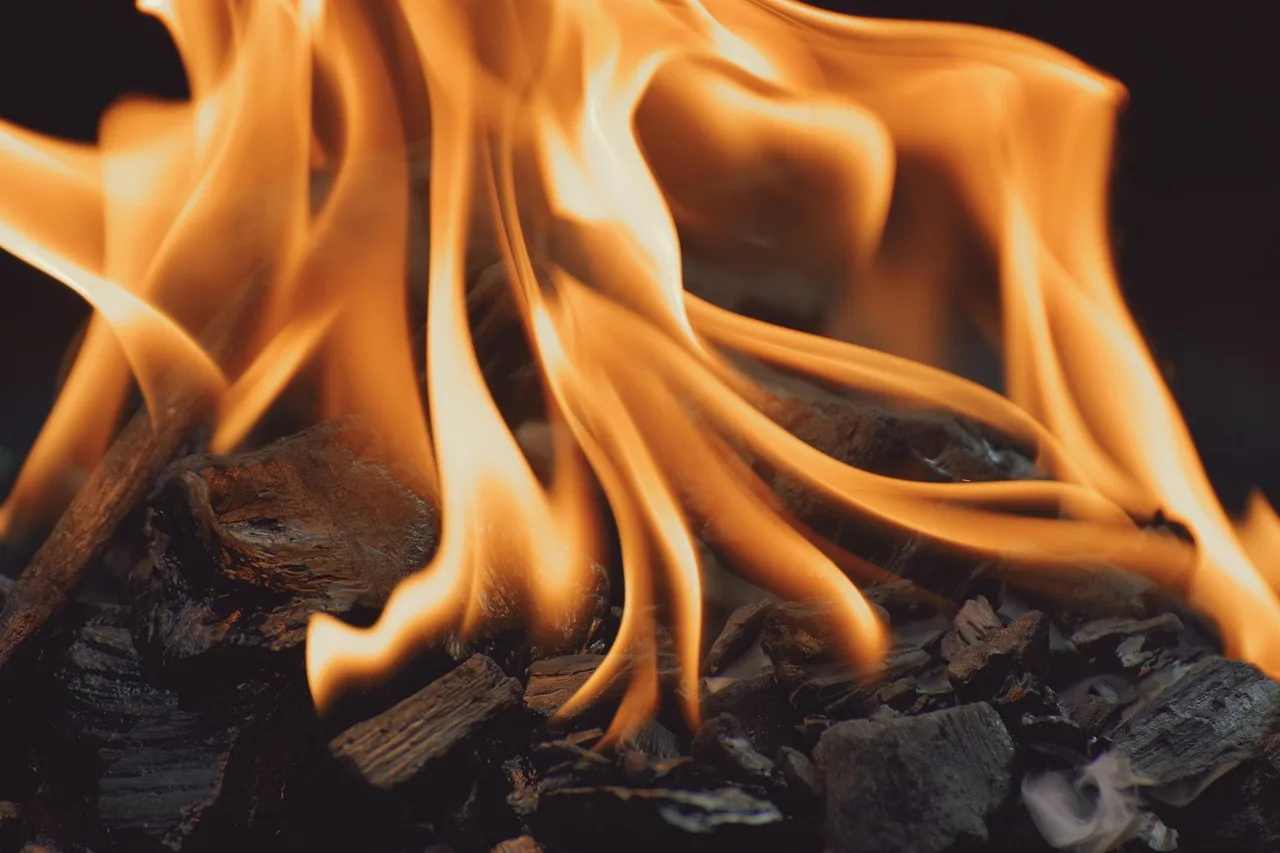
What happened next looked spontaneous and was not. Pubs pushed out low tables and red plastic stools until they occupied the roadway. Strings of small national flags went up overhead, a habit inherited from an older idea of what a beer garden should look like. Charcoal grills appeared. Within an hour a two-lane service road had become a seated room for several hundred people, and the noise carried.
None of that is something a restaurant may simply decide to do. Korean food-hygiene rules keep service inside the walls of the licensed premises, and the pubs here bought their way out the slow way. Residents complained. The owners organised themselves into a committee and wrote their own house rules. Thousands of residents petitioned the Jung-gu council, which passed an ordinance, and on 11 May 2017 the district office issued a special notice covering outdoor facilities for food businesses. Seventeen pubs then held road occupancy permits and paid for the privilege of sitting customers on public highway.
Then it stopped. The permits expired on 30 November 2022 and the district declined to renew them. Its written answer to a reporter in late 2024 lists four reasons: main construction starting in the adjacent Supyo redevelopment area around March 2023, with the pedestrian accidents, noise and dust that brings; the road's ordinary function as a road, which it judged to outweigh local trade; the risk of a crowd crush in a dense outdoor drinking site, citing the Itaewon disaster by name; and legal advice that a refusal sat comfortably inside its discretion. From 2023 the answer on the form has been no. Jung-gu's construction management division impounds outdoor furniture and issues fines, merchants report inspections twice a day, and at least one tenant has been through a criminal prosecution over it.
The car-free hours went as well. Eight until eleven every night had been closed to traffic; the district lifted that in July 2023, its transport office explaining that redevelopment had thinned out the shops and that construction vehicles needed to get down the lane. So the roadway is a roadway again, and it is now shared after dark with forklifts and site traffic, which is a thing to know before you step backwards off a kerb.
This matters practically, and it matters in the other direction from how it used to. The outdoor tables were the main room; they are not there. Turn up expecting the photographs and you will be disappointed. Turn up expecting a short menu, a cold glass and a room the size of a garage and you will be fine. Ask for a table outside and you may get an apology, which is the correct answer and not an unfriendly one.
What happened to the pub that started it
In 1980 a small brick pub called Eulji OB Bear opened on a lane of tool merchants, a franchise outlet of the draught beer chain run by Dongyang Beer, the company that became OB. It sold cold beer to men coming off shifts in the metal shops. The fish arrived a year later, and it arrived by regulation: in 1981 the Fair Trade Commission stopped drinks suppliers handing out free bar snacks, and the founder, Kang Hyo-keun, worked up a grilled dried pollack with a peppery sauce of his own to replace the peanuts. It caught on. Others copied it, the copies clustered, and the lane acquired the name Nogari Alley. The stretch runs roughly 500 metres now. The room itself was about twenty square metres, and a nogari cost 1,000 won for decades.
In 2015 the Seoul Metropolitan Government designated the alley a Seoul Future Heritage site. In 2018 the Ministry of SMEs and Startups named Eulji OB Bear a hundred-year store and gave it a plaque for the door. Around the same time the wider neighbourhood picked up the nickname Hipjiro, a portmanteau of hip and Euljiro, as young drinkers discovered that the least fashionable district in central Seoul had the most usable street seating in it.
In April 2022 a court order removed Eulji OB Bear from the building it had occupied for 42 years as a tenant. The owner of a neighbouring pub had bought the property in 2018 and declined to renew the lease. The founding family offered to double the rent and were refused. They lost in court, about seventy men hired by the court arrived at four in the morning on 21 April, the sign came off the front, and the alley the pub had named carried on without it.
They did not stay gone. In March 2023 the family opened a branch called Eulji OB Bear Wow near the Gyeongui Line Book Street in Mapo, and in February 2024 they came back to Euljiro 3-ga, trading by Exit 10, across the main road from the lane they started.
Be clear about what the heritage designation did and did not do. Seoul's Future Heritage programme, running since 2012, had listed 470 buildings, sites and intangible assets by the start of 2020, and the list has grown since. What a listing gives an owner is a copper plate for the wall, a slot in the city's tourism material and, sometimes, a small contribution toward repairs. It gives nothing that can stop a landlord, and nothing that can stop a redevelopment order. Eulji Myeonok, the Pyongyang-style cold noodle house a few streets over, started in 1985 by a daughter of parents who fled south during the Korean War and put on a companion city list, Seoul Living Heritage, in 2015, is the demonstration. It closed in June 2022 after 37 years when the scheme that had swallowed its block went ahead, and the building came down. Twenty-two months later, in April 2024, it reopened in Nakwon-dong in Jongno-gu, in a five-storey building the owner had bought and remodelled. The list is a compliment, not a shield. What survived the redevelopment was the recipe and the capital, not the address.
Drink in the alley with that knowledge rather than despite it. This is not a preserved quarter. It is a working district on land that developers value at considerably more than the current rent roll, and the beer is being drunk in the gap.
Where to start
The anchor is Euljiro 3-ga station, an interchange between Seoul Metro lines 2 and 3, and the exit you take decides which alley you get. Exit 3 brings you up beside the southern pub lane, which the city's own tourism office addresses as 12 Chungmuro 9-gil. Exit 4 is the one for the northern stretch along Eulji-ro 13-gil, where the beer halls cluster and where the street seating used to be. They are two different lanes on opposite sides of a main road, and guides conflate them constantly.
Three things are worth doing in sequence. Start at ground level in the nogari lanes proper, where the pubs are old and the menus are short. Manseon Hof, at 19 Eulji-ro 13-gil, is the operator you cannot avoid: when OhmyNews walked the lane in April 2024 it counted fourteen beer pubs and found the Manseon name over seven of them, in variants including Original Manseon Hof, Manseon Hof IV and Manseon Sky Lounge. The concentration is not incidental. Korean reporting states plainly that it was the owner of Manseon Hof who bought the majority stake in the Eulji OB Bear building; the Korea Times could not get it on the record, because the man his neighbours named denied being that man and declined an interview. A former Manseon Hof representative told OhmyNews that the outlets were opened by other people as chain branches rather than by the business expanding, and that three have since closed as trade fell away.
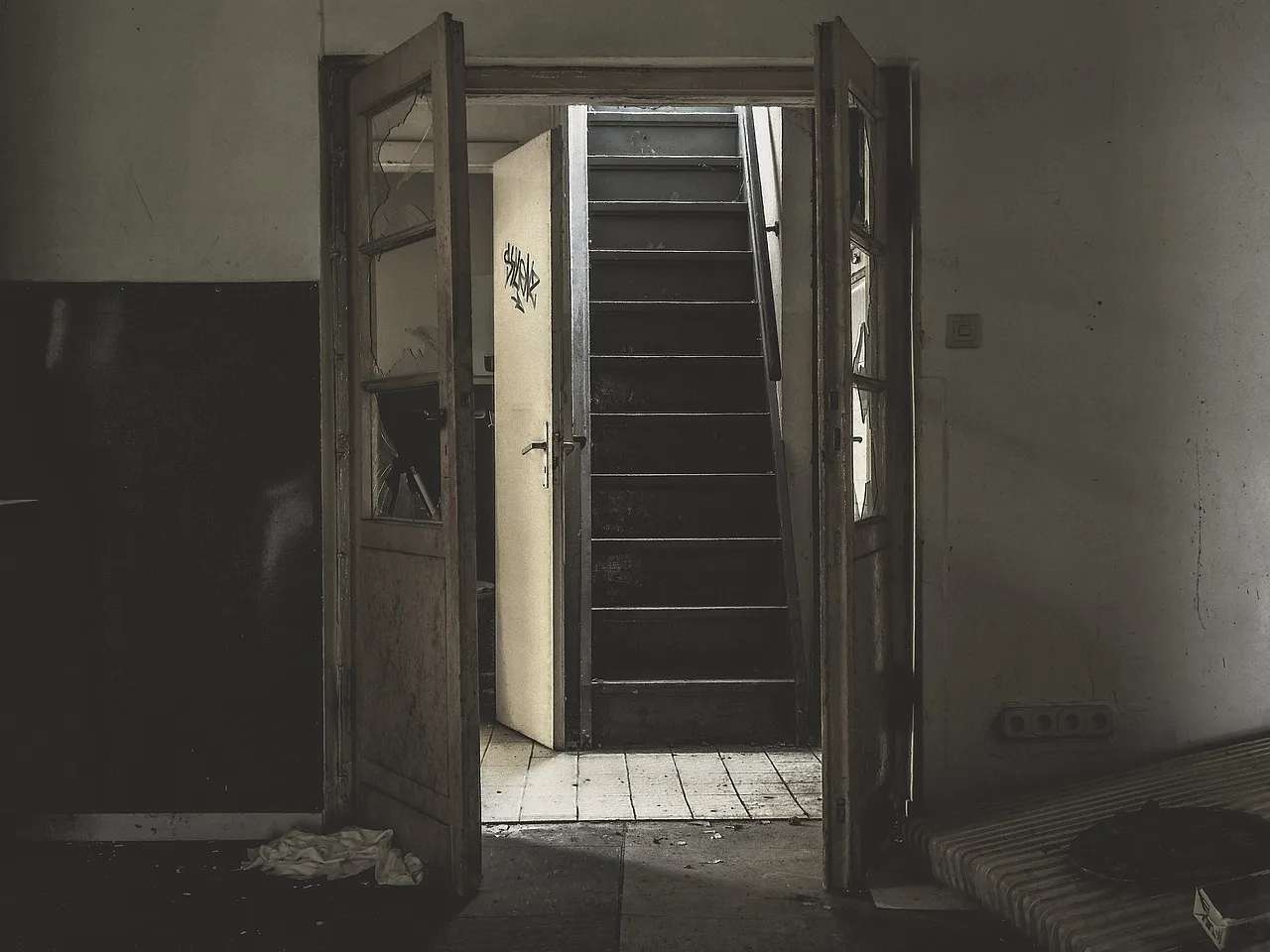
Second, walk the same block for golbaengi: sea snail, dressed in a sweet chilli sauce and served with cold thin noodles to be mixed through it. There are restaurants in these alleys that do essentially nothing else. Third, look up. The interesting part of Hipjiro is vertical. Bars and coffee rooms have colonised the upper floors of print buildings, reached by unmarked stairwells beside a roller door, with no sign at street level and often nothing but a small paper notice on the landing. If a metal door on the third floor has light behind it, that is usually the answer.
If you want the view of what is at stake, walk five minutes north to the Sewoon complex, the long concrete spine of shops and workshops that runs toward Jongmyo. Its elevated walkway, a kilometre of bridge that cost 110.9 billion won and only reached full length in 2022, is being taken down again. The Sampung Sangga segment, 112 metres, is scheduled to go first from July 2026; the PJ Hotel segment, 173 metres, from late 2027; the Sewoon, Cheonggye and Daerim segments after that, phased against the park scheme replacing them. The sections nearest Nogari Alley are the ones still standing. From up there the district reads as a single organism: workshops, printers, alleys, and the demolition edges where it stops.
Ordering when nothing is in English
The good news is that the menu is short and mostly the same everywhere, so you can order competently on four or five words.
Getting a table. Stand at the edge of the seating and hold up fingers for the number of people. Staff will point you at a table or wave you off. There is no host stand and no queue system beyond standing there looking hopeful.
Getting attention. Say yeogiyo (여기요), which means, roughly, over here. It is not rude. Shouting it across four tables is the normal mechanism. Some places have a call button screwed to the table; press it.
Beer. Most Korean pubs pour a single brewery's draught, and in practice that means Cass or Terra, the two lagers that between them take most of what Korea drinks in bars. So there is no decision to make and no point asking what else is on. Order by vessel: a glass each, or a pitcher for the table. Maekju (맥주) is beer. Soju is the clear spirit and comes by the bottle.
Food. In a Korean drinking house the food is anju, the thing you drink against, and ordering some is not optional in spirit even where it is in fact. In the nogari lanes the default, by convention rather than any rule, is one nogari per person, brought grilled with a dish of gochujang mixed with mayonnaise for dipping. Beyond that: golbaengi muchim (sea snail salad), gyeran mari (a rolled omelette), fried chicken, assorted fried things. Igeo juseyo (이거 주세요), meaning this one please, while pointing at a neighbouring table, works everywhere and is used by Koreans too.
Pouring. You do not pour your own. Watch the bottle level around you and fill other people's glasses. When you pour for someone older, use your right hand on the bottle and support your right forearm with your left. Receive with two hands the same way. When drinking in front of someone considerably senior, turn your shoulder slightly away. None of this is enforced on foreigners, and doing it anyway is noticed.
Paying. Expect to settle at the till on the way out rather than at the table, and expect the group to pay as one. Splitting a bill six ways at the counter is possible but reads as strange.
Finding the place, and getting home
Two practical notes that will save more time than any restaurant recommendation.
First, use Naver Map or KakaoMap, not Google Maps. Taking high-precision Korean map data out of the country is not forbidden, but it needs approval from an interagency body, and that approval was withheld for nineteen years on national security grounds tied to the fact that the Korean War ended in an armistice rather than a peace. Google asked in 2007 and was refused, asked again in 2016 and was refused, and on 27 February 2026 had a third request granted under five conditions: raw data processed on domestic servers run by a local partner, coordinates for Korean territory stripped out of the global products, military and sensitive sites obscured across all imagery including street view and the historical archive, a red button the government can press in an emergency, and a dedicated map affairs officer stationed in Korea. Approval is not a launch. Google has confirmed that turn-by-turn navigation is the plan and is hiring a Seoul partnerships team to get there, but as of this writing it has not shipped. Google Maps in Korea does carry place listings, reviews and public transit routing; what it does not carry is guided walking or driving, and the walking legs of a transit route come out as dotted lines. In alleys with no signboards, that is exactly the half you need. Recheck this before you fly; it is the sort of thing that changes.
Second, learn to read the address, because in alleys with no signboards the address is the navigation. Korean street addresses use -ro for a road of roughly two to seven lanes and -gil for the smaller streets branching off it, numbered outward from the parent road. Building numbers rise by two every twenty metres, odd on the left, even on the right. So 19 Eulji-ro 13-gil is on the thirteenth branch off Eulji-ro, on the left-hand side, about 190 metres in. Note the hyphen: the road is romanised Eulji-ro in addresses even though the area is written Euljiro. Type it the official way and the map will find it.
Finally, the trains. The Seoul subway runs from about 5:30 in the morning until around midnight, with the exact last train varying by line and direction. After that, the late-night N buses run, with final departures at four in the morning. A room that is full at half past eleven empties in a hurry before midnight, and there is a reason for that. If you plan to stay past it, work out your night bus before the fourth pitcher rather than after.
The alley will not last in this form, and the form it is in now is already the reduced one. Its founding pub was evicted and reopened across the road. The noodle house up the way was demolished and reopened in Jongno. The tables are off the highway and the highway is back to being a highway. In April 2024 Seoul's urban planning committee signed off a revised redevelopment plan for the Supyo area around 237 Ipjeong-dong, which takes roughly half of the alley's old shops with it and puts a single 33-storey office block where they stood. Manseon Hof, as it happens, falls outside the line.
That is not a reason to be sentimental about it. It is a reason to go and sit down with a fish from the wrong ocean and pay attention while there is still something to pay attention to.
Sources
- [Weekender] A fish with a dozen names - pollack catch history, the 91 percent juvenile figure, the 2014 restocking budget, the 2019 warming report and the Cho and Jung positions on cause
- 10년간 190만마리나 방류했는데... 결국 복원에 실패한 '한국인 국민 물고기' (Wikitree, reporting MBC) - the 1.9 million releases, the 2024 survey finding none of them, and the suspension of the programme in early 2026
- 을지로 (Korean Wikipedia) - the road's total length of 3,018 metres and its endpoints
- Euljiro (English Wikipedia) - the 1883 printing office at Euljiro 2-ga, and the printing-business count, sourced there to a Seoul Museum of History page dated 9 June 2016
- Euljiro Nogari Alley (VISITKOREA) - Euljiro 3-ga station, nogari and golbaengi, the standard alley set-up
- Euljiro Nogari Alley (VisitSeoul) - the southern lane addressed as 12 Chungmuro 9-gil, 86 metres from Exit 3
- Manseon Hof (VISITKOREA) - address at 19 Eulji-ro 13-gil and the standard menu of nogari, golbaengi muchim and gyeran mari
- [Weekender] Euljiro Nogari Alley offers unpretentious pub fare - the 500-metre stretch, resident complaints, the pub owners' committee and the Jung-gu ordinance permitting street seating for a fee
- [단독] 서울시 중구 노가리골목 세입자들 (서울뉴스통신) - Jung-gu Notice 2017-38 of 11 May 2017, permits running May 2017 to November 2022, the refusal from 2023, and the district's four written reasons
- '서울미래유산'이라더니 이젠 단속만... 힙지로 '노가리 골목' 한숨 (오마이뉴스) - the seventeen permitted pubs, the November 2022 cancellation, table seizures and twice-daily inspections, the car-free hours lifted in July 2023, the Manseon Hof purchase of the Eulji OB Bear building and the seven-of-fourteen storefront count
- Decades-old pub in Euljiro fades into history (Korea Times) - the 1980 opening and the 1981 Fair Trade Commission snack ban that produced the nogari, the 42-year tenancy, the 21 April 2022 eviction, the buyer identified only by surname who denied it, the 2015 and 2018 designations, the Hipjiro nickname
- '노가리 골목' 떠났던 을지OB베어, 을지로3가 돌아온다 (서울신문) - the March 2023 Mapo branch and the February 2024 return to Euljiro 3-ga by Exit 10
- New additions to Seoul's 'Future Heritage' list (Korea Times) - the programme since 2012, the count of 470 as of early 2020, and what a listing actually provides
- [Newsmaker] Redevelopment boom is erasing Seoul's heritage (Korea Herald) - the closure of Eulji Myeonok after 37 years following a court ruling on redevelopment
- [도시탐구] 을지면옥과 을지다방이 옮겨간 곳 (뉴스포스트) - the 2015 Seoul Living Heritage designation, the June 2022 closure and demolition, and the April 2024 reopening in Nakwon-dong
- '을지로 노가리 골목' 절반 사라진다 (EBN) - the 3 April 2024 urban planning committee decision on the Supyo plan, the 33-storey building, roughly half the old shops affected, Manseon Hof outside the zone
- 박원순 1109억 들인 세운상가 공중보행로…철거 내년 7월로 미뤘다 (헤럴드경제) - the walkway's cost and 2022 completion, and the segment-by-segment demolition schedule
- Hitejinro catching up with top-ranked OB in beer market (Korea Times) - Cass and Terra as the two lagers that dominate the market, including sales into restaurants and bars
- Addresses in South Korea - the -ro and -gil naming rules and the building-number system
- Korea clears exporting map data for Google, ends 19-year dispute (Korea Herald) - the 27 February 2026 conditional approval, the 2007 and 2016 refusals, and the five conditions attached
- [Exclusive] Google builds Korea team for full-functioning Maps service (Korea Herald) - that Google Maps in Korea still has no turn-by-turn navigation, that walking legs render as dotted lines, and that Google intends to launch it
- Public Transportation, Seoul Metropolitan Government - late-night N bus service with last departures at 4 a.m.
- Subway, Living in Jung-gu - Seoul subway operating hours of roughly 5:30 a.m. to around midnight