English Will Carry You Further in Oslo Than in Osaka
LineCast Networks

The Japan Tourism Agency publishes a style manual for the English on Japanese signage, and it is now in its ninth edition, dated February 2026. Among its rulings: do not use macrons. Write Osaka, not Ōsaka. Write Tokyo, Kobe, Hokkaido. The clearest exception is audio guide scripts, where the macron survives as a cue to the narrator. There are pages on the romanisation of the small tsu, on whether shoji takes a plural, on when a Japanese noun earns its place in an English sentence at all.
A national government arbitrating diacritics on museum placards is a government that has thought very hard about the English a visitor reads. It has thought much less about the English a visitor hears, because there is much less it can do.
The Ministry of Education's annual survey of public schools puts a number on that, though the number is softer than the headline suggests. In the most recent round, 52.4 per cent of final-year high school pupils either held a qualification at CEFR A2 or above or were judged by their English teacher to be working at that level, and 23.9 per cent the same for B1. Strip the teacher judgements out and the certified figures are 32.5 and 17.2. The ministry is candid about what the judgements rest on, listing among the bases a school's own CAN-DO performance tests, used in 44.6 per cent of cases, and AI tools, used in 1.9 per cent. The government's targets are 60 and 30.
A2 is broadly the level at which you can handle a routine exchange about a familiar thing. B1 is roughly where a conversation survives an unexpected turn: the train is cancelled, the dish contains something you cannot eat, you have left your bag on a bench. Fewer than one public-school leaver in four reaches it on the generous count, and fewer than one in five on the strict one. The survey covers public schools only, and the ministry's own figure for private high schools is about three in ten pupils, none of whom are in the sample.
You can see the consequence in the Tourism Agency's own exit survey, which stops 4,110 people in departure halls at five airports and asks what went wrong. Communication with staff came second on the list, named by 15.4 per cent. The places it went wrong were restaurants (38 per cent of those cases) and railway stations and bus terminals (27 per cent). Sixty-eight per cent of the people who hit the problem reached for a translation tool. Note also that 43.7 per cent reported nothing going wrong at all, which is the other half of the picture and the half that rarely gets written up.
Where English is effectively a second public language
Now Oslo. In the 2022 European adult education survey, 1.8 per cent of Norwegians aged 25 to 64 reported knowing no foreign language. Not eighteen. One point eight. More than seven in ten reported three or more. In the Netherlands, 7 per cent reported none and 40.2 per cent reported three or more. Sweden: 4.1 per cent none. Finland: 7.8. Denmark: 9.8. The figure for the European Union as a whole is 25.3 per cent.
Depth follows breadth, mostly, and Norway is where the "mostly" earns its keep. Asked to rate their strongest foreign language, 51 per cent of Swedes who have one called themselves proficient, 48.5 per cent of Danes, 38.7 per cent of the Dutch, against an EU average of 27.6. Norway, the widest country in the survey on breadth, comes in at 24.2 per cent, below that EU average. What Norway has instead is enormous bulk one rung down: a further 56.5 per cent rate their best foreign language good rather than proficient, which puts four Norwegian adults in five at good or better. Breadth is Norway's headline. Depth is somebody else's.
Two honest caveats. These are self-assessments, and a Norwegian counting Swedish and Danish as foreign languages is doing something different from a Portuguese person counting English and Spanish. And the Nordic bloc is not uniform: Iceland reported 11.5 per cent of adults with no foreign language, a higher share than Norway, Sweden, the Netherlands or Finland, while returning the highest proficiency rate in the whole survey at 58.2 per cent. Both facts cannot be flattering at once, which tells you these surveys measure how people answer questions as well as what they can do.
The school data underneath is less ambiguous. Across the EU, 97.6 per cent of lower secondary pupils were learning English in 2024. In Denmark, Slovenia and Sweden the figure is 100 per cent.
None of which makes your English a neutral, cost-free instrument in those countries. Norway passed a Language Act in 2021 whose stated purpose is to safeguard Norwegian as a complete language, usable in every area of society. The Netherlands sent a Balanced Internationalisation bill to parliament on 8 May 2024, partly because English-taught degrees were crowding Dutch out of the lecture hall and out of the research literature. As introduced, a programme counted as foreign-language once more than a third of its credits were delivered in something other than Dutch, and the bill extended to every student, arrivals from abroad included, a duty on universities to build their Dutch.
Watch the tense there. Two years on, the bill is still with the lower house and is not law. Its enforcement machinery has been dismantled in stages: motions carried in May 2025 pulled the foreign-language teaching test off existing programmes, a revision sent to the Council of State in January 2026 left the test applying only to new ones, and the coalition agreement that followed now promises to scrap it for new programmes as well and keep the current foreign-language provision in place. The political impulse behind the bill is real and durable. The statute is still a draft.
Which is an argument for the two words, not against them. In Oslo and Utrecht, opening in Norwegian or Dutch is pure courtesy: it changes nothing about whether you are understood and everything about the temperature of the exchange. It costs about four seconds of preparation and it is the cheapest thing in your bag.
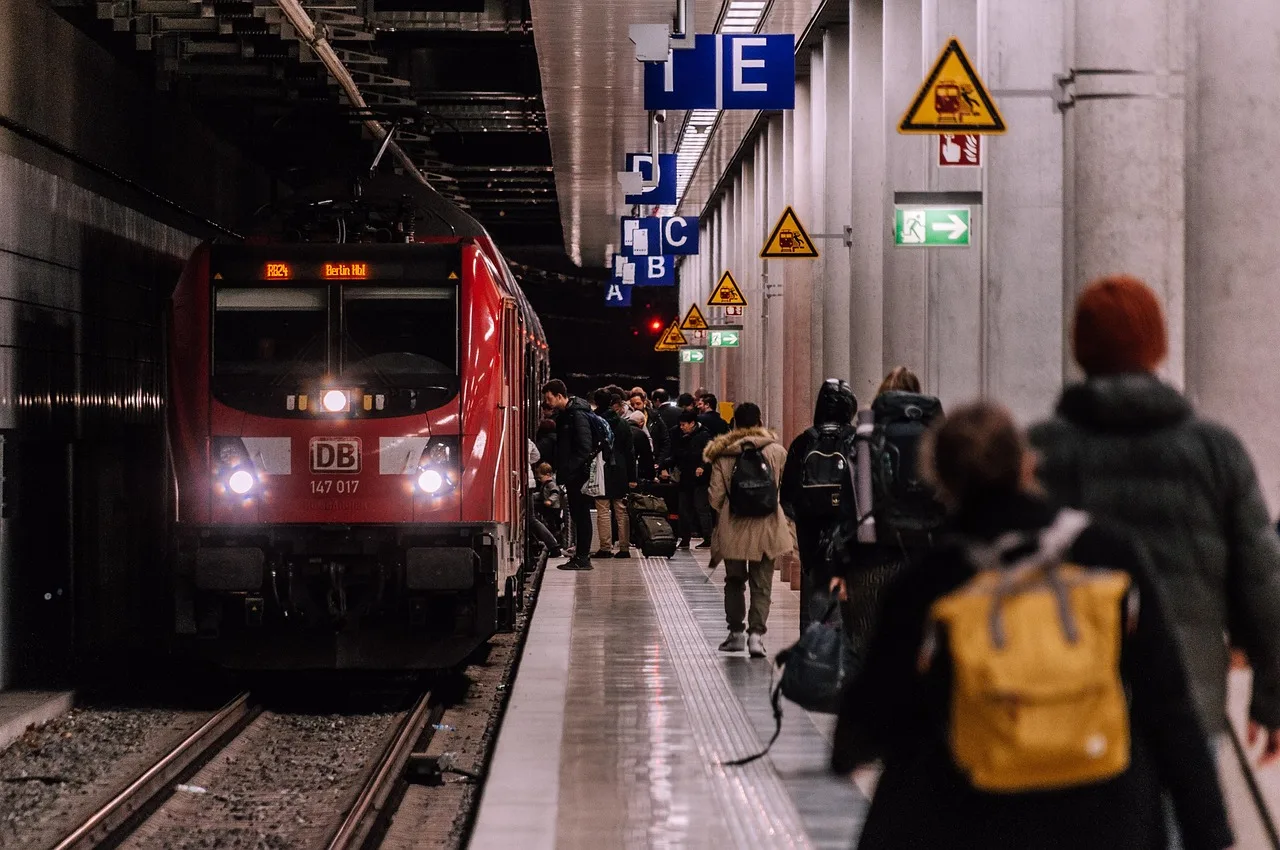
France, where the sign is a legal object
France is the country most often accused of rudeness by people whose real complaint is arithmetic. In the same European survey, 22.6 per cent of French adults reported no foreign language at all, which is worse than the Nordics or the Netherlands and considerably better than Spain or Italy. Of the French who do have one, half described their strongest as basic and a quarter as proficient. Multiply through and roughly one French adult in five will claim proficiency in any foreign language, against about a third of the Dutch.
That proficiency figure is 24.5 per cent, which, awkwardly for the headline of this piece, sits within rounding distance of Norway's 24.2. The distance between the two countries opens up lower down the scale, not at the top: 49.4 per cent of French adults with a foreign language rate it good or proficient against 80.7 per cent of Norwegians, and 22.6 per cent of French adults have nothing at all against Norway's 1.8. The Norwegian advantage is that almost everybody has something workable, not that Norwegians are unusually brilliant at it.
That is the whole mystery. A Parisian waiter who answers you in French is, quite often, a Parisian waiter who is answering you in French.
The signage tells a different story, and it is worth knowing why it looks the way it does. Under the 1994 law on the use of the French language, failing to use French for any inscription or announcement intended to inform the public, posted on the public way, in a place open to the public, or on public transport, is a punishable offence. So is presenting the French version less legibly, audibly or intelligibly than a foreign-language version alongside it. The circular of 19 March 1996 spells out what a place open to the public means: stations, airports, bus stops and shelters, theatres, cafés, restaurants, museums, shopping arcades, shops.
So the bilingual panel in the Gare de Lyon, French on top and larger, English beneath, is not a grudging concession. It is a legal artefact, though not the artefact you would guess. Article 3 compels the French. Nothing compels the English. Article 4 says that when a public body, or a private one running transport under a public-service mission, decides a translation is worth making, it must translate into at least two languages, and the transport ministry's circular of 28 September 1999 is blunt about where the discretion sits: the duty bites only "quand ils jugent utile de traduire", when they judge it useful to translate. A decree of 1 July 1998 then carves out narrow single-language exemptions, for unscripted safety and emergency announcements, and for transport hubs in a department bordering another country where the one translation is into the neighbour's language.
Which means French plus English and nothing else is closer to the shape the law was written to discourage than the shape it mandates. France is not hiding the translation from you. It is insisting on the order, and, where it translates at all, on there being more than one language in the queue.
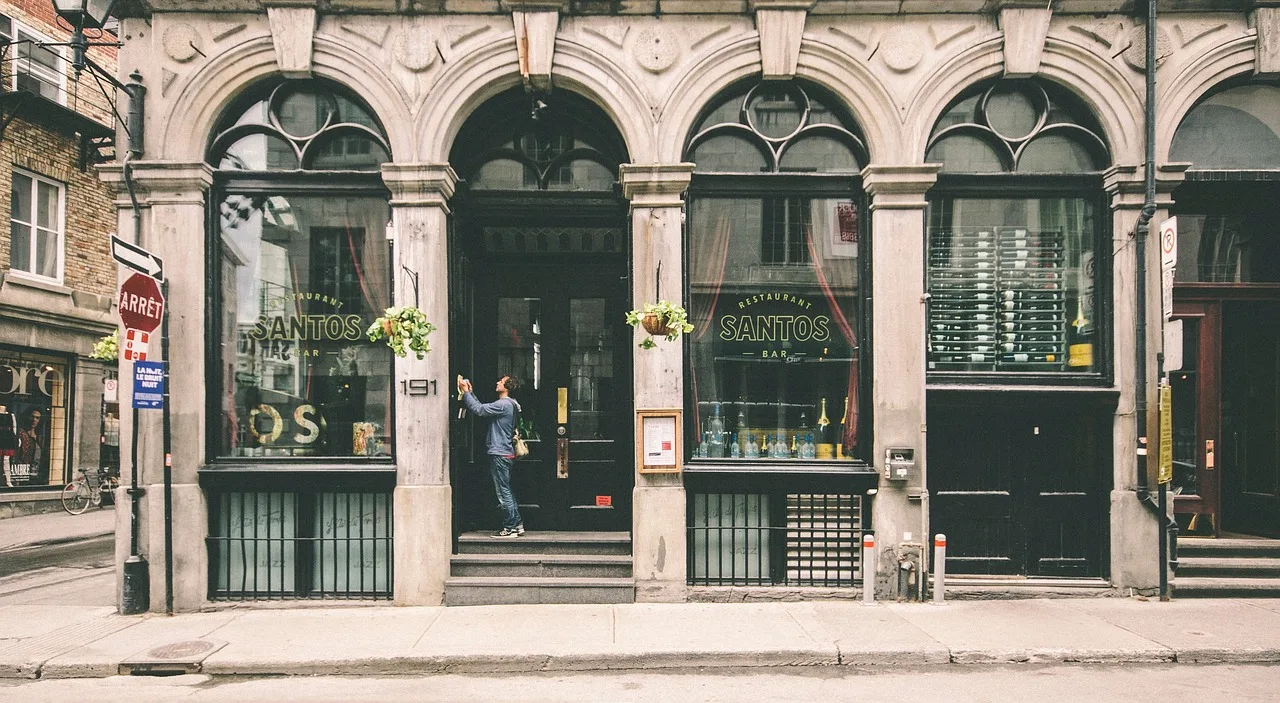
Quebec, which is not what you were told
The received version of Quebec has the province refusing to speak English at you. The census says the opposite, and by a wide margin. In 2021, 46.4 per cent of Quebec's population was English-French bilingual. Outside Quebec, the rate was 9.5 per cent. Nationally it was 18 per cent. The province with the most protective language law in North America is also, by a distance, the part of Canada most likely to contain a person who can switch mid-sentence.
The law is worth reading rather than repeating. The Charter's rule of exemplarity binds the civil administration: government communications must be in French alone, with a published list of exceptions. Look at the list. People who dealt with the administration solely in English before 13 May 2021. People holding what Quebec calls a "certificate of eligibility for instruction in English". First Nations and Inuit persons. Immigrants, for the first six months after arrival, for services that welcome them into Quebec society. Services delivered outside Quebec. Companies with no establishment in the province.
There is no exception for visitors, because the exemplarity rule never reaches them. It governs ministries and municipal offices, not the shop on Saint-Laurent. The six-month clock that generated most of the coverage runs on new residents, not on you.
The Charter does reach that shop, and when it does it points the other way. Section 5 provides that consumers of goods or services "have the right to be informed and served in French". Since 1 June 2025 the rules on commercial signage have tightened further: where a trademark appears in another language on signage visible from outside the premises, French has to be markedly predominant, which the regulation defines as occupying at least twice the space of the other language, at equivalent legibility and permanence. Every one of those duties lands on the merchant. The one provision aimed at a person standing in the shop hands that person a right.
What that leaves, for you, is a norm rather than a statute. Open in French, badly, and you will usually be answered in whichever language makes the transaction easier, often English, often by someone visibly pleased that you tried. Open in English cold and you get a colder version of the same information. This is not enforcement. It is people.

Latin America, where one language does all the work
Colombia's school leaving exam carries an English section, graded on five CEFR bands. In the ICFES national report on the 2024 sitting, the lowest band, A minus, still held 40 per cent of the main-calendar cohort, and the report notes that most candidates remain in the basic bands. That is genuine movement: the same band held 57 per cent in 2020, and the share reaching B1 has risen four points over the same period. It is movement from a low floor. The last full band-by-band breakdown, published by Universidad Javeriana's education economics lab from the 2021 cohort, put 27.1 per cent at A1, 13.6 per cent at A2, 7.5 per cent at B1 and 2.1 per cent above it. Under one in ten of that cohort left school able to hold a conversation that goes off-script. Spain, the source of the language, reported the highest share of adults with no foreign language in western Europe, 43.7 per cent.
Read those figures next to the Norwegian ones and the practical instruction writes itself, though not the instruction people expect. Latin America is the one region on earth where a very small amount of preparation is amortised across an entire hemisphere. The Spanish you learn for a week in Oaxaca still works in Cartagena, La Paz, Montevideo and Valparaíso. Fifty words of Norwegian buys you Norway. Fifty words of Spanish buys you most of two continents, with Brazil as the large and cheerful exception.
What actually changes
There are two different problems here and they are usually confused.
In Oslo, Amsterdam, Stockholm and Copenhagen, English is not in doubt. What is in doubt is which version of the answer you get: the flat one, or the one where the person leans in and tells you the tram is faster. The argument of this piece is that a greeting in the local language is what moves you between those.
In Osaka, Lyon, Bogotá and most of rural anywhere, the question is whether there is an answer at all. There, the greeting does something structurally different. It signals that you are prepared to do part of the work, and that is often what converts a person who was about to avoid eye contact into a person who will fetch someone, draw a map, or open their own translation app. The Tourism Agency found that 68 per cent of visitors who hit a communication wall reached for a translation tool. The phone is the floor, and a poor instrument for the thing you actually need, which is somebody deciding to help you.
Four items, in the local language, cover almost all of it: the greeting, thank you, excuse me, and the question do you speak English, asked in their language rather than yours. The fourth is the one that does the heavy lifting, because it hands the choice back. Asked in English it is a demand. Asked in Japanese or French or Spanish it is an offer, and people answer offers differently.
Which brings us back to the bar over the vowel, where the reasoning runs the opposite way from the one you would expect. The Tourism Agency's manual lists pronunciation under the arguments in favour of macrons: knowing how a word actually sounds, it says, "helps international visitors understand the words when spoken or use the words themselves to make inquiries". The bar comes off anyway, because "the primary goal of these texts is considered to be the enjoyment of international visitors, most of whom are thought to have little to no prior knowledge of Japan", because macrons distract, because signage fonts fight them, and because Merriam-Webster has already naturalised Tokyo, Kobe, Osaka and Hokkaido into English. Ōsaka is printed Osaka to keep you reading, not to help you say it. Even that rule bends: macrons can go back in where the site and the production company agree they are needed, provided somebody leaves a note at the top of the file recording the decision.
So the state did not, in the end, spend its committee time on your pronunciation. It spent that time deciding that your pronunciation was worth less to you than an unobstructed sentence, and it has now spent it nine times. Learning to say sumimasen is a reasonable rate of exchange.
Sources
- Foreign language skills statistics, Eurostat Statistics Explained - 2022 adult education survey figures for languages known and self-rated proficiency, by country (datasets edat_aes_l21 and edat_aes_l31, from which the Norway 24.2 and 56.5 per cent proficiency figures were read directly)
- Foreign language learning statistics, Eurostat Statistics Explained - share of EU lower secondary pupils learning English, and the 100 per cent figures for Denmark, Slovenia and Sweden
- Results of the English Education Implementation Survey, Ministry of Education, Culture, Sports, Science and Technology, Japan - the 52.4 and 23.9 per cent headline figures for public high school pupils, their split into 32.5 certified plus 19.9 judged and 17.2 certified plus 6.7 judged, the bases used for teacher judgements, and the government targets of 60 and 30 per cent
- Promotion of private schools, Ministry of Education, Culture, Sports, Science and Technology, Japan - the ministry's figure that private schools account for about 30 per cent of high school enrolment, which is the share the public-school survey does not cover
- Writing and Style Manual: English for Sightseeing Destinations around Japan, Japan Tourism Agency - ninth edition, February 2026: the arguments for and against macrons, the audio guide exception, the stakeholder opt-in, and the anglicised place name rule
- Survey on the reception environment for foreign visitors to Japan, Japan Tourism Agency - departure-hall survey of 4,110 visitors: communication difficulties, where they occurred, and the 68 per cent who used a translation tool
- Modernization of the Charter of the French language, Gouvernement du Québec - the duty of exemplarity, the full list of exceptions, and the six-month provision for new immigrants
- New signage obligations in force from 1 June 2025, Gouvernement du Québec - the commercial signage rules that took effect for businesses on 1 June 2025
- Regulation defining the scope of the expression "markedly predominant", LégisQuébec - the twice-the-space test for French on exterior signage
- While English and French are still the main languages spoken in Canada, the country's linguistic diversity continues to grow, Statistics Canada - 2021 census bilingualism rates: 46.4 per cent in Quebec, 9.5 per cent elsewhere in Canada, 18 per cent nationally
- Texts applying the law of 4 August 1994 on the use of the French language, Université Laval - the penal provisions on public signage and legibility; the circular of 19 March 1996 defining a place open to the public; the transport circular of 28 September 1999 on articles 3 and 4 and the obligation to translate into at least two languages; the derogations in the decree of 1 July 1998
- Circular of 19 March 1996 on the application of law 94-665, Avenir de la langue française - full text of the circular carrying the definition of places open to the public (Légifrance's own copy at JORFTEXT000000376966 refuses automated retrieval)
- Apuntes del Icfes para la política educativa: informe nacional de resultados del examen Saber 11 2024, ICFES - the 2024 English band distribution, the fall in the lowest band from 57 to 40 per cent since 2020, and the four-point rise at B1
- English in Colombia: results from Saber 11 and Saber Pro, Laboratorio de Economía de la Educación, Pontificia Universidad Javeriana - the band-by-band breakdown of the 2021 cohort
- The Language Act, Lovdata (English translation, Norwegian Ministry of Culture and Equality) - the 2021 statute's stated purpose of keeping Norwegian usable in all areas of society
- Aiming for a balanced internationalisation of universities and universities of applied sciences, Government of the Netherlands - the bill as introduced in May 2024: the one-third threshold and the extended duty on Dutch language proficiency
- Wet internationalisering in balans (36.555), Eerste Kamer der Staten-Generaal - the bill's introduction on 8 May 2024 and its current status, still before the Tweede Kamer and not in force
- Amended internationalisation bill goes to the Council of State, Vox (Radboud University) - the May 2025 motions, and the January 2026 revision narrowing the foreign-language teaching test to new programmes only
- Goed onderwijs en wetenschap, regeerakkoord, Rijksoverheid - the coalition commitment to scrap the foreign-language teaching test for new programmes and keep existing foreign-language provision