Eating Dinner Alone Without Feeling Watched
LineCast Networks
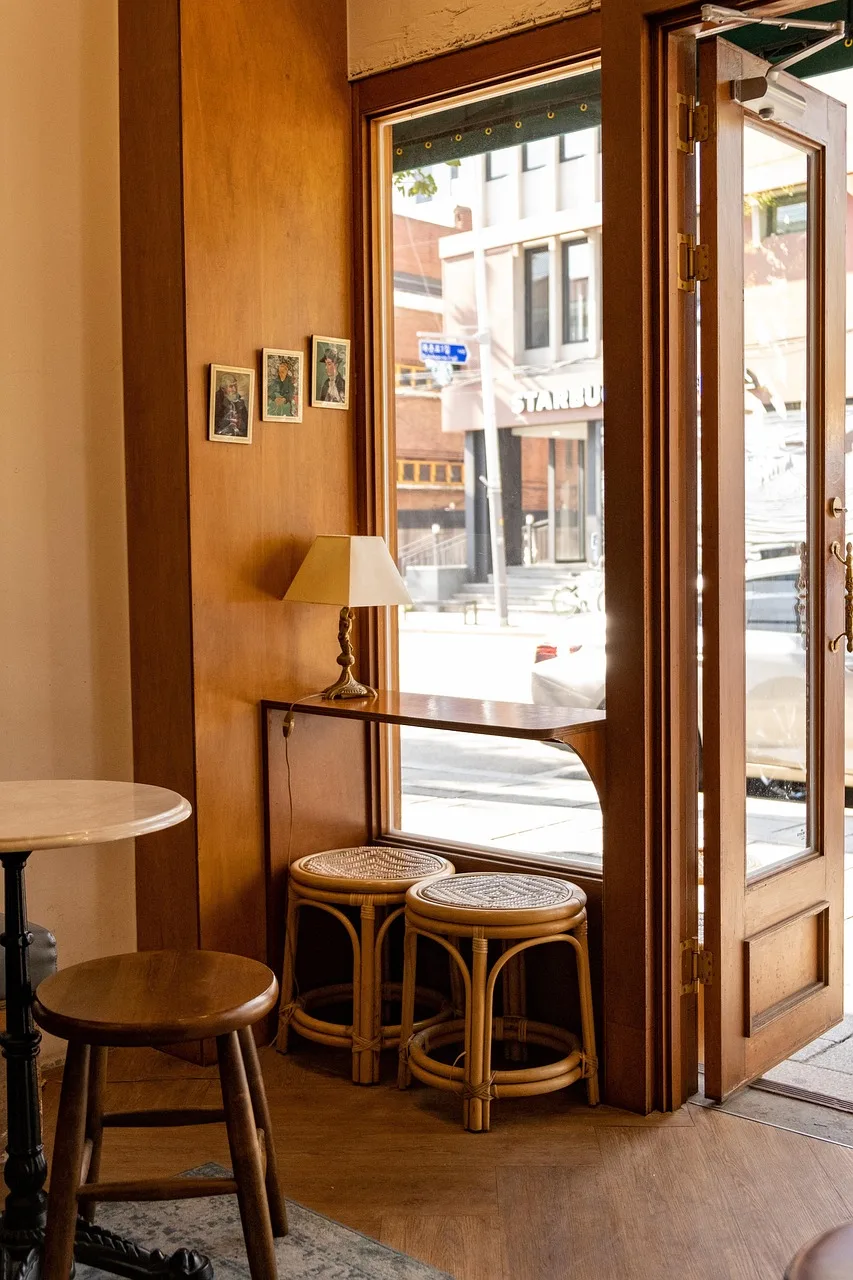
Austria's national inventory of intangible cultural heritage holds an entry, inscribed in 2011, that defines the Viennese coffeehouse as a place "in which time and space are consumed, but only the coffee is listed on the bill." The listing is almost always reported as UNESCO World Heritage. It is not that. UNESCO's international Representative List is a separate register, and Viennese coffee house culture sits on the Austrian national one, which is a smaller distinction than it sounds and a more interesting fact than the misattribution. The line is not the inventory's own. It sits inside quotation marks, credited to nobody, wedged between an official note about small marble-topped tables and an official note about Thonet chairs. Somewhere in the business of registering a tradition, the body that keeps the national inventory decided that the truest thing it could say about the Viennese coffeehouse was a borrowed epigram, and declined to say who it was borrowed from.
The furniture came first and the paperwork caught up. Vienna's coffeehouses have been handing out newspapers since 1720, when Café Kramer on the Graben became the first in the city to put them within reach of customers. The poet Peter Altenberg gave out his café as his postal address, printing it on his visiting card, and Café Central keeps a monument to him. Marble tables the size of a tea tray, Thonet chairs, a rack of newspapers on wooden spines: a room built on the assumption that someone will arrive alone, stay, and not be hurried out.
Most people who dread eating dinner alone are not actually afraid of solitude. The fear is mechanical and quite specific. You are holding a two-person table with one person's worth of value. The server keeps glancing over. The room has done a small piece of arithmetic about you and come up one short. That is a problem of furniture and timing far more than a problem of nerve, which is good news, because furniture and timing are things you can choose.
Countries where the question never comes up
Japan has removed the social transaction from ordering almost entirely. The national tourism organisation's own guide notes that in most ramen restaurants you pay in advance at a ticket vending machine, hand the printed ticket to staff, and sit down to wait. The same page adds, without apology, that a ramen shop is not somewhere anyone expects you to sit around after the bowl is empty. Nobody is reading your table for signs of a missing companion, because nobody expects a table to be a social unit in the first place.
The chain Ichiran has taken the logic to its terminus. Its own system guide describes what it calls zero interaction dining: a lit seating chart tells you which booth is free, partitions stand on both sides, a bamboo curtain separates you from the staff, and you order by circling preferences on a paper sheet and pressing a button. Noodle refills are requested by placing a metal plate on a sensor. You can eat a full meal in a Japanese city and speak roughly four words, which is either dystopian or the kindest thing a restaurant has ever done for a tired person, depending on your mood.
Korea named the practice while it was still new. In January 2017 the Republic of Korea's own news service was reporting honbap (eating alone), honsul (drinking alone) and honhaeng (travelling alone) as fresh coinages, words the language had just grown in order to fit a habit. The same piece went to look at what was being built for it. At Ichi-men, a ramen shop in Seoul's Sinchon student quarter, the tables were partitioned off from each other like reading cubicles, two of the room's three sections were given over to lone diners, and a vending machine by the door took your order before any member of staff saw you. That was one restaurant on one afternoon nine years ago, which is the honest size of the example. The vocabulary outlasted it.
Singapore's answer is architectural in a different way. When hawker culture was inscribed on UNESCO's Representative List in 2020, the citation described hawker centres as "community dining rooms" where people from a range of backgrounds eat over breakfast, lunch and dinner. The citation stops there and says nothing about how the food reaches you, but the format finishes the thought. Nobody shows you to a table. You queue at whichever stall you want, and at most of them you carry the plate back yourself, though some hand you a buzzer or bring it out. The only thing that claims a seat is a packet of tissues left on it, a convention widely reported among diners rather than anything the room does to you. A space with no host and no seating plan cannot register you as an anomaly.
Spain solves it at the counter. The official tourism board describes tapas as small plates that open the appetite, taken in the run-up to lunch or during the long afternoon lull, and adds that if you eat enough of them they will stand in for a meal. In the Basque Country the same thing is a pintxo. Standing at a bar with one drink and three small plates in front of you, you have not been allocated a table, so there is nothing for the room to account for.
France put its counter into a legal document. In 2024 the Ministry of Culture inscribed the social and cultural practices of French bistros and cafés on the national inventory of intangible cultural heritage. The dossier describes the comptoir as the space that generates conversation between regulars, "sometimes people on their own," and the owner or the barman. The counter's entire function, as described by the state: a place where a person by themselves is not by themselves.
There is a duller structural fact underneath all of this. Eurostat counted 203 million households in the European Union in 2025, of which more than 76 million were single adults without children. The same page translates it out of households and into people: 22.5% of adults either live by themselves or are lone parents. Whatever the room feels like, better than a fifth of the adults in it have no other adult at home.
The hour does more work than the country
If you only change one variable, change the clock.
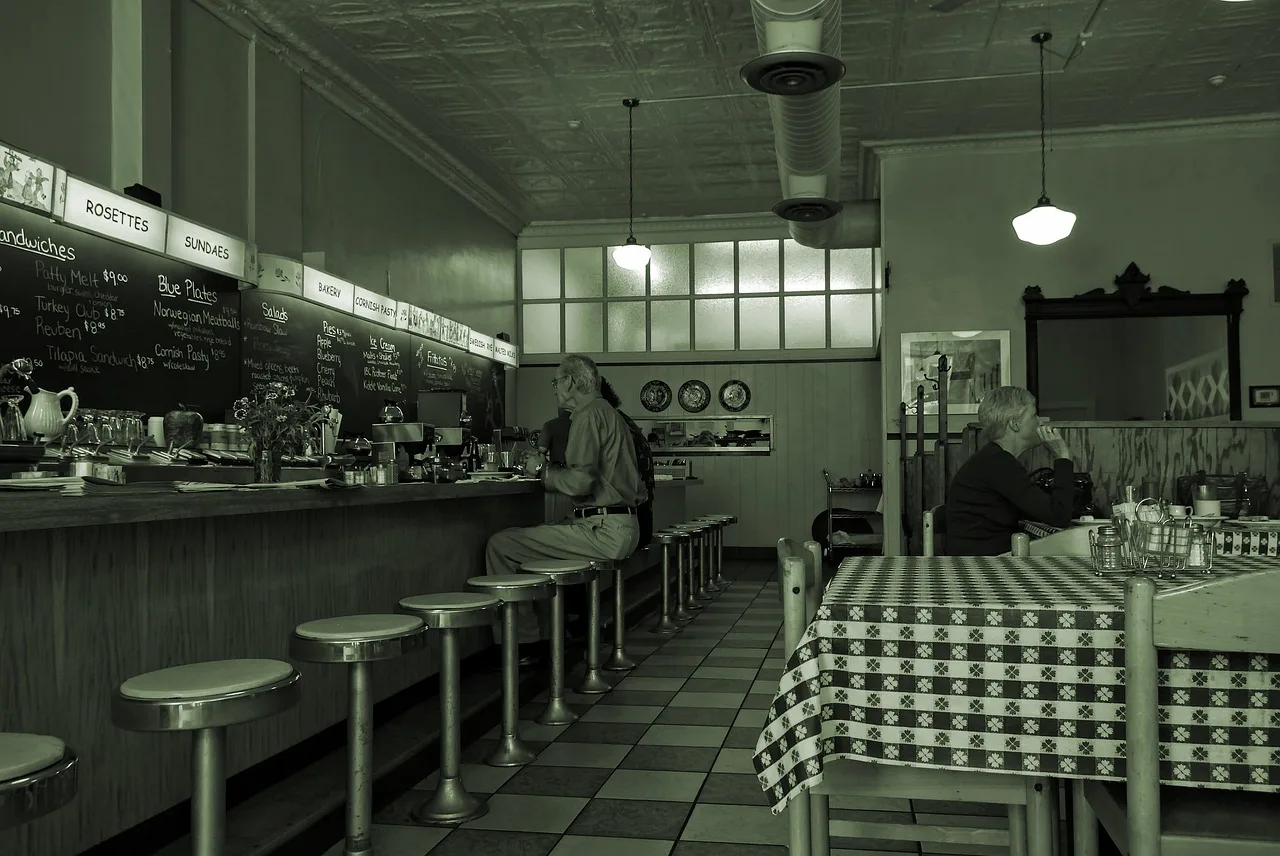
Lunch is the friendliest service to a single cover almost everywhere. The kitchen is running short, fast dishes, the dining room turns over quickly, and a table that will be free again in forty minutes is a table the restaurant wants. Many places that would put you at a bad two-top at nine in the evening will put you at the good window seat at one.
Spain's official tourism site sets out the rhythm plainly. Lunch service occupies the window from 13:00 to 16:00. Dinner opens at 20:00 and carries on until 23:30, while the drink-and-tapas hours fall earlier still, from 12:00 to 14:00. That hands a solo diner two separate exits. Eat at the front of the lunch service and you are one of the first covers of the day. Or take the other tapas window, the late-afternoon one, and lean on the tourism board's own concession that enough small plates will stand in for a meal. Seated dinner does not begin until 20:00 in any case, so eating standing at six is not skipping the evening service so much as arriving before it exists.
Where you cannot dodge dinner, take the first twenty minutes of service. The room is calm, the staff are not yet buried, and a single seat costs the floor manager nothing at all. The end of service works for the opposite reason: tables are emptying and one person is the easiest shape to place. The moment to avoid is the middle of the local peak, whenever that is, because that is the only hour when your table genuinely does have an opportunity cost.
Sunday lunch is worth knowing about as an exception. In much of southern Europe it is the most family-shaped meal of the week, and a solo diner in the middle of it will feel more conspicuous than at any other moment. Sunday evening, when the same restaurants are half empty, is one of the easiest meals of the week to eat alone.
Seats, ranked by how little they cost you
The counter facing the kitchen or the grill. The single best invention for this problem. You have something to watch, the cook has someone to talk to if they want, and a counter stool was designed for exactly one person. A good deal of fine dining has quietly rebuilt itself around this seat.
The bar proper. Same benefits, more drink, usually the full menu. In a country with a bar culture the bar is a different room, and often a better one.
A window bar or a standing table. No table to justify, an outward view, and an easy exit.
A communal table. Slightly harder if you want silence, much easier if you want company you can decline. The seat next to you belongs to nobody until it does.
A terrace. The French inventory dossier describes the terrace as a space of contemplation and encounter, in some establishments more important than the counter itself. Sitting outside, one person facing the street, reads as a purpose rather than a shortfall.
A two-top against a wall. Workable, and covered below.
A two-top in the middle of the dining room, next to the service station. The seat every host gives a single diner when they are not thinking. You are allowed to ask for a different one.
Ordering at the bar
Get the attention of whoever is behind the counter, then say what you want. The commonest mistake is hovering with an apologetic expression, which reads as indecision and gets you served last.
Order in the local unit rather than in courses. In Spain that is one drink and one thing to eat, repeated as often as you like. At a Japanese ticket machine it is buy first, sit second. In a Turkish or Portuguese lunchroom with the day's dishes already cooked and visible, it is pointing. A surprising number of these systems were built to work without shared language, which is the point of them.
Payment usually accumulates and settles at the end at a counter, but not everywhere, and it is a fair question to ask early rather than a guess to make late. If you are standing, keep your drink and your plate in a tight footprint and leave the elbow room to your left and right alone. Counter etiquette is mostly spatial.
And if they seat you at the two-top
Book it. A reservation for one is an ordinary line in a restaurant's book and it gives the floor manager time to place you well, which is the whole game. When you book, ask whether there is counter or bar seating and whether those seats take reservations or are walk-in only, because the answer varies by restaurant and nobody minds the question.
Walking in, say the number and stop talking. "One, please." The pause that follows is a host reading a floor plan, not forming an opinion. If you are offered somewhere you do not want, ask for the bar or a table by the window in the same tone you would use to order bread.
Take the chair facing the room. The wall-facing seat is the one that makes people feel like they are hiding, and the room is the entertainment you came for. Leave the second place setting where it is. Clearing it is the server's decision, and doing it yourself is a small announcement.
Order the way you would with company: something first, something after. A single cover that orders one course is a table the kitchen fires in six minutes and clears in twenty, and then you are standing on the pavement at half past eight wondering what happened. If you want the evening to have a shape, ask for a gap between courses. Staff will do this happily and it is the single most effective request available to you.
Bring something to read on paper if you want to be left alone, and bring nothing if you want to talk to the bartender. A phone does neither job well: it looks like waiting rather than like intent, and it is the one object that makes a table for one look like a table for two where the other person is late.
The Viennese formula transfers better than any of this advice. Time and space are consumed, but only the coffee is listed on the bill. You are buying the food. The chair was never part of the transaction, and nobody in the room is charging you for it.
Sources
- Viennese coffee house culture, Austrian Commission for UNESCO - inscription on Austria's national inventory in 2011, the marble tables and Thonet chairs, the "time and space are consumed" line carried as an unattributed quotation, and Café Kramer offering newspapers from 1720
- Viennese Coffeehouse Culture, Austrian National Tourist Office - the coffeehouse as workplace and living room, and Peter Altenberg writing his café's address on his visiting card
- Ramen, Japan National Tourism Organization - ticket vending machines and the statement that ramen shops are not places to linger over a meal
- System Guide, Ichiran - "zero interaction dining", the self-seating chart, partition booths, bamboo curtains, the written order sheet and the call button
- Being alone is full of fun, Korea.net, 10 January 2017 - honbap, honsul and honhaeng described as new words, and the Ichi-men ramen shop in Sinchon with tables partitioned like reading cubicles, two of three sections for lone diners, and a vending machine beside the door
- Hawker culture in Singapore, UNESCO Intangible Cultural Heritage - inscription in 2020 and the description of hawker centres as "community dining rooms" where people gather and dine over breakfast, lunch and dinner
- Anyone for tapas?, spain.info - tapas meant to whet the appetite before lunch or in the late afternoon, tapas substituting for a meal, and pintxos in the Basque Country
- Typical opening times and public holidays in Spain, spain.info - lunch service roughly 13:00 to 16:00, dinner 20:00 to 23:30, and the drink-and-tapas window between 12:00 and 14:00
- Les pratiques sociales et culturelles dans les bistrots et cafés en France, Ministère de la Culture - the 2024 national inventory dossier describing the comptoir as a space of exchange including "des personnes seules", and the terrace as a place of contemplation and encounter more important than the counter itself
- Household composition statistics, Eurostat - 203.1 million EU households in 2025, of which 76.1 million were single adults without children, and the person-level figure that 22.5% of the adult population live alone or are single parents