Bangkok's Commuter Boat Beats a Taxi, If You Know Which Flag to Board
LineCast Networks
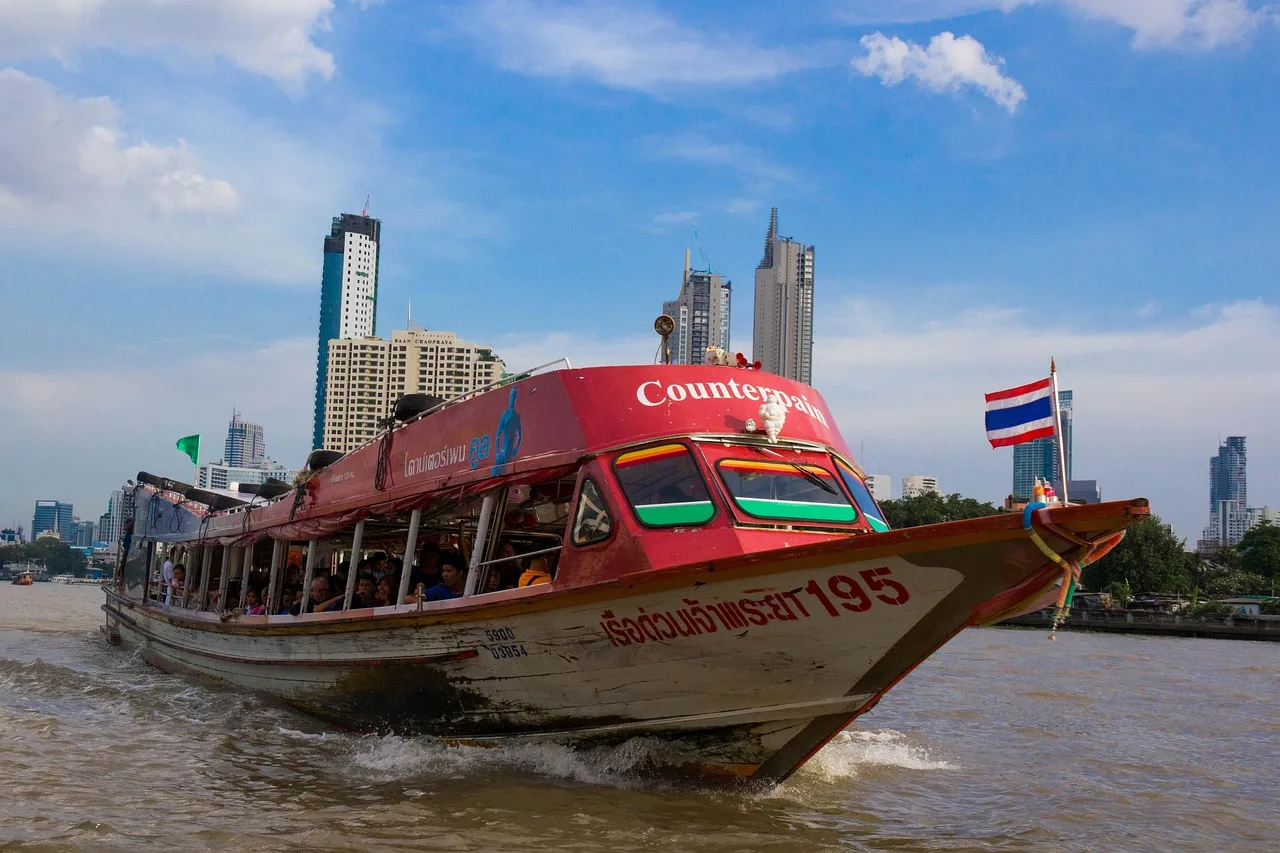
The company that has run the passenger boats on the Chao Phraya since 1971 lists five lines on the Thai-language part of its website. Four of them carry flags: orange, yellow, green-and-yellow, red. The fifth is the one with no flag at all, the plain local service that called at every landing on the way. Beside it, in brackets, the company has written that the line is temporarily suspended.
That bracket quietly retires a good deal of what is written about Bangkok's river in English, most of which still tells you to look for the boat without a flag because it is the cheapest and stops everywhere. It does not stop anywhere at present. What runs instead is a four-line commuter network whose shape has changed more in the last few years than in the previous thirty, and whose logic is invisible from the pier unless somebody explains it.
Four flags, four different jobs
Chao Phraya Express Boat Co took over the river express service from the government in 1971 and has been running it ever since. The spine of the network is a single north-south corridor: Pakkret, in Nonthaburi province, down through the old city and central Bangkok to Wat Rajsingkorn, coded S3, south of the centre. Piers north of the central hub are numbered N1 upwards, piers south of it S1 upwards, and a handful of newer landings have names but no number at all.
The orange flag is the workhorse of the four. It runs the full length, Nonthaburi to Wat Rajsingkorn, at a flat fare that does not change whether you ride one pier or twenty. The yellow flag is really two boats wearing the same colour. At the peaks it is an express from Nonthaburi that terminates at Sathorn and skips most of the landings in between. Between the peaks and at weekends it becomes the long boat, running the whole way down to Wat Rajsingkorn and working through a much longer list of piers. Either way its fare is flat and a little dearer than orange, which is why the operator's own English page can list the yellow line as Nonthaburi to Sathorn and still be only half right. The green-and-yellow flag starts further north at Pakkret and is the only one of the four priced in zones, with three separate steps: Pakkret to Nonthaburi, Nonthaburi to Sathorn, and the whole thing. The red flag is the newest and the odd one out, an air-conditioned catamaran introduced in 2020 under the name Riva Express, running Nonthaburi to Sathorn at the highest flat fare on the river.
The flat fare is the part worth understanding, because it explains the behaviour of everyone else on board. Three of the four lines charge the same for a twenty-minute ride as for a two-minute one. The pricing is built around the long commute from Nonthaburi, not around hopping between two piers in the old city. If your journey is short, the river is not cheap in relative terms. If your journey is long and parallel to the water, it is close to free.
The timetable has been turned inside out
Here is the part that catches people out. The received version, repeated in print for years, is that the orange flag is the all-day boat and the yellow and green flags are rush-hour expresses for commuters. The current timetable inverts that.
The weekday service is split into three periods. In the morning peak all four flags run: orange from both ends of the line, yellow from Nonthaburi, green-and-yellow from Pakkret, and a short burst of red-flag departures out of Nonthaburi. In the middle of the weekday, roughly from mid-morning to mid-afternoon, the orange flag stops and the yellow flag takes over the full Nonthaburi to Wat Rajsingkorn run on its own. In the evening peak only three of the four come back: orange again from both ends, with yellow and green-and-yellow heading south out of Sathorn. The red flag is a morning service, and a one-way one at that. It does not sail home in the evening.
On Saturdays, Sundays and public holidays, the yellow flag is the entire service. One line, the whole length of the river, all day.
So the standing advice to wait for an orange flag is precisely wrong at the times most visitors are on the water: late morning, mid-afternoon, and at weekends. Wait for orange on a Sunday and you will wait a long time.
Two cautions on this. First, the timetable described above is the one the operator published in March 2026 and the Nation reported at the time. The service page is now headed "BOAT SCHEDULE From 24 June 2026 onwards" and gives the timetable itself only as a photograph of a printed sheet. The June departure times that have been transcribed elsewhere keep the same weekday shape, orange in the peaks and nothing in between, but the individual times have moved. Second, that page manages to contradict itself within a few lines: the heading says the service operates "Monday to Sunday and Public Holidays", and then all four lines beneath it are labelled Monday-Friday. New timetables go out through the company's LINE account and Facebook page rather than as a table anyone can read on the site. The practical consequence is that the board at the pier and the departure being announced are more authoritative than anything you read the week before.
Where the boat meets the trains
The interchange everyone knows is Sathorn, also signed as Central Pier, coded CEN, tucked under the approach ramp of Taksin Bridge. Every line calls there. The BTS Silom Line crosses the Chao Phraya at that bridge, and Saphan Taksin station sits on top of the pier, which makes this one spot the hinge of the entire system. If you are staying anywhere on the Sukhumvit or Silom corridors, this is how you get onto the river.
It is no longer the only hinge. On the Thonburi bank, the ICONSIAM pier connects to the Gold Line, a three-station, 1.8-kilometre automated shuttle running the length of Charoen Nakhon Road from Krung Thon Buri to Khlong San. BTS says the line was built "to connect all travel modes including buses, trains and boats", which is a plainer statement of purpose than most railways manage. It is a small piece of railway with a tight geometry, its sharpest curve a radius of 32.70 metres at the Sermsuk warehouse intersection, the spot BTS glosses as Pepsi Pier, and it exists largely to stitch the river to the Skytrain on the west side.
Further north, Bang Po pier (N22) sits beside MRT Bang Pho, where the Blue Line crosses the river on an elevated structure. At the northern end, Phra Nang Klao Bridge pier (N30/1) meets the MRT Purple Line, but the only service that calls there is the green-and-yellow flag from Pakkret, which runs on weekdays at the peaks and not otherwise. In the old city, Rajinee pier (N7) is a short walk from MRT Sanam Chai.
The tunnel that changed the arithmetic
Sanam Chai deserves its own paragraph, because it is the reason the river is no longer the only civilised way into Rattanakosin.
In the Mass Rapid Transit Authority's account of the alignment, the Blue Line turns onto Sanam Chai Road, drops under the river at Pak Khlong Talat, keeps going beneath Khlong Bangkok Yai and comes up under Itsaraphap Road, at which point, in the authority's own words, "the structure changes to an elevated structure" and the line climbs away toward Tha Phra. So the tunnel does not stop at the water's edge. Itsaraphap, on the Thonburi side, is the only underground station over there and the last one before daylight. (The summary table on the same MRTA page puts the end of the underground section back at Sanam Chai, one station short of what its own route description says.) In plain terms: there is a metro station inside the old royal quarter, and the line burrows under the river and out the other side before it surfaces.
For decades the argument for the express boat was that road access to the palace district was hopeless and the river was the only alternative. Half of that is still true. The other half is not. If your starting point is on the Blue Line, the metro is usually the faster and more predictable way in, and the boat becomes a choice rather than a necessity. That is a better reason to take it, not a worse one.
When the water genuinely beats the road
The numbers on the road side are not close. TomTom's index for Bangkok in 2025 put the average congestion level in the central city area at 67.9 per cent, with ten kilometres taking just under twenty-three minutes across an average day and a little over thirty-one minutes in the evening peak, an average speed then of 19.1 kilometres an hour. Across the same year, the index puts rush-hour delay at 115 hours per driver.
The boat's advantage is not that it is fast. It is that the number does not move. A river has no junctions, no traffic lights, no delivery van double-parked across a lane. The morning run and the wet-season Friday-evening run take about the same time, which is something no taxi in Bangkok can promise.
The costs are equally real. The pier is rarely where you want to be, so there is a walk at each end, sometimes a long one in heat you did not plan for. The boats only go where the river goes, which is north and south. Any journey that crosses the city east to west is the wrong journey for a boat, and no amount of scenery makes up for it. The honest rule: if your origin and destination are both within a few hundred metres of the water, between roughly Sathorn and Thewet, take the boat during the peaks. Otherwise take the train.
Piers, palaces, and two doors into the same courtyard
The Grand Palace publishes its own directions, and it recommends two different piers under two different headings. Under the Skytrain heading it tells you to leave Saphan Taksin by exit 2, walk down to Sathorn Pier under the bridge, take the orange flag and get off at Tha Chang (N9). Under the boat heading it tells you to board an express boat for Tha Tien (N8), walk out past the food stalls to the large junction, and look for the palace ahead of you and slightly to the right.
Both work, and the choice is a real one. Tha Chang puts you closest to the palace gate. Tha Tien puts you beside Wat Pho, which makes it the better door if you intend to see both in one morning. Do not misread the palace's ten minutes: its directions send you from that junction, telling you to turn right and "walk about 10 minutes until you come to Wat Pho", which measures palace to temple, not pier to temple. From the pier itself, Wat Pho is a couple of minutes. The palace also lists MRT Sanam Chai, exit 1. Whichever you pick, the dress code is enforced at the gate and the list of what will not get you through it is long: sleeveless shirts, vests, cropped or see-through tops, shorts, torn or tight trousers, mini skirts.
Wat Arun is a separate problem. The company announced that from 5 April 2024 two of its lines, the orange flag and a gold flag it was then running between Nonthaburi and Sathorn, would give up the Wat Arun pier and call at Tha Tien instead. The gold flag does not appear anywhere on the operator's current list of five lines, which leaves the orange flag as the service that change still bites on. To reach the temple you cross on the small ferry that shuttles between the banks. The blue-flag Chao Phraya Tourist Boat does call at Wat Arun and sells a one-day hop-on hop-off pass, but it is a sightseeing product rather than a commuter line and is not priced like one.
Paying, and reading the board
Buy at the pier. Each service has its own ticket desk, and on a busy landing there will be several side by side. Buying on board is possible on the commuter flags but it is the fallback, not the plan. A Rabbit card, the same stored-value card used on the Skytrain and on the MRT Yellow and Pink lines, is accepted for express-boat fares. The operator has leaned on that before: five baht off a trip in a promotion that ran until the end of March 2023, then two baht off from April to May 2023. Nothing has followed since, so turn up expecting to pay the posted fare and treat a discount as a surprise.
Two things to check before you set off. Oriental Pier, N1, is listed on the company's own service page as closed for renovation, so anything routing you through it is out of date. And the same page carries a link marked Track Boat on ViaBus, which shows live positions for the fleet on a map.
That combination says most of what needs saying about the Chao Phraya boats. The newest boat on the river is an air-conditioned catamaran, the schedule is published as a photograph of a printed table, a ticket can still be bought on the deck, and every vessel is on a live tracking app. Read the board at the pier, note which flag the board says is running, and board that one. The river will do the rest at exactly the speed it always does.
Sources
- Boat Service, Chao Phraya Express Boat - the four current lines with their endpoints, the "From 24 June 2026 onwards" heading, the "Monday to Sunday and Public Holidays" line sitting above four lines each labelled Monday-Friday, the yellow line shown as Nonthaburi to Sathorn, the ViaBus tracking link, and the Oriental Pier (N1) closure notice
- About Us, Chao Phraya Express Boat - the 1971 handover from the government operator, the current list of five main lines with the no-flag local boat marked temporarily suspended, and the air-conditioned Riva Express red line launched in 2020 on the Nonthaburi to Sathorn run
- News, Chao Phraya Express Boat - the notice moving orange-flag and gold-flag calls off the Wat Arun pier to Tha Tien from 5 April, the gold flag's own launch on the Nonthaburi to Sathorn route, and the Rabbit card fare promotions of five baht to 31 March 2023 and two baht from 1 April to 31 May 2023
- Chao Phraya Express Boat announces updated passenger boat timetable, Nation Thailand - the March 2026 timetable in full: morning services on all four flags, daytime yellow flag from Nonthaburi to Wat Rajsingkorn, evening services on orange, yellow and green-yellow only, and yellow alone on Saturdays, Sundays and public holidays, with new timetables issued via LINE and Facebook
- Practical Information, The Grand Palace - the Saphan Taksin exit 2 route to Sathorn Pier and the orange flag to Tha Chang (N9), the separate boat directions to Tha Tien (N8) and the ten-minute walk on to Wat Pho, MRT Sanam Chai exit 1, and the itemised dress code
- Chaloem Ratchamongkhon Line, Mass Rapid Transit Authority of Thailand - the alignment turning onto Sanam Chai Road, dipping below the river at Pak Khlong Talat, then below Khlong Bangkok Yai, reaching Itsaraphap Road before the structure changes to elevated, the Bang Sue to Tha Phra section crossing the river at Bang Pho, and the summary table placing the underground section at Hua Lamphong to Sanam Chai
- Itsaraphap MRT station, Wikipedia - Itsaraphap as the only underground station on the Thonburi bank and the last before the line rises toward Tha Phra
- Structure and Stations, BTS Skytrain - the Silom Line crossing the Chao Phraya at Saphan Taksin between Bang Wa and National Stadium
- Gold Line company profile, BTS Skytrain - the stated purpose of connecting buses, trains and boats, the three stations and 1.8 km along Charoen Nakhon Road, and the 32.70 m minimum curve radius at the Sermsuk Warehouse (Pepsi Pier) intersection
- Bangkok traffic report, TomTom Traffic Index - the 2025 figures: 67.9 per cent average city congestion, 22 min 59 s for a ten-kilometre drive, 31 min 25 s and 19.1 km/h in the evening peak, and 115 hours lost per driver
- Orange Flag Boat, THAIest - the orange flag timetable dated from 24 June 2026 showing weekday peak departures only, the pier-by-pier route, and the Bang Po (N22), Rajinee (N7) and ICONSIAM interchanges
- Chao Phraya Express Boat map, route and fares, THAIest - the yellow flag's added daytime stops beyond its former rush-hour route, the green-yellow flag as a weekday peak-only service, ticket desks at the pier with buying on board possible but discouraged, Rabbit card acceptance across boat, BTS and the MRT Yellow and Pink lines, and the blue-flag Chao Phraya Tourist Boat route including Wat Arun with its one-day pass
- Chao Phraya Express Boat, Wikipedia - the pier table showing Phra Nang Klao Bridge (N30/1) served by the green-and-yellow flag with an MRT Purple Line transfer, and the fleet list including the air-conditioned catamaran on the red line