Always Say No When the Card Machine Offers Your Own Currency
LineCast Networks
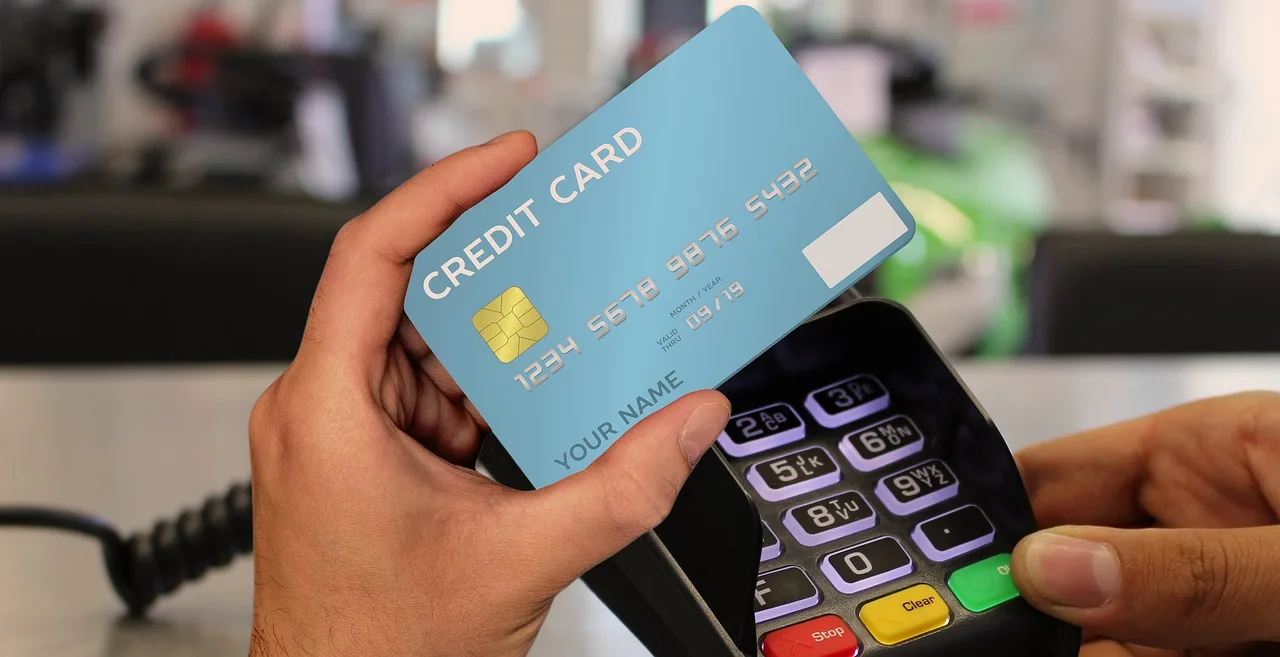
The European Central Bank publishes a set of euro foreign exchange reference rates every working day, and on the page where it publishes them it prints a warning: "The reference rates are published for information purposes only. Using the rates for transaction purposes is strongly discouraged." They come out of a concertation call between European central banks at around 14:10 Central European Time and appear on the website at around 16:00. One number per currency, once a day, explicitly not meant for trading.
European law nonetheless makes that once-a-day figure the ruler against which every currency conversion offer at a card terminal or cash machine in the EU must measure itself. Regulation (EU) 2021/1230, which codified and replaced the older Regulation 924/2009, requires whoever offers to convert your money, at a cash machine or at the till, to express their total charges "as a percentage mark-up over the latest available euro foreign exchange reference rates issued by the European Central Bank", and to disclose that mark-up before the transaction starts.
The reason lawmakers reached for a deliberately unsuitable benchmark is that they needed any benchmark at all. Without one, the offer on the screen was unreadable. That offer has a name, dynamic currency conversion, and it is the reason a terminal in Lisbon asks whether you would like to be charged in pounds.
Who is actually asking
The prompt looks like a courtesy from the shop. It is a financial product, and it is not sold by your bank.
The Hong Kong Monetary Authority described the structure plainly in a consumer piece on card use abroad: the arrangement "does not involve the card issuing bank in Hong Kong", and is "jointly provided by the merchant, the merchant acquiring bank and the foreign exchange dealer overseas". The regulator is describing Hong Kong issuers, but the shape it describes is the general one. A dealer on the merchant's side of the transaction takes the prevailing wholesale rate, adds a margin, and quotes you the result in your own currency. Visa's own merchant documentation is equally blunt about the arithmetic: the amount you see "is calculated using the wholesale exchange rate including the DCC markup", and the field where a merchant's system sets that markup is called, without embarrassment, the margin rate percentage.
The card schemes require the receipt to say so. Among the mandatory receipt lines is a statement that "DCC service was provided by" the named merchant, alongside both amounts, both currency codes, the rate used, and any commission or markup over the wholesale rate. If you keep one receipt from a trip, keep that one. It is the only place the transaction admits what it was.

The evidence, such as it is
Nobody publishes a live league table of conversion margins, but consumer bodies have gone out and measured them.
The German testing organisation Stiftung Warentest sent twenty investigators to make withdrawals and payments in thirteen countries outside the euro area. Eleven of the thirteen had machines offering conversion. In every case where the investigators accepted, they paid more: between 2.6 and 12 per cent more at cash machines, and between 2 and 5 per cent more in shops. A Norwegian bank studied 1,500 of its customers' foreign withdrawals converted into kroner at the machine. Four came out cheaper than paying in local currency. Four out of fifteen hundred. Both studies were collected in a position paper the European consumer organisation BEUC put to Brussels in 2017, and the mark-ups it found ran as high as roughly ten per cent against a typical bank conversion cost of zero to three.
Those figures are now some years old, and the disclosure rules that followed have made the good and bad offers easier to tell apart. The direction of the finding has not changed, because it cannot: the conversion on the screen is a retail price built on top of a wholesale rate, and the alternative is your own bank's conversion, which is a different retail price built on the same wholesale rate. You are choosing between two spreads. One of them is set by a business whose customer you became four seconds ago.
The part that surprises people
Declining does not make the transaction free, and accepting does not make it exempt.
Say no and your issuer converts instead, at the card scheme's rate, and many issuers then add their own foreign transaction fee. That is a real cost and worth knowing before you travel; it is the number to check on your own bank's fee schedule, not on any terminal.
The trap runs the other way. A common belief is that paying in your home currency turns a foreign transaction into a domestic one and dodges that fee. It does not. The transaction is still acquired abroad. The Hong Kong regulator noted that cardholders who use conversion services to settle in Hong Kong dollars are charged an additional fee by the card associations through their issuing banks, that some banks waive it and a few add a handling charge of their own, and that issuers are required to publish the "fees relating to settling foreign currency transaction in Hong Kong dollars" in their fee schedules. Different market, same mechanism. Accepting the conversion can leave you paying the merchant's margin and a cross-border fee, which is the worst available combination.
The yellow box on the corner
Cash machines deserve their own paragraph because they charge you twice, and say so.
Euronet, an independent operator with machines across tourist Europe, lays out the structure on its own website. There is an access fee, "a flat fee applied on each withdrawal transaction charged by the ATM provider for the ATM cash service itself". Then, separately, there is conversion: the operator explains that the rate it uses "may differ from the official conversion rate published daily by the European Central Bank and this difference is referred to as Conversion Fee or Conversion Markup", and that the entity performing the conversion must state that fee as a percentage over the ECB rate on the day. The company's position is that this is the price of convenience and that the transparency is the point, which is a defensible thing for an operator to argue. It is also a clear description of two charges stacked on one withdrawal.
The company is equally useful on how the offer gets triggered. Conversion "will only be present when the software identifies the chip on the card as foreign", and it notes that a card can read as foreign even when you applied for it at home, if the issuer manufactures its cards centrally in another country. That is why holders of app-based accounts sometimes get a conversion prompt for a currency they did not expect, and why the answer to give is still the same.
A machine in the wall of a branch, with a bank's name on the building above it, is a different proposition from a free-standing box on a pavement outside a station. Not always cheaper, but the free-standing box is in that spot precisely because of who walks past it.

The rules you are entitled to hold them to
Everything above is avoidable, and the schemes have written down what a compliant offer looks like.
Visa states that merchants and cash machines "should give you a choice to accept or decline currency conversion and must not choose on your behalf", that providers "should not use language or procedures such as different font size or color to influence your decision", and that if the required details are missing or you feel pressured, you should decline and report it to your card issuer. It adds the reassurance that most people need in the moment: declining "will not impact your ability to make purchases or withdraw cash internationally". You are not risking the transaction by saying no.
Scheme rules define acceptance as an active choice, an action you take after proper disclosure, and for card-present payments it has had to be registered on the terminal's own screen or its PIN pad, under deadlines that passed in 2021 for new installations and 2022 for existing ones. Verbal steering, disclosures printed at different sizes, and mismatched formatting are all listed as non-compliance. If somebody behind a counter presses a button before handing you the machine, the rule that has just been broken is not an obscure one.
In the EU, the statute adds specifics on top. A party offering conversion at a machine or a counter must tell you, before the payment starts, the amount payable in the merchant's currency and the amount payable in yours, must display the mark-up percentage at the machine, and must also inform you "of the possibility of paying in the currency used by the payee and having the currency conversion subsequently performed by the payer's payment service provider". That last clause is the law obliging the shop to tell you it is not your only option. Underneath it sit the EU's payment services rules, today Article 59(2) of PSD2, which requires the party offering the conversion to disclose all charges and the rate, and says that the payer "shall agree to the currency conversion service on that basis". Consent, not silence. That framework is on its way out, replaced by PSD3 and a directly applicable payment services regulation that the EU's co-legislators agreed in 2026 and that applies twenty-one months after it is published. Check the article number if you are reading this in 2028. Check the terminal either way.
Where the European rule stops
This is the part most travel advice gets wrong by generalising.
The EU mark-up disclosure regime is scoped by currency, not by geography. It applies to payments "denominated in euro or in a national currency of a Member State other than the euro". Neither the Turkish lira, nor the dirham, nor the baht, nor the dollar ever qualified. So a Dutch card in Marrakesh sits outside the article that guarantees you a percentage figure on the screen.
Edinburgh does not, and this is where the generalising usually goes wrong in the other direction. Sterling stopped being a member state currency in 2020, but the United Kingdom onshored the rule on the way out and then widened it. The assimilated text of Regulation 924/2009 now applies to payments "denominated in euro, sterling or in a national currency of a Member State of the European Union other than the euro", the word sterling having been dropped in by a 2020 statutory instrument, and its Article 3a still requires the total conversion charge to be expressed "as a percentage mark-up over the latest available euro foreign exchange reference rates issued by the European Central Bank". A conversion offer at a Scottish terminal is inside a statute, not merely inside a scheme rulebook.
It is not, however, the same rule. The UK copy is wider on currency and narrower on territory, applying only to "those parts of a payment transaction which are carried out in the United Kingdom", and it sheds two of the paragraphs the EU version carries. It also sits on a countdown: Parliament has already legislated to revoke the whole instrument under the Financial Services and Markets Act 2023, and the only reason it is still law is that the repeal has not been commenced. It works at the terminal today. It is not a fixture.
The scheme rules, to be fair, travel with the card. Visa publishes the same disclosure and choice requirements to cardholders travelling anywhere, and acquirers describe both networks as imposing them: Worldline tells its merchants that the scheme requirements demand the mandatory disclosures "in same size, color and font types", that the cardholder "must not be steered towards a choice" by a pre-selected or default option, and that a declined offer must be processed in the merchant's currency and the cardholder not re-prompted. But a rule enforced by a card network through its acquirers is not the same instrument as a regulation with a national supervisor behind it, and the practical difference shows up in how confidently a terminal in a resort strip presents its offer.
Online, where nobody asks
Booking sites are the blind spot. When a website quotes you a hotel in your own currency, that may not be dynamic conversion at all but multi-currency pricing, which Visa's implementation guide defines simply as a service where "a website is repriced in the currency of the cardholder". That is a glossary definition rather than evidence of anyone's practice; the same guide says the service is not currently offered on the platform it documents. The mechanism is nonetheless the one you meet on booking sites, and the giveaway is what is missing. There is no prompt because there is no choice: the merchant has decided to sell to you in your money at a rate it selected. The only lever you have is the currency selector, usually near the language selector, and switching it to the local currency before you reach the payment page is the online equivalent of pressing the right button on a terminal.
One last mechanical detail worth knowing. If you accept conversion and later return the goods, the scheme guidance tells merchants to reapply the exchange rate used at the original authorisation, which nets the margin back out. Treat that as an instruction to merchants rather than a promise to you. Acquirers hand it to them as one option among several: Trust Payments lists refunding at the original rate alongside refunding at a new one, and Worldline warns that refunds "must be issued in the currency that the cardholder used for the payment. Otherwise, it is not guaranteed that the same exchange rate at the time of purchase transaction will be applied during refunds." If the money comes back in the merchant's currency instead, your issuer reconverts at a fresh rate, and you have paid the original margin and a second spread on top of it. Check the credited amount against what you were charged.
So the answer at the terminal is short, and it is the same in every country and on every machine: pay in the currency of the place you are standing in. Ask for the local currency by name if the screen is confusing, because "euro" and "dollar" are ambiguous in a way that "the local one" is not. Then look at the receipt for the line naming who provided the conversion service. If it is there, the machine did it anyway, and you have the document you need to take it up with your issuer.
Sources
- Regulation (EU) 2021/1230 on cross-border payments in the Union - the current EU instrument; Article 4 requires the mark-up to be shown as a percentage over the ECB reference rate, Article 1(2) limits that regime to euro and member state currencies, and Article 15 repeals Regulation (EC) No 924/2009
- Regulation (EU) 2019/518 amending Regulation (EC) No 924/2009 - where the currency conversion transparency rules were introduced, with the phased application dates and the recital confirming a payer may refuse the service
- Directive (EU) 2015/2366 (PSD2) - Article 59(2), requiring disclosure of all charges and the rate, and the payer's agreement on that basis
- ECB euro foreign exchange reference rates - the daily concertation at around 14:10 CET, publication at around 16:00, and the warning against using the rates for transaction purposes
- Visa, Decoding Dynamic Currency Conversion - the requirement to offer a choice, the ban on influencing it by wording or formatting, and the advice to decline and report
- Adyen, Dynamic Currency Conversion rules and regulations - the active choice definition, the screen and PIN pad deadlines, and the mandatory receipt lines including the naming of the service provider
- Worldline Acquiring, Dynamic Currency Conversion - a second acquirer's statement of the scheme disclosure and no-steering requirements, and the warning that the original exchange rate is not guaranteed on a refund issued in the wrong currency
- Trust Payments, How do I refund DCC payments? - refunding at the original rate offered as one option among several, with the choice sitting with the merchant and its rate provider
- Visa Currency Conversion implementation guide - the wholesale rate plus markup calculation, the margin rate percentage field, the multi-currency pricing definition, and the instruction to merchants to reapply the authorisation rate on refunds
- Euronet, ATM Fees Explained - the operator's own description of the access fee and the conversion markup as separate charges measured against the ECB rate
- Euronet, Dynamic Currency Conversion - the operator's case for the service, and the explanation that the offer is triggered by the card chip reading as foreign
- Hong Kong Monetary Authority, Hong Kong Dollars or Foreign Currencies? - conversion is provided by the merchant, acquirer and an overseas dealer rather than the Hong Kong issuing bank, and settling in your home currency can still attract a card association fee through your bank
- BEUC, Dynamic Currency Conversion position paper - the Stiftung Warentest field test across thirteen countries and the Norwegian study of 1,500 converted withdrawals
- Assimilated Regulation (EC) No 924/2009, Article 1 - the UK text as modified on IP completion day, adding sterling to the currencies covered, limiting the regime to parts of a transaction carried out in the UK, and carrying the note that the Regulation is revoked by the Financial Services and Markets Act 2023 with effect yet to be applied
- Assimilated Regulation (EC) No 924/2009, Article 3a - the operative UK currency conversion transparency article, still requiring the mark-up as a percentage over the ECB reference rate