A Week in a Medellín Apartment Is a Different City From a Week in a Hotel
LineCast Networks
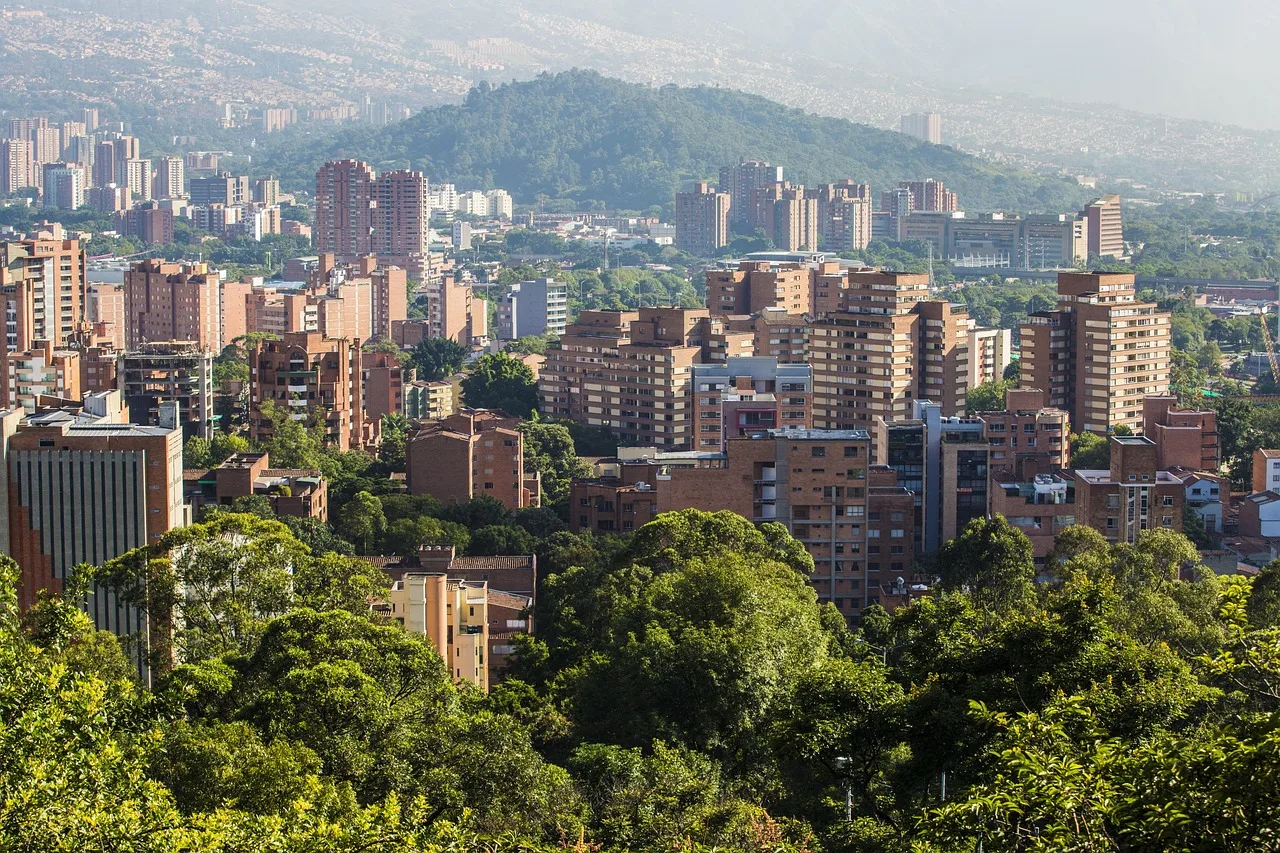
Medellín is one of the easier cities in the Americas to give directions in. Calles run one way, carreras the other, the numbers climb in a sensible direction, and an address is a coordinate pair you can solve in your head while the taxi is still moving. Then there is Laureles. The neighbourhood was laid out to a design by the painter and architect Pedro Nel Gómez, who drew a web of circulares and transversales that broke with the calles and carreras used in the rest of the city, and by 2020 El Colombiano was reporting that courier and delivery riders preferred to take work in zones where the crossing of a calle and a carrera tells you where you are. The city's cadastre office took the problem seriously enough to announce a modernisation of the street nomenclature across 124 blocks of comuna 11, citing confusion among residents, disruption to property business and difficulty identifying buildings.
What arrived, in May 2022, was not a renumbering. The city had said in advance that the changes would show up in the type of street, that calles and carreras would become transversales and diagonales, and that, in the release's own words, "no se registrarán modificaciones en la numeración." House numbers stayed exactly where they were. What moved was the labels: 55 streets across Conquistadores, Lorena, San Joaquín and Laureles itself were reclassified, some of them into circulares. Avenida Nutibara stopped being transversal 39B and became diagonal 74A. The circular running past the first park of Laureles stopped being 74 and became 7.
So the web on the ground is exactly where Gómez left it, and the names you would have used to describe it are not. That is the worst of both outcomes rather than a neutral one. Ten days into the change, El Colombiano found taxi drivers and couriers navigating by buildings they recognised because Waze and Google Maps were still returning the old addresses. Yan Figueroa, a foreign rider doing motorbike deliveries in the barrio, put it to the paper as "estábamos acostumbrados a la nomenclatura vieja y ahora todo es un enredo," and added the part that stings: if you are slow picking up or dropping off, you get penalised for it.
That is the first thing a rented apartment hands you that a hotel never does: an address you have to learn to say out loud, correctly, to a stranger on a phone, at speed. It is a small thing and it is the whole difference in miniature. A hotel sells you a week of being a guest. An apartment sells you a week of being a resident at a specific address in a specific municipality with specific obligations attached to it, most of which nobody tells you about because the person renting it to you has stopped noticing them.
Two neighbourhoods, and one of them is a different town
Laureles and Envigado get listed together as the sensible alternatives to El Poblado, which flattens a real distinction. Laureles is part of the city of Medellín. Envigado is not. It is its own municipality with its own mayor, its own council, its own waste contractor and its own paperwork, and it spent decades outside the metropolitan authority that governs the valley before its residents voted in a popular consultation to rejoin, 24,507 to 15,364.
This has consequences that show up in the first hour. On the metro's own station pages, the address given for the station called Envigado is Carrera 42 59A-291, in Itagüí. The next station north, Ayurá, is listed at Carrera 49 25A Sur-35, in Medellín. Line A runs down the flat western side of the valley near the river. Envigado's old centre, the part with the church and the park and the bakeries, sits well east of that and, since the valley floor rises away from the river, uphill. A listing that says "walking distance to Envigado metro" is describing a walk, and you should look at the contour lines before you agree to do it twice a day with shopping.
Laureles has the opposite arrangement. Line B crosses its northern edge, and three of its stations sit on the streets people actually use: Estadio on Carrera 70, Suramericana on Carrera 65, Floresta on Carrera 80. You can live in Laureles without ever thinking about how you get to the metro, which is not a sentence you can write about most neighbourhoods in most cities. The trade is that Line B's last trains leave before midnight, and earlier on Sundays and holidays, so a long dinner turns into a taxi whether you planned one or not.
The rule that decides whether you are allowed to be there at all
Here is the friction that no listing mentions and no guide explains, and it is the one most likely to ruin a week.
Under Colombian law a hospedaje contract is one for less than 30 days. Anyone renting a flat out on those terms is providing a tourist service, not signing a tenancy, and tourist accommodation providers have to be registered in the Registro Nacional de Turismo. Booking platforms operating in Colombia are required to give the host a place to display that registration number and to pull down listings from anyone whose registration is not active.
The second requirement is the sharp one. Where the flat sits inside a building under the horizontal property regime, which in these two neighbourhoods means very nearly every flat, the building's own reglamento has to expressly permit tourist accommodation. Not tolerate it. Permit it, in writing. A citizen challenged that requirement on the grounds that it restricted private property rights, and the Consejo de Estado rejected the challenge and left the rule standing, noting that the assembly of owners is entitled to decide what the units in their building may be used for, and that a building's rules may restrict a property's use even beyond what municipal land use rules say.
So the legal status of your week is decided by a meeting of your neighbours that happened before you booked, and it is a meeting you will never see minutes of. In practice this produces the scene that people report and rarely explain: arriving with luggage at a Laureles or Envigado building where the porter has been instructed to stop short lets, and being told, politely and immovably, that you cannot come in. The host is not always lying to you. Sometimes the host genuinely believes the building has softened. The porter has the reglamento and the porter is right.
The check takes one message. Ask the host for the registration number, and ask, in plain words, whether the building's reglamento permits alojamiento turístico. A host with both answers ready is a host who has done this legally. A host who answers the first question and gets vague about the second has told you something useful.
Being reported, or not
Everyone who lodges a foreigner in Colombia is supposed to report it. The reports go through a system called SIRE, run by the migration authority, and providers registered in it are excused from keeping a physical guest book because the electronic record replaces it. Accommodation providers are separately required to complete a lodging registration card for each guest, which the law treats as proof of the hospedaje contract.
A hotel does this without you noticing, which is what the photocopy of your passport at check in is for. An informal host may do it, may have never heard of it, or may be actively avoiding it, which is one of the reasons an informal host is cheap.
It is worth being clear about what this does and does not get you, because the temptation is to imagine the record as a receipt. It is not yours. The law puts the registration card in the provider's hands, filled in on the system the national government designates, and treats it as proof of the contract between provider and guest. Nothing in it says the guest gets a copy, or can go and ask for one later. So the difference between the hotel week and the apartment week is not a document you can produce for anybody. It is whether the state has any record at all that you slept where you say you slept, and with an informal host the honest answer is that it may not.
What the meter knows about your building
Colombian utility bills are not priced the way you expect. Residential properties are classified into socioeconomic strata, and the tariff for water, power and gas is charged differentially by stratum, with the ones judged to have more capacity paying more so that the lower strata can pay their bills at all. The classification attaches to the dwelling, not to the person living in it: DANE's unit of stratification is the individual residential property, the house or the flat. It is set through a municipal process with a standing stratification committee behind it, it belongs to the flat rather than to you, and it does not care that you are there for six nights.
This explains a great deal of apartment behaviour that otherwise reads as stinginess. It is why a flat so often has a gas hob and a small fridge and a water heater that serves the shower and nothing else. It is why the host's welcome note has a line about the air conditioning, if there is any air conditioning, which in this climate there often is not and does not need to be. In a hotel, energy is somebody else's line item. In a flat you are standing inside somebody's utility bill, and the mechanism setting that bill was decided by a municipal classification of the property, not by you.
One thing works the other way. Medellín's utility says its water customers can drink from the tap. A jug in the fridge replaces the entire bottled water economy that a hotel room quietly runs on, and after two days you stop thinking about it.
Laundry, lifts, and the rest of the small print
Assume a washing machine. Do not assume a dryer. Residents describe the standard arrangement as a machine and a covered service patio, called the zona de ropas, with lines strung across it, and the practical consequence is that laundry becomes a weather decision rather than a Tuesday decision. Ask before you book if this matters to you, because a week of two people's clothes drying indoors in a two bedroom flat is a specific and avoidable kind of unpleasant. The alternative is the neighbourhood lavandería, which is generally said to charge by weight and to turn things around fast, and which is the sort of errand that makes a week feel like residence rather than tourism.
Lifts follow the same logic as everything else here: they are common property, and the building's rules govern them. Those rules are written by the same assembly that decided whether you are allowed in the building at all, and in older buildings they can include booking the lift for moves, restricted hours, and a porter who will enforce both. Laureles is widely described as low rise by the standards of Colombian cities, which is part of its appeal and also means a fourth floor flat with no lift is a real possibility rather than a listing error. Read the floor number. Look for the word ascensor. If it is absent, believe the absence.
The card with your name on it
The metro runs on a stored value card called Cívica, and it comes in two versions. The Eventual is the anonymous one, defined by the operator as the card that carries none of the user's information, bought at the metro's points of sale for a one off price and topped up with as many trips as you want. That is the card a visitor can walk up and buy at a station on arrival, on any day the trains are running. There is also the App Cívica, which gets you through the gates with a QR code, and which the metro's own FAQ recommends to anyone who cannot get to a counter.
The personalised card is the one with your identity attached. It is worth the errand for a stay of any length, because it is the version whose balance can be recovered if you lose it, where the Eventual's balance simply goes with the card. Foreigners can get one on a passport or a Colombian cédula de extranjería. The catch is where. The five customer service points that issue it sit at Niquía, Acevedo, San Javier, Itagüí and San Antonio, and they run Monday to Friday only, closed Saturdays, Sundays and public holidays. None of the five is in Laureles. None is in Envigado. So if you land on a Saturday, buy an Eventual at the station window and get on with your weekend. The personalised card is a Monday errand, and it is a Monday errand at a station you have no other reason to visit.
The same card, or the EnCicla app, unlocks the valley's public bicycle system, free to use once you are registered, running from more than 130 manual and automatic stations across the Valle de Aburrá. The metro lists one at Estadio, on the edge of Laureles.
Registration is where it gets interesting, and where the apartment quietly wins. EnCicla asks for a recent selfie, a photograph of your identity document, and a copy of a utility bill issued no more than three months ago. A tourist does not have a Colombian utility bill. A host does, and it is in the same drawer as the wifi password. Whether the counter will take one that is not in your name is between you and the counter, but it is at least a document a hotel cannot produce for you and a flat can, which is a better argument for the apartment than anything in the listing. Two things to know before you build a week around the bikes: at manual stations you hand over the physical photo ID you registered with, and the system does not run on public holidays at all, while Sundays close at four with the last loan at three.
What the week actually buys
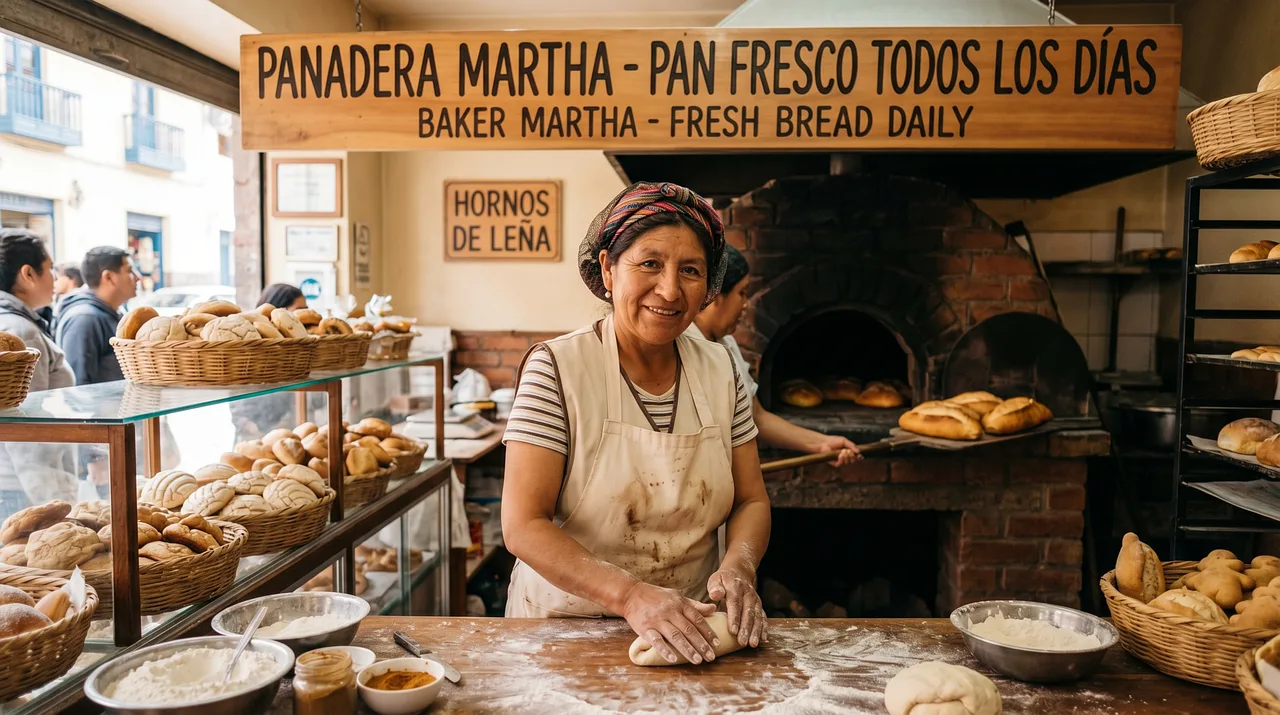
The panadería is the part people remember, and it is genuinely the point. Residents will tell you there is one within three minutes of nearly every flat in either neighbourhood, it opens early, and by the third morning the person behind the counter has your order started before you have finished saying it. That transaction is not available to a hotel guest at any price, because it requires being the same person in the same place on consecutive days at roughly the same hour, which is precisely what a hotel is designed to make unnecessary.
Everything in this piece is the cost of that. The street that got renamed under the couriers, the assembly vote you were not at, the registration number, the stratum on the bill, the drying patio, the card counter that shuts at the weekend. A hotel absorbs all of it and charges you for the absorption. An apartment hands it to you and calls it independence, which is accurate, and which is worth choosing on purpose rather than by accident.
Sources
- Modificarán nomenclatura en tres barrios de Laureles para no "perderse" (El Colombiano, July 2020) - Pedro Nel Gómez's web of circulares and transversales, riders preferring other zones, the 124 manzanas, and subsecretario de Catastro Iván Mauricio Salazar on property business and building identification
- La modernización de la nomenclatura en Laureles facilitará la ubicación en ese sector de Medellín (Alcaldía de Medellín, June 2020) - 124 blocks of comuna 11, the stated reasons, and the commitment that street types would change but numbering would not
- Cambian direcciones en Laureles con más transversales y diagonales (El Colombiano, May 2022) - the change as executed, 55 streets, circular 74 becoming circular 7, Avenida Nutibara becoming diagonal 74A
- Qué enredo, el cambio de nomenclatura de Laureles (El Colombiano, May 2022) - the 55 vías across four barrios, Yan Figueroa on motorbike deliveries, delivery penalties for lateness, and Waze and Google Maps still carrying the old addresses
- Metro de Medellín, Línea A - station addresses, including Envigado station listed in Itagüí and Ayurá in Medellín
- Metro de Medellín, Línea B - Estadio, Suramericana and Floresta station addresses, last services, and EnCicla listed at Estadio
- ¿Cómo obtener tu tarjeta Cívica? - passport or cédula de extranjería accepted for foreigners, and the five customer service points, weekdays only, closed Saturdays, Sundays and holidays
- Tarjeta Cívica Eventual - the Eventual defined as the card carrying no user information, and the loss of balance if it is lost or stolen
- Cívica, preguntas frecuentes - PAC hours, and the recommendation to use the App Cívica to travel the Metro network
- How to travel in the Metro - the Eventual card bought at the system's points of sale, one payment for the card plus whatever balance you load
- EnCicla, Sistema - free public bikes, more than 130 manual and automatic stations, the registration documents including a utility bill no older than three months, photo ID at manual stations, and service hours with no service on public holidays
- Consejo de Estado mantiene requisitos legales para que bienes de propiedad horizontal puedan ser destinados al turismo - the building's reglamento must expressly permit tourist use, upheld on challenge, with the assembly of owners entitled to decide
- Ley 2068 de 2020 - hospedaje defined as under 30 days, letting under 30 days as a tourist service, the lodging registration card as the provider's record and proof of the contract, and the platform duties to display the RNT number and remove inactive listings
- Resolución 2357 de 2020, Migración Colombia - reporting of foreigners' lodging through SIRE and the replacement of the physical guest book
- DANE, Estratificación socioeconómica - residential properties as the unit of stratification, differential utility tariffs, subsidies and contributions, and the municipal stratification committee
- EPM garantiza agua de calidad en Valle de Aburrá y Rionegro - the utility's statement that its customers can drink tap water
- Envigado ahora hace parte del área metropolitana del Valle de Aburrá - Envigado as a separate municipality and the popular consultation vote, 24,507 to 15,364