A Second Trip to Rome, Once the Colosseum Is Behind You
LineCast Networks
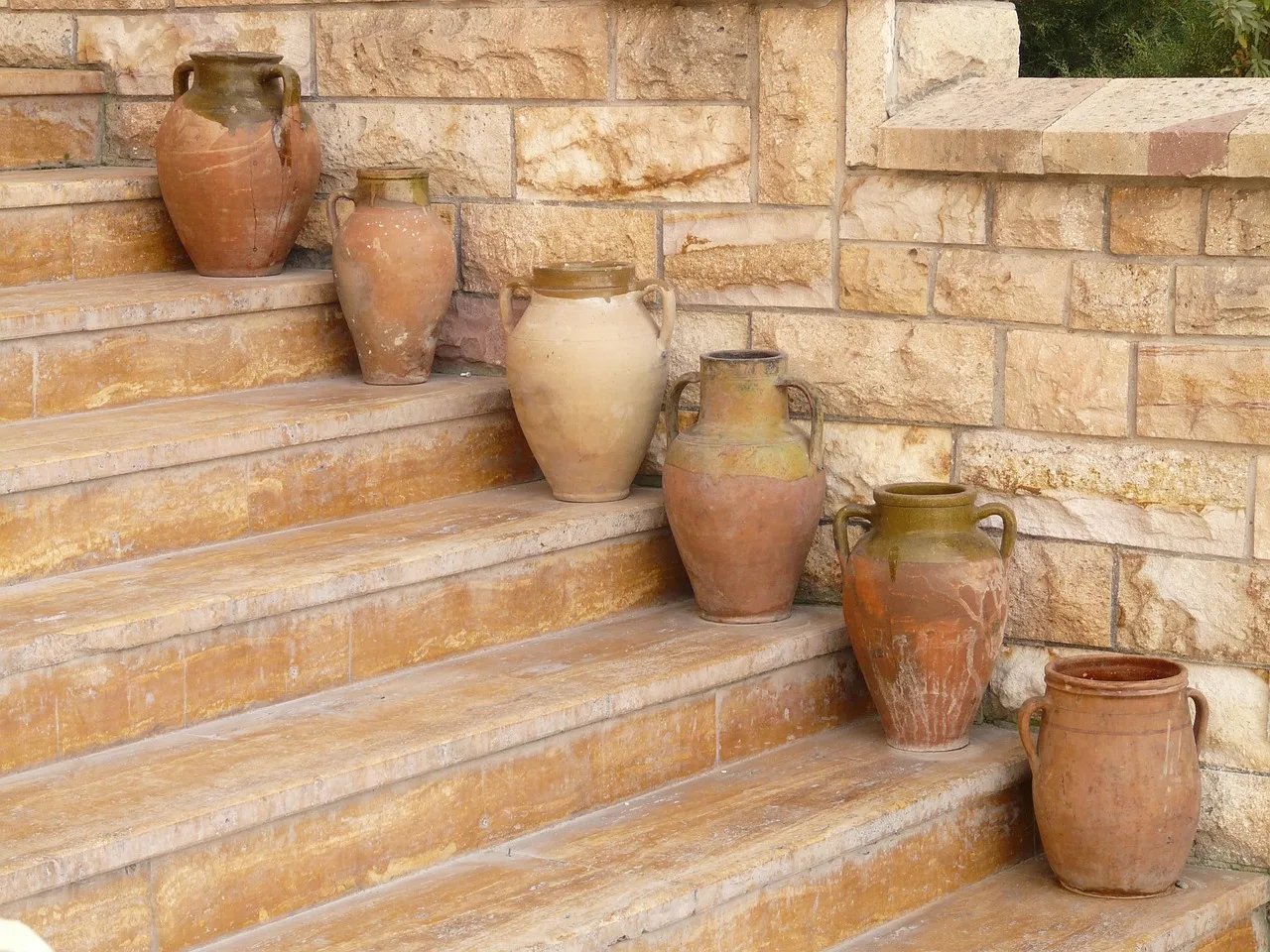
Rome has a hill made of rubbish. Monte Testaccio stands about thirty-five metres above the streets around it, on the flat ground south of the Aventine, with a circumference of close to a kilometre, and it is composed almost entirely of smashed pottery: olive-oil amphorae, most of them shipped up the Tiber from Baetica, the Roman province that is now Andalusia. You will also see the figure fifty-four metres, which is the summit reckoned from sea level rather than the climb from the pavement, and even thirty-five metres flatters the ground: the street level around the mound has risen over the centuries and buried part of the original base. Oil jars could not be sent back for a second run, because the residue soaked into the clay and turned rancid, so the empties were broken where they were unloaded. Rome's municipal heritage office describes the result not as a slag heap but as engineering. The sherds were stacked with deliberate economy of space and dressed with lime, which dealt with the smell and, as a side effect, bound the mass into something stable enough to still be standing eighteen centuries later. A ramp and two cart lanes carried the loads up as the mound grew. The Sovrintendenza Capitolina puts the tipping between the Augustan period and the middle of the third century.
That fact ought to reorganise a second trip. A first visit to Rome is about power, and the itinerary writes itself: Colosseum, Forum, Palatine, St Peter's, emperors and popes in the order the guidebooks put them. A second visit can be about the plumbing. Where the oil came in, where the cargo was stored, who was allowed to be buried and where, what a parish church looks like when nobody is selling tickets at the door. Those questions have addresses, and most of them sit within half an hour's walk of Piramide station.
The port that never left
The rione of Testaccio occupies roughly sixty hectares on the left bank, and its entire history is logistics. When the old landing at the Forum Boarium stopped coping with the volume, the plain here was given over to a new river port, the Emporium, with storage buildings behind it and, eventually, the amphora tip. Between the fifth and seventh centuries the whole area went back to farmland, and from the Middle Ages it carried vegetable plots and vineyards; part of it stayed open ground known as the meadows of the Roman people. Then the master plan of 1871 designated it for factories and workers' housing, and the first tenements went up without a water supply, electricity or drains.
That sequence explains why Testaccio still feels like a working district that happens to contain a Roman port. The most startling survival is the least visited. Walk the residential streets between via Rubattino and via Franklin and you will find great grey walls of tufa wedged into the modern blocks, occasionally doing duty as the back of a garage. These are the remains of what is usually called the Porticus Aemilia, a warehouse complex completed and enlarged in 174 BC that ran 487 metres along the river and 60 metres deep, divided internally by 294 pillars into seven long aisles stepping down towards the water in pairs. The Sovrintendenza Capitolina calls it the largest commercial building the Romans ever put up, and the walls, tufa laid in opus incertum, are the earliest surviving use of that technique in the city.
What the building actually was, though, is still argued over, and the superlative is attached to a label that may be the wrong one. One school reads the structure as the Navalia, the city's covered ship sheds, and not a warehouse at all. Excavations on the site between 2011 and 2013, run by the state superintendency with Dutch partners, concluded that both readings are too tidy, and documented a long sequence of collapse and rebuilding in which parts of the complex were reworked as imperial granaries around the turn of the second century AD. Nobody queues for any of this. There is no ticket office. You look at it over a parked Fiat.
The neighbourhood market makes the same point in miniature. It trades from a purpose-built hall with entrances on via Beniamino Franklin, via Alessandro Volta, via Aldo Manuzio and via Lorenzo Ghiberti, and when the ground was dug for it the excavators hit Roman remains, which now sit beneath the trading floor. The stallholders run free guided visits down there on open days, in cooperation with the state archaeological superintendency, led by archaeologists who worked the dig, in groups of twenty, with a donation invited rather than charged. At the time of writing those visits are suspended while the underground rooms are refurbished, which is worth confirming before you build a morning around it.
Monte Testaccio itself can be climbed, but not casually and not for free. Booking on 060608 is compulsory whoever you are. Accompanied groups are capped at thirty people a visit; individual visitors can book too, on a calendar the city publishes. Entry is four euros, three reduced, free for residents of Rome and the metropolitan area on production of proof and free on a MIC card, and it does not include a guide, which you organise yourself. The site is not wheelchair accessible, and for safety it is flatly forbidden to go near the edges or out onto the slopes. Picking sherds up off the ground is banned outright. That last rule is not fussiness. Many of the fragments still carry the stamp of the workshop that made the jar, and others carry tituli picti, notes brushed or penned onto the clay giving the exporter's name, the contents, the checks made during the journey and the consular date. The mound is a filing cabinet for the economy of an empire, and its contents are only legible in place.
The cemetery run by ambassadors
The commonest misconception about the Non-Catholic Cemetery, on via Caio Cestio just off via Marmorata, is that it is a city cemetery, or an English one. It is neither. It is governed by an assembly of fifteen ambassadors accredited to Italy and resident in Rome, most of them representing countries with Protestant or Greek and Russian Orthodox majorities. It funds itself entirely from private sources: thirty-year renewable burial concessions, the annual fees concession holders pay towards upkeep, funeral costs, and donations from visitors, embassies, foundations and legacies. It does not do so comfortably. Roughly two-thirds of the historic tombs no longer generate any income at all, and the cost of maintaining and restoring them falls on the cemetery anyway, which is why the World Monuments Fund added it in 2005 to its list of the hundred most endangered places in the world. In the same year the cemetery asked ICCROM, the intergovernmental conservation body based in Rome, for advice on how to run and preserve itself. The ambassadors accepted the recommendations and still work to them. It remains an active burial ground, which is why the notice at the gate is a code of conduct rather than a map.
Its existence began as a papal concession. Documentation traces the ground to at least 1716, when Clement XI allowed members of the exiled Stuart court to be buried in front of the Pyramid. The permission was gradually extended to other non-Catholics, many of them young men who died on the Grand Tour. The oldest grave traced so far belongs to George Langton, an Oxford graduate whose remains surfaced in excavations in 1929, covered by a shield-shaped lead plaque. Between 1738 and 1822, more than 150 people were buried in that first patch of ground. In 1821 the pope stopped burials directly in front of the Pyramid and granted an adjoining plot, which was walled. That New Cemetery was then enlarged twice over the nineteenth century, and it was the second enlargement, in 1894, that gave it the size and the shape you walk into today. The chapel went up in 1898.
Keats and Shelley draw the visitors, and the second-visit pleasure is the company they keep. Antonio Gramsci is here. So are Carlo Emilio Gadda and Andrea Camilleri, and the superintendency's list of notable burials adds Emilio Lussu, Miriam Mafai, Dario Bellezza and Jannis Kounellis. One caution on attribution, because guidebooks and even some official listings garble it: the Humboldt buried here is not Wilhelm von Humboldt the philologist and minister, but his nine-year-old son, interred in 1803 while his father was Prussia's representative in Rome.
Check the opening arrangements before you go, and check them on the cemetery's own homepage rather than a third-party listing or even its plan-your-visit page, because the homepage is where the current notice sits. The recurring rule is closure on a run of public holidays, closure for roughly a fortnight around Ferragosto in the middle of August, and a standing warning that the gate may shut at no notice for reasons outside anyone's control. In 2026 the fortnight has become the whole month. The notice says the cemetery is closed from Saturday 1 August to Monday 31 August inclusive, on top of a maintenance closure from 13 to 19 July. Turn up this August on the strength of the general rule and you get a locked gate.
The pyramid, and what you can actually get into
The Pyramid of Cestius, the white wedge the cemetery backs onto, is the sole survivor of a fashion. After the conquest of Egypt in 31 BC, Egyptian-styled tombs went up around Rome, and this is the one still standing. Gaius Cestius, a politician and a member of the priestly college of the epulones, specified in his will that his tomb be finished in 330 days, and it was built between 18 and 12 BC. It stands 36.40 metres high on a square base of 29.50 metres a side, a concrete core faced in brick and clad in marble from Luna. Nearly three centuries later, when Aurelian's builders ran the city wall through here between 272 and 279, they simply absorbed it, which is why a private tomb now works as a bastion.
The burial chamber inside measures about 23 square metres, barrel-vaulted, painted with nymphs and lustral vases and four winged Victories at the corners of the vault, and it was sealed at the funeral in the Egyptian manner. Medieval tunnellers came in through the north side and took the ash urn, along with a good deal of the painting. It has been restored repeatedly, most recently as part of a broader reordering of the surrounding area with new lighting.
Here is the part the internet reliably gets wrong. The interior is not on general sale. The superintendency states that the site can be entered only at special openings and during events. Plan on admiring it from the cemetery wall or the traffic island, and treat an interior visit as a lucky break rather than a booking.
The Aventine, past the keyhole
Everyone photographs the keyhole in the gate at Piazza dei Cavalieri di Malta. Fewer people register what they are looking through. The Order of Malta has held this ground since 1312, the year the Templars were dissolved and their holdings across much of Europe passed to the Knights of St John. The villa behind the gate is one of the Order's two institutional seats, home to the Grand Priory of Rome and to the Order's embassy to the Italian Republic; the Grand Master lives, and the government meets, at the other one, the Magistral Palace on via dei Condotti, and has done since 1834. Giovanni Battista Piranesi laid out the square and the church of Santa Maria in Aventino behind it in 1764, and had the monumental gate built the year after that. Square and church are the only architecture Piranesi ever completed, worked over densely with motifs drawn from the Order's own history, and his ashes are in a niche in the church. As for the view, the Order's own page claims the keyhole is "the only point where it is possible to see three different states in a single glance", with its extraterritorial garden in the foreground, Rome and Italy in the middle, and the Vatican at the end of the laurel tunnel. Take that as the house description of the house view, and then join the queue like everybody else.
A couple of hundred metres north along via di Santa Sabina is a building that deserves more of your morning than the keyhole does. Santa Sabina was built between 422 and 440, and its interior is the closest thing in Rome to what a fifth-century congregation actually stood in: a wide, plain hall with light coming through the upper windows and almost nothing on the walls to distract from the proportions. Honorius III gave it to Dominic as the Roman house of the Order of Preachers, and the convent attached to it is the order's general curia today, eight centuries on. It is free, it is quiet, and it is almost always emptier than the garden next door.
Below the hill, on the slope above the Circus Maximus, is the municipal rose garden, and its history is not decorative. The ground has been given over to flowers since antiquity, when a temple of Flora stood in the area and the spring Floralia were held in the Circus below. From 1645 the plot was the Orto degli Ebrei, a Jewish market garden with a small cemetery attached for the use of the community, and in 1934 that cemetery was moved to the Verano. When the city finally laid out roses here in 1950, it thanked the Jewish community by setting a stele at the entrance recording what the ground had been, and by shaping the paths that divide the beds in the collection area into a menorah. The lower and smaller section holds the plots for the Premio Roma, an invitation-only rose prize whose first edition was held in 1933 on the Colle Oppio, before it moved here. The garden opens for the spring flowering, generally from late April into May, and again in the autumn, with the calendar set by the plants rather than the diary, which is a polite way of saying you should check.
The church you walk into by accident
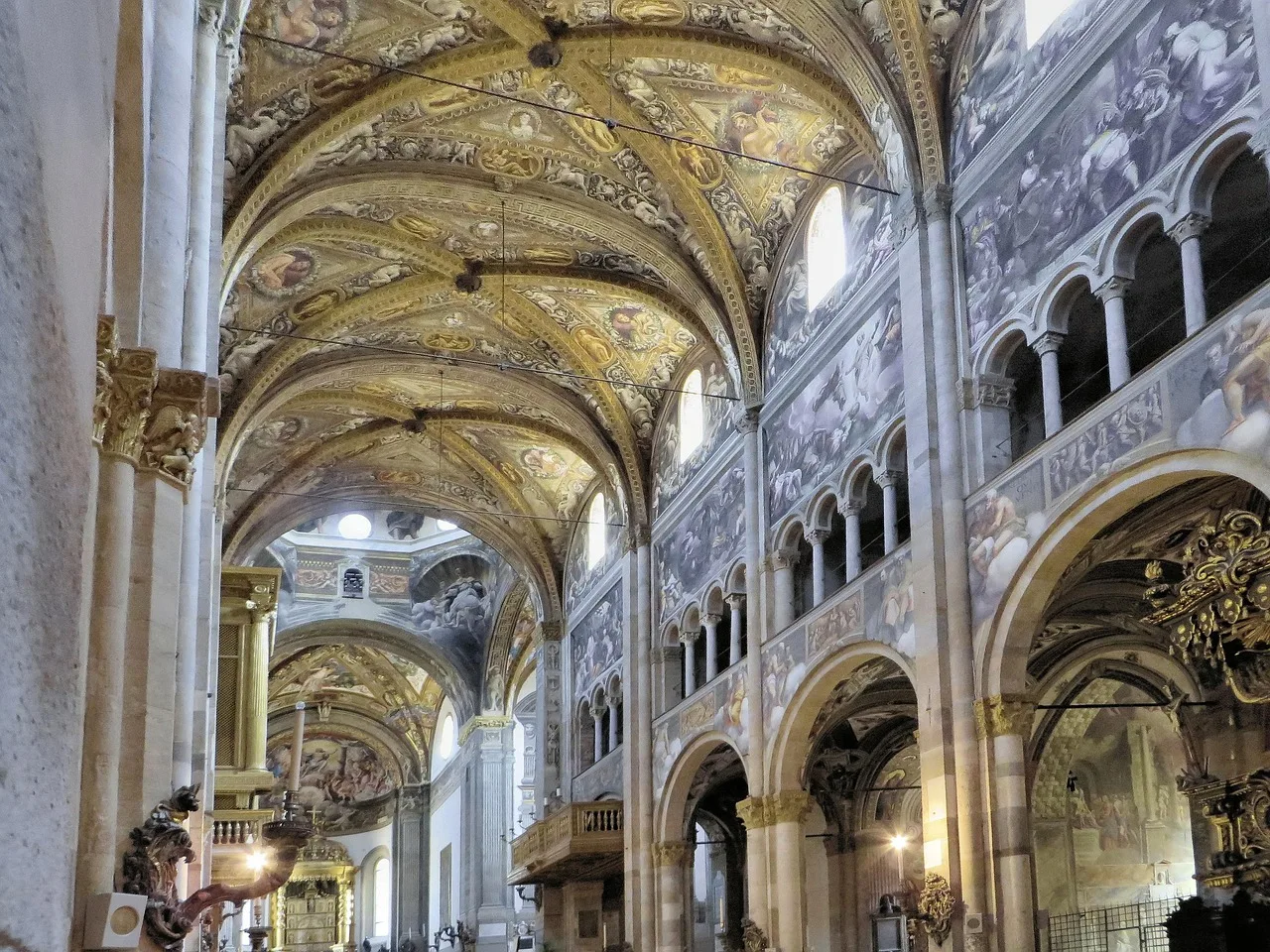
The habit worth acquiring on a second visit is entering parish churches with no plan and no expectation. One makes the argument on its own. Santa Prassede sits a short walk from Santa Maria Maggiore, reached through a portico on via di San Martino ai Monti, and is usually close to empty. It was built in the ninth century by Pope Paschal I, who added a small side chapel as a monumental tomb for his mother Theodora and lined the whole of it, walls and vault, in mosaic. The chapel is roughly the size of a large bathroom. The city's own tourist board calls it perhaps the most important Byzantine monument left in Rome, and that is not a stretch. Bring coins for the light.
The same visit teaches the rule that governs all such places: these are working churches, visits stop during services, and published hours are guidance rather than contract. That is the trade. You get in free, you get in alone, and you get in when the parish says so.
Walk back down to Testaccio afterwards and the hill looks different. Rome shipped in the oil, broke the jars, poured lime over the pieces so the heap would not stink or slide, and then, once the port stopped working, held public games that were something like a bullfight, and autumn festivals, on top of the rubbish. The receipts are still in there, brushed onto the clay in ink, waiting under a public park with a no-souvenirs rule.
Sources
- Monte Testaccio, Sovrintendenza Capitolina ai Beni Culturali - the 54-metre figure and circumference of about a kilometre, Baetican oil amphorae and why they were not reused, the use of lime, ramp and cart lanes, workshop stamps and tituli picti, medieval games and the ottobrate, booking on 060608, groups capped at thirty, the individual-visitor calendar, tickets at 4 and 3 euros with free entry for Rome and metropolitan-area residents and MIC card holders, guide not included, no wheelchair access, no approaching the edges or slopes, no collecting sherds
- Il Monte dei Cocci a Testaccio, Roma Capitale - the mound as about thirty-five metres high, the surrounding street level having risen over the centuries and buried part of the base, the consolidation of the sherds with lime
- Museo diffuso del rione Testaccio, Soprintendenza Speciale di Roma - the rione's sixty hectares, the Emporium and warehouses, ruralisation and the meadows of the Roman people, the 1871 plan and unserviced workers' housing, notable burials in the Non-Catholic Cemetery
- Porticus Aemilia, Sovrintendenza Capitolina ai Beni Culturali - completion and enlargement in 174 BC, 487 by 60 metres, 294 pillars and seven aisles descending in pairs, the "largest commercial building the Romans built" claim, remains between via Rubattino and via Franklin, earliest use of tufa opus incertum in Rome
- G.-J. Burgers, R.-A. Kok-Merlino and R. Sebastiani, "The Imperial horrea of the Porticus Aemilia", BABESCH 90 (2015), 199-212 - the disputed identification, the Navalia reading, the 2011-2013 excavations, and the granaries installed in part of the building in the late first and early second century AD
- Area archeologica, Mercato di Testaccio - the excavation beneath the market hall, free open-day visits run with the state superintendency by the excavating archaeologists in groups of twenty with an optional donation, current suspension for refurbishment, the hall's entrances on via Beniamino Franklin, via Alessandro Volta, via Aldo Manuzio and via Lorenzo Ghiberti
- Storia del Cimitero, Cimitero Acattolico di Roma - Clement XI's permission of at least 1716 for the Stuart court, George Langton's grave found in 1929, more than 150 burials between 1738 and 1822, the walled plot granted in 1821, the two nineteenth-century enlargements and the definitive one of 1894, the chapel of 1898, the Humboldt child buried in 1803
- Controllo e finanziamento, Cimitero Acattolico di Roma - governance by fifteen ambassadors, ICCROM's 2005 recommendations, funding from thirty-year renewable concessions, maintenance fees, funeral costs and donations, the two-thirds of historic tombs producing no income, the World Monuments Fund listing of 2005
- Cimitero Acattolico di Roma, homepage - the 2026 closure notices, closed 13 to 19 July for maintenance and 1 to 31 August inclusive
- Pianifica la tua visita, Cimitero Acattolico di Roma - holiday closures, the fortnight around Ferragosto, closure without notice, the entrance off via Marmorata, conduct in an active cemetery
- Piramide di Caio Cestio, Soprintendenza Speciale di Roma - the 330-day clause in the will, construction between 18 and 12 BC, dimensions and materials, the sealed chamber and its frescoes, the medieval tunnel on the north side and the loss of the urn, access only at special openings and events
- Magistral Villa, Sovereign Order of Malta - the villa as one of the Order's two institutional seats, seat of the Grand Priory of Rome and of the embassy to the Italian Republic, extraterritoriality, Piranesi's square and church of 1764 as his only built work, his ashes in a niche
- Magistral Palace, Sovereign Order of Malta - the palace on via dei Condotti as the Grand Master's residence and the seat of the Order's government since 1834
- St Peter's Basilica seen through the keyhole, Sovereign Order of Malta - possession of the Aventine site since 1312 and the dissolution of the Templars, the monumental portal built in 1765, the laurel hedge, and the quoted three-states claim
- Basilica di Santa Sabina - construction between 422 and 440, the austerity of the early Christian interior, Honorius III's grant to Dominic, the convent as the Dominican general curia
- Roseto Comunale, Turismo Roma - the temple of Flora and the Floralia in the Circus Maximus, the Orto degli Ebrei from 1645 with its small community cemetery, the transfer to the Verano in 1934, the roseto of 1950, the stele and menorah-shaped paths, the Premio Roma by invitation with its first edition on the Colle Oppio in 1933, spring and autumn opening set by the flowering
- Basilica di Santa Prassede, Turismo Roma - ninth-century foundation under Paschal I, the portico entrance on via di San Martino ai Monti, the chapel of San Zeno as a tomb for Theodora, the "most important Byzantine monument in Rome" assessment, visits suspended during services