When to Put the Camera Down
LineCast Networks
The regulations for visitors to the Auschwitz-Birkenau State Museum run to a long list of prohibitions, and photography barely features. Filming and photographing are strictly prohibited in exactly two interiors: Room No. 5 of Block No. 4, and the basement of Block No. 11. Everywhere else on the grounds you may take pictures, so long as you use no flash and no tripod inside the buildings. What the regulations spend more words on is you. No telephone calls in any building on the tour, and none in the courtyard of Block No. 11, which the rules mark out as a zone of silence. No drones without permission. No filming or photographing of the visitor screening checkpoints, the visitor service points, the hand luggage inspection areas, or anything else belonging to the security systems. And no conduct, public statement or symbol that insults the victims' good name, denies the Nazi crimes, or desecrates the memorial. The camera is a footnote. Your behaviour is the text.
That ratio holds almost everywhere cameras cause trouble. Very little of the rule is about the equipment, and most of what people believe about the rest of it is a local intuition that has been mistaken for a universal one.
The sentence that does not travel
A piece of American legal shorthand is widely repeated as though it settled the matter everywhere: in public there is no expectation of privacy, therefore anyone in a public place may be photographed. As a description of what the law says outside a small number of countries, it is close to worthless.
The German statute people usually mean does not stop you pressing the shutter. Section 22 of the Kunsturhebergesetz, which governs images of people, provides that portraits may be disseminated or publicly displayed only with the consent of the person depicted, and that for ten years after death the consent of relatives is required. Section 23 then carves out the exceptions: images from the sphere of contemporary history, pictures in which people appear only as incidental to a landscape or other locality, pictures of assemblies and processions in which the depicted people took part, and portraits not made to order where display serves a higher interest of art. Even those exceptions collapse where a legitimate interest of the person depicted is injured. Notice where the line sits. Not at the shutter. At the posting.
German law does draw a line at the shutter, though, just in a different statute. Section 201a of the criminal code punishes the unauthorised making or transmitting of an image, by up to two years, where the subject is inside a dwelling or a space specially shielded from view and their most private sphere is violated by it. The same section reaches images that put a person's helplessness on display, and images that exhibit a dead person in a grossly offensive way. Narrow, but real, and it has already been committed by the time you get home to edit.
Spain draws its main line earlier. Organic Law 1/1982, on the civil protection of the rights to honour, personal and family privacy, and one's own image, lists among the unlawful intrusions, in translation, "the capture, reproduction or publication by photograph, film or any other procedure of the image of a person in places or moments of their private life or outside them, except in the cases provided for in article 8.2". Capture is the first word in the list, and the escape hatch is bolted to the same sentence. Article 8.2 covers people holding public office or of public notoriety when the image is taken during a public act or in a place open to the public, caricature in accordance with social usage, and graphic reporting on a public event in which a particular person appears as merely incidental. Outside those windows, the wrong is complete before you have edited anything.
The United Arab Emirates skips the civil framing altogether. British government advice for the country is a single flat imperative: "Do not photograph people without their permission." The same page goes on to record arrests of men who photographed women on the beach.
Three jurisdictions, three different places to draw the same line, and none of them where the confident sentence puts it.
A church is not a museum with pews
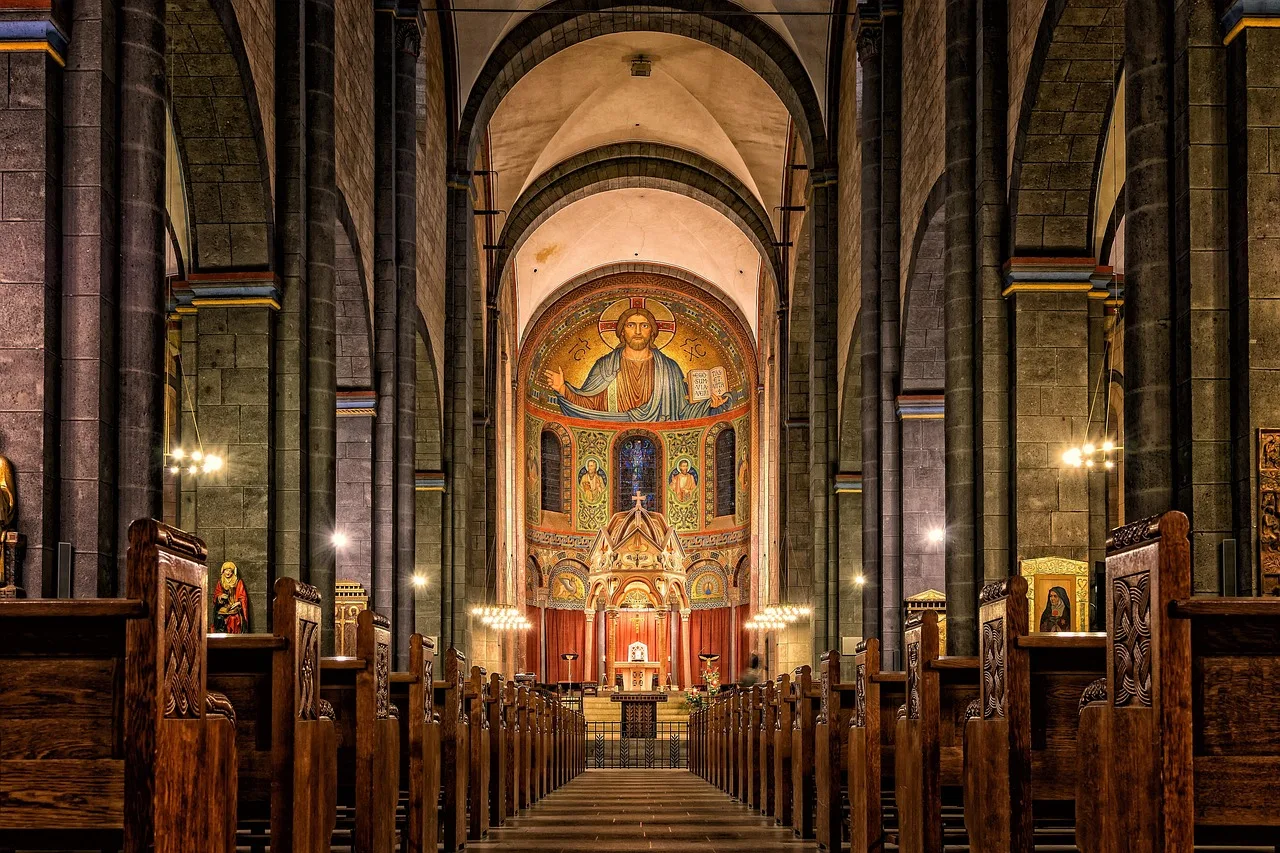
Working places of worship are the category people get wrong most often, because they arrive as visitors and the building is also somebody's parish.
Westminster Abbey permits personal photography in the church. It also prohibits it at any time during services, including services that run alongside tourist visiting, and it prohibits video, flash, extra lighting, selfie sticks and tripods outright. Three spaces are closed to the camera at all hours: St Faith's Chapel, the Shrine of St Edward the Confessor, and the Queen's Diamond Jubilee Galleries. At a special service, photography is permitted before it starts and as the congregation leaves, and not during the processions at either end. And there is a line most cathedral policies do not bother to write down: photography of children and young people is prohibited without the consent of the accompanying adult.
The Vatican Museums are similarly precise. Photography for personal and domestic use is permitted throughout, apart from the Sistine Chapel, where taking pictures or film with any type of electronic equipment is forbidden, where mobile phones are banned, and where visitors are asked to observe absolute silence. Flash is forbidden everywhere in the museums. Tripods, stands and video cameras go to the cloakroom. The clause worth memorising hangs off the Sistine Chapel prohibition and nothing else on the list: the guard staff, the museums write, "is authorised to request the immediate cancellation, in their presence, of video or photographic material produced in contravention of this rule." Request, not require, and the distinction is real. It is also thinner than it looks when the person making the request is standing at your shoulder watching the screen. An offer to delete is not always a courtesy you are extending.
The Western Wall Heritage Foundation's photography procedure shows how wide these definitions have become. Photography there means still images, video, 360-degree capture, aerial work by drone or aircraft, and three-dimensional scanning, with any equipment at all, "including any existing or future technology, for any purpose". Requests go in at least forty-eight hours ahead, with a statement of intent and an equipment list, and a film or television request must arrive with a written summary and script. Approval is conditional on the shoot not falling on a Saturday or a Jewish holiday, and news photography is confined to the upper plaza rather than the prayer plaza except for specified events.
Read to the end of it, though, and section 7 hands most of that back. Clause 7.1: "Filming of a private individual visiting the Western Wall complex for non-commercial and/or profit-making purposes does not require approval according to this procedure." Clause 7.2 lets anyone carrying a valid official press card work without filing anything in advance. Nobody is asking a visitor with a phone for two days' notice.
What section 7 does not hand back is the substance. Clause 7.4 applies the rest of the procedure to exempt filming too, "with the necessary modifications", and among the instructions it carries across is the one that should be on a board at the entrance: the faces of worshippers are not to be photographed, and no close-up of a worshipper is to be taken without consent. The forty-eight hours are for producers. That instruction is for everybody.
Sometimes the offence is not the photograph but the pose. British government advice for Sri Lanka warns that disrespecting Buddhist images is a serious offence that can lead to arrest, and that visible Buddha tattoos can get you refused entry or deported. Then, with no elaboration at all: "Do not pose for photographs standing in front of a statue of Buddha." Your back is the problem, not your lens.
The lane that is not a street
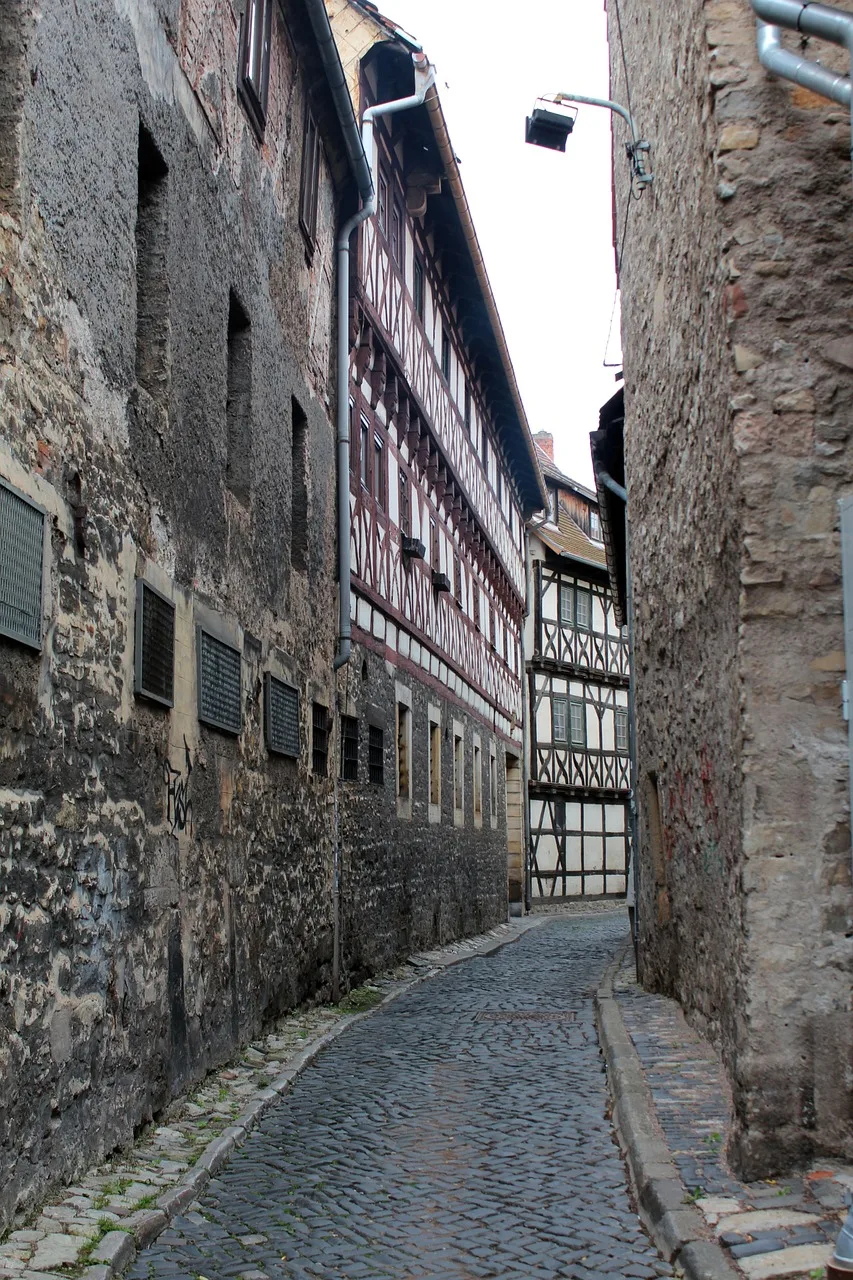
A cobbled alley with wooden facades reads as public space to anyone who did not grow up on it. In Kyoto, that reading is sometimes simply wrong.
The city has published a notice, circulated through the official tourism association, about the Gion-machi Minamigawa district and areas like it. It describes what has been happening: geiko and maiko followed and photographed without permission, photographs taken on private land such as the frontages of shops, and unauthorised entry onto that land. It goes on to describe people photographing children at primary schools and nurseries without permission, and residents reporting that this leaves them anxious and frightened. The city asks for consideration towards the district and the people who live in it.
The associated etiquette guidance puts the same point more gently, and more usefully. A maiko you meet in the street is at work: do not photograph her casually and do not stop her. Check whether photography is permitted, and do not take photographs or video at temples and shrines where it is prohibited. And, in a phrase worth carrying into any narrow lane anywhere: the person taking the photograph is also being watched.
The practical test is simple. If the surface changes underfoot, if the lane narrows past two arm-spans, if there are bicycles and drying laundry and no shopfronts, assume you are in someone's hallway and behave accordingly.
Buildings that photograph back
Security-sensitive architecture generates more myth than any other category, and the myth runs in both directions.
In the United Kingdom, section 58A of the Terrorism Act 2000 is routinely described as a ban on photographing police officers. It is not. Inserted by the Counter-Terrorism Act 2008 and still in force, it makes it an offence to elicit or attempt to elicit information about a person who is or has been a member of the armed forces, of the intelligence services, or a constable, where that information is, in the words of the statute, "of a kind likely to be useful to a person committing or preparing an act of terrorism", and to publish or communicate any such information. It carries a defence of reasonable excuse. That is a narrower provision than the folklore, and a broader one than a photography rule, since it reaches publication as much as capture.
Elsewhere the prohibition is blunt. British advice for the Emirates records that photographing certain government buildings and military installations is illegal, and that hobbies like birdwatching and plane spotting can be misread near airports, government buildings and military sites. Advice for Sri Lanka lists what not to photograph, not fly a drone near, and not point binoculars at: military bases, government buildings, and vehicles used by VIPs. And back at Auschwitz, the specific ban on photographing screening points and luggage inspection areas exists for the same reason: a site that has been threatened does not want a published map of how it is guarded.
The realistic risk in most of these places is not prosecution. It is forty minutes with a serious person who wants to look through your camera roll, in a language you do not have, while your train leaves.
How to ask when you have no words
There is a gesture that works nearly everywhere, and it is not the one most people use. Do not raise the camera to your eye first. Hold it at chest height, catch the person's eye, tilt the camera a few degrees towards them, raise your eyebrows, and then wait a full second longer than is comfortable. A nod, a smile, a small shift of posture towards you: that is a yes. Anything else, including politeness with no movement in it, is a no. The second of waiting is the whole technique. It converts a demand into a question.
Two refinements. Ask after you have spoken to someone rather than before, because a photograph is the end of an interaction and not the beginning of one, and because market traders and stallholders are being asked for something of value by a stranger. And when a phrase is called for, the words matter less than the object: hold the camera up, say the local word for photograph if you have it, and let the grammar go. People understand the gesture. The failure mode is never bad accent, it is not asking.
Then there is the case where consent is not yours to collect. Children, in most of the places above, require an accompanying adult's permission, and Westminster Abbey writes that into a policy rather than leaving it to instinct. Funerals, prayer, grief and arrest are not photographic opportunities with a consent problem attached. They are the moments the camera should be at your side, screen dark, because the only thing a photograph of them can improve is your feed.
The regulations at Auschwitz get one thing exactly right by putting the camera rules in the middle of the list and the conduct rules at the end. What survives a trip is rarely the picture you took of the person. It is whether they would recognise themselves in how you behaved while taking it.
Sources
- Regulations for visitors and persons staying on the grounds of Auschwitz-Birkenau Museum and Memorial - the two interiors where filming and photography are prohibited, the flash and tripod rule, the silence zone in the courtyard of Block No. 11, the ban on photographing screening checkpoints, visitor service points and luggage inspection areas, and the conduct clauses
- Vatican Museums, Useful advice for visitors - personal-use photography permitted except in the Sistine Chapel, flash forbidden throughout, tripods and video cameras to the cloakroom, and the guard staff's authority to request cancellation, attached to the Sistine Chapel rule
- Photography in the Abbey, Westminster Abbey - photography permitted but never during services, the three spaces closed to cameras at all times, and consent of the accompanying adult for images of children
- Procedure for obtaining permission to photograph at the Western Wall Complex - the site's definition of photography, the forty-eight hour request, the Saturday and Jewish holiday condition, the section 7 exemptions for private individuals and press-card holders, clause 7.4 carrying the instructions across to exempt filming, and clause 5.6 on the faces of worshippers
- Kyoto City notice on tourism manners, Kyoto City Tourism Association - unauthorised photography of geiko and maiko, photography on private land and unauthorised entry in the Gion-machi Minamigawa district, and photography of children at schools and nurseries
- Kyoto tourism etiquette guidance - maiko in the street are working, check whether photography is permitted at temples and shrines, and the reminder that the photographer is also being watched
- Kunsturhebergesetz § 22, Gesetze im Internet - consent required for dissemination or public display of a person's portrait, and the ten-year rule after death
- Kunsturhebergesetz § 23, Gesetze im Internet - the exceptions for contemporary history, incidental figures, assemblies and processions, and art, and their limit where a legitimate interest is injured
- Strafgesetzbuch § 201a, Gesetze im Internet - the criminal offence of making or transmitting an image, penalty of up to two years, covering dwellings and spaces specially shielded from view, displays of helplessness, and grossly offensive images of the dead
- Ley Orgánica 1/1982 de protección civil del derecho al honor, a la intimidad personal y familiar y a la propia imagen - article 7.5 listing capture as well as publication as unlawful intrusion, including its closing reference to article 8.2, and the article 8.2 exceptions for public figures, caricature and incidental appearance
- Terrorism Act 2000, section 58A - the actual scope of the offence covering armed forces, intelligence services and constables, its publication limb, and the reasonable excuse defence
- Foreign travel advice: United Arab Emirates, safety and security - do not photograph people without permission, arrests for photographing women on beaches, and restrictions near government and military sites
- Foreign travel advice: Sri Lanka, safety and security - what not to photograph in secure areas, and the specific warning against posing for photographs in front of a statue of Buddha